Theme: Palliative Care
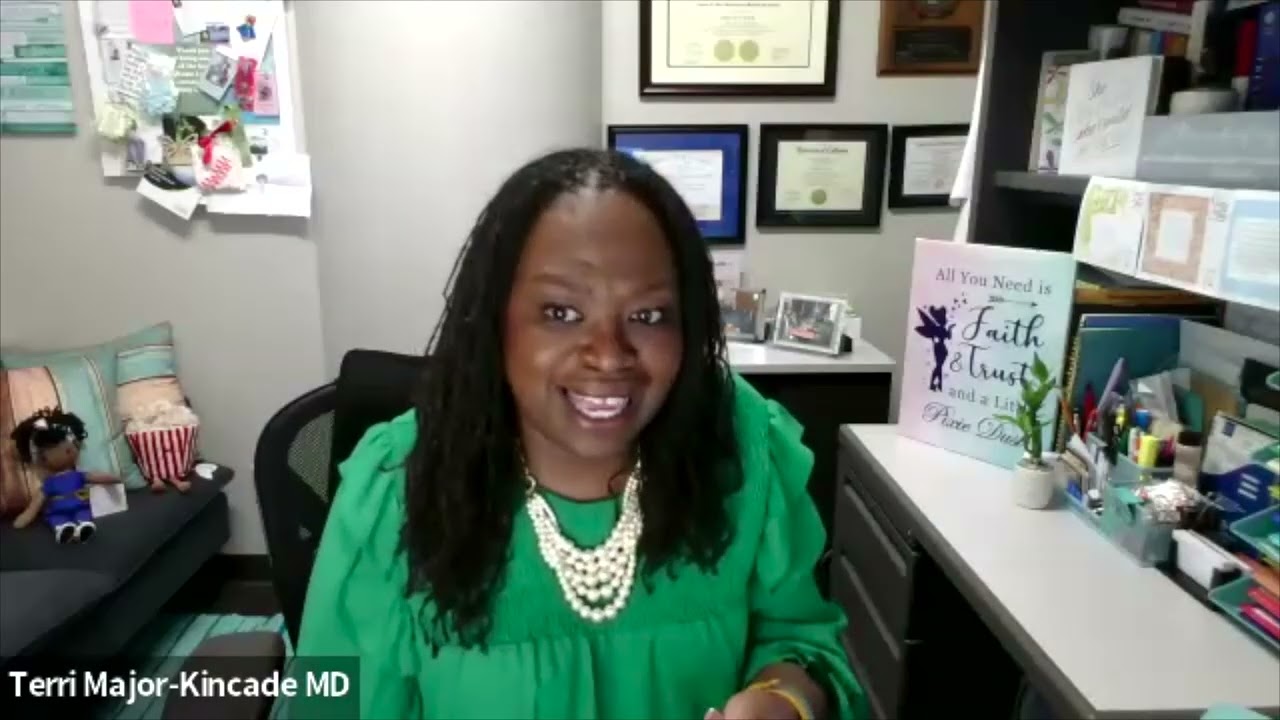
Dr. Terri Major-Kincade notes that physicians shouldn’t evaluate a child’s quality of life when they are at their sickest in the hospital. She gives an example of how she teaches this to students – sometimes the smallest, simplest things make a good day.
Theme: Palliative Care
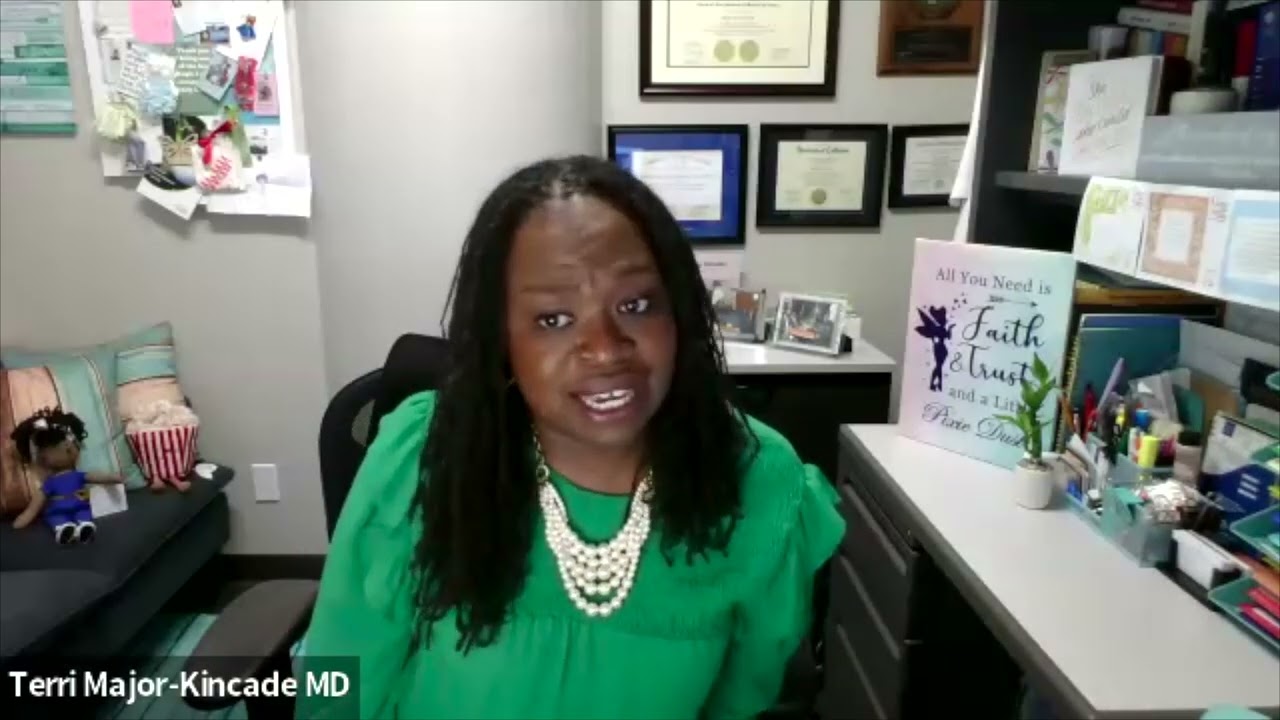
Palliative care physician Dr. Terri Major-Kincade illustrates how the framing of the question from the medical team can include judgement which then impacts what families feel they are permitted to decide/choose. Sometimes families will say ‘I’m so tired of trying to justify my decision.’ “I share with the residents is that you’re in a relationship with families and it’s a privilege. And it’s a privilege for somebody to be vulnerable enough with you to share a decision that may be different than the decision you believe you would make.”
Theme: Palliative Care
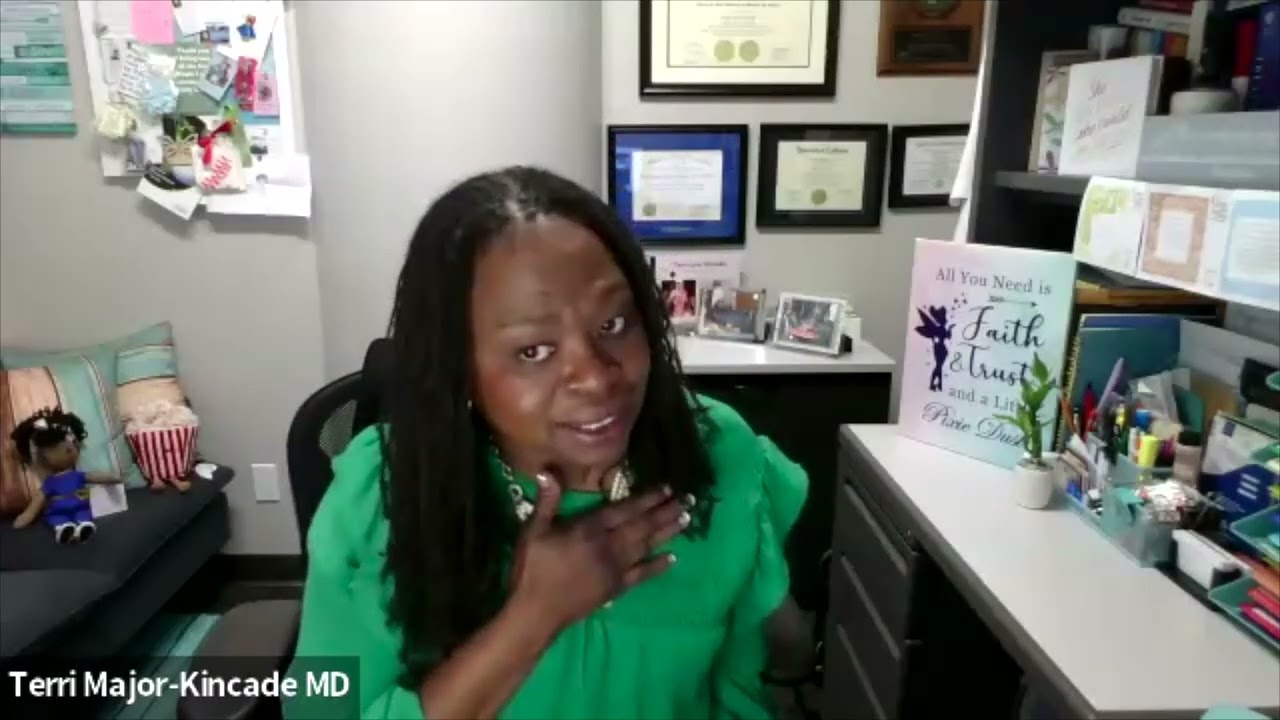
Dr. Terri Major-Kincade shares a personal story about how her relationship with a family she had known since the baby was born very prematurely complicated the parents’ decision later to transition to comfort-care only. The family was afraid they were going to let her down because she saved their baby. “I’ve had such guilt about them feeling like they didn’t have permission. How many shunt infections have been treated? How many things have this baby gone through?” (This was a big learning moment for Terri.)
Theme: Palliative Care
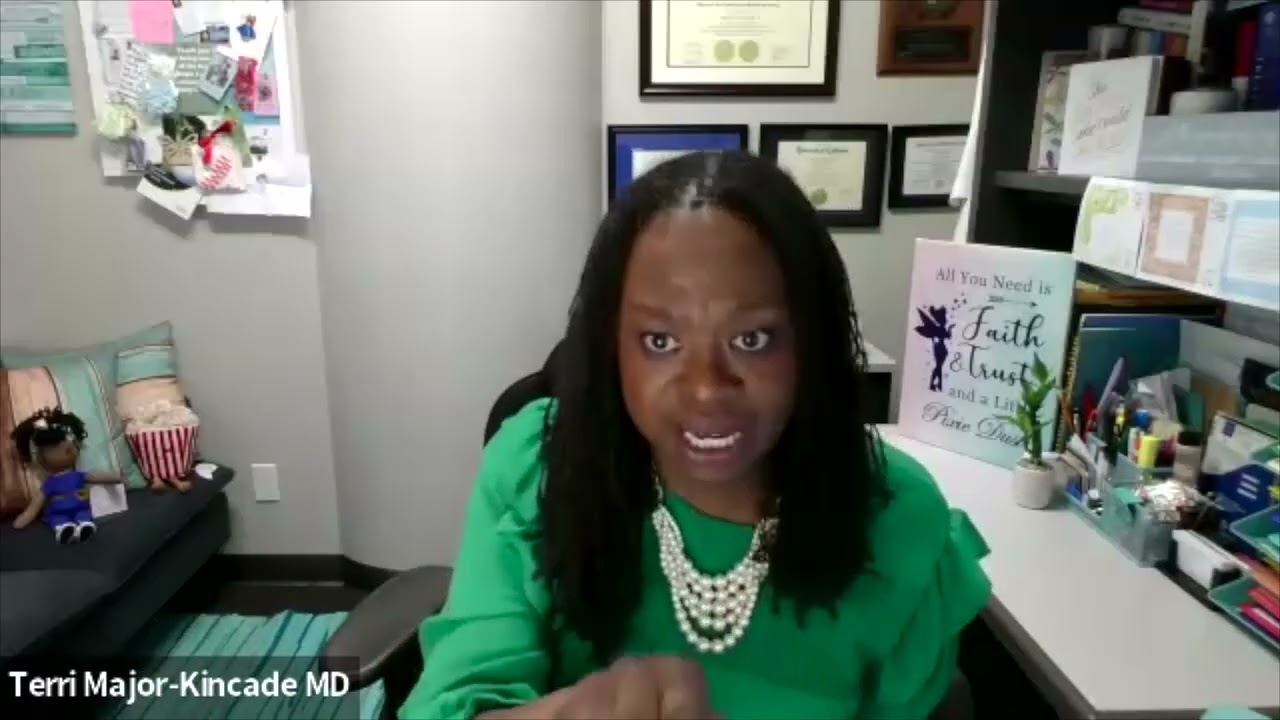
Pediatric palliative care MD Terri Major-Kincade talks about she stresses to the medical team that it is the parents who are always going to remember this day, this baby, and they have to be OK with their decision. “Parents are not coming to the hospital going, let me see how I can make my child suffer today.” She also explains why she hates the word used about parents: Denial
Theme: Palliative Care
Pediatric palliative care physician Terri Major-Kincade describes why this question gets to the heart of what matters.
Theme: Palliative Care
This is long but worth the full listen: the hardest part of the job is not communicating about the tough stuff but about helping families find resources when they are discharged and are no longer surrounded by a team with hospital resources. “We live in a system that does not prioritize continuity of care and coordination of care.” She describes all the ways families are burdened: arguing with insurance about DME, parking at the clinic, the Medicaid waiver waiting list. She stresses the importance of preparing families, forecasting, including about the nursing shortage, and getting families on the Waiver waitlist asap.
Theme: Palliative Care
Dr. Terri Major-Kincade talks about how a palliative care consult and team or family liasion can help parents who feel they aren’t being heard or are being judged.
Theme: Palliative Care
Director, Pediatric Palliative Care Medicine
McGovern Medical School at UTHealth Houston
Children’s Memorial Hermann Hospital, TMC, Houston, TX
Theme: Palliative Care
First published on ehospice.
When my daughter was diagnosed with a rare and life-limiting condition, my world changed in an instant. I was thrown into an unfamiliar place that I did not recognize—a world of uncertainty, fear, grief, and helplessness. As a father, I felt an overwhelming urge to fix it. That is what we do, right? We solve problems. We protect. We provide.
But what happens when the problem is your child’s illness—and it can’t be fixed?
I learned, painfully and gradually, that many fathers face this same moment. A child receives a devastating diagnosis, and suddenly everything you thought you were supposed to be—strong, stoic, solution-oriented—no longer fits. You are left standing in the middle of a storm with no map and no tools. Just love. And fear. And questions you cannot answer.
Pediatric palliative care helped me find my footing in that storm. No, it did not offer a cure. But it offered something else: a way forward. A way to be a father in the face of the unimaginable.
I was raised in a culture where men are expected to be fixers. When that instinct meets an illness that has no fix, it can shatter your sense of identity. I asked myself, “What did I miss?” “Did I do something wrong?” “Am I strong enough for my family?” These questions haunted me. And like so many fathers, I tried to hold it all in—to be “the rock” for everyone else. But that silence was not strength. It was suffering.
And that’s where palliative care came in.
Pediatric palliative care is not just for the end of life, it is whole-family support that starts at diagnosis. It is a team approach, with doctors, nurses, social workers, chaplains, and psychologists who are not just treating the child, walking alongside the entire family. They helped me make sense of what we were going through and gave me permission to feel what I was feeling.
They also helped me redefine what it meant to be a father during that time. I did not need to have the answers. I did not need to be strong in the traditional sense. I just needed to be there. Holding my daughter’s hand. Reading her a book. Sitting in the quiet moments. Advocating for her comfort. Loving her with everything I had.
That shift—from fixing to being—was the most profound transformation of my life.
Palliative care also helped ease the isolation I felt. As a father, I did not always have the same kind of built-in support network that my partner did. I did not know where to turn, or who would understand. But through counseling, peer support, and simply being invited into conversations I might have otherwise been left out of, I began to feel seen. Heard. Connected. Hearing another dad say, “I feel that way too,” changed everything.
My daughter passed away when she was four years old. That pain will never go away. But I will always be grateful for the support we received through palliative care. It did not remove the grief—but it gave me purpose. It helped me understand that love is not about fixing; it is about showing up every day, fully present.
Pediatric palliative care is not a cure—but it is a lifeline. For fathers especially, it provides a space to feel, to connect, and to redefine what strength looks like. We may not be able to fix everything—but sometimes, the most powerful thing we can do is simply be there. And in the end, that is more than enough.
Theme: Palliative Care
First published on ehospice.
In my professional life, I have led numerous meetings, many of them with pivotal decisions or necessary outcomes, but never have I felt such great mental and emotional weight as at the initial care conference with my firstborn’s medical team. The experience came while my daughter was in the NICU for almost a month after a non-eventful pregnancy and a smooth delivery. After a surprise rare genetic diagnosis and prolonged breathing tube placement, our family was eager to discuss the direction of our daughter’s care.
A care conference is a meeting of the patient and family with the health care team. Care conferences are often convened when a hospital stay is long, there are complex medical problems or something in the patient has changed unexpectedly.[1] I first learned about the concept of a care conference from our palliative care team, who recommended we initiate one after multiple failed breathing tube extubation attempts. Instinctually, I knew we needed this meeting, but I was nervous because I understood it would set the direction for my daughter’s care, and the outcomes of the meeting could impact my family significantly. I was also nervous because I didn’t know what questions were reasonable to ask, and I did not know if the busy clinicians would think it was a waste of their time for me to ask questions like when/whether my intubated one-month-old would be able to receive physical or occupational therapy. I felt inadequate because I thought I was supposed to “own the meeting” because it was about my child. Fast forward five years and nearly a dozen care conferences under my belt, I still feel nervous for similar reasons. Luckily, our palliative care team always makes me feel it is reasonable to request a care conference and reminds me that my questions – big or small – have a name – advocacy.
At my first care conference, I leveraged my professional background to develop an agenda. I included a title, the time and place, and the attendee list. I included our top priority questions and listed secondary questions. I usually don’t add colors to the agendas, but I chose a colorful template. After all, this wasn’t an ordinary meeting, and having an organized agenda with a bit of personality increased my confidence as the meeting approached. If I could not control the outcome of the meeting, at least I could control the color of the agenda. To this day, I still follow a similar structure, even when we have the conference as an outpatient.
But truthfully, having the “perfect agenda” does not always quell my worries. Recently, we held a care conference with nearly 30 participants. I still felt nervous, even though we have a trusting relationship with everyone who attended the meeting. I experienced the same feelings of inadequacy and prepared hard for weeks on how to run the meeting effectively, especially as there were many issues to address in only an hour. With such a large group, I wanted to include a lot of contextual information in the agenda so everyone could have a fair view of my daughter’s quality of life. I even planned to bring treats for a virtual meeting – a positive addition to the meetings I implemented early on. But in all this planning and self-imposed pressure to run the leanest care conference for a dynamic, thriving individual with very complex medical needs, I forgot to give myself heart space to be her mother—a mother who has gained so many caregiving and care conference skills but also has scary memories of my child nearly dying multiple times. I began to realize that if I didn’t give myself the heart space to be a mother who cannot control the outcomes, my head space could be too full and chaotic to be the parent my daughter needed me to be present with her for the time we do have together.
To help me declutter my mind, sort my emotions, and find space to be my daughter’s mother first and her care coordinator second, I once again turned to our palliative care team. Our palliative care doctor and nurse allowed me to talk through the topics I wanted, not expecting my thoughts to be neat or structured. They met where I was – not just emotionally but literally – my daughter was in the CT scan room under anesthesia, and they came to find me in the waiting room. They even walked with me to a nearby eatery after they learned I had skipped breakfast to get my daughter to the early morning appointment. They allowed me to feel comfortable, both physically and mentally. And in that comfort, I was able to narrow down what I wanted to cover, prioritize agenda items, and worry less about being the perfect meeting organizer.
Experiencing a care conference is something a parent rarely forgets, regardless of how many times they attend one or how familiar they are with the medical system.[2] Understanding the special emotional weight care conferences carry for parents is a critical piece of the effectiveness of a care conference. I am fortunate to have our palliative care team to process with and walk alongside me as I face all my daughter’s future care conferences.
[1] Nationwide Children’s Hospital. Care Conferences for Families. https://www.nationwidechildrens.org/family-resources-education/health-wellness-and-safety-resources/helping-hands/care-conferences-for-families
[2] Palliative care: I was able to unburden my worries to one person … and then the care conference allowed us to talk about everything. CPN. (n.d.). https://courageousparentsnetwork.org/videos/palliative-care-i-was-able-to-unburden-my-worries-to-one-person-and-then-the-care-conference-allowed-us-to-talk-about-everything
Theme: Palliative Care
Each morning begins in the small sensations that remind us we are alive.
The bubble of the kettle. The smell of coffee. The way light catches the rim of the mug, making even the ordinary seem briefly radiant. These are moments that belong wholly to the inside of our experience. We feel them before we ever name them. The warmth against our palms, the hum of a refrigerator, a child’s distant cough in another room. All of it arises in sensation before thought can measure or assign meaning.
And yet, we are never only inside. Coffee is a compound of molecules; that light is a frequency; that coughing can be plotted as sound waves measured in decibels. We live, always, in this doubleness, moving between the world as it feels and the world as it is recorded. We live in a body that aches, stumbles, delights and then we invent the abstractions that allow us to make sense of what the ache or the joy might mean. Between these two is the tension of knowing we can never live entirely in either space. We are tethered to changing sensation just as we are ever compelled to find static language for our senses.
Perhaps this oscillation between immersion and distance, heartbeat and calculation is what makes us human: we are the creatures who measure what we feel and feel what we measure. It is in moments of extremity where we find that measuring either side becomes difficult.
Exploring this tension, philosopher Thomas Nagel once wrote about what he called the view from Nowhere. It’s an impossible vantage point where one sees the world stripped of all subjectivity, rendered in pure, detached clarity. From such a height, emotion and circumstance fall away; all that remains are facts, patterns, causes. Against this, there stands the view from Here with its thick, gauzy embodied immediacy of our personal lives, from which every sound, texture, and heartbeat is felt before it’s understood. The view from nowhere seeks precision and coherence. The view from somewhere clings to meaning, to what it feels like to be a person in a body, loving another person in theirs.
Both views are real, but they speak different dialects. We spend our lives crossing the invisible bridge between these two, wanting to know what’s true, yet unable to let go of what’s ours.
For parents of medically complex children, this tension becomes more than philosophical. It almost becomes the air we breathe. What’s more, we can never rest fully in either. The Here demands tenderness and attention, the kind that can feel the weight of her trust as she melts into your arms. This is the precious ground that friends, family, and fleeting visitors get to stand on. Holding a hand or singing a song, with love unburdened by the brutal calculus of a medication schedule or the terrifying consequence of waiting too long into a seizure to give oxygen. Then there is the Nowhere, which pulls just as hard, insisting only on the cold, unblinking precision of milligrams, milliliters, and flow rates. This is the domain of the provider, where the body is viewed through the necessary lens of protocol and data. Both places, populated by both peoples, are necessary.
To parent a medically fragile child though is to live on the fault line between love and logistics, between the memorable and the measurable. We are forever translating, reading the body as data and the data as life. Always feeling so burdened to find answers in order to make the right decisions.
It is exhausting.
Each step further into the dark brightness of medical parenting feels like an ascent up the mountain into the cloud of unknowing. A climb into thinner air where what once seemed solid begins to shimmer and blur. The higher we go, the ground of the everyday where we once believed love and reason could coexist without fracture begins to erode, and more distance stretches between the Here and the Nowhere.
This widening itself isn’t a problem. All parents, in one form or another, live within the tension between presence and abstraction. We watch our children play, delight in their laughter, then measure their growth on a chart and calculate hours of sleep or minutes of screen time. With enough community, family, and practical support, this balance holds. But for parents of disabled, medically complex, or fragile children, the gap widens until the span feels unbridgeable. Sustaining both perspectives can stretch even the most resilient heart past what ordinary networks can hold. The oscillation that once felt like breathing begins to feel like gasping.
When the ground between Here and Nowhere begins to quake, what parents need most is not to choose a side but to find a companion who can walk the fault line with them. And for parents like us this guide is Pediatric Palliative Care.
Unfortunately, many of those who could benefit from palliative care enter into it too late, often because palliative care is often misunderstood for hospice. However, its most powerful role begins at the moment of diagnosis and especially whenever the medical complexity starts to cause significant family strain, regardless of prognosis.
Its work is not to collapse the Here and Nowhere, but to reveal their interdependence and to steady the traveler caught between them. It does not dissolve medical demands—the Nowhere remains—but what it does is gently make room for the Here.
Neither the Here nor the Nowhere is sufficient alone. The child’s life insists on both.
If you find yourself constantly translating data and gasping for breath, remember that seeking palliative care is not a failure but an act of self-preservation that will help medical precision to become a form of care, and tender presence to become a form of healing.
It is love learning to breathe again.
Stephen Hager goes by his second middle name (he has three), Bud, because it’s easier to remember and baristas never misspell it. Along with his wife he is a caregiver for their 8-year-old daughter, Emma, who has pachygyria, a rare neurological disorder. He believes in taking an active approach to advocating for his child and others like her. To this end, he sits on various advisory councils at Children Hospital of Orange County (CHOC), volunteers on consulting and directing boards for various non-profit centers and lends his writing skills where he can. Experiencing a lack of support for parents of medically complex children, Bud founded a support group through CHOC focusing on parent-to-parent interaction. He is also a professor of psychology and has a small private psychotherapy practice.
Theme: Palliative Care
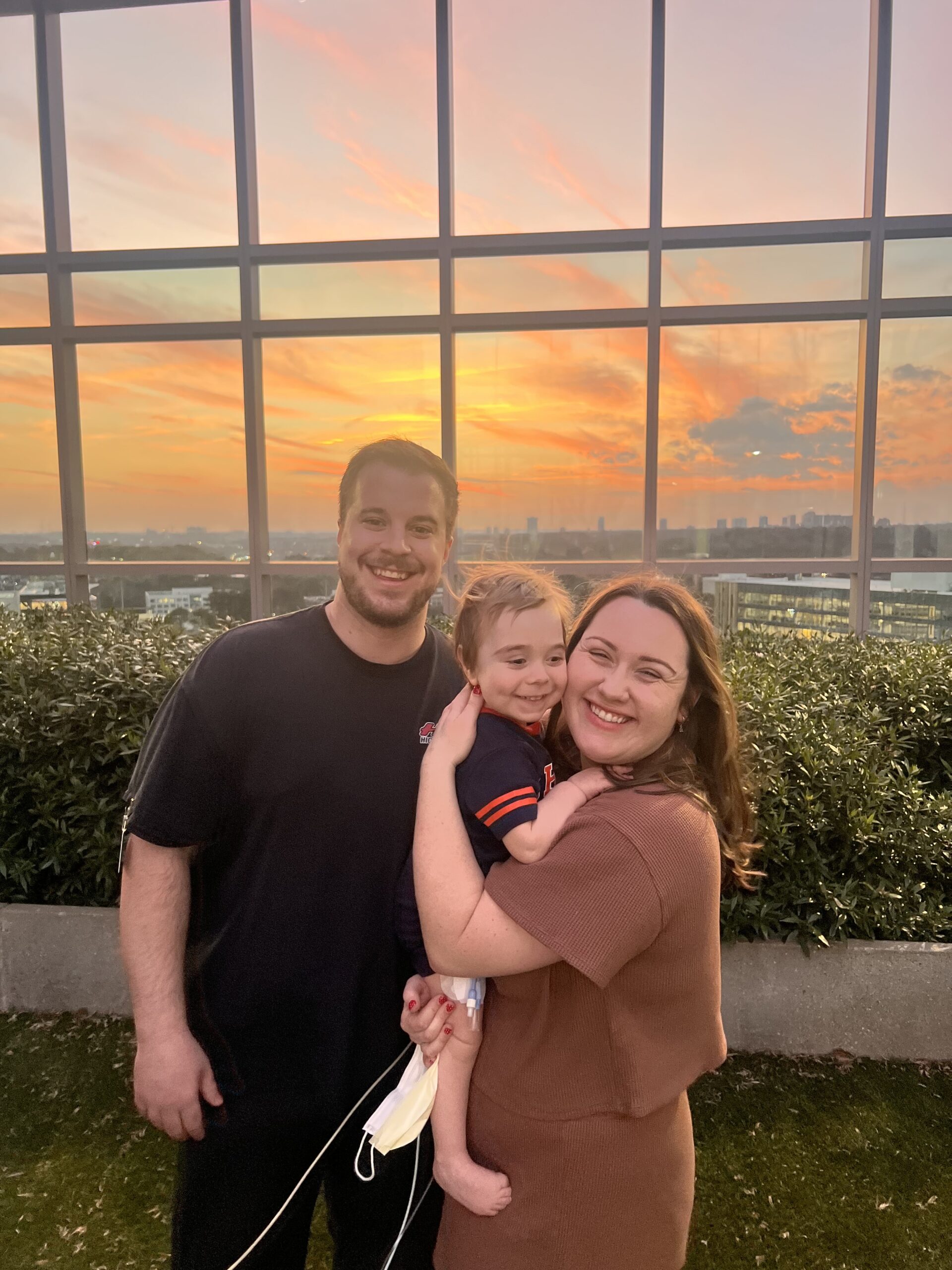
Parent Champion Kelsey Stanczyk, Parent of Stella
Stella was diagnosed as a newborn with Ring 9 Syndrome and Microduplication on chromosome 17. She died at age 23 months.
Kelsey’s 6 words: Palliative care gave my family peace