

There is a quiet moment that happens for many parents of medically complex children. It doesn’t come with an announcement or a clear turning point. It’s not when the diagnosis is given or when the monitors start alarming. It’s more subtle than that.
It’s the moment you realize that waiting—waiting for answers, waiting for direction, waiting for someone else to take the lead—might not be enough for your child.
For me, that moment came early in Luka’s journey. The most important thing I learned from that moment is this: you are allowed to ask for more—more support, more opinions, more clarity—even when no one offers it.
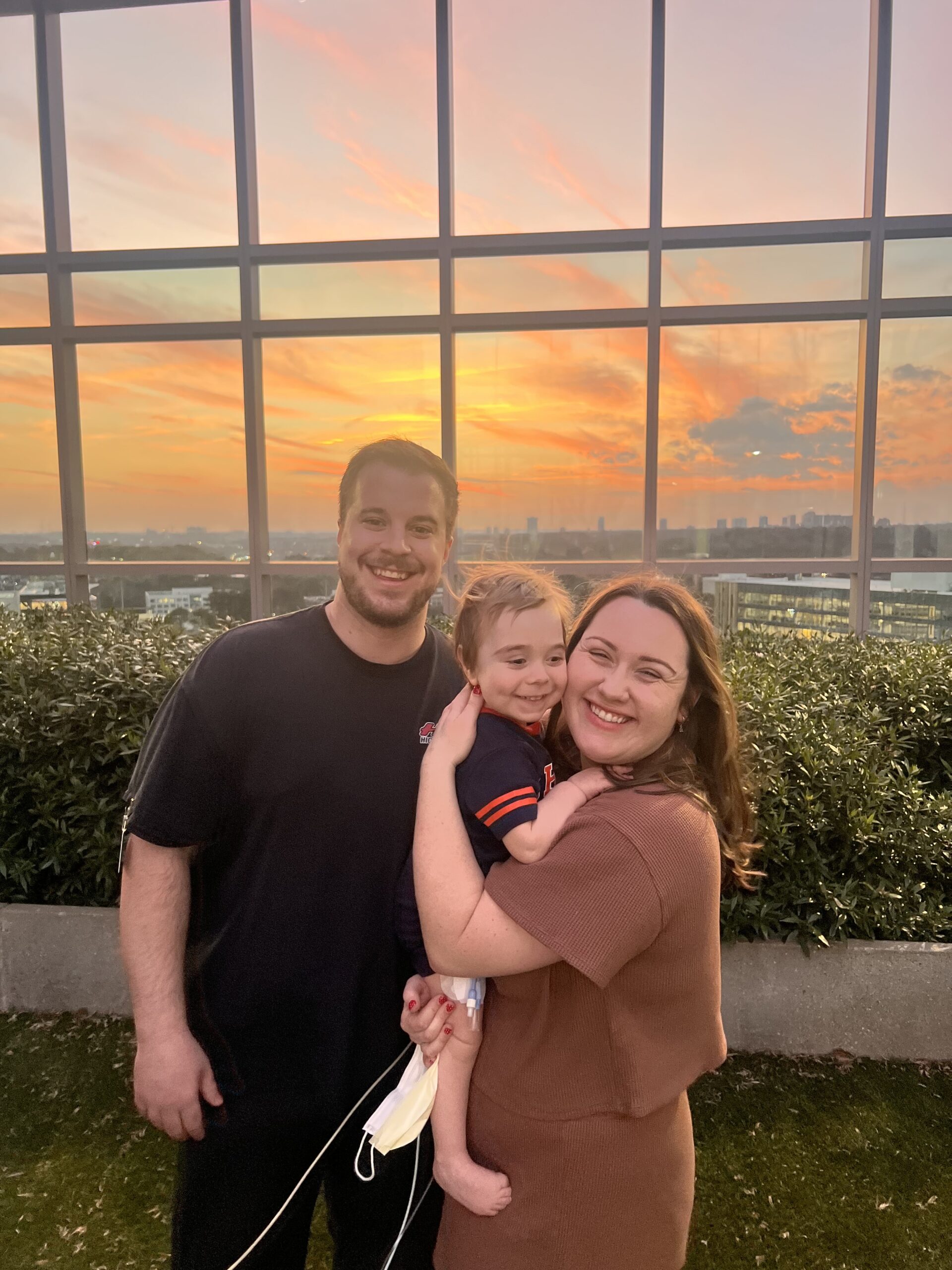
My 22-month-old son Luka, was born with prune belly syndrome, which caused kidney failure, respiratory failure, urological abnormalities, and cardiac issues. When he was born he was taken straight to the NICU, where everything felt urgent and overwhelming. Specialists rotated in and out. Plans shifted quickly. Conversations were filled with medical language I was still trying to understand. I remember sitting there, trying to absorb it all, trying to be “a good parent” in a system that felt bigger than me. But underneath all of it, there was a faint, persistent feeling: something was missing.
There was an evolving medical care plan for our son; but, emotionally, relationally, and holistically my husband and I were struggling. We were getting through each day, but we weren’t grounded in anything that could help us process what was happening or prepare us to make decisions with clarity. So I asked for help. This is when we were introduced to the palliative care team.
I will never forget the first time we met the palliative team’s nurse practitioner and physician at our Florida hospital. With a calm, gentle presence, they offered the support that I had sensed we so desperately needed. They quickly became one of the most important supporters in Luka’s journey. They were the bridge between everything we were feeling and everything the medical team was trying to do. They helped translate—not just medical language, but priorities.
They asked questions no one else had asked us:
What matters most to you right now?
What are you most afraid of?
What does a good day look like for Luka?
 In a system focused on interventions, they brought us back to values, and that changed everything. Instead of reacting to every new recommendation, we started making decisions through a clearer lens: does this align with what we want for our child? That shift didn’t just help emotionally—it improved how we engaged with Luka’s care team and how we understood the path forward.
But advocacy doesn’t stop at asking for support. Sometimes, it means confronting something much harder: what to do when trust starts to feel uncertain.
There was a point in Luka’s NICU stay where we lost trust in our medical team—not because of one clear mistake, but from a gradual unraveling. The confidence we once felt shifted into uncertainty as conversations became filled with “we think” and “let’s try,” instead of clear, decisive plans. Care decisions seemed inconsistent, providers offered differing opinions, and we often found ourselves piecing together Luka’s plan rather than being guided through it. I kept questioning whether this was just the nature of complex medicine; but deep down, it didn’t feel right. The hardest part was the internal conflict—these were the people keeping our son alive, and questioning them felt both uncomfortable and risky. But that instinct kept growing: we needed more clarity, more alignment, and more confidence in the care he was receiving.
Deciding to seek a second opinion grew out of the moment we realized that we couldn’t keep moving forward with so much inconsistency. Asking for that second opinion felt like crossing a line, and our son’s life hung in the balance. But connecting with a new care team also brought an immediate sense of relief—we were finally taking back some control. The process required persistence and advocacy in ways that stretched us, but ultimately led us to transfer Luka’s care to a different state entirely. It was a difficult decision, especially in the middle of a crisis; but it was an important turning point. Looking back, it wasn’t just about losing trust—it was also about learning to trust ourselves. In complex medical situations, parents don’t need to have all the answers, but they do need to listen when something doesn’t feel right and have the courage to act on it.
“Trust your gut” sounds simple; but in practice, it’s complicated. Your gut doesn’t always feel like clarity. Sometimes it feels like anxiety. Sometimes it feels like you’re the only one in the room questioning something, while everyone else seems sure. What I’ve learned is that your gut isn’t about having answers—it’s about recognizing when something doesn’t sit right and giving yourself permission to explore that further. For my husband and I, that meant asking hard questions. It meant slowing down decisions when we could. And eventually, it meant making one of the hardest choices we faced: changing hospitals.
A second opinion brought new insight. A new team brought a different approach. And slowly, something shifted—we felt aligned. Not because everything was perfect, but because we felt heard, included, and grounded in a shared understanding of what mattered for Luka. Twelve hours after the medical transfer, a new palliative team was there to greet us. They were new but familiar. Their open arms and hearts were there to hug us and hold us and listen while we cried, reliving all we had been through. They were ready to plan care conferences and help get us acquainted with our new team.
This is the part of advocacy people don’t talk about enough. It’s not always confident or clear. It doesn’t feel strong. Most of the time, it feels like fear mixed with responsibility. Because you don’t actually know if you’re right. You just know that you can’t ignore a feeling.
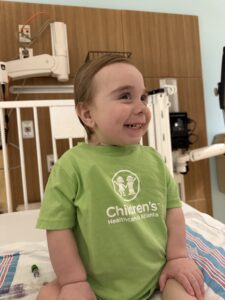 Today, Luka is six weeks post kidney transplant. He has survived four fetal surgeries, and 11 months worth of NICU and PICU stays. Right now he is sitting on the living room rug and flipping through Horton Hears a Who, bending each page as he grips them with determination. It’s such a small, ordinary moment—but for us, it represents everything we fought for. We made it out alive. And while that is something I will never take for granted, survival is only part of the story. There are still memories that stay with me—moments that don’t fade as easily as I thought they would. But when I look back, I don’t regret asking for more.
The experiences that shaped this understanding were not easy: recognizing when trust in our care environment was compromised, choosing to pursue a second opinion, and making the decision to change teams despite the uncertainty. Each of those moments required stepping outside of what felt comfortable; but, each one moved us closer to the care Luka needed.
If you are a parent in the middle of caring for a sick kid right now:
You are not asking for too much.
You are not overthinking.
You are responding to a situation that asks everything of you.
And if you are a clinician, please know this:
When a parent asks more questions, seeks another opinion, or requests additional support, it is an expression of how deeply they are trying to get this right for their child. Honor their tenacity.
I used to think good care meant finding the right team and following their lead; but now I understand it differently. Good care is collaborative. It’s built on communication, trust, and the willingness to pause and ask: Are we still aligned with what matters most? Because sometimes, the most important shift in a child’s care doesn’t come from a new treatment. It comes from the moment a parent realizes they are allowed to speak—and chooses to.