Theme: Orienting to the Hospital
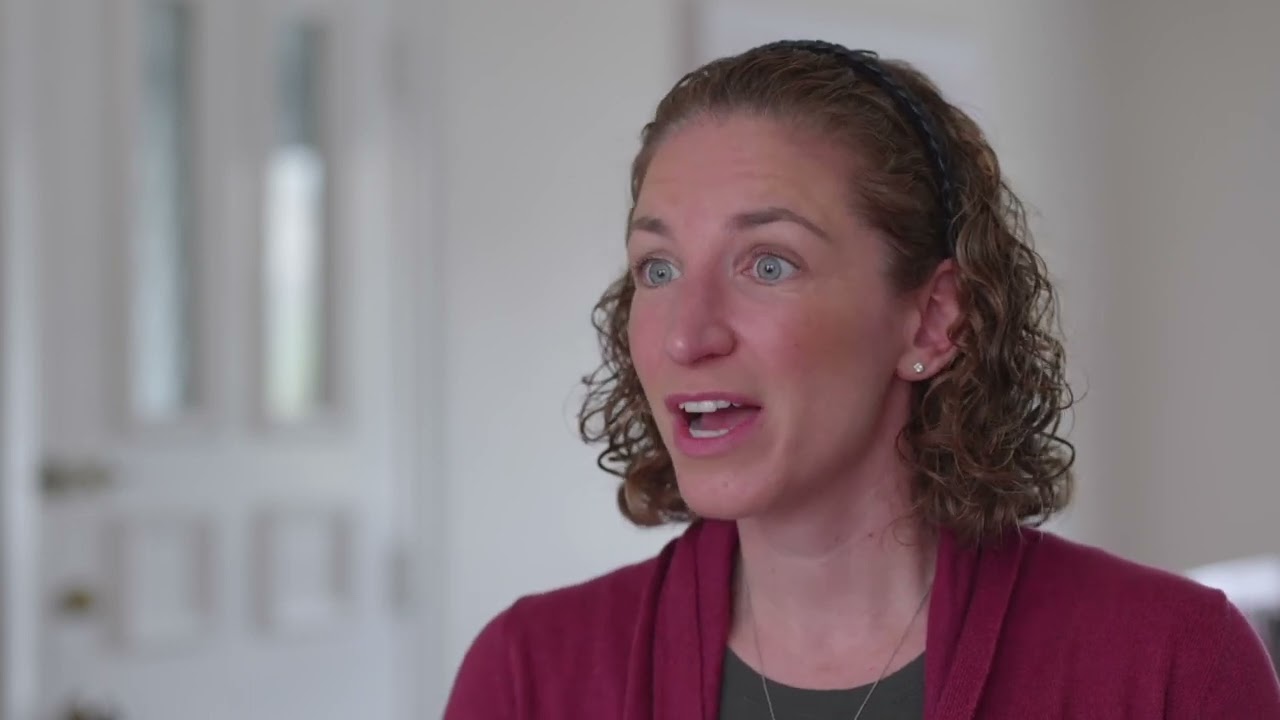
Palliative care doctor Kate Nelson acknowledges the power differential between the clinician – who is very comfortable in the hospital setting – and the parent and patient for whom it is a foreign and unsettling place. Clinicians and parents are in very different places. She teaches residents to appreciate that differential. She encourages parents to tell the oblivious clinicians that they need a moment.
Theme: Orienting to the Hospital
A palliative care pediatrician describes how tension and mistrust arise when what the family wants and expects bumps into hospital protocols. The job of the clinician is to listen and be transparent.
Theme: Orienting to the Hospital
The mother of a daughter who spent five months in the NICU talks about the little things that could have made her feel more supported as a woman of color spending most of her time in the hospital.
Theme: Orienting to the Hospital
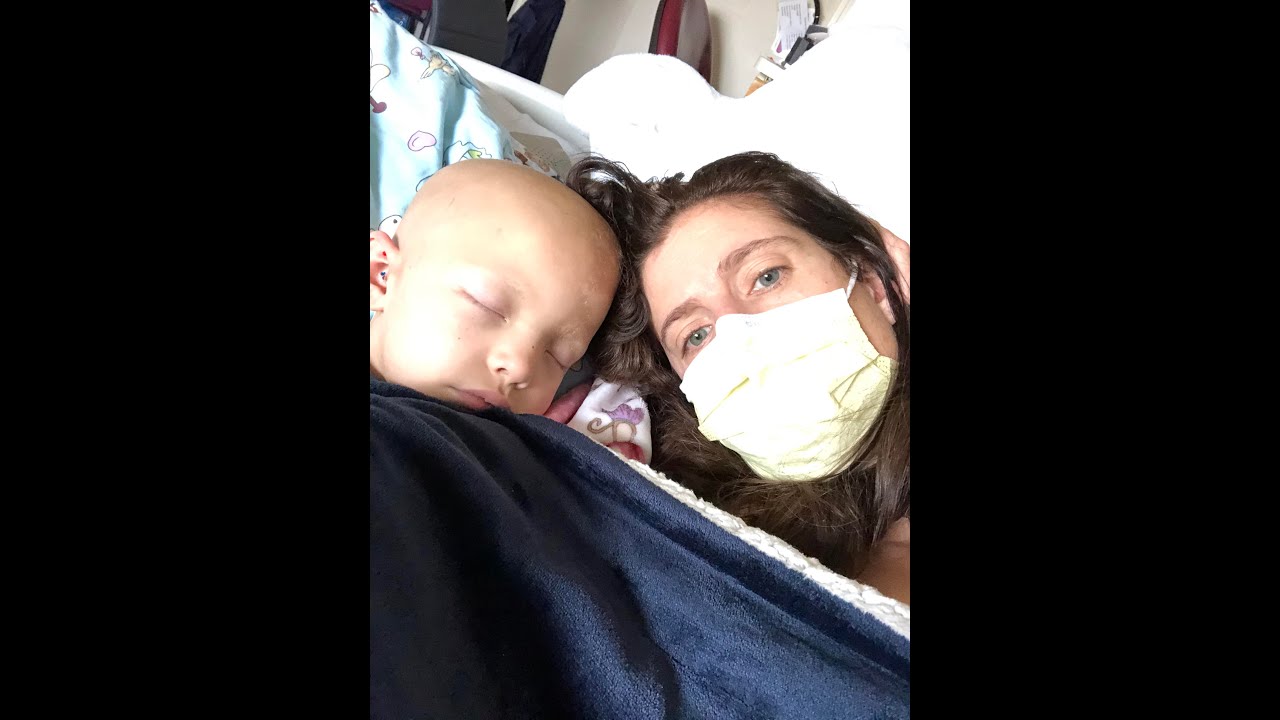
A NICU mom speaks frankly that the question “how are you doing?” from clinicians is unhelpful and how parents answer to get people to leave them alone. She suggests some more authentic, helpful questions.
Theme: Orienting to the Hospital
An NP in the PICU talks about her pathway to becoming a nurse, then a nurse practitioner, and how she sees her role: “I’m working with the providers a lot, I’m working with the nurses a lot, I’m really at the bedside working with families who need a lot more support and need some help and guidance and understanding.”
Theme: Orienting to the Hospital
A PICU NP observes that a lot of the care of children living with complex, chronic conditions is to make the hospitalization as short as possible knowing that if that child and that family can get back to their home environment, that it’s the best thing for everyone.
Theme: Orienting to the Hospital
An NP in the PICU talks about how, with time at the bedside, she has come to appreciate and see how parents and their children communicate in minute ways that fast-moving clinicians can easily miss or not understand, and how hard that is for parents.
Theme: Orienting to the Hospital
We ask them to adjust to us. But children with complex medical needs, the family need the medical team to understand that we as medical caregivers, in many ways need to adjust to them, because they have a routine. They have a way that works for their child, they have a way that works for their family.
Theme: Orienting to the Hospital
Pediatric nurses are truly some of the most amazing people in the world. I’ve seen so much in the news lately about the persistent toll the pandemic is taking on all healthcare professionals – and especially nurses. They are the crux of quality care – interfacing between patients, families, doctors and multiple care team members to coordinate treatment. And 9 times out of 10, at least in our experience, they do this with patience, diligence, and extreme competence. And they do this for several patients simultaneously.
On the several occasions my husband and I were inpatient with Colson for treatment related to his mitochondrial disease, I often wondered what sustained nurses during their shifts, because they never stopped moving. When we visited with nurses in the outpatient setting for regular weight checks, I wondered how they kept such a positive attitude with the constant drone of infants crying, toddlers screaming, and kids badgering their parents or siblings in the background. I feel the same way about nurses as I do about teachers – they must genuinely feel called to this work to show up for it every day. And thank heavens for that.
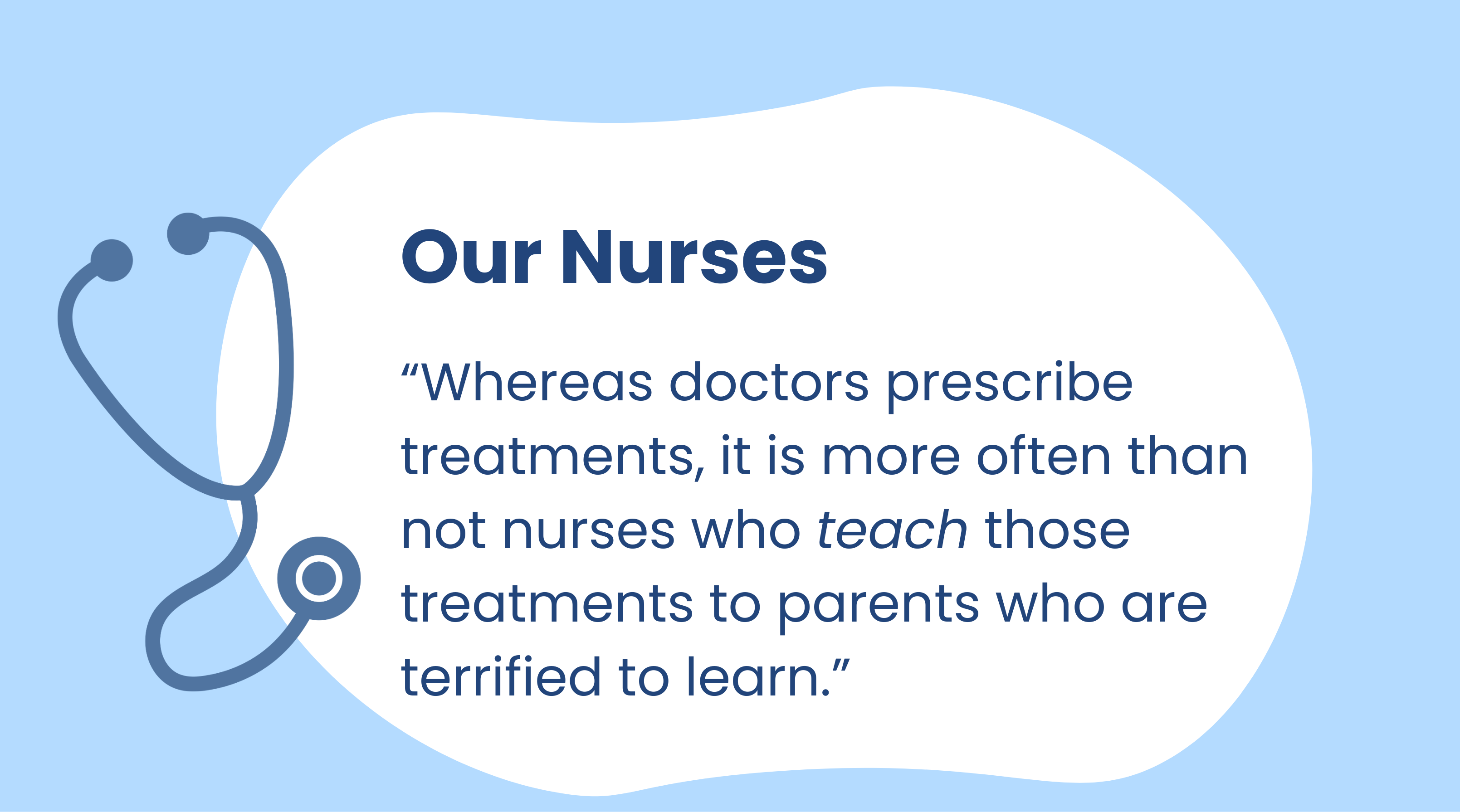
When I think about our care journey with Colson, I realize how essential skilled nurses were in helping us manage his care and provide him a stable quality of life. Whereas doctors prescribe treatments, it is more often than not nurses who teach those treatments to parents who are terrified to learn.
It was a nurse who:
- Taught us how to do intramuscular injections to treat infantile spasms.
- Showed us how to insert and secure an NG tube.
- Taught us how to clean and change a G-tube site.
- Explained the differences between a VBG and a CBG blood draw to us.
- Gave us tips and tricks to effectively use a urine collection bag on a wiggly newborn.
- Taught us the unique sensitivities of an electronic blood pressure monitor, and how to get accurate readings at home.
In addition to this clinical support, nurses also bear witness to the overwhelm many families impacted by complex illness face, and do their best to alleviate it.
It was a nurse who:
- Hugged me and told me I would be okay when I broke down sobbing during a difficult day at the hospital.
- Told me to go outside and take a walk every day if I could during a long inpatient stay.
- Made sure I always had water, apple juice, yogurt, cheese sticks and chips in front of me during hospital stays, knowing how easily parents forget to feed themselves there.
- Asked me if we needed anything to take home, anything at all, from the supply closet during the peak of the pandemic, knowing that many families were experiencing disruption in their home-care orders – and then procured some much-coveted positioning pillows for Colson.
- Gently reminded me that I could sleep during inpatient stays if I wanted to – reminding me that I was allowed to take a break overnight because they were there, keeping watch over my vulnerable son.
These experiences with nurses in both the inpatient and outpatient setting make me so grateful for the people who commit their lives to this work. They more than deserve the recognition their organizations, colleagues, and patient families will hopefully be heaping on them during this upcoming National Nurses Week!
Theme: Orienting to the Hospital
I don’t like to brag, but I am a gifted smeller. I can tell you which shelf in the fridge is harboring the dead thing before taking a single item out. When I pass a smoker outside a building, puffing away in their restricted pen, I know right away if they are smoking Benson & Hedges Deluxe Ultra Gold Lights, my mom and gram’s brand. And I always knew when the babies needed changing, way before my husband. Though thinking about it, that’s probably not the win I think it is.
In the hospital, there is a collision of smells. You wouldn’t think saline has a smell, but it does. Not good, not bad, just watered down slightly salty and medicinal. I smell orangey industrial soap, and the buttered popcorn we brought from home because it’s my daughter’s go-to snack right now. I bring it, but she won’t eat it here, she’s afraid she’ll eat it and throw up, and consequently ruin this current favorite food and never like it again. I should know all that by now, but I pack it anyway, just in case things change and I can get her to eat something while she’s here. Some foods, like the chicken Caesar wrap on the cafeteria menu are completely off limits. That’s her rule, not mine. But I comply and I get it. I let her be the boss of my lunch pick. She can’t be expected to deal with cancer and that smell.
On overnight stays, I can smell the chemo on her. I can smell it protruding from her pores. It’s metallic and harsh. It smells like some strong alloy that’s been heated hot and still smolders. When we come for an overnight infusion, I’ll smell the chemo all night to the point where I feel like I can taste it. I hate it. It must feel as harsh going through her body as it smells. But we don’t talk about the harshness. I’m afraid she will worry about what it’s doing inside of her besides attacking her cancer. You see, giftedness runs in the family. My daughter is a gifted worrier.
She looks frailer here than at home. She’s wearing a tank top and her purple panda pajama pants. She has her robe on, the one with the foxes wearing glasses and her tie-dye slipper boots. She forgoes her hat. At home, her hat is part of her uniform, but I guess she feels safer here. Or maybe apathetic. Or a little of both. Her eyes, always chameleon-like, are green today because of the colors in her robe. Her freckles poke through her pale skin. She’s feeling up to it, so to break the monotony and selfishly for me to score a bonus new smell, we take a walk around the hospital floor. I push her IV pole with one hand and hold her hand in my other.
As we walk, I smell Mexican food wafting in the hall. A patient’s family has brought home cooked food for their son. I’ve seen their containers in the communal fridge. As we pass the nurses station, Nurse Diana is holding an infant. Diana soothes the baby. I smell Diana’s perfume ever so slightly as we walk by. It’s pretty, just like her.
We pass the dad pushing his toddler son in the wagon that holds the IV pole. The wagons are custom made in animal shapes and are a big deal to little kids on the floor. This boy scored the frog wagon. I swear they’ve walked by our door 40 times today. I’m sure the dad’s ultimate motive is a nap, but only one of them looks tired, and it’s not the boy. I bet their room smells like baby wipes and apple juice.
We walk, maybe 2 laps, and go back to our room then finally, the chemo runs through, and fluids after that, and it’s our time to go home. For as much care as I took packing to come here, now I just hastily stuff our bags. I sniff her robe before it goes in. It doesn’t smell like home anymore, not one bit. Now, it only smells like the hospital. When we get home, I’m going to wash the hospital out of everything. I’ll wash it out of our clothes and blankets, and out of my hair. I’ll help my daughter shower. I’ll wash it all out, except for out of my memory.
________________________________________________________________________________________________________________
Amy Graver currently works in the corporate world, and is a writer, a wife, and mom of four. Her daughter Lauren was diagnosed with rhabdomyosarcoma at age 7. Amy’s writing chronicles the journey on which cancer has taken her family. Lauren’s cancer diagnosis imposed a new reality and a new perspective on life. She is dedicated to making the cancer experience better for future families. Amy is an enthusiast of US presidential history, she aspires to be a professional seashell collector, and is absurdly competitive about things that don’t matter.