 English
 العربية
 简体中文
简体中文
 Français
 Português
 Español

Extended Family and Friends
Your extended family and friends may have the most well-intentioned desire to support you and your child, but may be unsure of how to do so. They may do or say things that feel unhelpful or hurtful. They may also show up in ways that happily surprise you with their insight and caring. Having clarity and communicating about what roles you want extended family and friends to have, what your needs are, and what feels supportive to you can be a good place to start.
Your Team:
A member of the clergy who is responsible for the religious needs of an organization and/or its constituents.
A specialist whose aim is to improve the quality of life of their patients over the course of their illness regardless of stage, by relieving pain and other symptoms of that illness.
A mental health professional who uses therapy and other strategies to support coping and adjustment and treat concerns regarding social, emotional, or behavioral functioning.
A trained professional who works with people, groups and communities to help them better their lives.
An individual who leads and/or guides individuals or groups coping with life experience and challenges.
A psychologist, social worker, palliative care clinician, chaplain and/or spiritual leader can provide a space for talking through emotions that may arise for you and other family members. They can also help you explain challenges to your extended family and community. A trusted friend or close family member can act as your communication hub, helping to keep others informed.
What Your Family May Experience
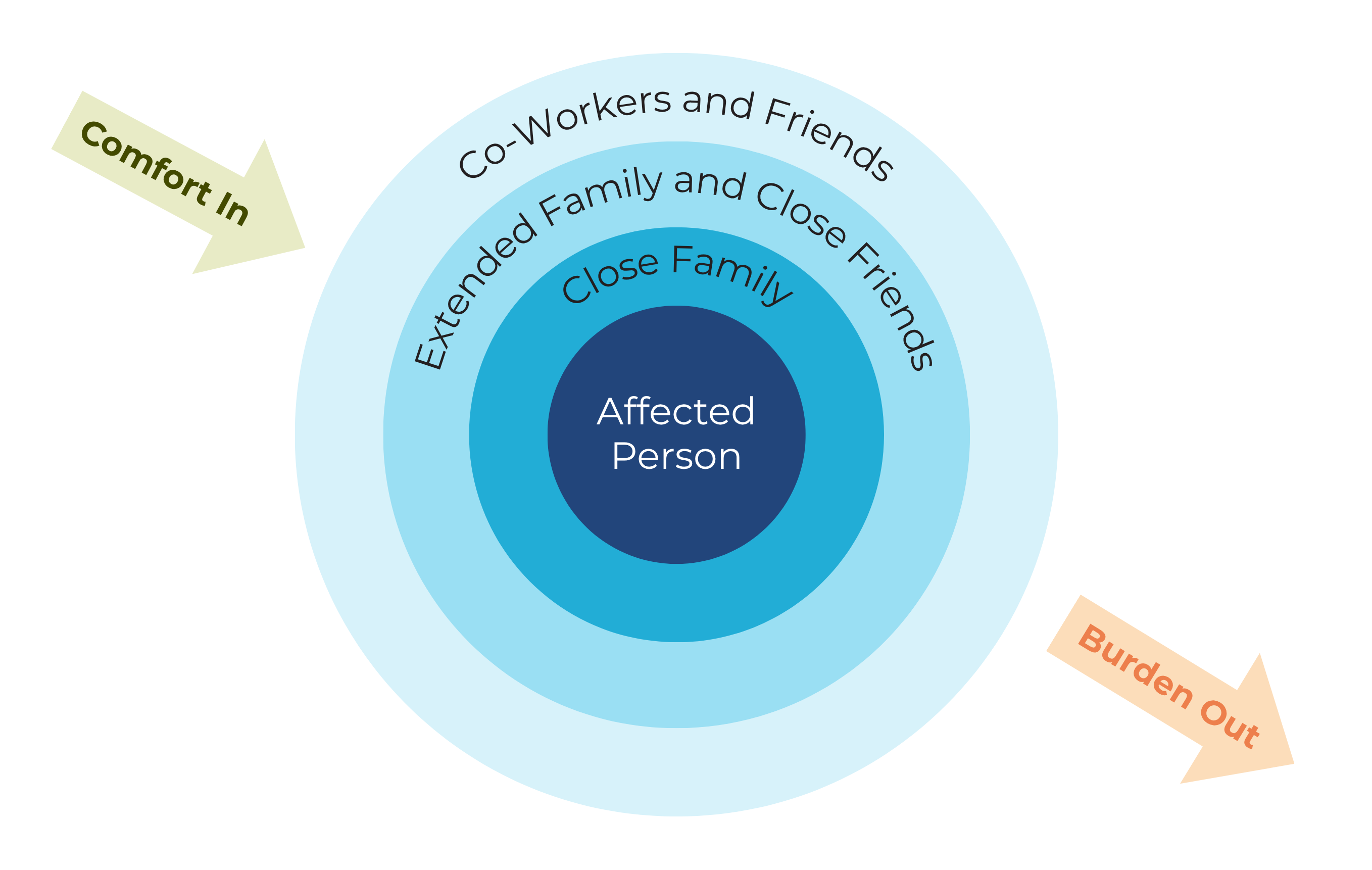
The Ring Theory of Support is a helpful framework for how to ask for and offer support. Imagine an inner ring and an outer ring in concentric circles. Those in the inner ring, mainly a parent or primary caregiver, can ask for assistance (or guidance) from those in the outer ring. Anyone in an outer ring (such as friends or extended family) may offer support, but may not burden those in the inner ring with their own needs and feelings without permission or consent.
Explaining the ring can help you let your loved ones know what you need and what you can handle. As everyone understands their roles, it will be clear that you and your co-parent, if there is one, know what is best for your child and family, and are making decisions in their (and your) best interest.
However you choose to share your journey, you will likely hear “Let me know if there’s anything you need” more than once. But overwhelmed by a new diagnosis, a change in baseline, or by the everyday stress of your child’s care, you may not know exactly what you need, or have the energy to reach out. In an ideal world your extended family and friends would just know what help to offer. However, the reality is that you may need to be specific and direct in stating what you need. You may want to consider adopting an online resource that allows you to specify your needs and others to volunteer and schedule assistance. Having a family member or close friend act as a communication hub can be helpful, and in most instances, this person will be so glad you asked.
You may find that your community circles change. People you thought would support you may not, or they may draw close initially and then drift away over time. They may not know what to do, be scared to say the wrong thing, feel helpless or overwhelmed by their own emotions, or not want to intrude. Whatever the reason, this can be very painful. At the same time, other people (some unexpected) may show up in the most helpful ways, strengthening your bond. Forming new friendships with other parents of children with serious medical conditions can also feel very validating and supportive.