 English
 العربية
 简体中文
简体中文
 Français
 Português
 Español

Siblings at End of Life
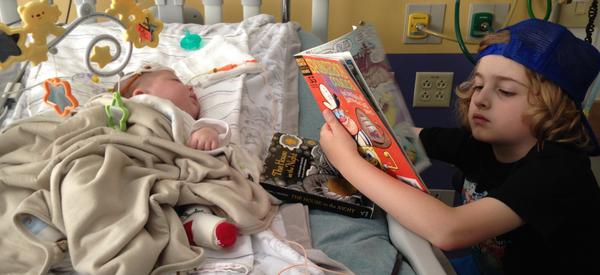
If you have other children, you may be concerned about how to prepare them for the death of their sibling. It may feel unthinkable to talk about death openly, but siblings likely will have some idea of what is ahead and will have their own questions and concerns. Speaking honestly and gently can offer comfort and help reassure them that the family unit will survive. In being open, you will create a foundation of support, space and trust to talk about difficult things, now and in the future.
Your Team:
A member of the clergy who is responsible for the religious needs of an organization and/or its constituents.
A pediatric health care professional who works with children and families to help them cope with illness, injury and other medical experiences.
A mental health professional who specializes in bereavement and loss.
A person who gives help and advice to students about educational and personal decisions.
A person trained to care for the sick, especially in a hospital.
A specialist whose aim is to improve the quality of life of their patients over the course of their illness regardless of stage, by relieving pain and other symptoms of that illness.
A medical professional who practices general medicine.
A mental health professional who uses therapy and other strategies to support coping and adjustment and treat concerns regarding social, emotional, or behavioral functioning.
A trained professional who works with people, groups and communities to help them better their lives.
An individual who leads and/or guides individuals or groups coping with life experience and challenges.
An educator.
A psychologist, social worker, chaplain and/or spiritual leader can provide a safe space for siblings to talk and share their emotions. A grief counselor can help process strong emotions. Palliative care clinicians and child-life specialists can offer age-appropriate ways of talking with siblings, and facilitate special moments and memory-making. Your child’s primary physician can offer a deeper understanding of the family. A school nurse, guidance counselor, or teacher can provide support.
Some siblings may want to be intimately involved. Others may be unable or not want to be so closely involved. As a parent, you may wonder what is appropriate. There are no right or wrong answers. If siblings express interest or desire, offering to have them participate can be helpful. Options may include making or giving something special to their sibling as they say goodbye, or being physically present at the death. Speaking to a member of the care team, a close relative, or someone who knows the siblings, can help you decide what is best for your family.
What Your Family May Experience
It can be hard to know how to bring siblings into the conversation about end of life. A good place to start is to ask them what they know about their brother or sister’s illness. This conversation can provide a jumping-off point to share any new information, explore their questions and worries, and clarify any misunderstanding. It can be helpful, too, to encourage siblings to think about how they want to participate in the end-of-life experience. Planning ahead empowers siblings to be thoughtful about what they may want and need, and it gives parents the opportunity to provide support and reassurance.
As much as possible, have these conversations in familiar surroundings, gently, and with love and tenderness. You may find yourself having to answer many difficult and painful questions, some of which you may not have answers for. Be honest and direct, using age-appropriate language. Words like death, or dying, help avoid confusion, as many other terms (e.g., passing on, departing) have multiple meanings. This is particularly true for young children, who tend to be concrete thinkers and take things quite literally.
How Grief Shows Up
Enlisting Helpers
Keeping the Dialogue Open
Children’s Understanding Depends on Developmental Stage
- Infants have no cognitive understanding of death, but they do grieve. They may experience death as separation, and often sense a caregiver’s emotional state, so it is important to maintain routines and avoid separation when possible.
- Preschool children (ages 2-5) see death as temporary and reversible, as in cartoons. Magical thinking (around age 5) is characteristic, and so preschoolers may believe that a death is the result of something they did or didn’t do, or that they somehow have the power to cause the death (or reverse it).
- Children ages 6-9 are concrete thinkers but still do not understand that death is permanent. They still may believe that it will never happen to them or anyone they know.
- Children ages 9-11 remain concrete thinkers. They have some capacity to put themselves in other people’s shoes and may have a sense that others can die.
- Around age 12, children begin to have abstract thinking and come to understand that death is final, irreversible, and will happen to everyone. Adolescence, however, has many phases and each phase may bring with it different responses.