Theme: Siblings at End of Life
Parents Jordan and Julia share how they didn’t hide their baby’s daughter end of life from their two-year old son, with guidance from the child life specialist, and how he now fully brings his sister up when talking about his family. “We didn’t make it scary or dark or unspoken.”
Theme: Siblings at End of Life
Parents of three children, one of which was diagnosed with a very rare genetic condition at birth talk about telling their other two kids. They were honest with them about his diagnosis and what it meant for his life, finding that they were able to come together as a family and love Viggo with their whole hearts even if it meant they would break.
Theme: Siblings at End of Life
When a child is living with serious illness, the entire family is affected, including and very importantly, the siblings. And while the child that is sick likely requires more time and attention, parents care deeply about being a good parent to ALL of their children. This includes knowing how to support the siblings’ anticipatory grief and feelings about their sick brother or sister, and then, when the time comes, talking to the siblings honestly and gently about end-of-life, death, and the time that follows.
But how on earth do we talk with our other children about the death of their brother or sister? Dr. Elena Lister, educator and author of the book GIVING HOPE: CONVERSATIONS WITH CHILDREN ABOUT ILLNESS, DEATH, AND LOSS shares her professional guidance for how to talk with the siblings of any age. Her wise and practical insights will help parents prepare for, initiate, and facilitate these profound conversations that the surviving siblings will carry with them in different ways for the rest of their lives.
Theme: Siblings at End of Life
Almost exactly 12 years ago we had our first child, Lucas. About 6 months ago we lost him to a rare disease, Menkes Syndrome. My wife and I now tend to think of our life in three distinct stages: before Lucas, with Lucas and after Lucas. But almost 10 years ago we had our second child, Alex. I try to imagine how different it is for him; he never had a life before or without Lucas until just recently.
I think my wife and I draw some comfort knowing you can have different chapters in your life. We knew a time before finding each other that we were happy. We knew our time as a couple before Lucas and we were happy then. It helps to know we’ve had and will have different people in our lives at different times and we still find happiness in each segment. That’s probably an advantage unavailable to Alex. His whole life has been one uninterrupted segment with Lucas. There has been no other life for him other than as the younger brother to a different sort of big brother. And I worried – would that mean Alex is less able to adapt to the loss of Lucas than we are?
Last month, as we honored what would have been Lucas’s 12th birthday, I asked Alex how things have been different for him, both during when Lucas was with us and since his passing. Here is some of what he had to say.
“I think about how some of my friends don’t get along with their brothers or sisters. They get in fights all the time. I never got in a fight with Lucas. He could never really do anything wrong, except maybe annoy you. But I basically never got annoyed with him.”
He recalled how some strangers and even some of his friends used to see Lucas and think he was a baby. He remembered, “I have to tell people “No he’s not a baby, he’s special needs.”
I pressed him…did he wish his brother had been different?
“I don’t know if it would be hard having a different brother. Because I haven’t had one. So, I don’t know if it would be easier or harder. He’s the only brother I’ve had.”
“Well, honestly even though it hasn’t even been a year for me not having Lukey as a brother, I’ve gotta say no. I never lived a life without Lukey. I never had to get used to it. I just have to get used to not living with him.”
It’s a relief when I hear Alex’s attitude that having a brother with greater demands on his parents was just how it was. To his mind it wasn’t egregious or damaging. For nine years I had operated with a persistent low-grade fear he was being neglected a bit or given a short shrift.
I sometimes feel Alex might try to avoid speaking ill of Lucas’ memory, so I pressed him for any things that were harder in his life because of Lucas.
“Like if we were watching TV and he wanted to be loud. He always wanted to be loud.”
“There weren’t really any rules for Lukey because he couldn’t really break any to begin with.”
“There was a lot less I could do with Lukey, like tag or playing with toys. He couldn’t really move well in his wheelchair and for toys he couldn’t really hold them even.”
I asked him what his favorite thing to do with Lucas was.
“My favorite things to do with Lucas was a game we called “Three Pigs in a Blanket”. Lukey, mom and I would be lying on the couch and pull a blanket up over our heads, it was cozy. Lukey would laugh every time. For me it was like being in a theater to put on a show.”
Alex is in typical health and we had just started to see him age into a new role. At ages 9 and 11 the sibling dynamic was shifting and as Alex grew more capable, we saw hints of him becoming a protective older brother character despite the numbers of years each had lived. As Alex says, “Basically every day I felt like: is he really 11 and I’m 9?” This spring Alex had just begun to do some of the Lukey care, like venting his g-tube. I asked Alex about this new responsibility
“He (Lucas) loved it. And I didn’t like it. It felt weird for some reason. I had never really taken care of him. I think anything I did he laughed. I don’t think I could do anything without him laughing. He just thought it was funny because I was not supposed to do things.”
And as it turned out this action by Alex was the happy punctuation mark on Lucas’ life. Last June when Lucas was finally able to come home after six days in the hospital and several surgeries, we were at last able to have a family night together. Because of Covid19 concerns, Alex and my wife had avoided any visits to the hospital and hadn’t seen Lucas for six days. These reunions could go either way for us. Often Lucas was just delighted to see those he’s been missing. But just as likely, this could be the moment Lucas suddenly realizes he should have been seeing those people before now. He would be like “Wait minute, where have you been for so long?” and then he’d cry or fuss.
But on this night Lucas was probably just too worn out from recovery to manage either reaction. We worried a bit not to get any smiles. And then we got one – Alex was venting Lukey’s g-tube. He smiled and we could see he wanted to laugh. It made a huge difference to us. It felt like he was back. His recent months-long decline had been so gradual we hadn’t even realized Lucas had gone weeks without a smile. His smiles not only light up rooms but really seem to lighten the hearts of anyone around him. We definitely needed a Lucas smile that night. We had no way to know then that was our last moment together as a family with him. But had we known; it was about as good as we could have wished for. The next morning, he awoke for just a few minutes before passing away.
I worried during the life-with-Lucas-time that perhaps Alex was getting less attention than he needed. I could feel a desire to say, “not now, can’t you see we’re busy dealing with Lukey stuff?” I don’t think I ever let myself vocalize that, but I think he picked up on it and was a very good sport about it. I asked him about this recently and he reluctantly admitted he felt that way “sometimes but not very much.” In his words “I never really felt left out really.” and his life with Lucas “It just kinda felt normal. I never really thought about it. It’s just what we did.”
But I’m sure for Alex, it felt like it was always Lucas’ time and rarely Alex’ time. We tried to work against this tendency. Sometimes we stumbled upon unexpected solutions. For example, after we resigned ourselves to never traveling by plane with Lucas, we realized if we were to ever travel farther than a manageable van ride it would mean splitting up the family. This led to some really precious trips for just Alex and his mom, or just Alex and me. He got undivided attention on an adventure with one of us. They are now among his favorite memories. His mom and I each in turn got to feel a week or a few days of “normal” parenting. For a little while on those trips life was easier. The practical demands of Lucas’ care were temporarily removed. The emotional demands were, for a moment, able to shift from foreground to background. For two of us.
Like most siblings to a special needs kiddo, Alex is sensitive and compassionate. And so, he was guarded and careful not to offend when he mentioned after Lucas’ death that “It’s mostly sad and bad, but there are some good things.” He went on to talk about how “We can do a lot more. We can all go on a vacation together.” (if only Covid would allow).
I don’t know if it’s unfair to my wife and me to think there is lost time with Alex which we now need to make up for; but fair or not, we are approaching this new chapter as one where Alex gets to be our first priority.
At the age of 12 months Daniel’s first child Lucas was diagnosed with the rare disease Menkes Syndrome. After adjusting his expectations of what raising a child might look like, Daniel began to tell Lucas’ story with a short documentary: “Menkes Disease: Finding Help & Hope” narrated by Oscar nominee Mary McDonnell. That film led to Daniel co-founding with Bo Bigelow DISORDER: The Rare Disease Film Festival and later The Disorder Channel, both dedicated to spreading awareness for patient families facing any of the more than 7,000 rare diseases.
Theme: Siblings at End of Life
When my third child, Talia, was diagnosed at 11-months-old with Tay Sachs, an always fatal neurological disease, my second thought, following my own feelings of shock, numbness and sadness, was thinking: How will my other children survive this?
I needed to find a way to prepare Nathan, 6, and Audrey, 4, to understand what death was, and prepare them for what was inevitable. They would be confronting what no child should have to know, and it was up to me, as their parent, to ready them for this challenge. I don’t believe there is a greater difficulty.
I knew that Talia, who would never mentally develop beyond that of four-month-old, would decline slowly until she died sometime before age five. The hardest part of parenting my children through this disease was the open timeline. I didn’t want to overwhelm them all at once, with what would happen – her death – and then have them be afraid to interact with their sister. I also didn’t want to make her decline the sole focus of our lives and have them come to resent her and the attention she sapped away from them.
After speaking to my palliative care doctor, and a friend who is a child psychologist, I felt prepared to begin the discussion with my kids. I have a history of speaking openly with my children. They understand where babies come from and they know they can ask me anything. I insisted on approaching this dark issue with the same openness.
We told our children that Talia had Tay Sachs Disease. We specifically said she had a disease, not that she was “sick”. We didn’t want them relating their own colds and sicknesses to a disease. We made absolutely sure that they knew the disease wasn’t contagious, and wasn’t their fault. Nathan, the older, had to be reassured more than once that he could not “catch” this disease.
“So I won’t ever get Tay Sachs?,” my son would late ask at regular intervals.
“You are safe,” we repeated.
“ Talia had a disability,” we said, “It is simply our job to love her exactly as she is.”
“I’ll give her lots of hugs,” my daughter responded.
I fought hard to remind myself that my children were very young, and when they asked questions, I tried to understand exactly what they were asking.
“Why can’t Talia hold her head up?“ Audrey would ask.
“Because she has Tay Sachs, remember?” I would reply.
I had to put my emotions on a shelf and not overwhelm them with my need to share my burden. I had to keep it simple for my kids, and instead, share my burden with my husband, parents and in-laws.
We were very clear about the disease Talia had and the limitations it placed on her body, but didn’t yet discuss the limitation it put on her life. The timeline was too open ended for them to understand. I remembered how they only “understood” my pregnancy with Talia in a real way when the baby actually arrived. Anticipating birth and death are similar for children in that they only really understand what they are seeing. With pregnancy it was my decreased stamina and growing belly. For Talia, I first wanted them to understand her decreased responsiveness and lack of development.
If Nathan or Audrey had asked about Talia’s outcome, I would have been honest with them because I would never lie to them, but I’ve found that kids ask questions when they are ready to hear the answers. Instead, my kids accepted Talia as she was, and didn’t question me much at all.
My husband and I thought of specific ways our children could have quality time with Talia while she was here. Initially it was difficult for me to encourage their sibling connection because I feared it would make the pain of their loss even greater, but helping children love each other is always the right idea. The physical memories of her siblings tickling Talia, bathing with her and helping feed her are all that now remain and when we talk about those memories, we keep apart of her alive.

Audrey came home from kindergarten one day and talked about a game where people died and then came back to life. I used it as an opportunity to directly address death, and help her understand that it isn’t something you wake up from. I didn’t overemphasize the point, just mentioned it and moved on. I then suggested that they play “go to sleep and wake up” instead.
I was also hyper vigilant about correct misconceptions about death. I heard another adult mention to my kids that death is like “going to sleep for a very, very long time.” I jumped right in and corrected her. Death CANNOT be connected to sleeping unless you want your children to fear sleep forever.
As it became clear that Talia was actively dying, I began discussing death more directly using the same plain language and openness that we had modeled throughout her sickness. “Talia’s body is going to die,” we told our kids. “The disease makes it so that her body isn’t able to work and when that happens eventually her heart will stop beating and she will die. Her soul, everything that makes her who she is, that lives on in us. Inside our hearts. Even though we won’t have her body here anymore, we will still carry her with us.”
It was only after Talia died that Nathan and Audrey seemed to understand that what we had lived through was out of the ordinary. We made sure they attended every part of the funeral and memorial to help them understand the unfathomable. I didn’t want there to be any mystery as to what was happening to Talia. I feared their imagination would conjure up something terrible, when, in fact, the actual burial was simple and beautiful.
As we approached the funeral, we didn’t want them to fear her body being underground. My husband told them a scientific truth. “All matter on this earth is made up of atoms and molecules that have been recombined in infinitely different ways since the Big Bang. Talia’s body is going to go into the earth to become part of the trees that give us air and water that makes rain and fills lakes. She’s going to be a part of everything”. He made it even more real for my son when he said, “When we skip stones across the lakes on our hikes, it will tickle the water and tickle Talia.” This was a tangible truth that our children could hold onto, and was connected to nature, and the cycle of nature of which death is an integral part.
I would like to say that since she has died, we no longer speak about death, but it’s simply not true. My son’s teacher’s husband died in the fall, and this was yet another opportunity to talk. In their lives, as in my own, there will always be illness and death, just as there is love and beauty. As a parent, I hope I am helping them confront hardship not with denial, but with a straightforward view and open communication. As a result of our conversations around Talia, my children are better equipped to understand this world in which beauty and tragedy too often coexist.
Theme: Siblings at End of Life
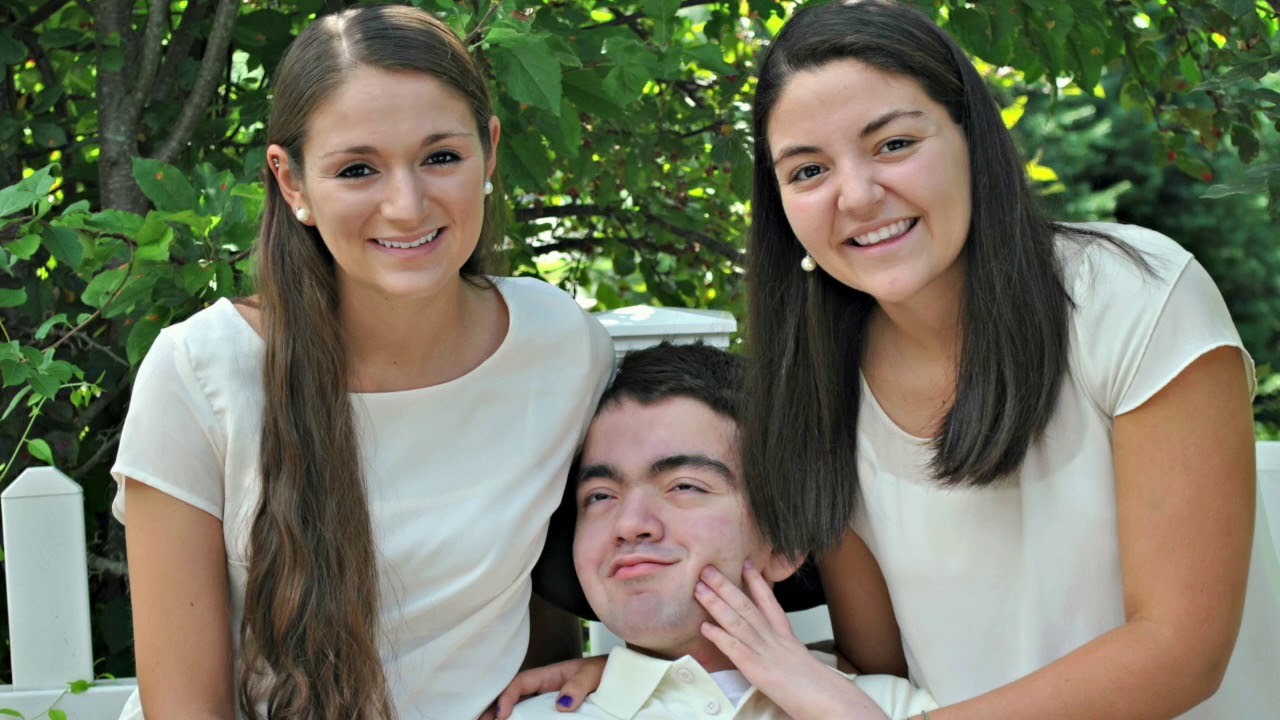
Sister Lexi shares a grand gesture of treating her brother to a very special sneaky treat at the end of his life, and getting one last smile. Creamsicles! “I did the right thing.”
Theme: Siblings at End of Life
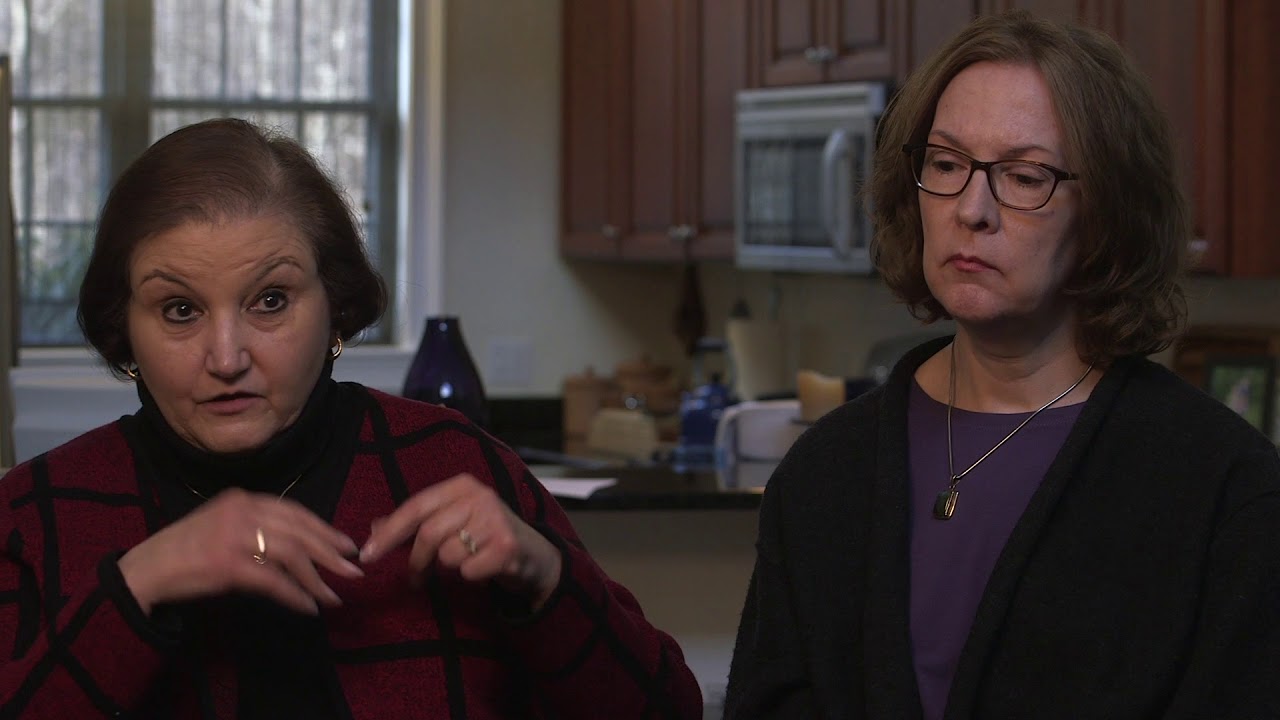
The mother of a boy with severe neurological impairment and his pediatric palliative care doctor talk about how his sister held hope and unspoken acceptance. She kept her focus on what he was going to continue to do. … but that didn’t mean she didn’t understand that he might not be able to make it. ”There was no need for us to keep reminding her.”
Theme: Siblings at End of Life
The mother of a boy with severe neurological impairment and his pediatric palliative care doctor talk about how his devoted sister got to a place where she understood that it was time and best for him to pass.