Skip to content
Courageous Parents Network Logo

Search

Search entire library or by microsite

Click here for NeuroJourney resources

Theme: Goals of Care

“I’m so glad I have a sister. Otherwise, it would just be me, you, Daddy and Suki (our dog).” Those were the words spoken to me recently by my four-year-old daughter, Nika as I rounded the corner from Sasha’s sit to stand recliner and headed towards the hall. I was stunned but tried not to show it. It had been a hard week in the household. I returned from a remarkable caregiver’s workshop in Washington DC to find that Sasha took a swift downturn during my ever so brief absence. We had already taken her to her primary care provider. It was a lengthy visit. As I sat there, the most surreal wave washed over me – a knowledge crest that everything was about to change.

My husband Mike came to the appointment to help get Sasha in and out of our vehicle. We had Nika in tow as the appointment fell on a non-school day.  Fortunately, there is a cute park on the clinic’s campus, and the weather cooperated for Nika to play for nearly 2 hours while Sasha and I investigated the next steps in her care plan. I appreciated the levity of Mike sending me time trials as Nika ran laps, “11.77, 12.08, 11.76, 13.31.” Random figures illuminated my phone with no explanation – a pleasant mystery that provided a helpful distraction. The day was a brighter gray than some during a particularly windy October.

Daylight savings was coming soon. I sat there silently bemoaning as I waited for Sasha’s PCP to enter the exam room. I’ve always resented the changing of clocks. In my college years, my first taste of adulthood, the time change always took me aback as it collided with an irresponsible modus operandi. Seemingly always in a public establishment, I’d look up only to realize I was an hour off on my given day. Years later, upon having my first child—a daughter with special needs—I would marvel, with frustration, at how deeply her days were affected by adding or taking away even one hour from her already tenuous schedule. Now, in middle age, I resent the changing of clocks for an entirely different reason: who are we to collectively manipulate time? What gives us the societal audacity to control clocks? Do we think we are God? Little did I know—especially in those college years—that time would become such a burden during most of my child-rearing years. I would either wish for it to speed up amid the angst of “When will this ever end?” or to slow down indefinitely so I could cherish the good years.

For nearly two decades, that balancing act came alongside a family unit of 2-3 individuals. While a single Mom to Sasha, there was never a reality of adding a sibling to her chaos. And when I met my second husband as Sasha was approaching age five, I was still a steadfast NO! My hands felt full with an extremely hyperactive child with significant special needs. Being in the throes of destructive sleepless nights, a nocturnal manic state that is common for children with Sanfilippo Syndrome, I knew that adding another child would be the rush of air that pushed down the line of dominos. As Sasha approached nine and we learned of her diagnosis of Sanfilippo Syndrome, we were faced with an unthinkable reality – Sasha’s body carried something fatal. With that realization came the heavy understanding that adding another child would mean they, too, might one day experience a traumatic loss. I doubled down on my steadfast “no” but was that ever the right way to view things?  In truth, we could all lose anyone in an instant. Who was I to play God…to try and control any outcome?

My phone continued flashing Nica’s times as I chatted with our PCP’s counterpart, a new nurse practitioner on Sasha’s medical team who was visibly committed to addressing the clinical concerns unfolding. We discussed the preceding week and the cascade of events –  Sasha’s sudden struggles with swallowing, her significant weight loss and increased tremors while eating. A swallow study was ordered. I left with numerous instructions, including recommendations for utilizing Sasha’s g-tube for nutrition within a specified framework.

The g-tube. A gut-wrenching decision that I fought so hard against that preceding year. Nine months of meeting with numerous specialties – Palliative, Genetics, Neurology, Complex Care. Messaging friends and acquaintances in the Sanfilippo community. Reaching out to fellow nurse friends to discuss the clinical implications. Listening to interviews of families before me who navigated the same decision. Middle-of-the-night brainstorming sessions filled with self-reflective thoughts. Looking back on the early days post diagnosis. I remembered sitting in Sasha’s cozy bed, holding her close, telling her I would never initiate any invasive procedure. We would let nature guide us and she could tell me when she was ready to be done with the fight. I told her to never hold on for me or anyone else. When she was tired, she could let us know and we would support her decision to let go. I would never play God.

That time now felt so out of reach, so long ago, like she and I were completely different people. I couldn’t believe the day I found myself sitting in a surgeon’s clinic, waiting for a g-tube consultation. He thought Sasha and I were there to schedule the surgery. In reality, I was there to ask the question, “who are we to think we can change course in an agreed upon pact?”

A highly rushed individual, as trauma surgeons will be, he bound through the exam room door and asked even before making eye contact or sitting down, “What questions do you have for me?” I stared as I waited for him to find his seat and scoot over via his three-wheeled black vinyl stool. A lanky fellow with wisps of black hair along a mostly bald scalp, his shoulders too broad for the wash-faded indigo scrubs, I quietly wondered if he was a long-distance runner. He looked at Sasha and saw my reservations. Knowing we were both rushing to get out of there, I spoke rapidly to squeeze it all in. Eventually, he softened and shared a personal story of his own father temporarily needing a g-tube. He could not impress upon me enough, he stated, the importance of nutrition and hydration in all phases of the lifespan. In that moment, he became more than a surgeon. He became human.

I told him I’d think it over and he shared the process for scheduling. It would not be an immediate phone call, I told him. He encouraged me to call and make an appointment, pointing out that as the day approached, I could always cancel if I was still feeling unsure. He left. I felt a bolstering confidence, ever so briefly. I was not reneging on an agreement made to Sasha so many years ago. And I certainly was not playing God. Was I?

“12.65” Nika’s time trials at the clinic’s park were ending alongside our appointment. Mercifully, Nika did not ask what transpired, an unusual occurrence for her inquisitive nature and foreman mindset overseeing all of Sasha’s care needs. She was consumed in exhilaration by her newfound mastery of time. She had learned through her dad’s coaching that she was slowing down ever so slightly each time she approached the finish line. He had explained that if she made a final push as the imaginary line approached, her time would improve.

There will be times in virtually all our lives, where we will be asked to make a decision standing at the crossroads of faith and uncertainty – at the intersection of medicine and personal philosophy. We may be called to decide for ourselves or for a loved one in a way that directly impacts a clinical outcome.

I have been fortunate to have a care team that welcomes these discussions, even discourse when necessary and who recognizes that philosophy is sometimes malleable and that certainty is never a guarantee. In a world that feels unquantifiable, when making decisions that feel impossible, I came to realize that an 80/20 ratio may be the best that I can do. If 80% confidence in a decision can be obtained, then that is where I will hang my hat. Those decisions may evolve with the revelation of new information or the presentation that is in front of you – our minds can change, and that is alright.

I didn’t know what to say in response that day when Nika proclaimed how happy she was to have a sister. I fought back tears and simply offered, “I’m so glad you have a sister too.”


Joanne Huff comes to Courageous Parents Network as a long time follower and parent enthusiast of the organization. As the Mother of two girls, the oldest of whom has the rare disease MPS IIIA/Sanfilippo Syndrome, Joanne has benefited tremendously from the intimate parent interviews and candid, vulnerable story sharing throughout numerous thought provoking blog posts.  As her daughter’s activities and lifestyle started to slow down with disease progression, CPN became a larger anchor in times of uncertainty and unrest. It is through this lens that Joanne hopes to share experiences and insights via the CPN blog.

Joanne completed nursing school after her daughter’s diagnosis, receiving her Bachelors of Science in Nursing from Plymouth State University, Plymouth NH.  She enjoyed community liaison work with home care providers of adults with special needs up until her own daughter’s care became increasingly more involved. In addition to serving on the Boards of New England Regional Genetics Group (NERGG) and Adaptive Sports Partners through 2024, she has found great purpose in volunteer work advocating for policy improvements and change in Washington DC with the National MPS Society.  In her free time, Joanne seeks balance and refuge with yoga, hiking and performing as an ensemble Soprano vocalist with the Pemigewasset Choral Society. When not blogging for CPN, Joanne enjoys sharing offerings on her personal Blog Folding Origami for God.  She resides in Bow New Hampshire with her two daughters, Sasha and Nika, her husband Mike and her yellow lab Suki.

Theme: Goals of Care

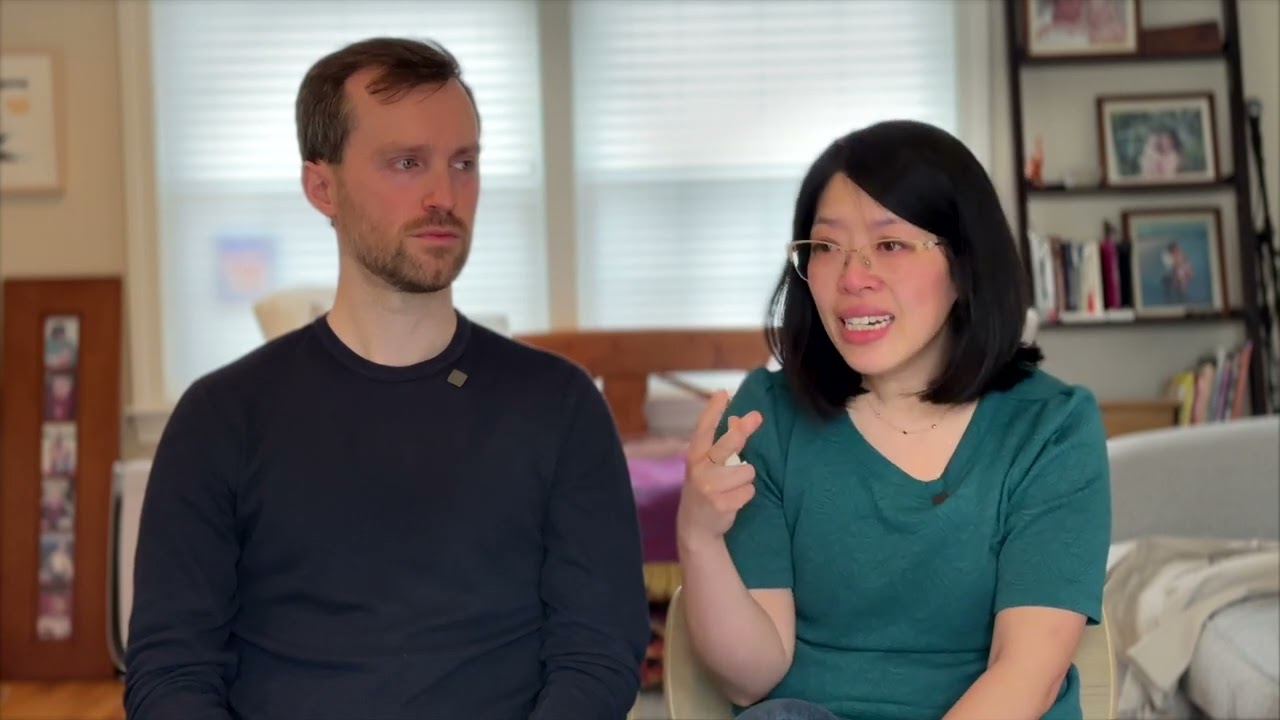
Parents Jordan and Julia describe how the vague and non-specific prognostication and conversation their medical team had with them was not helpful; they wanted an honest answer and clear options. “It was only when I made it very clear [what quality of life meant to me], that was when they were able to have the conversation with me. They could see how compromised she was. Why would they offer all of this care?… To do what?”

Theme: Goals of Care

My son was born 14 weeks premature. The odds were not in his favor, yet he’s proven that he’s an underdog to bet on. During his five-month stay between two neonatal intensive care units (NICU), I had many necessary yet hard and uncomfortable conversations with his care teams. I thought those would stop once we got home. I thought we were on our merry way to live our best life; but we were met with a barrage of soul-stealing and dream-crushing encounters. Each visit was an onslaught of apathetic and defeatist expectations. I understood the gravity of injuries sustained before, during and after his birth. I understood that I couldn’t change what had happened, but I could control how I interacted and loved him for however long he lived.

The purpose of this piece is two-fold.  For providers, it is to offer context of the impact of your words and offer suggestions on how to maintain the integrity and severity of the present reality while using loving and compassionate language. For parents, it is to let those who find themselves in a similar situation know that you aren’t alone. Here are ways to embrace hard-to-process decisions, acknowledge your grief, and how to find joy through the journey.

Fair Warning: This piece will include terms that I heard during my journey as both a parent and a professional in the field. I have intentionally kept these words in this piece. I did this so we can: (1) get comfortable with the uncomfortable; (2) confront and begin to address personal biases; and (3) see or move beyond the negative and get to the business of making the most of the life and time that we have.

Love Unconditionally

I was a first-time mom, with a micro preemie who would have a long, challenging life ahead of him. Many follow-up appointments were met with “he’s so sick” or “he is failure to thrive” or “he’s neurologically devastated, he’ll never walk so we won’t fix his hips” or “he’s going to be mentally retarded and not able to do anything.”

While I appreciate candid conversations, a minor shift could have helped heal my hurts and lessen my grief just a little. A simple “he’s yours and you love him no matter what” would have gone a long way. Even more helpful would be to hear, “His life is valuable and has meaning. It doesn’t matter how long or short of a time he is on this earth. It doesn’t matter how neurologically typical or neurologically devastated he is, his life matters. Love him not because of what he can do or who he’ll become, yet love him because he is your child.” or simply “Disability isn’t the end of the world. Disability doesn’t mean less than.”

I wish his providers had said those things. It doesn’t negate the prognosis; it humanizes my experience as a mother.

Live Fiercely

Disability can help you learn how to live life to the fullest. My son and I have done more things with and because of his disabilities than those without a disability.

Once a friend wanted to do something BIG with Noah – a four-day, 158-mile self-supported bike ride in Colorado – and I agreed! We had no idea what we were doing or how we were going to get it done, but we were committed to figuring it out. We had to ensure we all hydrated sufficiently a week before traveling. We had to navigate the airports and planes with all of our stuff. We had to watch for altitude sickness (I got it the worst and had to be taken down a few thousand feet so I could breathe). This is just a snippet of logistics. What came from the trip was life altering. We all grew personally. We met and worked with people who had never been around a person with disabilities. Noah drove for the first time. His participation enabled the Colorado Track-Chair Program to receive a grant to help others with limited mobility access the park in a safe and comfortable manner.  It was life-changing for all of us. You can read about it from our friend, Helen’s recap and watch the short video.

When we were sent home from the NICU and met with a barrage of specialists for lifelong appointments, I wish his providers would have said, “Create and live your (his) best life. Live to the best of your ability and don’t let disability be your limiting factor. Yes, there will be limitations, yet there are so many opportunities available if you learn how to adapt.” I also wish they would have encouraged me and shared the importance of making memories. I wish they had said, “Make memories. Every day you have breath is a gift and an opportunity to do, be, see, say more than the day before. Take advantage of the gift of time as you don’t know when it will run out.”

Noah and I have had many misadventures and we loved each one (not always in that moment). We learn and grow with every activity we attempt.

Dare to Dream

I had many dreams of what life would be like raising my child. I daydreamed what sports he would play and how I would teach him how to ride a bike. I planned out playdates with my friends and their children. I explored cloth diapers, making all his food, and even began looking into homeschooling curriculum. I was excited to take him on hikes and experience exploring nature together.

Many of those dreams were dashed when I was told he’ll never walk, talk, crawl or run. He’ll lose the ability to eat by mouth. That I could expect that he’ll be vegetative. As hard as that was to hear and more importantly to accept, I was committed to giving my son the best life and experiences that I could.

That meant we would try things and just see what happened.

Noah did crawl (not long or far, but he did it). He did walk (never unassisted but became skilled and confident as he walked the hall at therapy).  He’s ridden a bike (he hasn’t had one of his own yet due to cost). He’s driven a power wheelchair and track chair (in the mountains of Colorado). He beats me in bowling and has completed more endurance races than I can remember (triathlons, half and full marathons with the assistance of friends lending their legs). Noah has gone rock climbing, kayaking, horseback riding, zip lining and many other fun yet unexpected adventures.

Is it perfect? Yes, perfectly imperfect!  There is no such thing as perfect. Perfection is unattainable and pleasure-stealing for those that pursue it.

I wish his providers had said to me, “If you can dream or think it, dare to believe it, You can create it to happen. It may not look like everyone else and that’s okay.”  Really, that’s the beauty of it because we’re all unique.

Remember, if your child never tries, you know what the outcome will be, so what’s the harm in trying?

Advocate Unapologetically

You know your child best. You know their likes and dislikes. You know when they are happy, sad, content, or mad. You know when they are sick, well, and pretending to be one or the other. You know their quirks, nuances, and idiosyncrasies. You know your child, and what makes them unique. By knowing your child, you are their voice, until they can use their own. If you don’t speak up, who will? Providers do their best with the information that is presented, combined with their education and experiences. They are an expert in their field, and you are an expert of your child and family unit. Speak up so (and until) you and your child’s voice is heard.

Once it had been nearly 20 hours since Noah had been awake, alert, and active. This was not his norm. I took him to the emergency department, and he was admitted to the hospital. His health and demeanor continued to decline, yet it was overlooked because providers assumed this behavior was his baseline (due to his chart, diagnoses, and severity of medical complexity). I tried very hard to share and explain what baseline looked like for Noah and that there was something very wrong with him, despite me not knowing what was wrong. Thankfully a physician who was an active member of his specialist team, had cared for Noah for several years and knew what his baseline looked like, was assigned the case. With his help, we were able to identify one of the problems and begin to address it. What began as c.Diff morphed into toxic megacolon and septic shock in a span of 48 hours. It was a tumultuous hospitalization and experience. It was slow, yet Noah began to recover. His baseline attitude, demeanor, and infectious smile began to show up again. I captured him on video and began to show the team that initially cared for him at the beginning of this hospitalization. They were in total awe and disbelief that they were looking at the same kid.

I wish his providers had said to me, “Be assertive while remaining respectful. You are a vital member of the care team. You bring the story together and bring the whole picture into focus.”

Hope for the best yet prepare for the worst

As your child gets older, things may get harder if their condition doesn’t get better.  Fortunately, or unfortunately, medical equipment has slowly been making its way back into our home. I’m thankful to have it and saddened that my son needs it. It’s a constant reminder to live a good life so we can have a good death. Remember to acknowledge and celebrate the inchstones that make up the milestones even if unrelated to a diagnosis.

As he was born 14 weeks early, I knew the odds of survival were not in my son’s favor. There were conversations and a little bit of (death) preparation during his first month of life. For kids born prematurely, you might be having these generic conversations regarding risk and outcomes when various surgeries are scheduled. I wish my care team and I would have had the hard conversations about what a good death means to us and what that looks like. I wish his providers would have said, “Let’s talk about allowing natural death (AND) instead of only a do not resuscitate order (DNR).”

This type of conversation allows for parents to make hard, yet loving decisions.

Be prepared for the normal even when everything is so different

Doctors repeatedly told me what my son wouldn’t do. He won’t crawl, walk, or talk. He’ll lose the ability to eat and swallow safely. He will be mentally retarded and be unable to learn. With this type of message reiterated for years, why on earth would I believe that we’d ever reach puberty, let alone transition through it? Specialists who cared for my son ask, “How is Noah?” and we have general conversation. I give brief updates on his most recent or upcoming adventure. But before letting them go I’ll say “You told me everything not to expect, you didn’t tell me about tents in pants. I’m having a hard time with this.” I usually get a blank stare and then the light bulb goes off, releasing a grin or a burst of laughter. I wish his providers would have said, “Even as so much of Noah’s life is different, he is still a boy, and he might experience some of the things other boys do.”  I wish that when I brought up these typical things, the clinicians were courageous enough to provide guidance.

This would have prepared me for some typical experiences any other parent faces.

Listen carefully because sometimes the advice is there

I received two pieces of advice that have been my lifeline. Early on in our NICU journey, a nurse said, “Grieve your expectations. Grieve what you thought would be so you can enjoy what you have.” Although I didn’t fully grasp what she meant at the time, life events have described and defined the meaning. Those words have served me well over the years. I’ve learned how to acknowledge the feelings that come with the losses, while giving gratitude for the inchstones that make up the milestones.

“Find joy through the journey” was the other piece of advice given to me by the neonatologist that delivered my son. The first few months of my son’s life were riddled with life-altering events and conversations. Knowing the road would be a long, arduous, and emotionally charged one, this doctor gave me a gift. He planted the seed that happiness is a choice and something that I had control over. The trajectory of my son’s life was likely to be hard, frustrating, and sad, but I had the opportunity and choice to decide what I focused on. I opted to look at our time together as taking the scenic route to our destination. We would and continue to embrace the bends in the road (setbacks) and we wait with anticipation and expectation for the things that we’ll see and experience that wouldn’t be found had the direct route been taken.

Please hear me when I say disability isn’t the end of the world. Yes, it’s different. Yes, it can be lonely. Yes, it’s challenging, but so is life.  The attitude and outlook you have greatly influences the journey and outcome. Prognosis isn’t synonymous with quality of life.

I wish providers would have told me that.

Hear more from Naomi by viewing her video interview.

Theme: Goals of Care

I’ll start with the sad news so that it’s not lingering out there. My 13-year-old daughter, Halle passed away in November 2023 after living with a complex, rare disease her entire life. She was, as many of our kids are, the bravest person I ever will know. Halle was supported by palliative care for the last four years, and it was game-changing for our family. In the summer of 2019, she had to be airlifted from our beach vacation to a children’s hospital about two hours away because of a truly terrible seizure that almost ended her life. The pediatric specialist in the PICU told us about palliative care and suggested a statewide program in South Carolina. From that point on, Halle’s comfort became our number one priority, and that helped us structure all of her care in the final four years.

I write this blog, though, to share that even though we had quarterly palliative care check-ins and talked for hours about the what-ifs of end-of-life care, those decisions were still impossibly hard in her final hours. I thought I was prepared – and ultimately I was – but knowing that we would not put her on a ventilator did not make it any easier to not put her on a ventilator when Halle was struggling to breathe. Knowing that there would be a day when we’d have to make really harrowing decisions did not make making those decisions any easier.

But, what we did have was the knowledge we needed. We had practice conversations. Our nurse practitioners had walked us through different scenarios. I will forever be grateful for that knowledge because without it, the final hours would have been chaotic.

Halle was doing fine on Saturday, November 4, having just celebrated a fun family Halloween the week before. However, just 2 days later, she started coughing and struggling to breathe. We ended up going to the hospital by ambulance after a long night of nebulizing and at-home oxygen. She had quickly developed full-blown pneumonia. I stayed with her in the hospital that night and felt that even though she was on high levels of oxygen, with the right antibiotics and treatment, she’d recover as she always had before. This was probably our tenth or eleventh hospitalization for pneumonia and they had all ended the same before – a few weeks of wheezing, coughing, nebulizing, and suctioning, but slow and steady improvement.

We quickly realized the next morning that this time was going to be different. We have asked ourselves hundreds of times since then… why was this time different? Was she ready? Was this illness worse? Had she just been through so much with her precious lungs and they couldn’t fight anymore? Was it a combination? We will always wonder, and yet we will never know why this time was not the same as the others.

The PICU doctor that morning gave us the gift of tough love. I cannot imagine how he does that regularly. Until the last hour, I genuinely felt that Halle had a fighting chance, but he came in and said that this was it. At that moment, I was even considering a ventilator thinking “if we could just get her over the hump one more time.” The doctor once again reviewed the ventilator process. He explained that when it came to medical ethics, not putting someone on a ventilator and taking someone off a ventilator are considered equivalent decisions, but that deciding to take someone off a ventilator is often a more difficult decision for parents and caregivers. In the final 20 minutes we knew. We made the fateful decision to not put her on a ventilator and to accept that we had tried everything else.

In her final moments, all her tubes were removed, and her passing came quickly, and, mercifully, it came peacefully. Without the preparation of palliative care, we would not have been able to make the decisions we made. And yet, it was still as devastating as any moment in life can be. Ultimately, I learned, we can be prepared – but not be ready.


Cathy and her husband Erik live in Greenville, SC with sons Anders and Evan. Their daughter Halle lived 13 wonderful years. She was born with a rare CACNA1C disorder and experienced many challenges during her life. She faced them all with great courage. She enjoyed time with her family watching the Atlanta Braves and snuggling as much as possible.

Theme: Goals of Care

Theme: Goals of Care

perinatal palliative care and neonatologist, Dr. Natasha Henner shares what she has observed in years of practice. Parents can hold uncertainty better than clinicians can. Clinicians need training to do that. People want to work towards a goal … And what if the goal is just to have the baby live, even if only for a short while in the NICU. It’s uncertainty in the goals as well as in the outcomes. And this requires training – looking at a specific case.

Theme: Goals of Care

Theme: Goals of Care

During my son Lucas’s life, I often struggled with how many therapy sessions to schedule. There was so much we could do for Lucas. Physical, occupational, feeding, and speech therapies were just the start. Yet nothing we did would fundamentally alter the course of his disease. What should we do?  

I know I’m not alone in this struggle. Most Courageous Parents Network families probably take their children to therapies. We do this with love, dedication, and hope. Whether our child has a neurological disorder or another illness, we want to improve the quality and length of their lives. Still, therapy requires a lot of effort and determining what is “helpful” is not easy. 

As I talked about in my recent blog, our hopes influence our approach. Jane Witmer, my son’s occupational therapist, helped me develop an approach to therapy that acknowledged our uncertainties about what was helpful. We focused on activities that helped Lucas find joy in daily life. 

Because Jane was able to help us adjust our approach without ever diminishing Lucas’ potential or strength, I asked if she would reflect with me on how therapists can support children like Lucas and their families. I hope other families and providers find her reflections helpful as they support the children in their lives. 

A conversation between Occupational Therapist Jane Witmer and Parent Kim Gilsdorf

Kim: Hi Jane – thank you so much for having this conversation with me. Can you start by telling Courageous Parents Network families why you work as a pediatric occupational therapist?  

Jane: The families! Being an Early Support Specialist (birth to age 3 years) allows me to work just as closely with the caregivers as with the children. I love being able to partner with caregivers and helping them find what is meaningful for them and their family. 

Kim: How would you describe the purpose of occupational therapy for a seriously ill child, particularly if they have a neurological disorder like Lucas, and will progressively lose skills? 

Jane: The purpose of working as an OT with any child and their family is to meet them where they are and walk alongside them in their journey. The same applies to PT, speech, feeding, and other early support therapies. We bring our expertise in developmental skills like posture, movement, feeding, social interaction, and play. The families bring their love, knowledge, and priorities. Especially with rare conditions, the family typically knows more than the therapist about the condition. We work together to help the child find meaning and joy in their life. The ways that a child with a serious illness finds meaning and joy may look different, but the goals are the same.

Kim: Parents have a wide spectrum of approaches to therapy. Some may not want to engage at all. Others, like me in the early days with Lucas, engage with a level of desperation and hope that may not match the reality of what therapy can deliver. What kinds of conversations should therapists and parents have to build an alliance and develop shared goals?

Jane: Such a great question! The therapist bears a big responsibility in building open communication with the parent and truly listening. We may enter a session with ideas we think will be best, and what turns out to be best for the caregiver or child that day may look very different. By remaining open and really listening or asking what a parent is hoping to get from the session, a therapist can shift the focus to try to meet the need that day. A parent whose child was undergoing unbearable chemotherapy once told me the best thing I ever did was to genuinely smile at their child every time I came. I will never forget that. Any other agenda became less important once I got that feedback. 

You, ever the proactive and totally involved parent, surprised me once by letting me know that sometimes, you needed to watch Lucas play and have fun with me. You needed a tiny (and well-deserved) break. I really respected your honesty and was so happy I could help in that small way. Besides, I knew you were watching and learning even though you were “taking a break”. It really helps therapists when parents openly share what their priorities and hopes are. It also helps when parents tell me honestly when I am off track. I so appreciate the parent who says, “That’s a great idea, but I’m not going to do that!” or something similar. I can work with that! 

Kim: Sometimes, our medical systems begin to remove therapy time once a child’s baseline begins to decline. What advice would you give families facing this challenge? 

Jane: How awful. First, Early Support (sometimes called Early Intervention or Birth to Three services) will continue whether or not insurance will pay. Also, there are some therapy programs like one funded by The Elks in Washington State, that are no cost to families. A hospital social worker should know of programs like these and be able to connect families to them. I would also counsel a family to look to their palliative care team for help with finding therapy support. Additionally, patient advocacy groups often have wonderful resource ideas. 

Finally, one does not need to be a therapist to love and play with a child. Seek support from your circle of friends and family to provide plenty of love and play. Children find ways to do their own therapy if allowed to be playful and given access to things they enjoy.

Kim: I know you were deeply affected when Lucas died, which is a testament to your care for him. How do you care for your own mental health when a child you support dies? 

Jane: I am so lucky that I work with a wonderful group of people who support each other. I am also lucky that my work provides monthly reflective practice groups where we can process the emotions that occur when doing this work. With Lucas, I was extra lucky because you invited me to share in events to remember and honor him and that helped me so much. 

Kim: Can you end by sharing a favorite memory of working with Lucas? 

Jane: There are so many! His triumph early on when he figured out he could pull to stand against the fence and push the blocks through the holes. And that we would fetch the blocks for him! I will never forget his enthusiasm for telling us just how to carry out the play activity and the satisfied look he got when we finally got it right. 

And the smile that came from his entire being! Mouth, eyes, cheeks, and even chest slightly moving outward when he looked through the window and saw me arriving. Most of all, I loved when he saw me and said “Hug!” It was never a question; it was a command and an expectation.

Jane Witmer is a lead therapist at Wonderland Child and Family Services in Seattle, Washington.

________________________________________________________________________________________________________________

Kim Gilsdorf writes and lives with her family in Seattle, the traditional land of the Duwamish people. She works for Perigee Fund, an organization dedicated to supporting early childhood mental health. Her favorite title is “Mama” to her two children, Lucas and Sophia. Lucas lived with and died from a rare disease, Leigh Syndrome, and his life has forever changed the meaning and purpose of hers. You can find Kim’s writing on Instagram at @kgilsdorf.

Theme: Goals of Care

Theme: Goals of Care

The mom of a little boy with Krabbe explains her decision-making process in deciding not to treat/intubate her son, when in a previous instance she had decided to treat/intubate. As his condition deteriorated, the questions she asked changed. (An excellent example of parental thinking around decision-making.)

Theme: Goals of Care

Theme: Goals of Care

The mother of a boy with complex chronic conditions reflects on how difficult it was for her to recognize that the physical therapies she had been pursuing for her son were now hurting him more than helping him. And her goals had to change from maximizing his strengths to keeping him comfortable. “I had to really look at myself and see why I was doing it and understanding that’s when I began to realize and understand all the feelings that I was having just as far as, again, that grieving aspect of being a mom.”