Theme: Extended Family and Friends
It had been many years, 23 to be exact, since the last time I navigated life with a toddler. While friends of mine have started celebrating their entrance into grandparenthood, I had a remarkable occurrence of a surprise pregnancy instead. At age 45, while already the mother to a 22-year-old daughter with medical complexity and developmental needs, I was told the shocking news that I would be the parent to a daughter once again. Advanced maternal age hurdles were cleared, some more tenuous than others, but lo and behold, in the winter of 2021, a newborn arrived. Those first two years with our daughter Nika were filled with daily pinch me moments. We marveled at the mere existence of this new person developing before us. Highchairs, car seats, onesies and child rearing technological offerings, unheard of in the late 1990s, all took hold within our home. Milestones were easily met. We were on absolute cloud nine.
Then, toddlerhood entered. The temper tantrums, safety concerns and juggling of a very mobile little one coupled with the noticeable decline of her older sister became a heavier weight to carry. In this newest journey with toddlerhood, I started to wonder if my age (now 50) or perhaps the cumulative effects of decades of diaper changes, now for two individuals instead of just one, had created mental exhaustion.
I started to rescind from social interactions due to overwhelm. Most notable was my inability to clearly answer the question; how can I help? when offered by supportive friends. I understood their generosity and genuine desire to be of assistance, but I could not identify my own needs. My internal dialogue went something like this – Do I need someone to tend to the house or tend to my older daughter with special needs? Would it help my mental state if I found purpose by going back to work? Should my toddler attend preschool full-time while I remain home to catch my breath? Maybe I could simply “do better” at streamlining life and its collective tasks. In this past year, the most common thought I find myself thinking in response to outside offers of help is, “stop making my life harder”.
Small minor things like my husband asking if I know where his shoes are, my toddler insisting on Mommy doing something over anyone else, administrative bottle necks when trying to get a mere prescription refilled, are all examples of times when mental overwhelm takes hold. This wasn’t always the case. It’s only during this past year I’ve noticed this shift within my normal state of homeostasis.
This phenomenon self-propelled; it is now the case that when well-meaning friends suggest the planning of a girls’ outing, when I place unrealistic expectations on myself to see extended family members, or even just grabbing a quick dinner out with my husband ALL compound daily stressors. Each time one of these opportunities arises, I feel the quiet constraint of a belt being cinched, hoping to reach that next hole – wanting to please others, wanting to find balance, wanting to lead a normal adult life. Meanwhile, I feel a house of cards crashing down from all the tasks waiting in the wings.
Recently, I decided to investigate what research exists on the tolls taxed upon caregivers of adult children with special
needs. I postulate that these consecutive 27 years, totaling more than half of my own lifespan, are the root cause of my mental decline. It’s not so much that the individual tasks of caring for Sasha, who suffers from the neurologically degenerative Sanfilippo Syndrome, are my undoing, but rather the collective and ongoing nature of those tasks.
Indeed, a useful study conducted by the Polibienestar Research Institute, Universitat de Valencia and Biomedical Data Science Lab – ITACA Institute, Universitat Politecnica de Valencia, found that “the aging of family caregivers has been correlated with decreasing caregiving efficiency”. Perhaps my initial read was accurate. While my commitment to caregiving itself has never waned, my engagement with all things peripheral from it certainly has.
A little more digging had me also reading a National Institute of Health study illuminating Carol Ryff’s 6 domains for consideration towards psychological wellbeing: (1) Self-Acceptance, (2) Positive Relations with Others, (3) Autonomy, (4) Environmental Mastery, (5) Purpose in Life, and (6) Personal Growth. Immediately, many of these categories lit up my brain like a PET scan and caused me to reflect on the evolution of my life.
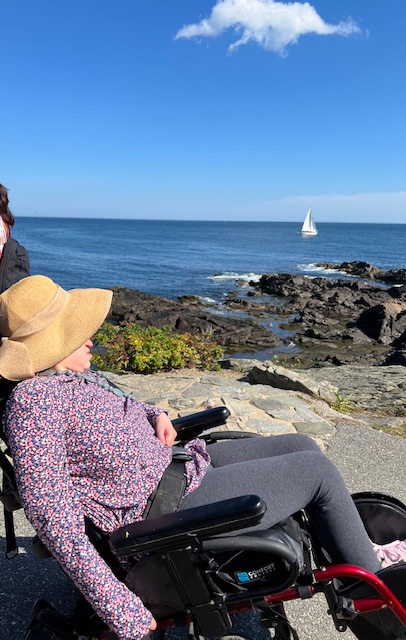
Sasha, who for so many years ran wild, laughed with mischief, fed herself and loved riding in the car, windows open, music blaring, is now so deeply changed. Today, Sasha is wheelchair bound, trembling while eating, crying out in the night longing for assistance to be repositioned. She needs diapering at the most inconvenient times, which is every instance that we’re headed out our front door on time, or in a public setting with a precarious wheelchair bathroom. As her eating and drinking rates have significantly slowed and require more of my time, the list of administrative and household to-do’s sits idly waiting. Her care has taxed my autonomy, my environmental mastery, my self-acceptance and my purpose in life. She has changed my trajectory. This reality is undeniable.
Sasha’s changes serve as a reminder that what was once helpful to me – like offers from others to help – may no longer be as useful. I live in a suspended state knowing that what would be most useful to me now is something that will never return: a mobile Sasha – a robust, strong, speed eating, agile Sasha. Setting that aside, even when I can identify resources to bolster control over my new environmental landscape – those which might provide greater autonomy or tap into my purpose and aid with self-acceptance – I find myself unable to act. My continual state of overwhelm has made it difficult to determine a beneficial resource.
At one point in time finding someone to help with housework or securing a care provider with a flexible schedule were the most meaningful forms of assistance. Blogging and journaling aided in reflection and self-acceptance and rippled into enhanced positive relations with others. Working outside the home provided purpose in life and personal growth. But in this current iteration of life, those tasks simply mean more oversight, which means more areas for me to manage.
In recent years, I have also identified that a quiet house provides the biggest boost in bandwidth. When Sasha’s school years came to an end, so did a quiet home. While we are very fortunate to have nursing staff come into the home to care for Sasha, Sasha and her sister (along with an additional individual) are now almost always home and a quiet house nowhere to be seen. This suggests to me that a certain bandwidth must be present to even pursue supportive tools or resources.
How can I help? is a well-meaning inquiry. But this inquiry can often stunt a response from the caregiver who is so often in that state of overwhelm. It asks us to think of a solution when we are already drowning. Thinking about Carol Ryftt’s 6 domains, it occurred to me that those offering support should consider them as well. For example, when asking a friend who is caring for an individual with special needs to go on a girl’s weekend, it might be helpful to first ask yourself – does that friend HAVE the mastery over their environment, or the autonomy to make such a plan? Or upon deeper reflection, you might see that the caregiver is consumed with domains 5 and 6 and understand that simply going out to dinner may feel like a pulling away from precious time needed to pursue their own self-care or purpose creating activities.
Caregivers often struggle with how their lives feel dictated by their circumstances. In my case, travel, working outside of the home and the pursuit of additional higher education, all intrinsically meaningful to me, also have all been put on an indefinite hold. I greatly miss engaging in a community aligned with my outside interests and meeting a greater sense of purpose. Self-acceptance ebbs and flows most days, which naturally impacts the final domain, positive relations with others. If an individual does not feel like they are flourishing, a rippling effect into other relationships can be expected.
All this is to say, caregivers feel tremendous strain. There are many days when the provision of basic life necessities are the only realistic activities to complete. I would like to offer this suggestion to those wanting to support parents like me. Offer a tangible, finite gesture of assistance. Rather than making a broad offer – Can I bring you dinner? Clarify it – “I can bring dinner over either on Tuesday, Thursday or Sunday this week” or “I can take the girls for a Sunday drive this month so that you can quietly tackle things around the house”. These more directive offers remove the pressure felt by the caregiver to make yet another decision.
Supporting a friend or family member like me is truly a subjective task for both parties involved, the supporter and the supported. It’s important to know that the caregiver role is an ever-changing landscape. Supporting loved ones navigating this life requires some reflection and finesse by both parties. In the end, and I say this delicately, trying not to “make that person’s life harder” may be a helpful mantra to start with when you are considering how to support caregivers.
References:
Namkung, E. H., Greenberg, J. S., Mailick, M. R., & Floyd, F. J. (2018). Lifelong parenting of adults with developmental disabilities: Growth trends over 20 years in midlife and later life. American Journal on Intellectual and Developmental Disabilities, 123(3), 228–240. https://doi.org/10.1352/1944-7558-123.3.228
https://www.sciencedirect.com/science/article/abs/pii/S0277953624011031
Joanne Huff comes to Courageous Parents Network as a long time follower and parent enthusiast of the organization. As the Mother of two girls, the oldest of whom has the rare disease MPS IIIA/Sanfilippo Syndrome, Joanne has benefited tremendously from the intimate parent interviews and candid, vulnerable story sharing throughout numerous thought provoking blog posts. As her daughter’s activities and lifestyle started to slow down with disease progression, CPN became a larger anchor in times of uncertainty and unrest. It is through this lens that Joanne hopes to share experiences and insights via the CPN blog.
Joanne completed nursing school after her daughter’s diagnosis, receiving her Bachelors of Science in Nursing from Plymouth State University, Plymouth NH. She enjoyed community liaison work with home care providers of adults with special needs up until her own daughter’s care became increasingly more involved. In addition to serving on the Boards of New England Regional Genetics Group (NERGG) and Adaptive Sports Partners through 2024, she has found great purpose in volunteer work advocating for policy improvements and change in Washington DC with the National MPS Society. In her free time, Joanne seeks balance and refuge with yoga, hiking and performing as an ensemble Soprano vocalist with the Pemigewasset Choral Society. When not blogging for CPN, Joanne enjoys sharing offerings on her personal Blog Folding Origami for God. She resides in Bow New Hampshire with her two daughters, Sasha and Nika, her husband Mike and her yellow lab Suki.
Theme: Extended Family and Friends
La teoría del anillo de apoyo es un marco útil para establecer roles en su equipo de apoyo.
Theme: Extended Family and Friends
The Ring Theory of Support is a helpful framework for establishing roles on your support team. The idea is to determine and communicate who can ask for support as you care for your child, and from whom.
Theme: Extended Family and Friends
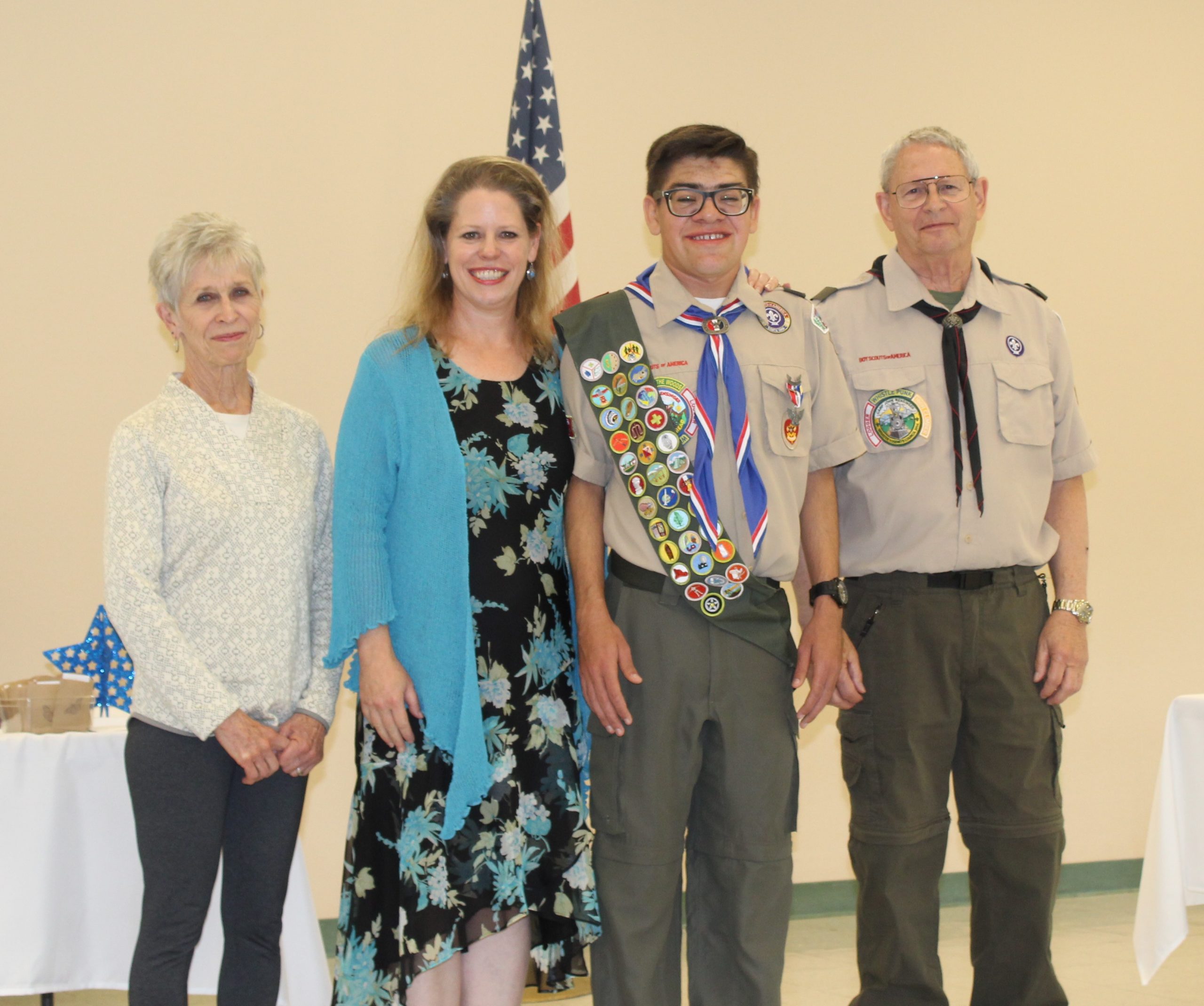
When my son Evren was in the sixth grade, he joined the Boy Scouts. While I was happy to see him socializing and learning about the great outdoors and his obsession du jour—wilderness survival—I was always nervous when he was away from me. Evren’s rare genetic disease, Acid Sphingomyelinase Deficiency, or ASMD, affects many organ systems including the liver, lungs, heart, and bones. Headaches, stomach pain, bleeding and fatigue were common to the point of being more ordinary than unusual. In short, Evren’s health status was a source of chronic anxiety.
My parents, Evren’s grandparents, shared my fears for his well-being. So for longer scout trips or overnighters, my father faithfully accompanied him dressed in a standard issue, adult-sized scout uniform.
Evren was always relieved Grandpa was there. Grandpa’s presence freed Evren from his anxieties about his health and allowed him to just be one of the boys.
The arrival of summer meant the much anticipated, week-long scout camp. I don’t believe I would have been brave enough to send Evren alone, accompanied only by the Scoutmaster and one or two other adults. But since Grandpa would accompany him, I smiled and sent Evren off, optimistic he would experience the typical childhood joys of summer camp. I could also relax somewhat, safe in the knowledge that Grandpa would watch over him.
Two days after Evren left for camp, I received a phone call. “I’m driving Evren to the hospital,” Grandpa informed me in his high-alert yet everything’s-under-control tone. Apparently, Evren had a bloody nose—a common occurrence in childhood– but with ASMD, bleeding is a major concern since the disease interferes with clotting. His nose had begun gushing blood, alarming the camp’s first aid officer, a former army medic. He tracked down an ER doctor in the camp who said there was nothing he could do. Evren needed to be transported to the nearest hospital, about forty-five minutes’ hard drive down a steep mountain, mostly on dirt roads.
After my father’s call, I stopped everything and jumped in the car to make the hour and ten-minute drive to meet them. Every ten seconds I had to tell myself to ease my foot off the gas pedal. A speeding ticket’s not going to help at all. Thank goodness my father is there, I kept thinking like a broken record.
When I finally arrived, I found a pale-faced Evren lying patiently on an ER room table with hospital grade clips on his nose, dried blood on his face, and a soaked tee-shirt that looked rather grisly from his recent bleeding event. I comforted him while I cleaned off his face, and then I went to speak with my dad in the waiting room.
“Dad,” I said, “I have a mission for you.” I knew without hesitation I could ask my father to do anything for his grandson, however inconvenient. “I need you to go buy Evren a new tee-shirt.” Without any ado, my father left the ER and headed to the nearest drugstore.
Now I came from a military family in which the children did not order the parents about. But the presence of a grandchild, especially one with special medical or developmental needs, somehow bridges the divide between adult children and their parents, even between those who haven’t always seen eye to eye.
Grandpa returned and handed me a neon-orange tee-shirt in size adult-small emblazoned with the city’s name in bright blue letters. “It was the best I could do,” he said apologetically. With gratitude, I took it and quickly peeled off the wet, stained tee-shirt Evren was wearing and threw it in the garbage. Although the giant top swamped Evren’s little torso and nearly reached his mid-thighs, he was clean, dry, and restored. After a long rest, he recovered and begged to return to camp. “Why not?” said the doctor. And so he did, along with Grandpa, of course.
Grandparents who actively care for grandchildren who have serious illnesses or neuro-developmental diagnoses are truly unsung heroes. But in fact, when looking at the grandchild-grandparent relationship from another angle, it is the grandparents whose lives are honored, made beautiful and thus “graced” by the presence of our very special children. For this reason, I choose the term “graced grandparents” to distinguish the exceptional classification of grandparents who have these special grandchildren in their lives.
Indeed, these grandparents are honored to be able to journey alongside a grandchild whose life may be fraught with remarkable challenges or whose life may be limited in length. Such children allow us to be immersed in unconditional, perfect love while they illuminate the ephemeral nature of life and underscore the very purpose of our existence.
In contemplating graced grandparenthood as a universal phenomenon, I decided to ask Veronica, my symbolically adopted niece, about her perceptions of her mother Irene’s role as grandmother to Jace. Jace was Veronica’s eldest son who had cerebral palsy and who was non-verbal and non-ambulatory. He passed away at age five during the COVID epidemic.
Veronica affirmed that her mother gave her “so much emotional support,” during and after her son’s life. She went on to explain that her mother Irene had grown hard with the enormity of the responsibility and hardships she had endured. Irene had already lost an adult son and a daughter and was raising her grandchildren as a subsistence farmer in rural Uganda. As Veronica put it, her mother “was not so emotional.”
Despite their socio-economic differences, I had seen this disconnect on a smaller scale with my own father. Life had hardened both of them to an extent. But it seems that the presence of our extraordinary children allows grandparents, even in extreme cases, to rediscover and reconnect with their gentleness and true identity as caring, feeling adults who are capable of outwardly expressing love and affection. Because of the special grandparent-grandchild relationship, miraculously, they are able to become “soft” once again.
Graced grandparents are the unsung heroes who hold up their children and grandchildren selflessly and steadfastly with countless acts of support. Often, these grandparents are the only ones who provide desperately needed respite care, especially for our older children. Their patience and wisdom, gleaned from their maturity, and close family bonds create the trustworthiness anxious parents need in order to separate from their children, many of whom are unable to speak for themselves and who require knowledge of specific behavioral or medical interventions. These heroic grandparents primarily offer their time and energy for free, without public recognition, and frequently on the fly.
Moreover, they are commonly the chief supporters of our other children, the super siblings, which reinforces our family systems and fosters our collective resilience. Even after the loss of a grandchild, these grandparents, with their wisdom and love, continue strengthening their adult children and surviving grandchildren.
This was the case for Veronica, who described the support her mother gave to two-year-old Izzy, Jace’s little brother. Confused by Jace’s disappearance, Izzy talked inconsolably about his missing brother, repeatedly asking when he would return. Grandma Irene was the one who “helped Izzy understand that when someone dies, they never come back,” which allowed Izzy to eventually resolve his grieving process.
Veronica also revealed that even in her bereavement, Irene was a graced grandparent. “You see,” Veronica explained, “here [in Uganda], we call an older person not by name, but by their first child’s name. They called me Mummy Jace. After Jace died, it took a long time for my mom to upgrade to Mummy Izzy.” Irene cherished her grandson, and the honor she held for Jace made adapting to the family structure’s new hierarchy a heart-rendering process.
Five years after that first summer camp, Evren achieved the highest rank in Scouts, thanks in large part to his grandpa’s unwavering devotion and dedication. A year after that, Evren and I co-wrote a children’s book about growing up with a rare disease, and Grandpa is represented in an illustration that depicts a grandfather following close behind his grandson as the two cross a stream amidst a group of scouts. Those readers familiar with chronic disease may recognize the insulated medicine tote bag that the grandfather shoulders for his grandson. It is symbolic of the weight they help us carry.
So today, graced grandparents all over the world, on behalf of all parents and guardians of children with serious medical or neuro-developmental diagnosis, I salute you, and I thank you. Yes, you have been graced by our children’s presence, and yes, we are infinitely blessed to have you.
________________________________________________________________________________________________________________
Kara Ayik is mother to two young adult sons, Evren and Erol. Her oldest son Evren was diagnosed with ASMD, a rare genetic disease, at age three. In 2021, she and Evren published their co-written book, Extraordinary! A Book for Children with Rare Diseases, which has since been translated into multiple languages. Currently a teacher, Kara divides her time among her many interests which include environmental stewardship and support for the well-being of children everywhere.
Theme: Extended Family and Friends
When my husband and I were told our 9-year-old daughter Dalia had become “an eyes-on patient,” we had no idea what that meant, literally or figuratively.
We were meeting with the social worker, who was prepping us to return home after three months in the pediatric intensive care unit. “Now that Dalia has a trach and is ventilator dependent,” she began, “one of the two of you or a nurse trained specifically in Dalia’s care will need to watch her at all times.”
It made no sense. What about sleep? What about work? What about Dalia’s school day?
We were lucky, she said. We qualified for more than 100 hours a week of nursing care paid for by a combination of our health insurance and Medicaid. “Some patients don’t get nearly that number of hours. And some families need to pay out of pocket.”
We didn’t feel lucky.
We couldn’t possibly have understood then the mixed feelings we’d come to have for the cavalry of nurses who would come in and out of our home – and our lives – over the next eight years.
When you leave the hospital with a newborn, you might feel surprised you’ve been trusted to care for this brand new person. You’re exhausted and overwhelmed and trying to figure out how to feed the baby and install a carseat and tend to the tears. Your friends and family can show you the ropes, assuring you it will all be second nature in no time.
When we left the hospital with Dalia, we weren’t only exhausted and overwhelmed, we were also terrified. And there wasn’t a single person we knew who could help us figure out how to change a trach or clear a clogged food pump or use a cough-assist machine. We were prepared to love any nurse who materialized at our house to guide us.
I envisioned a nurse floating down from the sky a la Mary Poppins and creating order out of the chaos.
As it turned out, we would meet some nurses along the way who seemed as magical as Mary. But for every A-plus caregiver, there were three or four who were barely passing.
We might have known before that there was a national nursing shortage. Maybe we saw a headline at some point or heard a news segment playing in the background while we cooked dinner. But we never thought about what that meant for the patients and families who had days – or even worse, nights – uncovered, or what it felt like to find nurses sleeping on the job because they’d been working back-to-back shifts without a break.
We didn’t realize that to a certain extent we’d need to take whoever we got when it came to the nurses. There was no picking and choosing, no pile of resumes to sift through. And that was a problem, because the nurses were our lifeline.
The first time we discovered a nurse sleeping on the job, we were horrified. Our eldest child returned from school to find Dalia’s nurse taking a nap on the living-room couch – while Dalia was in her upstairs bedroom. That was the only day nurse we found sleeping, but we had to wake several who were dozing at night. That wasn’t all. We had one nurse quit mid-shift because she thought our house was haunted, and another who told us she thought we were God’s soldiers.
But there were other nurses whose competence calmed us and who ultimately became like extended members of our family. And really, with the amount of time they spent in our home, they knew more about the ins and outs of our daily lives than our actual extended family. It was so different from the nurses in the hospital, where we were clearly on their turf.
Our home was no longer a private sanctuary where we could be as loud, messy, or cranky as we needed to be. Now there were people in our home, under the best of circumstances, more than 100 hours a week. And that was hard for me, a naturally social person, and even harder for my husband, who’s more introverted.
It was a catch 22 of sorts. We desperately wanted and needed the nurses. In those early days we depended on them to help us keep our daughter alive. As time went on and we became expert in Dalia’s care – more knowledgeable even than most of the doctors – we needed the nurses so we could have some semblance of life as we once knew it. No day nurse meant no work for my husband or me, no school for Dalia. No night nurse meant one of us staying up all night by Dalia’s bedside. We traded our privacy for the security they offered.
But while It was an intensely personal relationship, it was also oddly one-sided. After all, these nurses were with us when we were most vulnerable. They were there for the regular everyday stuff and also the high-stakes moments. They were in our daughter’s room overnight, while the rest of us slept. But we knew little about their lives outside of our home. Several years into our relationship with one of our most dependable, competent nurses…someone to whom I literally trusted my daughter’s life, I realized I didn’t even know her last name.
And yet for all the ambivalence I felt, all the last-minute call-outs and nurses who slept on the job, that social worker was right. We were lucky.
We were lucky that we had nurses like Jane and Lori who gracefully balanced being a part of our family life but also apart from it, knowing when to step in and when to step back. We were lucky that they loved Dalia, and our other children, too. We were lucky they were experts at their job and that they provided a continuity of care between our home and Dalia’s school. And we were lucky that they treated Dalia with respect and dignity even as her functionality slipped away.
Last week, our youngest son played in his town-league baseball game. It was a chilly night, and as I huddled under a blanket with Nurse Jane, passing chocolates back and forth, I thought about how different our relationship is than any other I have. Dalia passed away just over a year ago, and Jane was there with us at her bedside until the very end. We couldn’t have imagined it any other way. I don’t see her every day anymore, but we’re inextricably linked. I look at her and I feel all we shared from those shaky days at the beginning through the ups and downs of the eight years that followed. She knew Dalia and she loved Dalia. She saw her for who she was at her core, for the pure love and kindness she exuded, and she reflected that love and kindness right back to her. She’ll always be part of our family, and for that we are lucky.
________________________________________________________________________________________________________________
Jessica Fein writes about the mingling of joy and sorrow, mothering a child with a rare disease, and staying rooted when life tries to blow you down. Listen to her podcast, “I Don’t Know How You Do It,” wherever you get your podcasts. Her memoir, Breath Taking: Rare Girl in a World of Love and Loss, is coming in 2024 from Behrman House Press. Visit her website or connect with her on IG for real talk about love and loss @feinjessica
Theme: Extended Family and Friends
The Falmouth Road Race has always held a special place in my heart. With the finish line a few blocks from my childhood home, the race was always a highlight of my summers. My mother, a nurse, volunteered each year at one of the medical tents along the course, family and friends would run, and we would all gather post-race to celebrate. Though I’ve never been a natural distance runner, something about the Falmouth Road Race drew me in. I think partly it was the festiveness of it all and seeing world class runners up close as they sprinted by, almost silently as if their feet didn’t even touch the ground. Mostly, though, I think it was the regular people and the stories that their runs told that made it feel so special.
I can remember vividly all the years that I would stand at the corner, just past mile 6, waiting for Dick and Rick Hoyt to pass by. They would run together, Dick pushing his son Rick in his wheelchair. If you haven’t read their story, you should. It is incredibly inspirational in many ways. At its core is the story of a regular dad who went out of his comfort zone to do whatever it took to give his son the best quality of life possible. In doing so he changed not only their own lives for the better, but those of countless others. There were other stories of courage and selflessness, too. I would watch the runners running for various causes, names printed on shirts and bibs, and I would feel a sense of gratitude that there were so many good people, though I still saw them as other people’s stories, not mine.
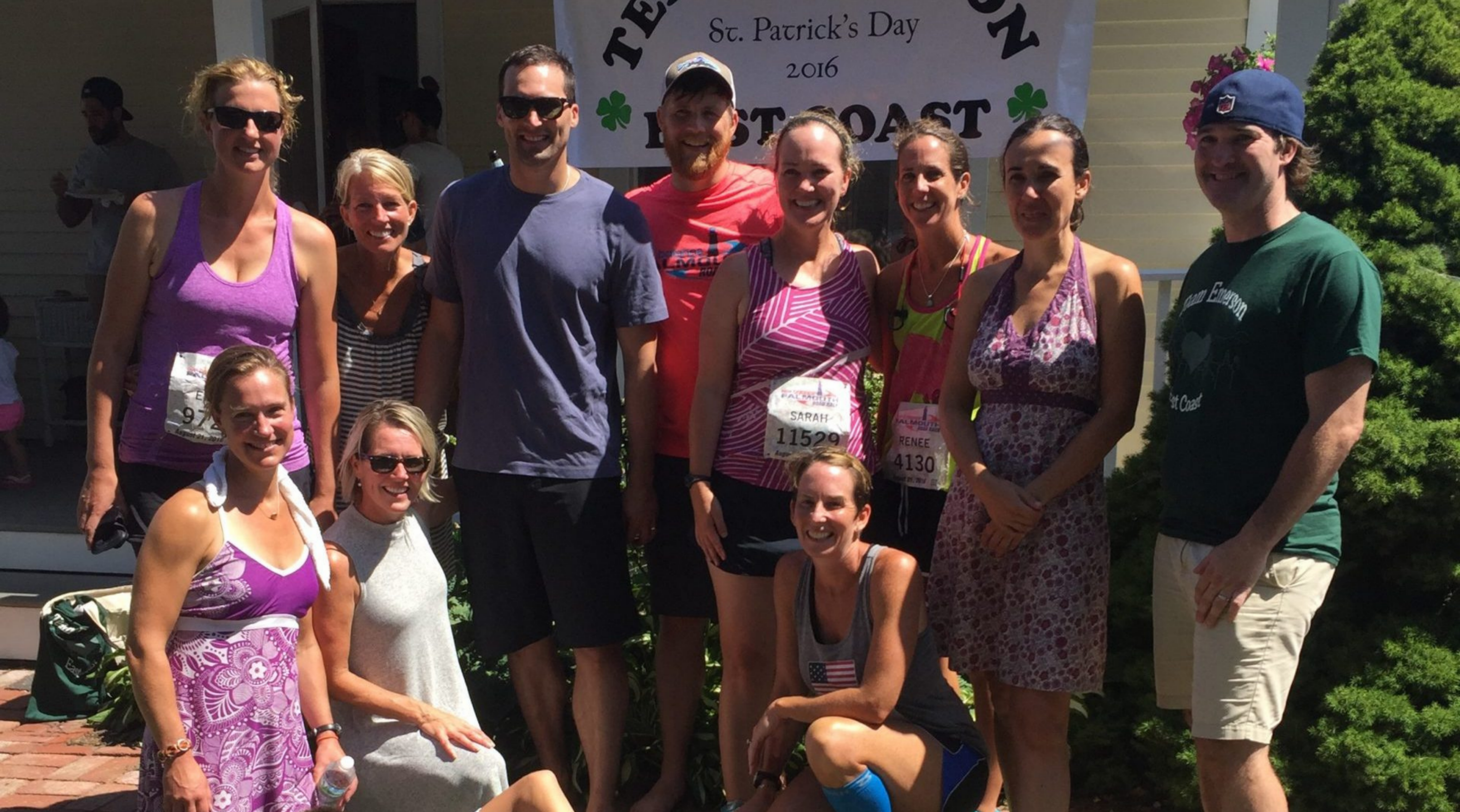
This changed in late 2015, when my daughter Emerson was diagnosed at 8 months old with Type 2 Gaucher’s, an extremely rare and fatal disease. My husband Steve and I went from being new parents with hopes and dreams for our daughter’s future, to being new parents anticipating our daughter’s decline and death. We were shattered. We were fortunate to have a wide circle of incredibly supportive family and friends, but there was a shared sense of helplessness. So, when my brother suggested that we gather to run the Falmouth Road Race as “Team Emerson”, it felt like something that we could all “do”. It was an opportunity for our friends and family to show their love and support, and for us to express our gratitude for that love and support. And it would be a time for us all to be together with Emerson, collectively soaking up all of her goodness that we could in the time that we had.
Unfortunately, Emerson didn’t make it to the race in August. She died in early June at 16 months old, just as we were ramping up our training. I stumbled blindly through the fog of those earliest days of grief. Where I had been efficient and focused and strong in my caring for Emerson, I now felt heavy and adrift. Standing felt difficult, self-motivation to run, impossible.
I don’t remember communicating to our team that we still wanted to run the race, but we must have. The support and momentum for “Team Emerson” grew. Our pediatrician, who had signed up to run with us, began stopping by after work to run with me. I suspect that she was mostly checking on my well-being, but training for the race gave us a reason to get together and gave me a purpose for moving my body, which I desperately needed. I know that there were days that she ran before or after meeting me to run (sometimes probably both) and that our runs were short, often including walking. But she kept showing up and so, so did I. Crossing the finish line of the race, I felt surrounded by love. I didn’t have the capacity at the time to express it, but I always wish that everyone who sent even the smallest good thought during that time could know how much it meant.
Not long after we ran the road race, my husband and I were interviewed by CPN. It felt like an honor to give back. We had been referred to CPN by the Pediatric Advanced Care Team (PACT) team at Boston Children’s Hospital soon after Emerson’s diagnosis, and will be forever grateful, both for the referral and for the families whose stories helped keep us afloat in the middle of so many nights. Connecting with CPN made us feel like we weren’t alone, gave us language for what we were experiencing, helped guide us as we made decisions, and most importantly, helped us to reframe what it means to have hope.
Over the years I’ve stayed connected with CPN in a variety of ways and have also continued to run. A few years ago, many of the original “Team Emerson” members ran a 5k on what would have been Emerson’s 3rd birthday, raising money for CPN in her memory. This planted a seed in my mind that would grow into CPN participating in the Falmouth Road Race’s Numbers for Nonprofits program. This program grants Massachusetts-based nonprofits a preset number of race entries for runners to raise money and awareness for their organization. Each year, over 3,500 runners represent over 300 nonprofit teams. Incredibly, since the year 2000, these teams have raised over 50 million dollars for their causes. Soon after Team CPN was accepted into the program for 2020, however, COVID hit, and the race was switched to a virtual format. While disappointing, if there is anyone who can deal with the “unplanned,” it is the CPN community. Our runners exceeded fundraising expectations and came together for a socially distanced run that felt every bit as special as we had originally hoped. In 2021, the race was back to the in-person format (with a virtual option). It was wonderful to have many of our runners and their loved ones join together post-race at my family’s house, just as I remember my family doing when I was younger.
I am so thrilled to be coordinating CPN’s Falmouth Road Race team again this year. Our runners include CPN families, medical providers, staff, donors, and friends. Collectively, they represent the community that is CPN. Individually, they carry personal stories of courage and love and wisdom, earned through, among other things, continuing to show up. This is beautifully illustrated by CPN sibling Johnny in this video he made for his brother Mateo. Their mother Michele, also a chaplain at Boston Children’s Hospital, will be taking to the starting line with Team CPN this August 21st. I can’t wait to cheer her and the rest of our runners on. Watching the race, I’m sure I’ll feel a familiar sense of excitement and gratitude, only deeper now. These aren’t just other people’s stories anymore, they’re also mine.
To learn more about each of our runners and to support their fundraising efforts, visit our team site here.
Theme: Extended Family and Friends
Bearing witness to other people’s joys, pains or challenges—truly seeing them and letting them know they are not alone—is not as simple as it sounds, especially when the circumstances are sad or difficult. While friends and family intend to lean in, they may worry about doing or saying the wrong thing or becoming too sad, and thus not take that step. But, showing up for a family caring for a child with a serious illness can make all the difference.
Showing up doesn’t have to be grand gestures; it can be running errands, cooking a meal or simply sitting and listening. Showing up is responding to the moment with intentionality. It can be hard. It takes generosity, and a willingness to be vulnerable to things that may be difficult or uncomfortable.
Theme: Extended Family and Friends
Aunts and Uncles of a little girl with infantile Tay-Sachs — who moved to be near the family — share some ways they helped the parents: providing respite for sleep, celebrating events and hosting micro-beautiful moments and meals, finding equipment to keep her comfortable. Equipment tips to help with oral feeding: Dr. Brown’s Baby’s First Straw Cup and Sassy Baby Food Nurser and Ark’s Z-Vibe Travel Kit with Spoons
Theme: Extended Family and Friends
The Aunts and Uncles of a little girl with infantile Tay-Sachs — who moved to be near and support the family — talk about wanting to protect the parents from their own sadness; and how the mom encouraged them to share and show their feelings – to grieve together, collectively. The balance between sharing and protecting. Communication is key.