Skip to content
Courageous Parents Network Logo

Search

Search entire library or by microsite

Click here for NeuroJourney resources

Theme: Baseline

“I’m so glad I have a sister. Otherwise, it would just be me, you, Daddy and Suki (our dog).” Those were the words spoken to me recently by my four-year-old daughter, Nika as I rounded the corner from Sasha’s sit to stand recliner and headed towards the hall. I was stunned but tried not to show it. It had been a hard week in the household. I returned from a remarkable caregiver’s workshop in Washington DC to find that Sasha took a swift downturn during my ever so brief absence. We had already taken her to her primary care provider. It was a lengthy visit. As I sat there, the most surreal wave washed over me – a knowledge crest that everything was about to change.

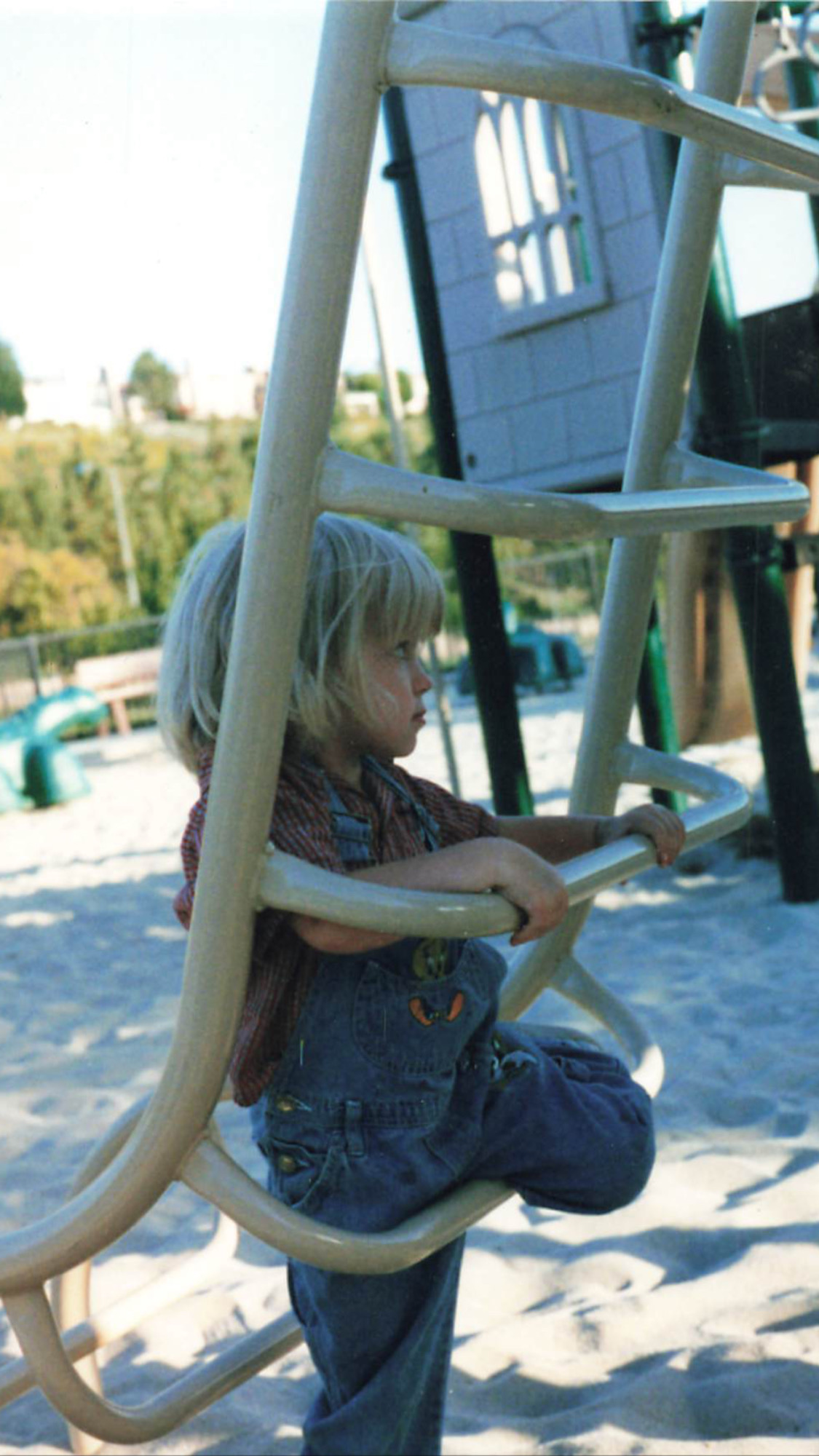
My husband Mike came to the appointment to help get Sasha in and out of our vehicle. We had Nika in tow as the appointment fell on a non-school day.  Fortunately, there is a cute park on the clinic’s campus, and the weather cooperated for Nika to play for nearly 2 hours while Sasha and I investigated the next steps in her care plan. I appreciated the levity of Mike sending me time trials as Nika ran laps, “11.77, 12.08, 11.76, 13.31.” Random figures illuminated my phone with no explanation – a pleasant mystery that provided a helpful distraction. The day was a brighter gray than some during a particularly windy October.

Daylight savings was coming soon. I sat there silently bemoaning as I waited for Sasha’s PCP to enter the exam room. I’ve always resented the changing of clocks. In my college years, my first taste of adulthood, the time change always took me aback as it collided with an irresponsible modus operandi. Seemingly always in a public establishment, I’d look up only to realize I was an hour off on my given day. Years later, upon having my first child—a daughter with special needs—I would marvel, with frustration, at how deeply her days were affected by adding or taking away even one hour from her already tenuous schedule. Now, in middle age, I resent the changing of clocks for an entirely different reason: who are we to collectively manipulate time? What gives us the societal audacity to control clocks? Do we think we are God? Little did I know—especially in those college years—that time would become such a burden during most of my child-rearing years. I would either wish for it to speed up amid the angst of “When will this ever end?” or to slow down indefinitely so I could cherish the good years.

For nearly two decades, that balancing act came alongside a family unit of 2-3 individuals. While a single Mom to Sasha, there was never a reality of adding a sibling to her chaos. And when I met my second husband as Sasha was approaching age five, I was still a steadfast NO! My hands felt full with an extremely hyperactive child with significant special needs. Being in the throes of destructive sleepless nights, a nocturnal manic state that is common for children with Sanfilippo Syndrome, I knew that adding another child would be the rush of air that pushed down the line of dominos. As Sasha approached nine and we learned of her diagnosis of Sanfilippo Syndrome, we were faced with an unthinkable reality – Sasha’s body carried something fatal. With that realization came the heavy understanding that adding another child would mean they, too, might one day experience a traumatic loss. I doubled down on my steadfast “no” but was that ever the right way to view things?  In truth, we could all lose anyone in an instant. Who was I to play God…to try and control any outcome?

My phone continued flashing Nica’s times as I chatted with our PCP’s counterpart, a new nurse practitioner on Sasha’s medical team who was visibly committed to addressing the clinical concerns unfolding. We discussed the preceding week and the cascade of events –  Sasha’s sudden struggles with swallowing, her significant weight loss and increased tremors while eating. A swallow study was ordered. I left with numerous instructions, including recommendations for utilizing Sasha’s g-tube for nutrition within a specified framework.

The g-tube. A gut-wrenching decision that I fought so hard against that preceding year. Nine months of meeting with numerous specialties – Palliative, Genetics, Neurology, Complex Care. Messaging friends and acquaintances in the Sanfilippo community. Reaching out to fellow nurse friends to discuss the clinical implications. Listening to interviews of families before me who navigated the same decision. Middle-of-the-night brainstorming sessions filled with self-reflective thoughts. Looking back on the early days post diagnosis. I remembered sitting in Sasha’s cozy bed, holding her close, telling her I would never initiate any invasive procedure. We would let nature guide us and she could tell me when she was ready to be done with the fight. I told her to never hold on for me or anyone else. When she was tired, she could let us know and we would support her decision to let go. I would never play God.

That time now felt so out of reach, so long ago, like she and I were completely different people. I couldn’t believe the day I found myself sitting in a surgeon’s clinic, waiting for a g-tube consultation. He thought Sasha and I were there to schedule the surgery. In reality, I was there to ask the question, “who are we to think we can change course in an agreed upon pact?”

A highly rushed individual, as trauma surgeons will be, he bound through the exam room door and asked even before making eye contact or sitting down, “What questions do you have for me?” I stared as I waited for him to find his seat and scoot over via his three-wheeled black vinyl stool. A lanky fellow with wisps of black hair along a mostly bald scalp, his shoulders too broad for the wash-faded indigo scrubs, I quietly wondered if he was a long-distance runner. He looked at Sasha and saw my reservations. Knowing we were both rushing to get out of there, I spoke rapidly to squeeze it all in. Eventually, he softened and shared a personal story of his own father temporarily needing a g-tube. He could not impress upon me enough, he stated, the importance of nutrition and hydration in all phases of the lifespan. In that moment, he became more than a surgeon. He became human.

I told him I’d think it over and he shared the process for scheduling. It would not be an immediate phone call, I told him. He encouraged me to call and make an appointment, pointing out that as the day approached, I could always cancel if I was still feeling unsure. He left. I felt a bolstering confidence, ever so briefly. I was not reneging on an agreement made to Sasha so many years ago. And I certainly was not playing God. Was I?

“12.65” Nika’s time trials at the clinic’s park were ending alongside our appointment. Mercifully, Nika did not ask what transpired, an unusual occurrence for her inquisitive nature and foreman mindset overseeing all of Sasha’s care needs. She was consumed in exhilaration by her newfound mastery of time. She had learned through her dad’s coaching that she was slowing down ever so slightly each time she approached the finish line. He had explained that if she made a final push as the imaginary line approached, her time would improve.

There will be times in virtually all our lives, where we will be asked to make a decision standing at the crossroads of faith and uncertainty – at the intersection of medicine and personal philosophy. We may be called to decide for ourselves or for a loved one in a way that directly impacts a clinical outcome.

I have been fortunate to have a care team that welcomes these discussions, even discourse when necessary and who recognizes that philosophy is sometimes malleable and that certainty is never a guarantee. In a world that feels unquantifiable, when making decisions that feel impossible, I came to realize that an 80/20 ratio may be the best that I can do. If 80% confidence in a decision can be obtained, then that is where I will hang my hat. Those decisions may evolve with the revelation of new information or the presentation that is in front of you – our minds can change, and that is alright.

I didn’t know what to say in response that day when Nika proclaimed how happy she was to have a sister. I fought back tears and simply offered, “I’m so glad you have a sister too.”


Joanne Huff comes to Courageous Parents Network as a long time follower and parent enthusiast of the organization. As the Mother of two girls, the oldest of whom has the rare disease MPS IIIA/Sanfilippo Syndrome, Joanne has benefited tremendously from the intimate parent interviews and candid, vulnerable story sharing throughout numerous thought provoking blog posts.  As her daughter’s activities and lifestyle started to slow down with disease progression, CPN became a larger anchor in times of uncertainty and unrest. It is through this lens that Joanne hopes to share experiences and insights via the CPN blog.

Joanne completed nursing school after her daughter’s diagnosis, receiving her Bachelors of Science in Nursing from Plymouth State University, Plymouth NH.  She enjoyed community liaison work with home care providers of adults with special needs up until her own daughter’s care became increasingly more involved. In addition to serving on the Boards of New England Regional Genetics Group (NERGG) and Adaptive Sports Partners through 2024, she has found great purpose in volunteer work advocating for policy improvements and change in Washington DC with the National MPS Society.  In her free time, Joanne seeks balance and refuge with yoga, hiking and performing as an ensemble Soprano vocalist with the Pemigewasset Choral Society. When not blogging for CPN, Joanne enjoys sharing offerings on her personal Blog Folding Origami for God.  She resides in Bow New Hampshire with her two daughters, Sasha and Nika, her husband Mike and her yellow lab Suki.

Theme: Baseline

I shifted Lucas in my arms, picking up his feeding pump backpack in one hand and a cup of syringes in the other. It was a sunny spring morning and we were headed into our backyard to meet Jane, his occupational therapist. His face lit up with a smile when he saw her walk through the gate. “Hug?” he asked excitedly, waving a tiny arm to punctuate the question. 

It was a measure of Jane’s skill that Lucas saw her as a playmate. Her role as a pediatric Occupational Therapist (OT) was more complex. The work of a pediatric OT is to help children improve self-regulation, self-care, and play skills in partnership with their caregivers. If possible, OTs help children reach new developmental milestones. 

My son Lucas was unlikely to reach the developmental milestones that show up in a pediatric therapy evaluation. Just after he turned one, he was diagnosed with Leigh Syndrome, a mitochondrial disease and severe neurological disorder. As with other rare neurological disorders, children progressively lose abilities. Currently, there is no treatment or cure.

Shortly after Lucas was diagnosed, his neurologist suggested that exercise could sometimes help slow disease progression in children with a mitochondrial disease like Leigh Syndrome. Given the stark landscape of treatments for Leigh Syndrome, with  clinical trials either closed to us or years in the future, exercise was the only proactive treatment. I decided we needed to do all the therapies available. 

In the backyard, Jane helped me set up a water table so we could entice Lucas to try standing. I started with Lucas on my lap. Surveying the bobbing toys, his eyes grew wide. Reaching out to splash, he made his signature noise of excitement– “Ahh!”

Adjusting his orthotic braces, we carefully helped him rise to a standing position. He leaned against the water table to support his weight. After playing for a moment, he clenched the edge and started to panic. He couldn’t simultaneously support himself and use his hands to reach for toys. We tried again, but every time we stood him up his face started to crinkle in pain and frustration. He didn’t have the strength to sit down safely on his own. 

 “Good job, buddy. You are doing so well!” I tried to encourage him. Internally, I was wrestling with my own frustration. I was still so new to the world of rare disease. I didn’t know there were standing frames to help Lucas experience this position securely. I didn’t want to believe that exercising would never stop Leigh Syndrome from advancing. All I knew was that I had so little to offer my child, and I just wanted him to be OK. 

I tried to get Lucas back into position, my hands lifting up his reluctant body. Jane gently asked me: “Do you see how hard Lucas is working?” I stared at her, confused. None of the many therapists we worked with had ever described Lucas this way. They said he had a beautiful smile. They said he looked tired. Most often, they told us we just needed to find “the right motivation” for him to make progress. 

Jane took over supporting Lucas, talking as she worked. “See how his neck is trembling? He is working hard to hold his head up while he makes the enormous effort of stabilizing his core. When he tries to stand, his knees lock and his entire body trembles. He wants to do what we’re asking, but it is really hard work.”

Something crumpled inside of me as I watched Lucas. He was indeed trembling. What we were asking was beyond his strength. I gathered him back onto my lap, comforting him. Once he recovered he reached for the water table ready to play again. 

After Jane left, her words kept reverberating in my mind: “Lucas is working so hard.” 

Years ago, I  read that play is the essential work of children. It is how they learn, develop, and build relationships. Lucas’s disease and resultant disabilities didn’t change that for him. If he couldn’t engage in therapy, it wasn’t because we had failed to motivate him. The problem was our expectations.

I had been focused on a world where Lucas battled Leigh Syndrome through exercise and didn’t regress any further, like the stories of families I had found on the internet. Stories that were not ours. Even though I knew my son better than anyone, my desire to fight this cruel disease sometimes blinded me. 

A few weeks later, Lucas would experience a swift and global regression impacting every sphere of his development. Most of the games and activities he enjoyed quickly left his grasp. The water table was only possible if he was carefully supported on our lap, and his erratic arm movements made it less fun.  

In the months of progressive loss that followed, we adjusted our expectations over and over. Our goals in therapy adjusted too. We focused on creating moments of joy with Lucas. We worked with his occupational therapist, Jane, to understand each new baseline. We stopped some physical therapy entirely knowing that his energy was precious. 

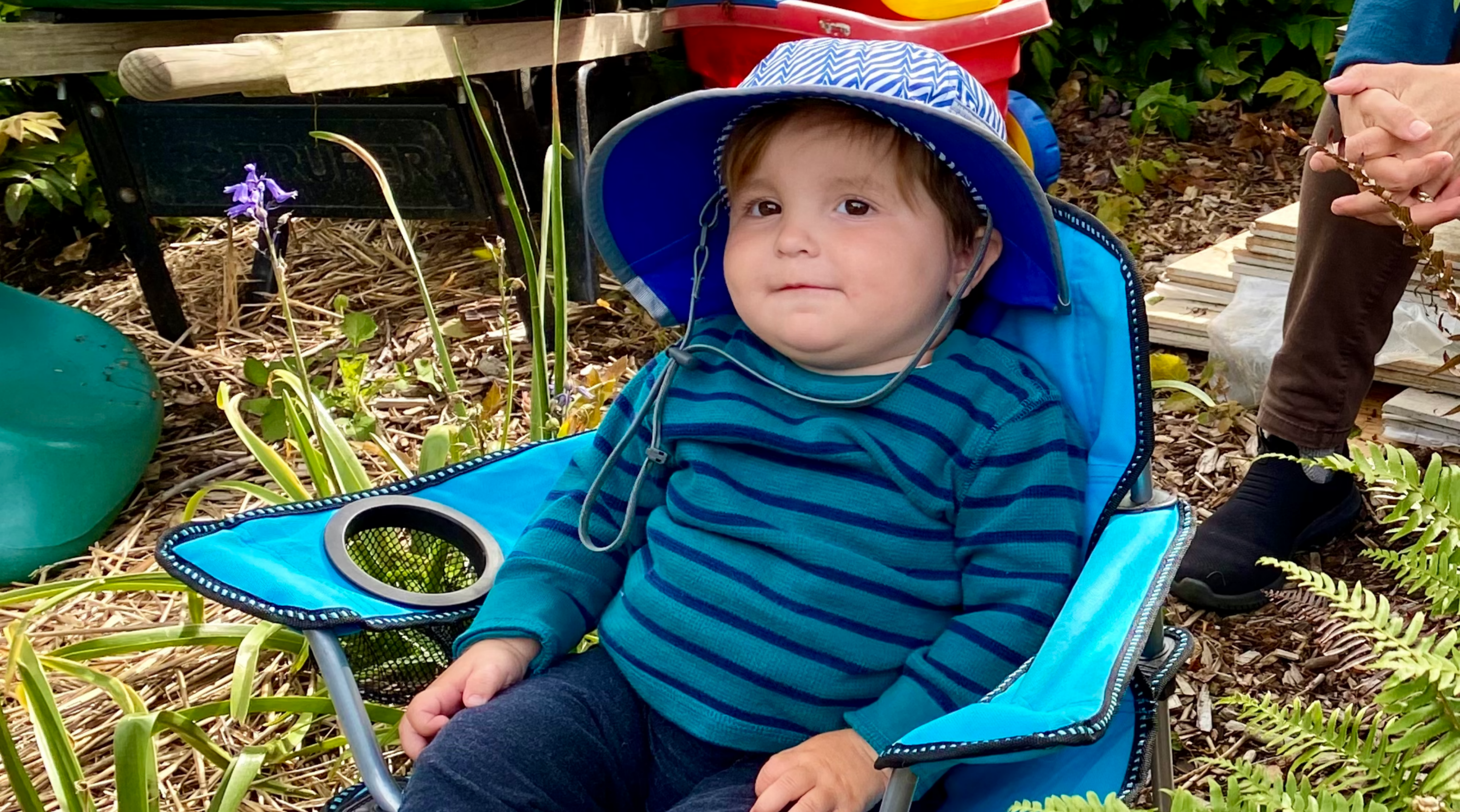
In these months, Lucas had some of the most joyful moments of his life. Jane found a portable chair that could be used in the park, so he could sit with other kids and interact at their level. She brought over giant toy cars outfitted with safety harnesses, so he could feel like he was “driving” around our house. Lucas continued to surprise us all with his capacity for focus and delight, even in the midst of great discomfort. 

In some ways, I think Jane’s most important work as an occupational therapist was helping me navigate Lucas’ changing baseline with clarity. It is hard to see clearly when you don’t want to see your child lose their abilities at all. Still, knowing how hard Lucas was working meant we celebrated every tiny win. And therapy became a tool for us to bring Lucas joy, even as his body changed in ways that were hard for us all to bear. 


A conversation between Occupational Therapist Jane Witmer and Parent Kim Gilsdorf

During my son Lucas’s life, I often struggled with how many therapy sessions to schedule. There was so much we could do for Lucas. Physical, occupational, feeding, and speech therapies were just the start. Yet nothing we did would fundamentally alter the course of his disease. What should we do?  

I know I’m not alone in this struggle. Most Courageous Parents Network families probably take their children to therapies. We do this with love, dedication, and hope. Whether our child has a neurological disorder or another illness, we want to improve the quality and length of their lives. Still, therapy requires a lot of effort and determining what is “helpful” is not easy. 

Jane Witmer, my son’s occupational therapist, helped me develop an approach to therapy that acknowledged our uncertainties about what was helpful. We focused on activities that helped Lucas find joy in daily life. 

Because Jane was able to help us adjust our approach without ever diminishing Lucas’ potential or strength, I asked if she would reflect with me on how therapists can support children like Lucas and their families. I hope other families and providers find her reflections helpful as they support the children in their lives. 

Kim: Hi Jane – thank you so much for having this conversation with me. Can you start by telling Courageous Parents Network families why you work as a pediatric occupational therapist?  

Jane: The families! Being an Early Support Specialist (birth to age 3 years) allows me to work just as closely with the caregivers as with the children. I love being able to partner with caregivers and helping them find what is meaningful for them and their family. 

Kim: How would you describe the purpose of occupational therapy for a seriously ill child, particularly if they have a neurological disorder like Lucas, and will progressively lose skills? 

Jane: The purpose of working as an OT with any child and their family is to meet them where they are and walk alongside them in their journey. The same applies to PT, speech, feeding, and other early support therapies. We bring our expertise in developmental skills like posture, movement, feeding, social interaction, and play. The families bring their love, knowledge, and priorities. Especially with rare conditions, the family typically knows more than the therapist about the condition. We work together to help the child find meaning and joy in their life. The ways that a child with a serious illness finds meaning and joy may look different, but the goals are the same.

Kim: Parents have a wide spectrum of approaches to therapy. Some may not want to engage at all. Others, like me in the early days with Lucas, engage with a level of desperation and hope that may not match the reality of what therapy can deliver. What kinds of conversations should therapists and parents have to build an alliance and develop shared goals?

Jane: Such a great question! The therapist bears a big responsibility in building open communication with the parent and truly listening. We may enter a session with ideas we think will be best, and what turns out to be best for the caregiver or child that day may look very different. By remaining open and really listening or asking what a parent is hoping to get from the session, a therapist can shift the focus to try to meet the need that day. A parent whose child was undergoing unbearable chemotherapy once told me the best thing I ever did was to genuinely smile at their child every time I came. I will never forget that. Any other agenda became less important once I got that feedback. 

You, ever the proactive and totally involved parent, surprised me once by letting me know that sometimes, you needed to watch Lucas play and have fun with me. You needed a tiny (and well-deserved) break. I really respected your honesty and was so happy I could help in that small way. Besides, I knew you were watching and learning even though you were “taking a break”. It really helps therapists when parents openly share what their priorities and hopes are. It also helps when parents tell me honestly when I am off track. I so appreciate the parent who says, “That’s a great idea, but I’m not going to do that!” or something similar. I can work with that! 

Kim: Sometimes, our medical systems begin to remove therapy time once a child’s baseline begins to decline. What advice would you give families facing this challenge? 

Jane: How awful. First, Early Support (sometimes called Early Intervention or Birth to Three services) will continue whether or not insurance will pay. Also, there are some therapy programs like one funded by The Elks in Washington State, that are no cost to families. A hospital social worker should know of programs like these and be able to connect families to them. I would also counsel a family to look to their palliative care team for help with finding therapy support. Additionally, patient advocacy groups often have wonderful resource ideas. 

Finally, one does not need to be a therapist to love and play with a child. Seek support from your circle of friends and family to provide plenty of love and play. Children find ways to do their own therapy if allowed to be playful and given access to things they enjoy.

Kim: I know you were deeply affected when Lucas died, which is a testament to your care for him. How do you care for your own mental health when a child you support dies? 

Jane: I am so lucky that I work with a wonderful group of people who support each other. I am also lucky that my work provides monthly reflective practice groups where we can process the emotions that occur when doing this work. With Lucas, I was extra lucky because you invited me to share in events to remember and honor him and that helped me so much. 

Kim: Can you end by sharing a favorite memory of working with Lucas? 

Jane: There are so many! His triumph early on when he figured out he could pull to stand against the fence and push the blocks through the holes. And that we would fetch the blocks for him! I will never forget his enthusiasm for telling us just how to carry out the play activity and the satisfied look he got when we finally got it right. 

And the smile that came from his entire being! Mouth, eyes, cheeks, and even chest slightly moving outward when he looked through the window and saw me arriving. Most of all, I loved when he saw me and said “Hug!” It was never a question; it was a command and an expectation.

Jane Witmer is a lead therapist at Wonderland Child and Family Services in Seattle, Washington. 

________________________________________________________________________________________________________________

Kim Gilsdorf writes and lives with her family in Seattle, the traditional land of the Duwamish people. She works for Perigee Fund, an organization dedicated to supporting early childhood mental health. Her favorite title is “Mama” to her two children, Lucas and Sophia. Lucas lived with and died from a rare disease, Leigh Syndrome, and his life has forever changed the meaning and purpose of hers. You can find Kim’s writing on Instagram at @kgilsdorf.

Theme: Baseline

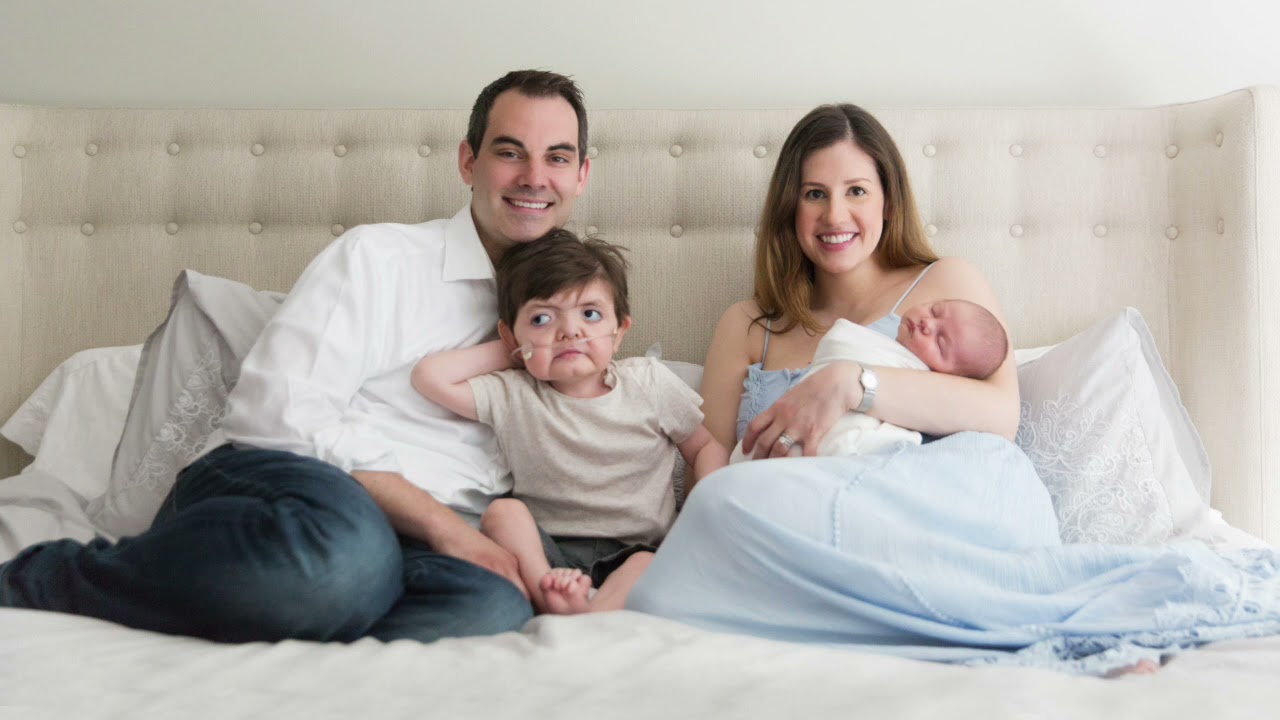
Jackson’s mom describes the journey to his diagnosis with Krabbe disease (an LSD) at 4 months old, including the moment when the medical team delivered the diagnosis. She is glad so many clinicians were in the room because they got to ‘see him in all his perfectness’ and establish baseline.

Theme: Baseline

My favorite thing about my gym is that I’m led by an expert. I show up three times a week, for one hour, and follow the instructions of a coach leading me and several others through various rotations on treadmills, rowers, and the weight floor. I love being delegated to by a fitness pro who can help me maximize my time and effort. One of the phrases I often hear on the weight floor is “time under tension, tension under time.” Form is everything when lifting weights – finding the balance between heavy enough to strengthen but not injure; fast enough to stretch but not strain. I decide what amount I will lift for any exercise, and I decide this based on intuitive cues from my body. Even though there’s a professional providing guidance, I remain the ultimate decision-maker about what’s going to work best for me.

This professional guidance/personal decision-maker dynamic works great at the gym but is absolutely overwhelming when parenting a child with a complex illness. I learned very early in Colson’s life with mitochondrial disease that it was my job to maintain a coherent narrative about his health and developmental status. I was the one responsible for tracking his baseline, taking cues from him and suggesting to specialists where we might need to push harder, or slow down and catch our breaths.

So much of understanding and organizing around a child’s baseline is driven by a parent’s intuition. Talk about too much tension. Talk about not enough time. Whenever someone told me to “trust my intuition” during Colson’s life, I thought some version of the following: “You want me to trust my intuition? She’s a mess! My intuition is tired and scared and didn’t go to medical school. My intuition thinks that Kraft Mac’n’Cheese is the greatest food on earth. SHE IS OBVIOUSLY UNDERQUALIFIED!”

And yet, just like strengthening a muscle, managing a baseline requires science and intuition. We trust our child’s providers to have the science part figured out. And while we parents do our best, it’s important to acknowledge that there are several factors that can complicate our intuition and make it difficult for us to trust.

Changes in baseline can be very subtle – almost imperceptible. We’re with our kids for the majority of each day, every day. We normalize subtle shifts in our kids’ behavior or care that cumulatively, over time, are actually quite significant. With Colson, I didn’t notice the decreased frequency or range of his vocalizations until I looked back at videos from earlier in his life. I didn’t register how significantly we had decreased his daily food intake by the time he was four, from his initial caloric targets when he was one. I knew things had shifted – but just didn’t register how much until after he died, and I started looking at videos and treatment plans from earlier in his life. It’s hard to look back when you’re trying to keep your child’s life moving forward.

Treatments often multiply as symptoms progress – making it difficult to untangle what’s working and what’s not. Colson was on nine medications being administered a total of fifteen times a day towards the end of his life. Each medication was designed to treat a unique symptom – and each medication had side effects that could potentially complicate other symptoms. This, in addition to tube feeding and cough-assist treatments and physical and occupational therapy and the list goes on. I often fantasized about admitting Colson to the hospital and removing all non-critical interventions (i.e., nutrition and biochemical supplements), simply to reestablish his baseline. To get us back to where we had been when he was just three weeks old and beginning his life with this disease. I wondered how many seizures he might have without seizure meds. I wondered how his energy or comfort might change without his pain management med. I wondered how much (or, rather, how little) food his body actually needed. I wondered how I would feel about everything we were doing for him, which increasingly felt like doing to him. I wondered if any of it was actually helping him in any meaningful way. This, to me, felt like a necessary step to take before confirming a decision to move towards comfort care only. But I didn’t know how to describe it, so I didn’t know how to advocate for it. I just knew everything felt incoherent and I didn’t have the mental or emotional bandwidth to untangle it.

Providers are trained to fix. Incredible progress in public health, science, and the practice of medicine has contributed immensely to better lives and longevity for children in wealthy nations. Doctors and other providers have knowledge and tools to provide life-changing, life-giving care that was unfathomable mere decades ago. It’s no wonder that they want to wield this precious power to help their patients, and are trained to do just that. But it is rare for a specialist to pause and acknowledge that whatever acute intervention they may be able to offer, particularly in the face of complex, progressive, or degenerative diseases, will only be a short term solution to a long-term challenge. (For a fascinating read on the tensions that come with modern medicine and pediatric illness, I highly recommend this article by Perri Klass.) I remember towards the end of Colson’s life, as his motility was failing, a well-intentioned doctor recommended we begin daily enemas for him to try to keep things moving. And, although I didn’t say it out loud, I did say to myself, “yeah, we’re not doing that.” I knew that once we started that treatment, it would just be a matter of time before its effectiveness wore off and we’d be back to searching for a fix that simply didn’t exist. It would have been so much more helpful if they had said something along the lines of, “I do have treatment options for you, though I think it might be useful to explore goals for this treatment long-term, since his motility has gotten worse over time and is not likely to get better.”  

Our culture still views death as a failure. Oof. This one is difficult to type. But there it is. I’ve often felt uncomfortable with the adversarial language that is used in disease communities, though I understand and respect the role it plays in building hope and awareness. But the notion of Colson being a “fighter” or a “warrior” against his disease never sat well with me. No mother wants their child to go to war. I wanted my boy to just … live … as long and as well as he could, without it feeling like a constant fight to keep him here. And that felt both so true and so wrong to me at the same time. And I wish someone could have told me every single day that, “it’s okay if you want this to be done for him.” Because by the time I was ready to live into that, he was already gone.

It took me three months to move from the eight-pound weights to the ten-pound weights for bicep curls at the gym. It took me four years to move from managing my child’s baseline towards life, to managing it towards less, then giving it over to death. Not all parents are granted that time to adjust – to a diagnosis, to a barrage of symptoms, to the truth that they may outlive their child and that doing so might just be the best way to love them. Talk about too much tension. Talk about not enough time.

________________________________________________________________________________________________________________

Liz Morris loves exploring complex questions. Her professional experiences in project management, librarianship, and community development prepared her well for her favorite role as mom to Colson. Colson, impacted by mitochondrial disease since birth, inspired Liz to face the complicated aspects of his life through writing and advocacy. Liz serves as a family advisor at Seattle Children’s Hospital, and is a volunteer ambassador for the United Mitochondrial Disease Foundation. She is committed to helping families find the information they need to help them live well in the face of life-limiting illness. You can find Liz on Instagram @mrsliz.morris

Theme: Baseline

The mother of two sons, the eldest of whom was diagnosed with Marfan Syndrome at birth, recounts what it was like when their second son was born and her older son’s baseline shifted within the same year. 

Theme: Baseline

The mother of a son with Neonatal Marfan Syndrome recalls how a shift in her son’s baseline signaled to them that they should introduce hospice and palliative care into his care plan and speaks to how she began thinking about her son’s end of life.

Theme: Baseline

Theme: Baseline

En algunos diagnósticos se puede proyectar la trayectoria y usted puede anticipar como van a progresar los problemas y complicaciones potenciales. En otros no, y los proveedores médicos no pueden decir con certeza como va a progresar la condición del niño; o quizás más importante proyectar cuanto tiempo le queda de vida. Pase lo que pase, vivir con un niño que tiene una enfermedad limitando su tiempo de vida es un ejercicio en aceptar la incertidumbre, y las altas y bajas en el camino.

Baseline es en realidad solo un término técnico para decir “Normalidad”. Es lo opuesto a un momento o evento agudo; es como están las cosas cuando están estables. Con niños viviendo con una enfermedad, la “Normalidad” cambia, y a veces cambia, a través del tiempo, descendiendo como si fuera escalones donde cada escalón más bajo representa un nivel más bajo de funcionamiento. MIentras que las altas y las bajas continuan, las altas, con el tiempo, no es probable que sean tan altas como lo eran, y las bajas tienden a ser más bajas. Con una “Normalidad” en descenso, el último paso es el fin de la vida.


Theme: Baseline

Pediatrician Dr. Richard Goldstein’s piece on the notion of “Baseline” in the context of parenting a child living with a serious illness or medical complexity. There is beauty, art, and knowing in this.

Theme: Baseline

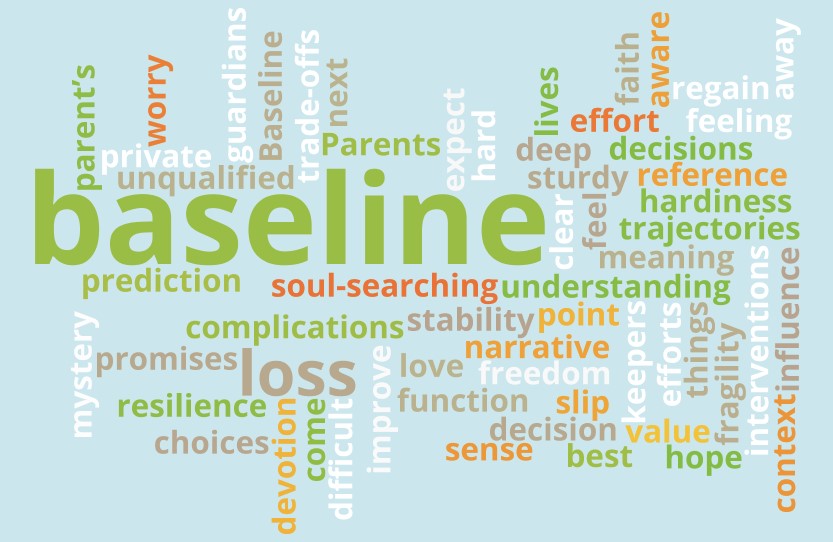
There is this thing we call the “baseline” and though we may not recognize it by its name, it has a deep influence on the lives of seriously ill children. It is a concept of what “well” is for a person at a time. The parents of seriously ill children are very aware of their child’s baseline, and put a lot of effort into understanding it and how it relates to their hopes for the next day and for their lives. It is the reference point: something to try to improve upon, at times. Something to regain, at others. Something that can slip away despite the best efforts, bringing with it soul-searching and the need for difficult decisions about what will come next.

The baseline is made up of many elements. There is the disease and its medical prognosis. There is the person, a growing child with special qualities. There is hardiness and fragility. There is stability and complications. There can be pain. Part of baseline is function, the interventions to support function, and sometimes its loss. There is hope. There is the deep nonverbal connection we feel when we meet our child’s eyes, and the worry about its loss. There is faith, there is love, there is resilience, there is devotion. There is the suffering of moments and the joys in other moments. There is mystery.

A child’s baseline becomes especially significant when it is understood in the child’s context. That context is sometimes time and survival, and decisions that need to be made with urgency.  An important part of making decisions rests in how we feel about our child’s baseline. Where is my child right now? It has to do with how sturdy things are feeling. It has to do with how much has been gained and how much has slipped away. It has to do with private promises we make towards our children.

I like to think that parents control the value in this, that a parent’s narrative of their child is the baseline.  The medical team can help parents understand the likely trajectories of the disease, and anticipate the hard trade-offs and choices that will come. I am often reminded that the intense involvement of clinicians and support staff comes with commentary and judgment. Even with the greatest empathy, no one can see things as a parent does.

As parents become aware of their child’s baseline and what to expect, they often ask how they will know what to do. Their child’s life can feel so medicalized, so full of technology and medicine, that they can feel unqualified. At some level, a medical baseline needs a medical mind to appraise it. But the questions of what is at stake and what is worth it can only be answered by a loving parent. There is no obligation more essential than looking out for your baby. Parents are the guardians and keepers of the baseline.

In the deepest sense, I think it is the children who own their baselines. Their efforts with their baseline, whatever their age or condition, can come to represent the value and meaning of their lives. Their lives will embody not only what has happened to them but how they lived with it and through it. It is powerful to consider that no matter what the baseline is, it can provide a foundation for hope and aspiration. The simple privilege of feeling secure in our goals for each day rests on the foundation that we have, although it may be full of assumptions and predictions. With all its accompanied worries and concerns, a clear sense of the baseline allows for a kind of freedom and lofty hope.

Theme: Baseline

I’ve been lucky to have only had two jobs in my adult life.  This consistency in my work has allowed me to deepen the meaning of my work as a physical therapist, eventually learning to look beyond the textbook definition. I have spent time as both hospital and school PT working with kids through a range of age, health concerns and diagnosis. PT is very focused on the “fixing”. We create care plans and set specific goals for improvement that push our work towards increasing the ability to better participate and enjoy daily life.

I’ve shared the journey of many kids and young adults who have severe, life-limiting illnesses. There needs to be a pause here.  Sharing the journey inspires, sustains and fulfills me. I’ve partnered with parents and my school district to broaden the sometimes boxed in definition of what it means to service children in the school and out of district school settings.  This means that besides the already awesome job of being a pediatric PT and working with kids to improve their function in order to maximize their access to the school environment, I have been an advocate, supporter of family’s needs, an educator to families and staff, a bridge to the medical world and, simply a person who has learned to “hold space” with someone.

When I met Ben, a preschool aged boy with Sanfilippo Syndrome, I had not yet begun to hold space.  I had set many goals and was working hard to increase his flexibility, helping him get stronger so he could transition from the rug more quickly and use a mature pattern on the stairs with his classmates.  I was searching for more supportive seating that would allow him to stay seated longer during tabletop activities in school. I was making sure he was able to safely access the playground. I was definitely in a “fixing” mindset.

Early in Ben’s elementary school career, it was clear that the public school setting was not the best place to meet his needs, and he transitioned to an out of district placement.  Years later, we reconnected at his out of district placement; an unexpected gift.  This new setting challenged me to think outside my previous role as his PT.  The classroom was different, the expectations were different, and my mindset had to be different too.  Preventing loss of function became a priority. Seating, positioning and comfort mattered a lot, as did getting outside and accessing the playground with assistance.  As we worked together, I talked about things we used to do, books I know he loved, and the farm animals I had recently seen. I stayed a few minutes longer. I found myself just being with Ben, holding space in a familiar, comfortable way.

In those months and years of service, I let go of some of the priorities I once had and grew to care an awful lot about what was important for Ben and his parents.  Like a daily routine of sitting up at the edge of a bed or couch together to chat at the end of a day or read a book.  We worked tirelessly to find the right positioning, and the strength to maintain an upright sitting position. I knew his time sitting next to someone, parents and teachers was time Ben still enjoyed. I wanted to be sure he kept this joy for as long as possible. Improving access to traditional education lost some importance. Life experiences replaced traditional educational goals because our focus was now on his quality of days. And we needed Ben to have as many of those as possible. I consulted on seating, positioning and movement activities/stretching as needed. I stayed a few minutes longer. I couldn’t fix any of this.  But I could walk along in the journey, and just be present.

In the course of my work, I’ve thought a lot about the parents and families I have met.  For most of them, I think there is nothing linear about their journey. I watch as acceptance and denial race along like a roller coaster of ups and downs. I think there are times during this journey that a provider (teacher, doctor, PT etc) can have varying impact: sometimes no impact at all, and sometimes, we can actually make a difference for a child, and for a family with our words, and our knowledge.  When we meet, I try to remind myself of this, and always consider what parents bring to the table, and where they are in their journey.  I try and put their agendas first, as I consider how to move forward. I have found that I can shift goals to meet changing needs as children move to a new baseline. I now know that I do not have to be the “fixer” all the time, and that the other layers of being a PT are equally important and fulfilling. Finding the right words, at the right time, and presenting them in the right way is the challenge. I don’t always do it right. When I do, it all feels worth it. Sharing the journey, I know is worth it.

Beth Quinty worked for 10 years as a physical therapist at Boston Children’s Hospital.  She currently works in a public school in MetroWest Boston. She is the mom to three children.

If you are interested in contributing a blog please email connect@courageousparentsnetwork.org. Our upcoming topics are marriage, voice of the father, making memories, participating or not participating in a treatment.

Theme: Baseline

Some diagnoses have a projected trajectory and you can anticipate how your child’s issues and complications are going to go. Others do not, and parents and doctors cannot project lifespan or how the child’s condition is going to progress. Regardless, there are always ups and downs along the way and living with a child with a life limiting illness is an exercise in accepting uncertainty.  

Baseline is really just a technical term for “the new normal” – it is the opposite of an acute moment or event. It is where things are when they are stable. With children living with illness, the baseline shifts, and often it shifts down over time like steps, where each lower step represents a lower level of functioning. While the Ups and Downs continue, the Ups are, over time, not as high as they were and the Downs are lower. With a declining baseline, the final step is end-of-life.