Theme: Access and Equity
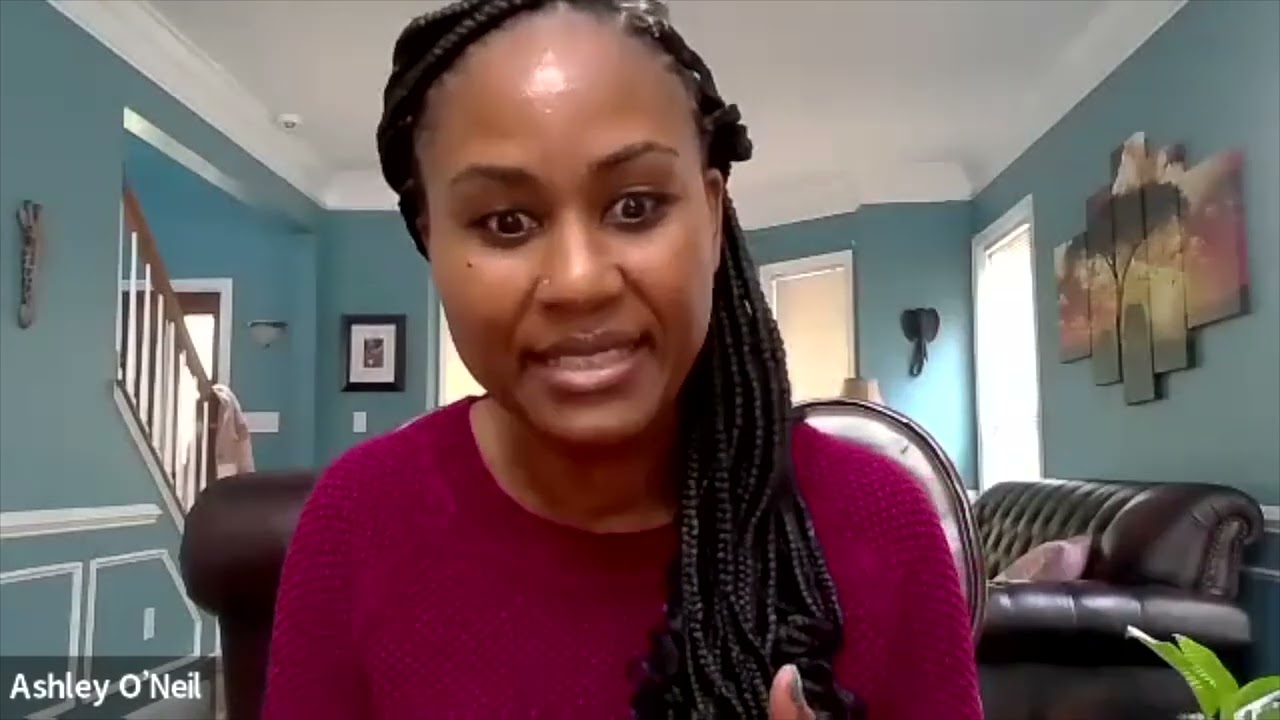
Dr. Terri Major-Kincade talks about how a palliative care consult and team or family liasion can help parents who feel they aren’t being heard or are being judged.
Theme: Access and Equity
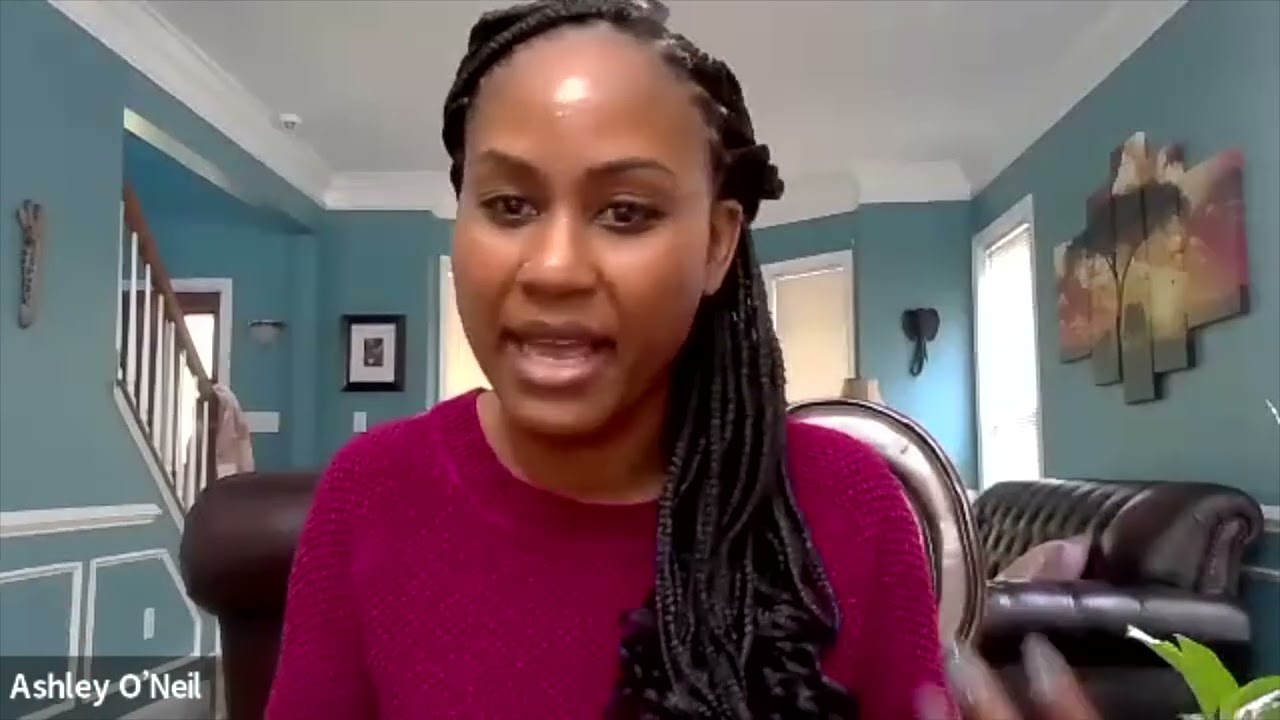
The mother of a young boy who is very medically complex describes the ways in which the health care system is burdensome for parents – gaps in coverage for nursing, miscommunication between hospital billing and insurers, gaps in information provided about community resources.
Theme: Access and Equity
The mom of a medically complex little boy who was born very premature stresses how important it is that hospital clinicians consider what families need to go home and stay home ….
Theme: Access and Equity
Six years ago, my daughter Sasha aged out of the public school system. I was forewarned by our area agency, her medical team and school staff that this transition would not be easy. Yet as much as they prepared me for the challenges that lay ahead, I was still taken aback by the freefall that occurred immediately after “age-out” day.
On Sasha’s last day of school, her therapists, aides, classmates and classroom staff hosted a big party. We laughed as we sat with paper plates on our laps, reminiscing about so many incredible elementary, middle and high school years. After an hour or so, Sasha’s physical therapist asked if they could walk the halls together one last time. I held back tears as we loaded our van with Sasha’s favorite school supplies – a dinosaur stenciled pillowcase, a plush musical octopus, special blankets and chewies, clothing and hair supplies.
In preparation for the coming years and after careful consideration, we decided on the Parent Directed Management System (PDMS) for Sasha’s day program. Unlike the Traditional Day Program where an area agency provides staff and locations, the PDMS model would give us the autonomy to utilize Sasha’s annual Medicaid and State budget in varying ways. We would be responsible for hiring and overseeing our own staff and building goals around a program we created. This model would have its benefits and challenges, but our desire for a customized day program that emulated what Sasha loved most about school drove the decision.
In the early months, we struggled to find staff in our rural community, a challenge we anticipated. Then, a pandemic hit. Life halted for most, and the medical vulnerabilities within the special needs community temporarily froze all programs. Next came a surprise pregnancy. I was 45 years old, making me now at increased risk for COVID too, in addition to an unborn child. All systems were necessarily on hold.
Somehow, six years passed. Six years of Sasha remaining at home. Little structure was present in her days other than meal and medication schedules and instilling purpose and meaning was like watching a balloon float just out of reach. And so, It was with disbelief during Sasha’s 2024 annual physical that the topic of summer camp arose. Her PCP, the Medical Director at a camp serving individuals with special needs in southern New Hampshire, broached the topic, “With Sasha doing so well,” she began “do you think she’d be interested in attending camp next summer?” Doing so well? I recall thinking. Attend camp? “With you living a good distance away” she continued, “overnight would make the most sense of course. We offer 5, 7 or 10-day sessions”. Overnight would make the most sense? I thought. I sat there…stunned. But I knew this was a must-do for Sasha. She had barely left my side for six whole years. She was 26 years old.
When registration opened, despite the commute, I changed my application status from overnight to day camp. I wasn’t sure If I was ready to displace Sasha, however temporary. I envisioned her looking up at the ceiling of a camp cabin, wondering if she would ever return home. I didn’t think either of us were ready for something so big. Soon thereafter, we attended the open house, touring the facilities and grounds. We met camp counselors from all over the world and got a wonderful feel for the activities and programs provided each day. On the car ride home Sasha’s sister Nika, age 4, asked why she couldn’t attend too.
The excitement in our home was palpable as the first day of camp approached. Checklists and shopping trips, preparations and medical clearances were all complete. The night before camp started, we retired a bit early and told Sasha what lay ahead. Tomorrow, she had a place to be.
That first morning was surreal, reminiscent of routines from years ago when Sasha attended school. I felt a familiar pang as I prepared myself to allow someone else to care for Sasha. Her sister was stoic, asking if she could make Sasha’s lunch and silently loaded her bag. I tried not to let my mind wander. A haunting notion that a much deeper loss awaited us all one day kept rising. One day we will be packing hospital bags instead of lunches. One day Sasha will leave the house and not return home. But there was no time to dwell. Drop off time was near.
As we got out of the car there was one counselor left on the gravel road, waiting for their camper. I am self-aware enough to know that I spoke forever while introducing us all to Joyce. I shared Sasha’s likes and dislikes, which noises indicate discomfort and which noises express joy. I conveyed the importance of hydration and discussed her g-tube along with how to best feed her purees. Nika listened attentively but spoke little. As we drove down the dirt road leaving Sasha behind Nika cried out “I miss her already!” I understood. I did too.
For the next five days we learned and grew as we honed our routines. Nika would excitedly march ahead of me into Sasha’s room each morning, flip on the light and call out “Sashaaaaa…. it’s camp tiiiiime!”. Then she would meticulously discuss outfit options, all the way up to the headband. Lunch would get packed as I fed Sasha her breakfast and then Nika would hold the front screen door for me to help the wheelchair fit through the threshold. She was so proud that her sister had somewhere to be.
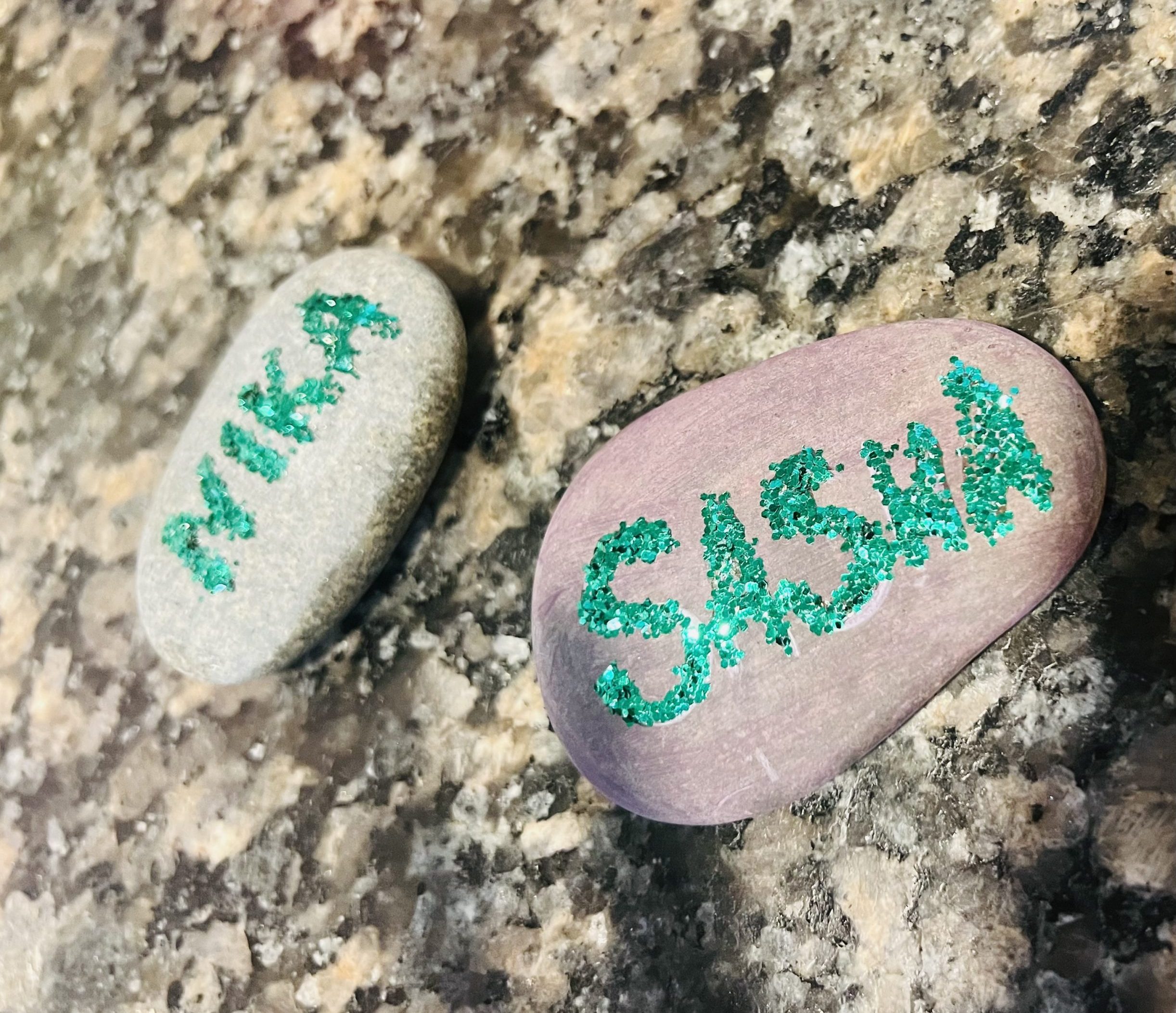
During daily pick-up we’d marvel at the joy Sasha’s arts and crafts brought us. Painted rocks for Mom and Dad, sunrise paintings for Sasha’s room, namesake beaded jewelry for her sister. But more than all those things, camp gave us a must-do schedule with Sasha as opposed to an optional one. Sasha was given structure, autonomy, identity and purpose. It also gave us one more thing, equity.
That word kept ringing in my ears as the end of camp neared. While reflecting on the people, the tone, the joy and the humanity that surrounded Sasha during her time at camp, movie reels of life throughout the years played in my mind. The reels mostly included Mike, Nika and I running to and fro while Sasha often stayed behind. We went out in the world to socialize or get things done and then report back. Meanwhile, Sasha’s day was unchanged.
During camp week, however, things felt…. equitable. Fair and impartial. Sasha would go out in the world for a day of socializing and productivity while we did the same. Both parties would report back with experiences to tell one another. What a gift camp gave us all.
________________________________________________________________________________________________________________
Joanne Huff comes to Courageous Parents Network as a long time follower and parent enthusiast of the organization. As the Mother of two girls, the oldest of whom has the rare disease MPS IIIA/Sanfilippo Syndrome, Joanne has benefited tremendously from the intimate parent interviews and candid, vulnerable story sharing throughout numerous thought provoking blog posts. As her daughter’s activities and lifestyle started to slow down with disease progression, CPN became a larger anchor in times of uncertainty and unrest. It is through this lens that Joanne hopes to share experiences and insights via the CPN blog.
Joanne completed nursing school after her daughter’s diagnosis, receiving her Bachelors of Science in Nursing from Plymouth State University, Plymouth NH. She enjoyed community liaison work with home care providers of adults with special needs up until her own daughter’s care became increasingly more involved. In addition to serving on the Boards of New England Regional Genetics Group (NERGG) and Adaptive Sports Partners through 2024, she has found great purpose in volunteer work advocating for policy improvements and change in Washington DC with the National MPS Society. In her free time, Joanne seeks balance and refuge with yoga, hiking and performing as an ensemble Soprano vocalist with the Pemigewasset Choral Society. When not blogging for CPN, Joanne enjoys sharing offerings on her personal Blog Folding Origami for God. She resides in Bow New Hampshire with her two daughters, Sasha and Nika, her husband Mike and her yellow lab Suki.
Theme: Access and Equity
Every two years in the month of July the deadline for redetermination of Medicaid coverage looms. My daughter, approaching age 27, has received subsidized health insurance for well over two decades. Her diagnosis, the rare genetic syndrome MPS IIIA (Sanfilippo Syndrome), requires extensive medical surveillance. We are fortunate that its severe impacts, surrounded by developmental delays, seizures and a degeneration of the central nervous system, are greatly but not entirely supported by Medicaid. The trifecta of her syndrome results in not only an all-hands-on-deck approach within the household but, if I’m being forthcoming, also a tremendous financial burden to both the family unit and the taxpayer at large.
I have long recognized and spoken of the financial burden that my daughter Sasha imposes upon the healthcare system. What I don’t often speak of is the financial impact her condition has on our household. The reality of both parents maintaining employment presents a logistical nightmare, as care management of a medically complex child is a full time job. Authorizations to obtain services are complex, and coordinating referrals, reauthorizations and appointments are commonplace in day to day life making parents both caregiver and case manager.
In Sasha’s early years, 1:1 supervision was required; she had the physical strength of a child her age but the cognitive awareness of an 18 month old. This made for numerous safety concerns and a need for her to always have eyes on her. Now in her older years the 1:1 supervision has been paramount for hygiene needs, feedings and positioning as she approaches a state nearing paralysis. Training in-home staff in a high turnover field eats up extended time periods and often parents need to fill the gaps in care, making a professional career nearly impossible. I know the continuous financial strain that Sasha’s care has placed on our family all these years, but I am also acutely aware that I am one of the lucky ones. There is sufficient financial stability in our home to provide for the option for me to not work full-time. But I worry – what are other, less fortunate families to do, especially in a political climate of intense governmental financial scrutiny, often by individuals far removed from the real life experiences of families like mine?
We have also been fortunate with our healthcare system and medical team in the state of New Hampshire. In time we’ve found ourselves an incredible medical team of over 10 specialists that supports both Sasha’s physical health and her mental wellbeing. When we struggled to keep Sasha safe in bed at night due to frequent nocturnal seizures, her neurologist wrote a medical order for a “sleep safe bed”. At that same time, pharmaceuticals were slowly introduced until we found the right mix to halt a most harrowing seizure condition. When her mobility started to wane, multiple consults took place with equipment vendors, doctors and physical therapists to obtain a highly specialized gait trainer- a “walker” to keep her upright for bone health and moving safely through her world. A shower chair to support both her and our safety was introduced.
Yet, these supports come with a price tag. Let me illustrate just a few. The out-of-pocket cost for the sleep safe bed would have been $10,000. The pharmaceuticals that have remarkably kept Sashsa’s seizures at bay for 12 years would cost $1800 per month without assistance from Medicaid. The out-of-pocket cost for the gait trainer to assist Sasha in safe ambulation would have been over $8,000 and the shower chair we rely on for safe sanitation charged our private insurance over $2,000. Thankfully, these items have all been covered either through our private insurance or Medicaid. While my family situation is secure, I can honestly tell you that bearing the responsibility for these costs without Medicaid, even with private insurance, would break any family including my own.
But this is where so many families like mine sit – in that divide of who benefits and how the financial burden is shared. It is an uncomfortable conversation. I fully see and understand the financial implications that we as society face as we address heaping debt. And yet medical ill fortune could fall on any one of us in an instant.
In nursing school, I had an opportunity to study internationally and perform clinical work with underserved and developmentally impaired communities. This time revealed the sobering truth of why robust medical teams, research and development and social services are so vital here in the United States. The support we have here in the US helps carry us in our day to day lives and it keeps my child living at home, where I want her to be, and where I know her care is less economically burdensome to society at large.
I have long maintained that, to me, Sasha is truly one IN a million. The physical challenges coupled with the emotional toll of watching her vitality fade NEVER overshadows the joy she brings to my daily life. The lessons she has taught me about love and commitment and gratitude are forever at the forefront of my days. But one could also argue that Sasha is one OF a million. From a financial burden standpoint, if you multiply the above-mentioned costs, you would arrive at a staggering financial total.
Yet you can not try to tell me there is a price tag you can place on Sasha living to her fullest capacity. There is NO price tag on well-being. Is it costly? YES. But what I also know is that every single child struggling with a rare disease, however complex to navigate, deserves an unbridled full shot. We all do.
I do not know what will happen regarding the bi-annual review of our upcoming Medicaid application. What I do know is that when individuals furthest removed from this reality have the power to make medically impactful legislation, for better or for worse, they may choose to contemplate price tags over human decency and physical health. Officially in the United States, we do not ration health care. But cuts to Medicaid are certainly going to do that. My aim is to not let that happen.
________________________________________________________________________________________________________________
Joanne Huff comes to Courageous Parents Network as a long time follower and parent enthusiast of the organization. As the Mother of two girls, the oldest of whom has the rare disease MPS IIIA/Sanfilippo Syndrome, Joanne has benefited tremendously from the intimate parent interviews and candid, vulnerable story sharing throughout numerous thought provoking blog posts. As her daughter’s activities and lifestyle started to slow down with disease progression, CPN became a larger anchor in times of uncertainty and unrest. It is through this lens that Joanne hopes to share experiences and insights via the CPN blog.
Joanne completed nursing school after her daughter’s diagnosis, receiving her Bachelors of Science in Nursing from Plymouth State University, Plymouth NH. She enjoyed community liaison work with home care providers of adults with special needs up until her own daughter’s care became increasingly more involved. In addition to serving on the Boards of New England Regional Genetics Group (NERGG) and Adaptive Sports Partners through 2024, she has found great purpose in volunteer work advocating for policy improvements and change in Washington DC with the National MPS Society. In her free time, Joanne seeks balance and refuge with yoga, hiking and performing as an ensemble Soprano vocalist with the Pemigewasset Choral Society. When not blogging for CPN, Joanne enjoys sharing offerings on her personal Blog Folding Origami for God. She resides in Bow New Hampshire with her two daughters, Sasha and Nika, her husband Mike and her yellow lab Suki.
Theme: Access and Equity
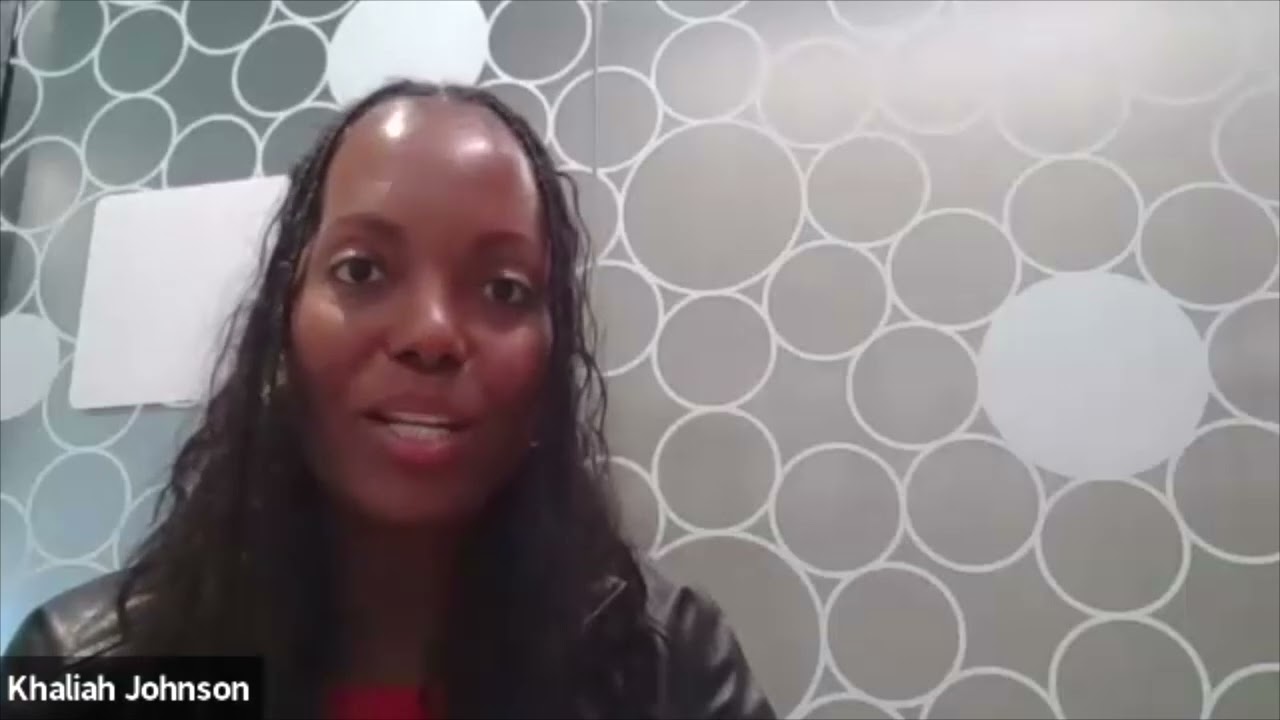
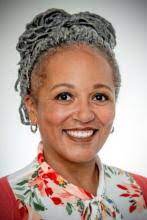
Dr. Johnson describes her journey to choosing pediatric palliative care – from a focus on maternal/child health and OB/GYN to widening the lens to whole family care and tending to family well-being in the context of serious illness; and then the role a mentor played in shepherding her into palliative care.
Theme: Access and Equity
Dr. Khaliah Johnson introduces herself including her ancestry and memories of being a caregiver as a young child. She considers caregiving part of her ancestral inheritance.