
The CPN team and I have just released CPN’s 2025 Impact Report. Certainly we’re proud of it because we’re proud of the work, and it is filled with numbers indicating CPN’s growing reach and engagement with parents and clinicians. Numbers matter in impact reports because they measure progress and scale.
Numbers also matter when you’re measuring the passage of time, ticking off birthdays and anniversaries. Next month – May 9 – marks 25 years since my daughter Cameron died. This is a big number that hurts my head and my heart.
Numbers matter for what they measure, but they don’t hold any deep meaning on their own. The significance comes in the individual stories behind the numbers. Stories contain lots of meaning. And stories are a vehicle for understanding and healing.
So here is a CPN story that is more meaningful to me than all the data in our impact report.
In the fall of 2015, in Burlington Vermont, Sarah Casey and Steve Shaw received the fatal diagnosis of Gaucher Type 2 for their beautiful 8-month-old daughter Emerson Mary Shaw. Emerson’s primary care pediatrician was Dr. Meredith Monahan, who had actually been the chief resident at University of Vermont’s College of Medicine when Sarah’s sister-in-law, Dr. Alicia Casey, had been a younger resident at UVM (a detail that is relevant to this story, so hold on to it).
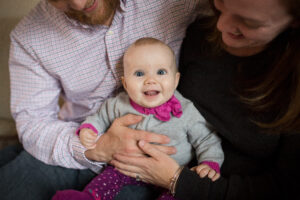 There was little to be done to meaningfully extend Emerson’s life, but Sarah and Steve could keep Emerson more comfortable through Enzyme Replacement Therapy, for which she would need a port. They traveled to Boston Children’s Hospital – where Dr. Alicia Casey was now an attending pulmonologist – for her niece’s port procedure. While there, Sarah and Steve met with the pediatric palliative care team and expressed how isolated and utterly alone they felt. The palliative care team referred them to Courageous Parents Network, which was only in its second year.
Reluctant at first to engage with CPN, Sarah quickly came to appreciate the multiple parent perspectives shown in CPN’s videos and blog posts, and how these parents gave language to what she and Steve were feeling. Sarah also participated in CPN’s pilot psycho-education series that psychologist Nancy Frumer-Styron was leading.
Back in Vermont, Sarah asked Emerson’s PCP Dr. Meredith Monahan for a referral to UVM’s palliative care pediatrician, Dr. Bob Macauley. Dr. Macauley had taught both Meredith and Alicia during their residencies. In conversations about decisions for medical interventions, Dr. Macauley helped Sarah and Steve understand that they could still be good parents if they focused entirely on Emerson’s quality of life rather than quantity of months.
Emerson died in June 2016 at age 16 months. While Sarah and Steve grieved deeply, they had no regrets.
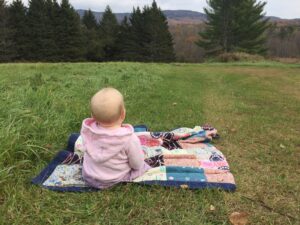 Up to this point, I (Blyth, founder of CPN) had no idea of Emerson, Sarah or Steve. CPN does not ask parents to identify themselves to use its resources and engage with its programming. But shortly after Emerson’s death, Sarah sent me an email personally thanking CPN for the help we provided and including photos of Emerson. Reading Sarah’s words and seeing these photos of Emerson with her parents, I burst into tears. CPN was only two years old, and this was among the first direct feedback we had received – putting a face, and unmistakable imprint of parental love, on the impact we were having.
Several years later, I interviewed Sarah and Steve and Sarah’s mother Melissa for Courageous Parents Network, so that their story could help other families just as they had been helped. And shortly after that, I interviewed Dr. Macauley so that his wisdom as a palliative care provider would be available on the platform. We also did a book talk with him for his recent memoir, Because I Knew You.
Meanwhile, also unbeknownst to CPN, Dr. Alicia Casey – now director of the Interstitial Lung Disease Program and Pulmonary Fellowship Training Program at Boston Children’s Hospital – was referring families in her practice to Courageous Parents Network. One such family was Frank and Jeanette, whose son Frankie Jr. was one of her patients. I learned about this when dad Frank reached out by phone to thank CPN for helping him see that he was not alone. Naturally, I had to interview them for CPN, to meet Frankie and to share their courageous parenting with other parents. I came away changed – moved by Frankie’s gentle energy, Frank’s humility and Jeanette’s feisty advocacy.
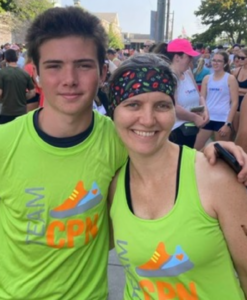 By this time, at her own initiation, Sarah was organizing and directing CPN’s running and fundraising team for the famous Falmouth Road Race, one of the oldest races for non-profits, held each August. Sarah and Steve and Alicia run on Team CPN in memory of Emerson and to raise money in support of other families. And for the past two years, Alicia’s son Jeremiah – Emerson’s cousin – has run too. (Sarah is actively recruiting runners for our team this year.)
Last month, Dr. Alicia Casey celebrated a milestone birthday. As a surprise, her family asked that gifts be made to CPN in honor of Alicia’s work and Emerson’s memory. The combination of this spontaneous gesture and the significant amount of money raised again brought me to tears. Of the amount gifted and her sister-in-law, Sarah said, “this is a testament to how much Alicia is loved and to how much her community values her dedication to her patients and families.”
It is also a testament to Dr. Alicia Casey’s appreciation of the work of Courageous Parents Network to promote palliative care, to help parents see that they are not alone, and to orient and equip them as their child’s advocate. When I spoke with Alicia about how her friends and family gave in her honor, she reminded me that she had trained under Drs. Bob Macauley and Meredith Monahan. We noted what a small world it had become –in the best possible sense. Alicia said, “I trusted that Meredith and Bob and all the people who trained me would take good care of Emerson, Sarah and Steve. And that I could be Emerson’s aunt and Sarah and Steve’s sister-in-law.”
At least for now, this is where the story ends. Dr. Macauley instilled in Drs. Monahan and Casey the primary principles and values of palliative care. Dr. Monahan became a primary care pediatrician and Emerson became one of her patients. Dr. Casey, Emerson’s aunt, became a pediatric pulmonologist and refers patient families like Frank and Jeanette to Courageous Parents Network. And people in their orbit, their network, give to CPN as an act of respect and appreciation; and to keep the goodness flowing.
The numbers in CPN’s impact report capture an expanding reach and dedicated engagement. But, this specific story captures what the numbers cannot. The authentic, soft, heart-forward connections between individuals who share a love for child and family and a dedication to compassionate care, the impact of which ripples outward for decades.
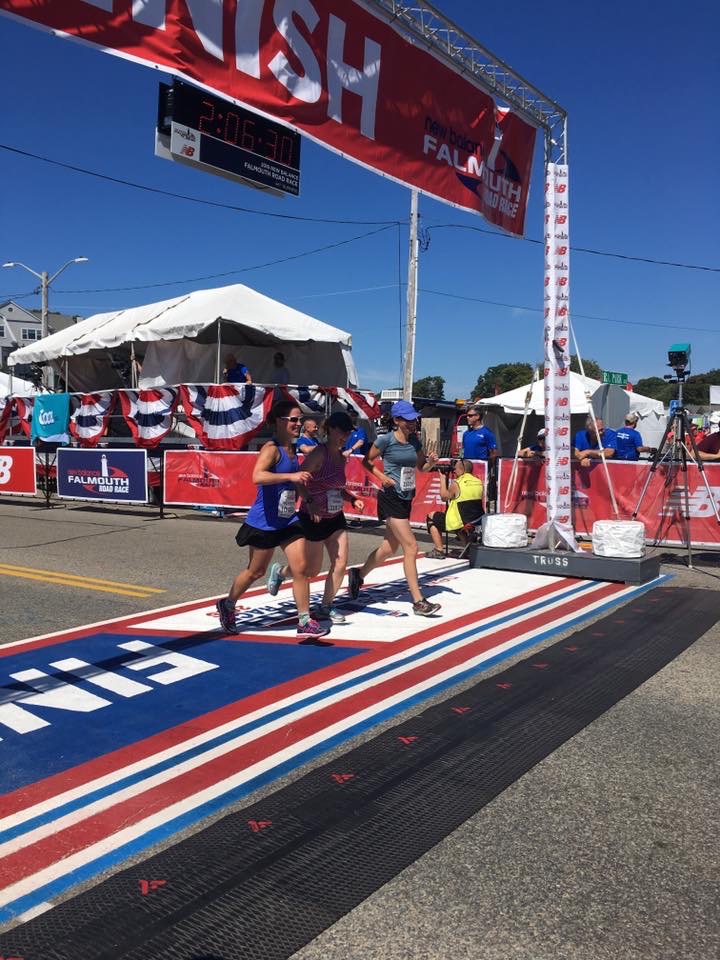 The Falmouth Road Race has always held a special place in my heart. With the finish line a few blocks from my childhood home, the race was always a highlight of my summers. My mother, a nurse, volunteered each year at one of the medical tents along the course, family and friends would run, and we would all gather post-race to celebrate. Though I’ve never been a natural distance runner, something about the Falmouth Road Race drew me in. I think partly it was the festiveness of it all and seeing world class runners up close as they sprinted by, almost silently as if their feet didn’t even touch the ground. Mostly, though, I think it was the regular people and the stories that their runs told that made it feel so special.
I can remember vividly all the years that I would stand at the corner, just past mile 6, waiting for Dick and Rick Hoyt to pass by. They would run together, Dick pushing his son Rick in his wheelchair. If you haven’t read their story, you should. It is incredibly inspirational in many ways. At its core is the story of a regular dad who went out of his comfort zone to do whatever it took to give his son the best quality of life possible. In doing so he changed not only their own lives for the better, but those of countless others. There were other stories of courage and selflessness, too. I would watch the runners running for various causes, names printed on shirts and bibs, and I would feel a sense of gratitude that there were so many good people, though I still saw them as other people’s stories, not mine.
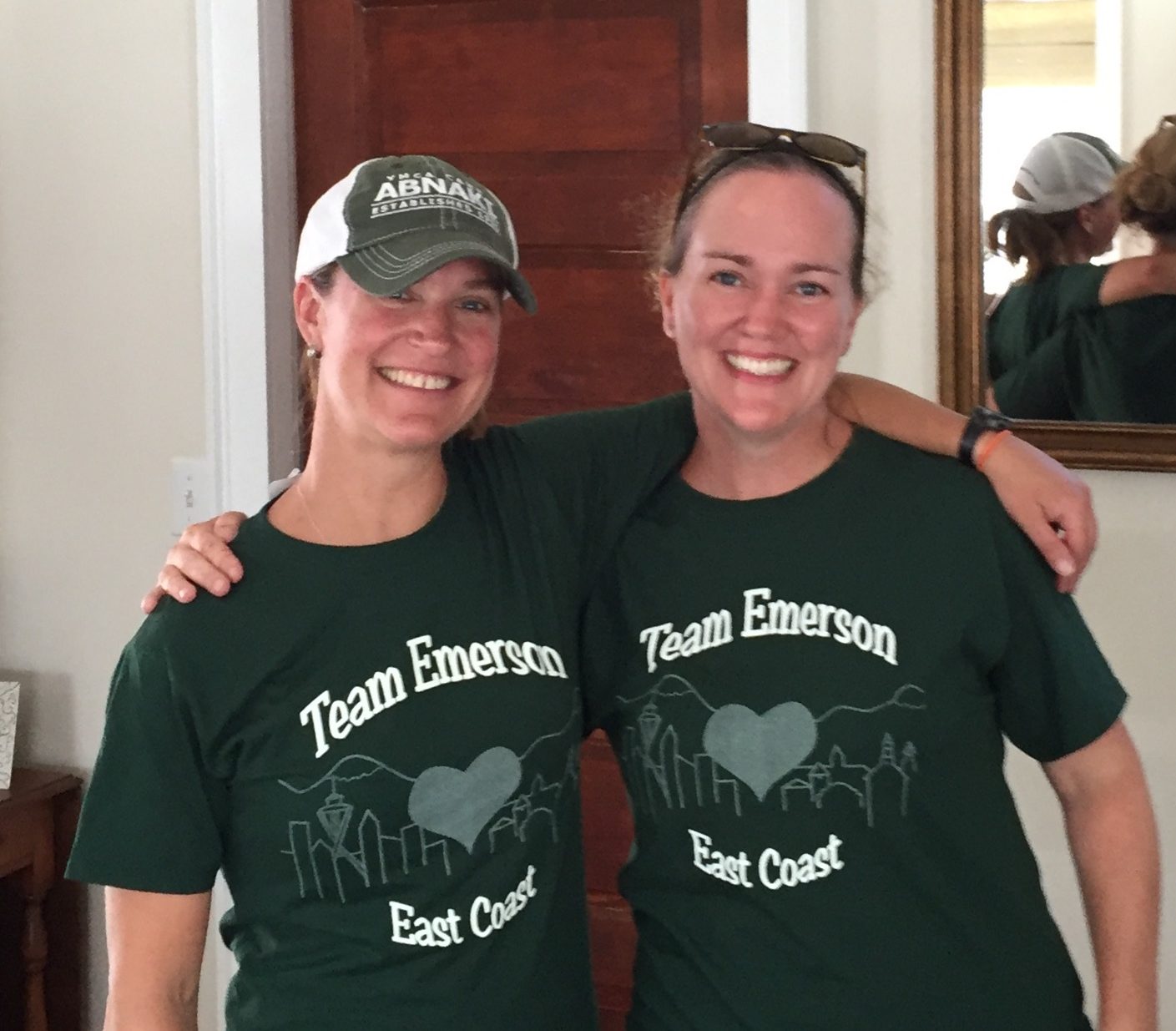 This changed in late 2015, when my daughter Emerson was diagnosed at 8 months old with Type 2 Gaucher’s, an extremely rare and fatal disease. My husband Steve and I went from being new parents with hopes and dreams for our daughter’s future, to being new parents anticipating our daughter’s decline and death. We were shattered. We were fortunate to have a wide circle of incredibly supportive family and friends, but there was a shared sense of helplessness. So, when my brother suggested that we gather to run the Falmouth Road Race as “Team Emerson”, it felt like something that we could all “do”. It was an opportunity for our friends and family to show their love and support, and for us to express our gratitude for that love and support. And it would be a time for us all to be together with Emerson, collectively soaking up all of her goodness that we could in the time that we had.
Unfortunately, Emerson didn’t make it to the race in August. She died in early June at 16 months old, just as we were ramping up our training. I stumbled blindly through the fog of those earliest days of grief. Where I had been efficient and focused and strong in my caring for Emerson, I now felt heavy and adrift. Standing felt difficult, self-motivation to run, impossible.
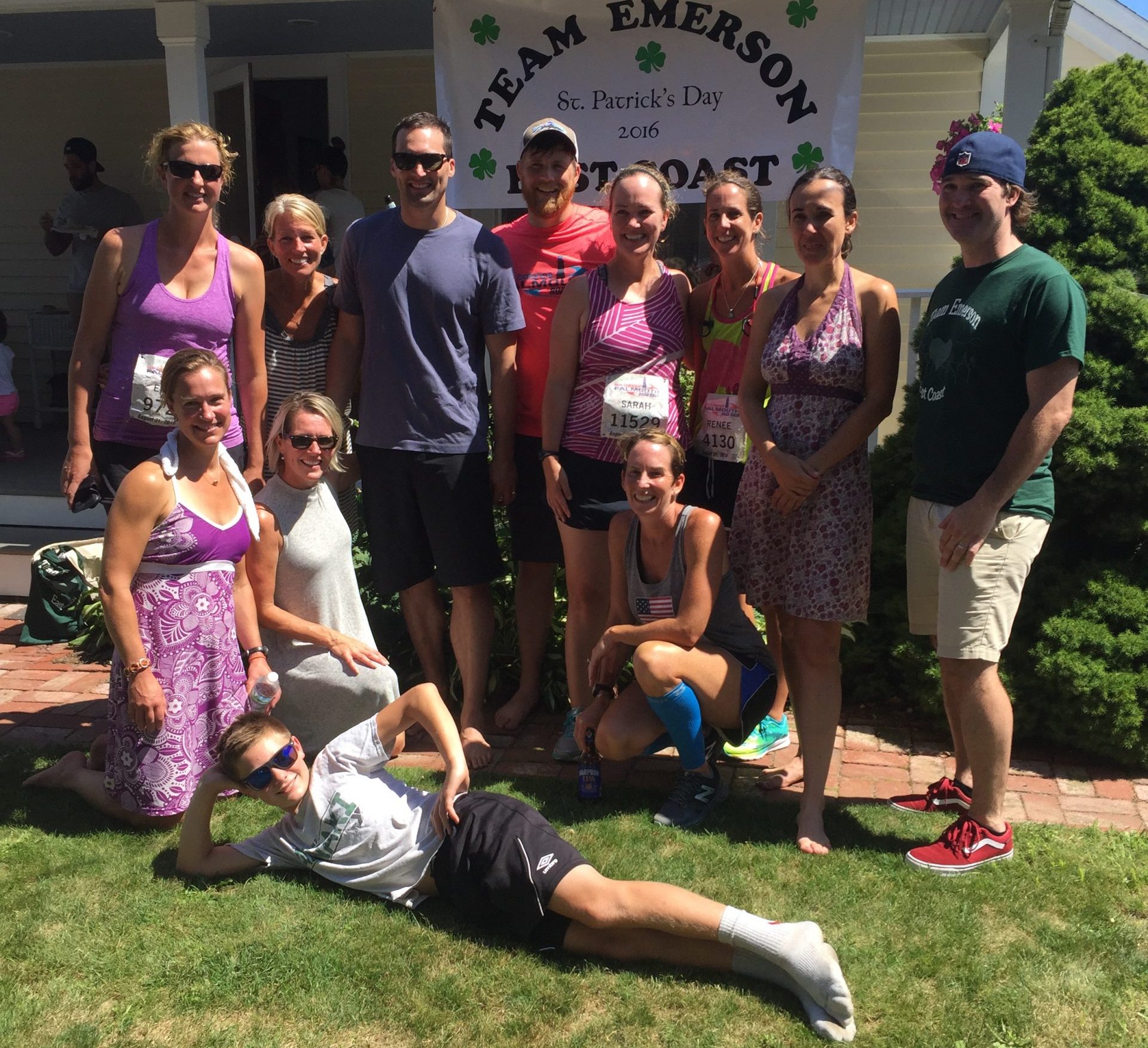 I don’t remember communicating to our team that we still wanted to run the race, but we must have. The support and momentum for “Team Emerson” grew. Our pediatrician, who had signed up to run with us, began stopping by after work to run with me. I suspect that she was mostly checking on my well-being, but training for the race gave us a reason to get together and gave me a purpose for moving my body, which I desperately needed. I know that there were days that she ran before or after meeting me to run (sometimes probably both) and that our runs were short, often including walking. But she kept showing up and so, so did I. Crossing the finish line of the race, I felt surrounded by love. I didn’t have the capacity at the time to express it, but I always wish that everyone who sent even the smallest good thought during that time could know how much it meant.
Not long after we ran the road race, my husband and I were interviewed by CPN. It felt like an honor to give back. We had been referred to CPN by the Pediatric Advanced Care Team (PACT) team at Boston Children’s Hospital soon after Emerson’s diagnosis, and will be forever grateful, both for the referral and for the families whose stories helped keep us afloat in the middle of so many nights. Connecting with CPN made us feel like we weren’t alone, gave us language for what we were experiencing, helped guide us as we made decisions, and most importantly, helped us to reframe what it means to have hope.
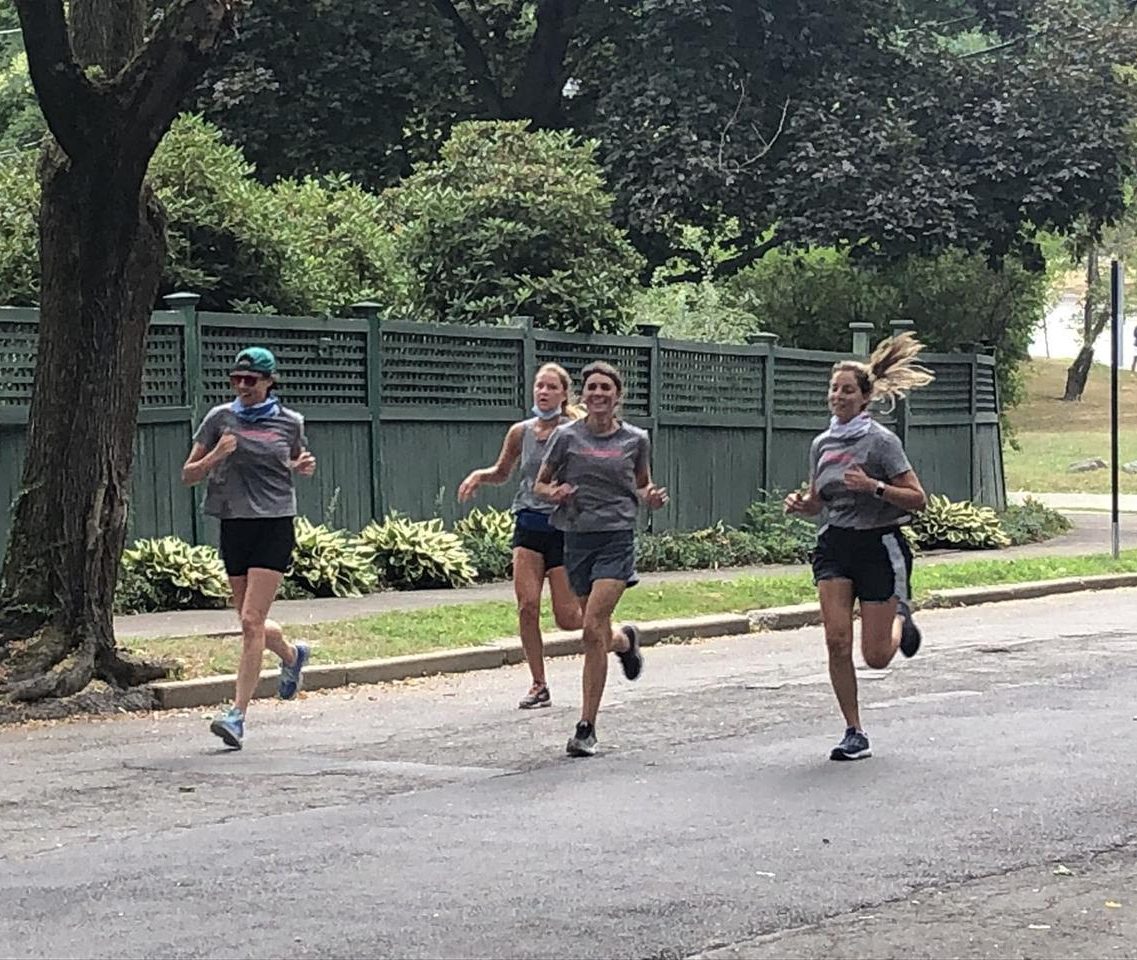 Over the years I’ve stayed connected with CPN in a variety of ways and have also continued to run. A few years ago, many of the original “Team Emerson” members ran a 5k on what would have been Emerson’s 3rd birthday, raising money for CPN in her memory. This planted a seed in my mind that would grow into CPN participating in the Falmouth Road Race’s Numbers for Nonprofits program. This program grants Massachusetts-based nonprofits a preset number of race entries for runners to raise money and awareness for their organization. Each year, over 3,500 runners represent over 300 nonprofit teams. Incredibly, since the year 2000, these teams have raised over 50 million dollars for their causes. Soon after Team CPN was accepted into the program for 2020, however, COVID hit, and the race was switched to a virtual format. While disappointing, if there is anyone who can deal with the “unplanned,” it is the CPN community. Our runners exceeded fundraising expectations and came together for a socially distanced run that felt every bit as special as we had originally hoped. In 2021, the race was back to the in-person format (with a virtual option). It was wonderful to have many of our runners and their loved ones join together post-race at my family’s house, just as I remember my family doing when I was younger.
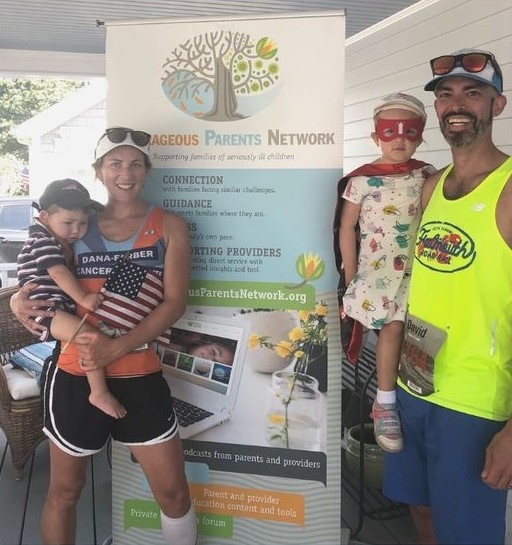 I am so thrilled to be coordinating CPN’s Falmouth Road Race team again this year. Our runners include CPN families, medical providers, staff, donors, and friends. Collectively, they represent the community that is CPN. Individually, they carry personal stories of courage and love and wisdom, earned through, among other things, continuing to show up. This is beautifully illustrated by CPN sibling Johnny in this video he made for his brother Mateo. Their mother Michele, also a chaplain at Boston Children’s Hospital, will be taking to the starting line with Team CPN this August 21st. I can’t wait to cheer her and the rest of our runners on. Watching the race, I’m sure I’ll feel a familiar sense of excitement and gratitude, only deeper now. These aren’t just other people’s stories anymore, they’re also mine.
To learn more about each of our runners and to support their fundraising efforts, visit our team site here.
Three bereaved moms share their beliefs about the connection between their children who have passed and their children who follow. They talk about the beauty of the signs they have been given, the intersection between life and death, and seeing beyond what happens on earth.
The mother of two daughters, Emerson and Margo, talks about the strange realization that as soon as she became pregnant again, she could safely talk about Emerson, who passed away at 16 months from Type II Gaucher’s Disease, with other people because there was a happy ending. She discusses how this made her feel protective of both her daughters because she wanted them to be seen as individuals and of equal importance in her story.
Sarah is the mother of Emerson. After 7 sleep-deprived but blissful months, Sarah and her husband Steve learned that Emerson had Gaucher Type 2. Gaucher Type 2 is always fatal in early childhood. Sarah shares here the vital role that Courageous Parents Network AND pediatric palliative care played in the months that followed the diagnosis and then Emerson’s death shortly after her first birthday, in June 2016. This recording is taken from a talk that Sarah gave in January 2017 at Pediatric Grand Rounds at the University of Vermont Children’s Hospital, where Emerson was loved and cared for and where she died.