Theme: Transition to Adulthood
When Evren and I first heard someone ask us, “Who’s your quarterback?”, it took milliseconds for it to click: the interviewer wanted to know who coordinated Evren’s complex care team. Today, I realize that who’s your quarterback is jargon known to many who live with medically complex diagnoses and their parents or caregivers, who may be asked the question again and again. But for me and Evren, it’s always been an awkward question. Was it legit for him to answer with, Mom’s the quarterback?
Somewhere on the timeline from childhood to the late teens or early twenties, a monumental transition occurs for a family living with medical complexity when it’s time for the entire pediatric team to be subbed out for adult care providers. Leaving pediatric providers who earned our trust and cared for our sick children is an emotionally fraught process, and many parents begin feeling anxiety years prior. The transition is even more challenging in situations like ours in which the parent or caregiver is the quarterback. Once our children reach 18, QB moms like me are then expected to turn the ball over to our medically complex “adult” child.
When Evren reached age 18, we were all overjoyed. Despite serious and progressive impacts of his genetic disease, Acid Sphingomyelinase, or ASMD, he had survived to adulthood and would be starting college an hour from home. Fortunately, though, we had a grace period before his pediatric providers would push us out of the nest. Because of his complex diagnosis, his pediatrician was willing to keep him on longer, and the children’s hospital, where most of our care team was, would continue seeing him until age 23.
But the time for the transition of care came sooner rather than later, before age 23. It turned out that certain specialties like endocrinology and pulmonology draw the line at 18 years because the demand for that specialty care outweighs the supply. But more than that, I wanted Evren to go to school. He needed to spend his days in classes and with his friends, not with me sitting in a car for hours traveling to and from medical appointments. So the decision was made to line up an entirely new team of adult care providers near his college. With a change of medical provider groups through an HMO, every single one of his physicians had to go all at once.
For the most part, Evren was still a typical young man. He wanted to do and think about the things most young men like. So although I gave my best shot at passing the ball to him, Evren was not really interested in taking over the QB position. He resisted my coaching on how to ask for referrals and had zero inclination to leave his social media apps and summon the patience needed to comb through a provider database which was not only tricky to navigate, but also filled with outdated listings.
Though I tried to fire him up with factoids I’d read in website bios about the new physicians, Evren wasn’t the least bit curious. I wasn’t surprised that he seemed completely unmotivated to take over as quarterback. He didn’t want to participate in the transition of care because he wished he didn’t need the care in the first place. He wanted life to be about fun at college and making memories with friends. No sir. No transition of care workshops for Evren.
Sigh.
I would need to be able to continue as QB, at least for a while. My plan was to watch for readiness for each new phase, transitioning him into the QB role at a slower pace. I felt doubly responsible to do whatever I could to help Evren because his disease progression had left him chronically exhausted. At least I could carry this weight for him.
Though I asked each one of his physicians, including his pediatrician, not one made a single helpful recommendation. I had to transition his care team by myself. The process took hours across several months and required endless phone calls, which usually meant sitting on hold with annoying music playing in the background. If my mind wandered, I had to listen yet again to the phone menu options, “which may have changed,” in order to be connected to the right line.
Sometimes I’d be disconnected, and sometimes a computer-generated voice ordered me to leave a message for the staff “who were all busy answering other callers.” I strategized by calling offices in the mornings during summer vacation while Evren was physically present but still sleeping in. Because Evren wasn’t a patient yet, there was no privacy waiver on file, and the office wouldn’t allow me to make an appointment for him. I’d dial the office, and when the receptionist inquired about his age, that was my cue to barge into Evren’s room, wake him out of a sound sleep, shove the phone at him, (he knew the drill), and then he would mumble with his eyes closed, “My mother has my permission to talk to you.”
One day, during a search for the new lineup, my mind started to slip into a daydream. Hmm. I wonder what it would be like to have one of these quarterbacks—someone who would guide us down the field and show us who to pass the ball to. What would it be like to have someone help me? Having a personal quarterback would have removed the burden of anxiety I felt about possibly making serious mistakes along the way, somehow leaving a bad impression, or failing to find that magic provider who would have been perfect for Evren’s care.
Right then I said to myself, I’m just going to do it. I had seen somewhere on the children’s hospital website that they had a transition of care office, and I would see if they could help me. When I called, and the conversation went something like this:
Me: Hello, I was wondering if you might be able to offer some help with the process of transitioning my son’s care. My son is aging out.
Receptionist: What is it you’re looking for help with?
Me: Well, I tried asking his hematologist and pulmonologist for a recommendation for an adult provider, and they basically said they don’t know anyone.
Receptionist: Uh, excuse me. I have a call coming in. I need to put you on hold. Click.
Me: Okay, drumming my fingers, feeling less optimistic with each passing minute.
Receptionist: Three minutes later. Okay, I’m back. What is it you wanted again?
Me: Uh, basically I wanted some help trying to find new providers for my son. After talking to the pulmonologist, I get the impression that it’s going to be YOYO.
Receptionist: YOYO?
Me: Yeah, you’re on your own.
Receptionist: Wait a minute. Who told you that? Did they say that? How old is your son? Do we have a confidentiality waiver on file?
Me: Yes, it’s there somewhere. Yikes. Am I lying? Has that one expired? I’m sure it’s there! I said it with fingers crossed, feeling guilty over my potential falsehood.
Receptionist: I’m putting you on hold while I look for it. Click. About two minutes later, he comes back on. I still can’t find it. Lots of tapping noises in the background. Oh, wait a minute. I have another call coming in. Click. Puts me on hold for the third time.
Enough! This quarterback dream has ended. I hung up the phone.
So, for a few hours, I stewed in frustration and self-pity, feeling jealous of people who had their own personal quarterbacks. Then, abruptly I put myself in check. I thought about the mothers around the world who had no money to access care of any kind for their children, or who might be able to access a doctor, but no specialty care of the caliber I expected for Evren. I was acting spoiled. I felt remorseful, and my attitude did a 360. I practiced expressing gratitude that my son could access the care he needed, and that I had the capacity to help him.
Eventually, the new care team came together, and I felt optimistic. In time, I saw that a few seemed to take even better care of Evren than his pediatric providers. By the end of the summer, it felt as though we had 100 appointments. “I think I’m all doctored out, Mom,” Evren said with weary resignation.
Fast forward to early 2025. My son was at his first visit with a new cardiologist; the third in as many years. (The first one—well—I picked a lemon. The second moved away.) Evren and I had agreed I would phone in and listen. Though he now attended many appointments by himself, I still tried to attend important visits, though it wasn’t always possible. As planned, I listened in and expected Evren to speak for himself. I spoke only when necessary. The appointment went well, and I hung up once the next steps had been determined.
A few minutes later, Evren called me back. “You know what the doctor said? He said, ‘We’re building a good team with your mom as QB.’ I started to laugh inside my head, but I couldn’t help myself. I couldn’t stop laughing. He must have thought I was crazy!”
I still smile at that.
We’re optimistic that Evren will be strong enough to take a regular job, and I’m confident that when it’s time, he can be his own quarterback.
Theme: Transition to Adulthood
The mother of a 21-year-old son with complex chronic conditions offers some tips for getting guardianship with DNR rights. She talks about the MOLST too. “It’s good to have all your ducks in a row.”
Theme: Transition to Adulthood
I have been on the ‘parenting a child with a rare disease’ journey for 12 years and I have a confession to make: I thought I had it all figured out. Truthfully, for a while I did. Then my daughter became a teenager.
After living this rare disease for over a decade I felt like a Vet in the Game. My job was always to be her case manager – to schedule appointments, refill medications, and intervene for her in countless other ways. I did so ungrudgingly because she already has so much to deal with daily. Being diagnosed with Mixed Connective Tissue disease meant days of fatigue, pain, and numerous other issues, so why wouldn’t I want to help in any way I could?
I had it handled. I created a system. I had it all under control. Until I didn’t. In what felt like overnight the things that I did and the interventions that worked so well didn’t work at all anymore. All of a sudden, she had opinions and desires and she was questioning EVERYTHING. ‘Do I really have to get monthly antibody infusions? What’s the worst that can happen if I don’t? It’s ok if I miss just one day of my meds. Mom, it’s not that big of a deal! You’re being dramatic’. Every time she would make these statements, awful memories would flash across my mind. Memories of hospital stays; days, weeks, and months spent homebound too sick to go anywhere. The cries of intense pain. She doesn’t remember any of this but for me, it feels like yesterday.
I get it. As a rare mom, I was told this would happen and as a child and adolescent psychotherapist I know that developmentally this is exactly where she is supposed to be. She is figuring out her way in the world outside of her family – outside of me, which is a good thing. But if I am totally honest, on the best of days this new-found questioning and independence irritates me; on the worst of days, it frightens me; and it is a nuisance on the days in-between.
At a recent family dinner, this became crystal clear. When it was time for dessert my daughter requested key lime pie, one of her favorites. You see we had been to this restaurant in the past and she ate this dessert without issue. On this day, however, the waitress informed us that the crust contained almond extract, and my daughter, on top of everything else, also has a severe nut allergy; so severe that any exposure to nuts can cause anaphylaxis, a life-threatening allergic reaction. I sat quietly and watched as the waitress spoke to her, certain that when given this information she would choose a different dessert. To my shock and surprise, she decided that since she ate it in the past that she would certainly be fine now. We all calmly explained to her that perhaps the recipe was changed and that it didn’t make sense to take such chances. This didn’t faze her and she was fine to just ‘risk it’. The waitress and I locked eyes while in my mind I quickly ran through all the options – the location of her EpiPen, the distance in minutes to the nearest emergency room, etc. Ultimately, I opted to step in and pull the Mom Card. There would be no key lime pie today. At least not THIS key lime pie.
The key lime pie incident started me on a spiral. What if I wasn’t with her? Would she know what to do? What’s going to happen when she goes to college? Will she take her medical condition(s) seriously? How did I miss this? What can I do to course-correct in the 15 months that I have left before she leaves? Should she even go away? Can I legally keep her at home for the rest of her life? It was pretty bad…
When I finally got my wits about me, I leaned into my clinical training and lived experience with my daughter’s older brother. I took a deep breath and reminded myself that though she has some serious medical challenges I can and should still utilize the same strategies that any parent of teens should use. I reminded myself that this experience was a teachable moment for both her and me. There is still work to be done but thankfully there is time in which to do it. I reminded myself of what I already knew to be true:
- She has a strong foundation
- As a parent of a teenager, I must begin to make the shift from being directive to being an advisor
- She is a critical thinker which is a valuable skill (even if it drives me crazy right now)
- I can help set her up for success by asking open-ended questions that can help translate her strong critical thinking skills to making health-related decisions
- I can give her the information needed so that she can make informed decisions about her health
- Adolescence is a challenging time. Empathy and understanding can go far.
And if all else fails, have an awesome recipe for nut-free key lime pie in my arsenal.
Ronda Thorington is a Licensed Professional Counselor with over 20 years of experience providing mental health treatment to children, families, and adults in various roles and settings. She began her career at Family and Children Services of Central Maryland where she provided case management services to families impacted by HIV/AIDS. After returning to her home state
of Connecticut she spent several years working as a clinical therapist at the Children’s Center of Hamden and then expanded her role to include that of clinical director of the facility’s crisis stabilization program. She currently runs a private practice specializing in the treatment of children and families.Ronda’s journey with serious illness began in 2012 when one of her three children was diagnosed with Mixed Connective Tissue Disease at the age of four. She now uses her clinical knowledge and expertise to coach families impacted by life-changing medical diagnoses. She shares tools and strategies developed out of her own experience to empower families in self-advocacy, reducing overwhelm and living lives that are not defined by a diagnosis.
Theme: Transition to Adulthood
Un cambio que requiere consideraciones y planificación por aelantado
El enfoque de todo tratamiento médico es maximizar nuestro bienestar y funciones por toda nuestra vida. Según un niño/a con desafíos significantes a su salud llega a su mayoría de edad, hay que tomar en cuenta muchas cosas que requieren planificación anticipada. El enfoque de este Guía es en el proceso de proveer cuido para un niño/a con necesidades de cuido significativas, el cual no es capaz de ser un participante activo en su cuido y la toma de decisiones.
Theme: Transition to Adulthood
Parenting is a lifelong process, and it is particularly so for parents of children diagnosed with a serious illness, where the child’s chronological age may not correspond with their developmental abilities. New challenges arise as the child grows bigger and older. Pediatric healthcare providers may raise concerns about the ability to continue to care for your child and the services provided through the community as well as the education system may end.
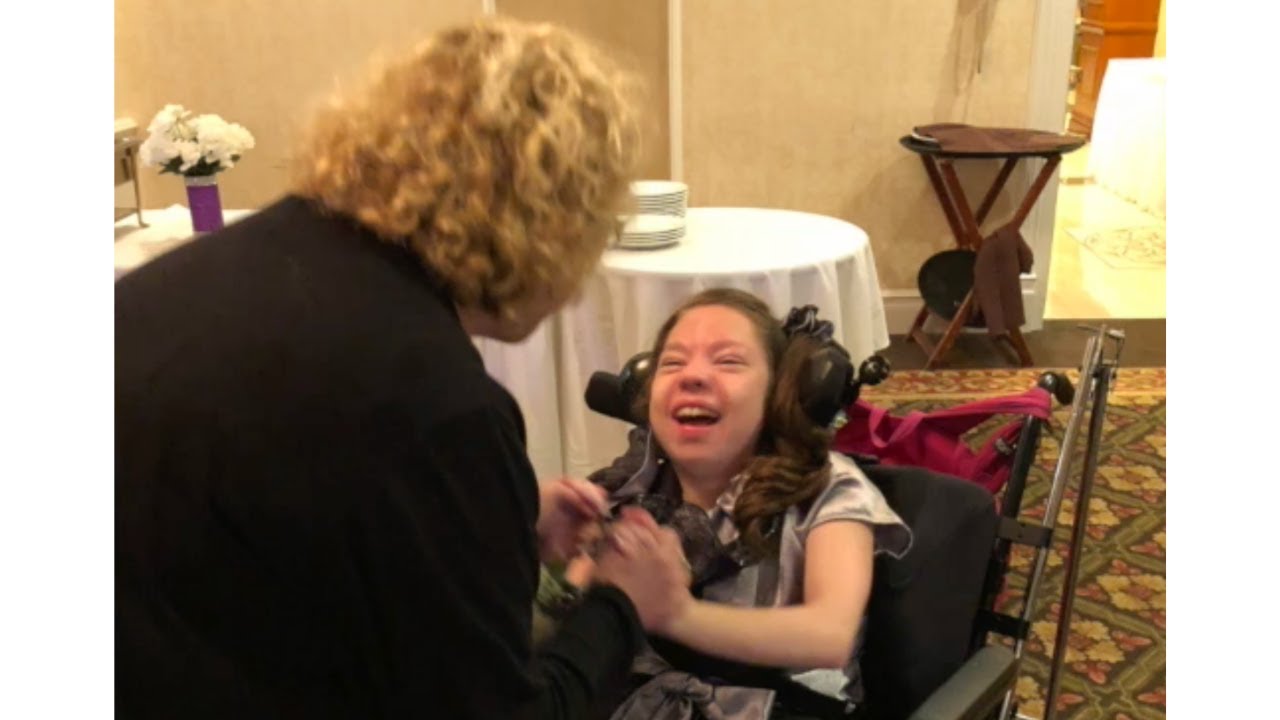
Understanding the guardianship role and planning the move to adult providers (including the possibility of out-of-home placement) take time and planning—long before the child is legally considered an adult. Join CPN and our panel of parents who have made this transition with their own child to discuss the joys and frustrations of parenting an adult-child, and what it takes to successfully avoid gaps in care and minimize stress.
Below is an archived video of this event.
Theme: Transition to Adulthood
Parenting is a lifelong process, and it is particularly so for parents of children with serious illness, where the child’s chronological age may not correspond with their developmental baseline. While your child is a minor, you can make all medical decisions for them just by virtue of being their parent. But when your child reaches adulthood (age 18 in most states), their legal status changes, and they are now presumed to be capable of making all major decisions on their own, regardless of their disability. This can create many problems for parents and others who are caring for them. However, many of these problems can be avoided if you go to court to become your child’s legal guardian. Having guardianship lets you make medical decisions for your child and provide uninterrupted access to medical care and supports.
Theme: Transition to Adulthood
Mom Natalie worked to connect with the teachers, therapists and doctors who would help show her “the sky’s the limit’ for Emma. “You are trying everything you can to help your kid be her best. You don’t know where this is going to end up.”