Skip to content
Courageous Parents Network Logo

Search

Search entire library or by microsite

Click here for NeuroJourney resources

Theme: Support Networks

It had been many years, 23 to be exact, since the last time I navigated life with a toddler. While friends of mine have started celebrating their entrance into grandparenthood, I had a remarkable occurrence of a surprise pregnancy instead. At age 45, while already the mother to a 22-year-old daughter with medical complexity and developmental needs, I was told the shocking news that I would be the parent to a daughter once again. Advanced maternal age hurdles were cleared, some more tenuous than others, but lo and behold, in the winter of 2021, a newborn arrived. Those first two years with our daughter Nika were filled with daily pinch me moments. We marveled at the mere existence of this new person developing before us. Highchairs, car seats, onesies and child rearing technological offerings, unheard of in the late 1990s, all took hold within our home. Milestones were easily met. We were on absolute cloud nine.

Then, toddlerhood entered. The temper tantrums, safety concerns and juggling of a very mobile little one coupled with the noticeable decline of her older sister became a heavier weight to carry. In this newest journey with toddlerhood, I started to wonder if my age (now 50) or perhaps the cumulative effects of decades of diaper changes, now for two individuals instead of just one, had created mental exhaustion.

I started to rescind from social interactions due to overwhelm. Most notable was my inability to clearly answer the question; how can I help?  when offered by supportive friends. I understood their generosity and genuine desire to be of assistance, but I could not identify my own needs.  My internal dialogue went something like this – Do I need someone to tend to the house or tend to my older daughter with special needs?  Would it help my mental state if I found purpose by going back to work?  Should my toddler attend preschool full-time while I remain home to catch my breath? Maybe I could simply “do better” at streamlining life and its collective tasks. In this past year, the most common thought I find myself thinking in response to outside offers of help is, “stop making my life harder”.

Small minor things like my husband asking if I know where his shoes are, my toddler insisting on Mommy doing something over anyone else, administrative bottle necks when trying to get a mere prescription refilled, are all examples of times when mental overwhelm takes hold. This wasn’t always the case. It’s only during this past year I’ve noticed this shift within my normal state of homeostasis.

This phenomenon self-propelled; it is now the case that when well-meaning friends suggest the planning of a girls’ outing, when I place unrealistic expectations on myself to see extended family members, or even just grabbing a quick dinner out with my husband ALL compound daily stressors. Each time one of these opportunities arises, I feel the quiet constraint of a belt being cinched, hoping to reach that next hole – wanting to please others, wanting to find balance, wanting to lead a normal adult life. Meanwhile, I feel a house of cards crashing down from all the tasks waiting in the wings.

Recently, I decided to investigate what research exists on the tolls taxed upon caregivers of adult children with special needs. I postulate that these consecutive 27 years, totaling more than half of my own lifespan, are the root cause of my mental decline. It’s not so much that the individual tasks of caring for Sasha, who suffers from the neurologically degenerative Sanfilippo Syndrome, are my undoing, but rather the collective and ongoing nature of those tasks.

Indeed, a useful study conducted by the Polibienestar Research Institute, Universitat de Valencia and Biomedical Data Science Lab – ITACA Institute, Universitat Politecnica de Valencia, found that “the aging of family caregivers has been correlated with decreasing caregiving efficiency”. Perhaps my initial read was accurate. While my commitment to caregiving itself has never waned, my engagement with all things peripheral from it certainly has.

A little more digging had me also reading a National Institute of Health study illuminating Carol Ryff’s 6 domains for consideration towards psychological wellbeing: (1) Self-Acceptance, (2) Positive Relations with Others, (3) Autonomy, (4) Environmental Mastery, (5) Purpose in Life, and (6) Personal Growth.  Immediately, many of these categories lit up my brain like a PET scan and caused me to reflect on the evolution of my life.

Sasha, who for so many years ran wild, laughed with mischief, fed herself and loved riding in the car, windows open, music blaring, is now so deeply changed. Today, Sasha is wheelchair bound, trembling while eating, crying out in the night longing for assistance to be repositioned. She needs diapering at the most inconvenient times, which is every instance that we’re headed out our front door on time, or in a public setting with a precarious wheelchair bathroom. As her eating and drinking rates have significantly slowed and require more of my time, the list of administrative and household to-do’s sits idly waiting. Her care has taxed my autonomy, my environmental mastery, my self-acceptance and my purpose in life. She has changed my trajectory. This reality is undeniable.

Sasha’s changes serve as a reminder that what was once helpful to me – like offers from others to help –  may no longer be as useful. I live in a suspended state knowing that what would be most useful to me now is something that will never return: a mobile Sasha – a robust, strong, speed eating, agile Sasha. Setting that aside, even when I can identify resources to bolster control over my new environmental landscape –  those which might provide greater autonomy or tap into my purpose and aid with self-acceptance –  I find myself unable to act. My continual state of overwhelm has made it difficult to determine a beneficial resource.

At one point in time finding someone to help with housework or securing a care provider with a flexible schedule were the most meaningful forms of assistance. Blogging and journaling aided in reflection and self-acceptance and rippled into enhanced positive relations with others. Working outside the home provided purpose in life and personal growth. But in this current iteration of life, those tasks simply mean more oversight, which means more areas for me to manage.

In recent years, I have also identified that a quiet house provides the biggest boost in bandwidth. When Sasha’s school years came to an end, so did a quiet home. While we are very fortunate to have nursing staff come into the home to care for Sasha, Sasha and her sister  (along with an additional individual) are now almost always home and a quiet house nowhere to be seen. This suggests to me that a certain bandwidth must be present to even pursue supportive tools or resources.

How can I help? is a well-meaning inquiry. But this inquiry can often stunt a response from the caregiver who is so often in that state of overwhelm. It asks us to think of a solution when we are already drowning. Thinking about Carol Ryftt’s 6 domains, it occurred to me that those offering support should consider them as well. For example, when asking a friend who is caring for an individual with special needs to go on a girl’s weekend, it might be helpful to first ask yourself  – does that friend HAVE the mastery over their environment, or the autonomy to make such a plan?  Or upon deeper reflection, you might see that the caregiver is consumed with domains 5 and 6 and understand that simply going out to dinner may feel like a pulling away from precious time needed to pursue their own self-care or purpose creating activities.

Caregivers often struggle with how their lives feel dictated by their circumstances. In my case, travel, working outside of the home and the pursuit of additional higher education, all intrinsically meaningful to me, also have all been put on an indefinite hold. I greatly miss engaging in a community aligned with my outside interests and meeting a greater sense of purpose. Self-acceptance ebbs and flows most days, which naturally impacts the final domain, positive relations with others. If an individual does not feel like they are flourishing, a rippling effect into other relationships can be expected.

All this is to say, caregivers feel tremendous strain. There are many days when the provision of basic life necessities are the only realistic activities to complete. I would like to offer this suggestion to those wanting to support parents like me. Offer a tangible, finite gesture of assistance. Rather than making a broad offer – Can I bring you dinner? Clarify it – “I can bring dinner over either on Tuesday, Thursday or Sunday this week” or “I can take the girls for a Sunday drive this month so that you can quietly tackle things around the house”. These more directive offers remove the pressure felt by the caregiver to make yet another decision.

Supporting a friend or family member like me is truly a subjective task for both parties involved, the supporter and the supported. It’s important to know that the caregiver role is an ever-changing landscape. Supporting loved ones navigating this life requires some reflection and finesse by both parties. In the end, and I say this delicately, trying not to “make that person’s life harder” may be a helpful mantra to start with when you are considering how to support caregivers.


References:

Namkung, E. H., Greenberg, J. S., Mailick, M. R., & Floyd, F. J. (2018). Lifelong parenting of adults with developmental disabilities: Growth trends over 20 years in midlife and later life. American Journal on Intellectual and Developmental Disabilities, 123(3), 228–240. https://doi.org/10.1352/1944-7558-123.3.228

https://www.sciencedirect.com/science/article/abs/pii/S0277953624011031


Joanne Huff comes to Courageous Parents Network as a long time follower and parent enthusiast of the organization. As the Mother of two girls, the oldest of whom has the rare disease MPS IIIA/Sanfilippo Syndrome, Joanne has benefited tremendously from the intimate parent interviews and candid, vulnerable story sharing throughout numerous thought provoking blog posts.  As her daughter’s activities and lifestyle started to slow down with disease progression, CPN became a larger anchor in times of uncertainty and unrest. It is through this lens that Joanne hopes to share experiences and insights via the CPN blog.

Joanne completed nursing school after her daughter’s diagnosis, receiving her Bachelors of Science in Nursing from Plymouth State University, Plymouth NH.  She enjoyed community liaison work with home care providers of adults with special needs up until her own daughter’s care became increasingly more involved. In addition to serving on the Boards of New England Regional Genetics Group (NERGG) and Adaptive Sports Partners through 2024, she has found great purpose in volunteer work advocating for policy improvements and change in Washington DC with the National MPS Society.  In her free time, Joanne seeks balance and refuge with yoga, hiking and performing as an ensemble Soprano vocalist with the Pemigewasset Choral Society. When not blogging for CPN, Joanne enjoys sharing offerings on her personal Blog Folding Origami for God.  She resides in Bow New Hampshire with her two daughters, Sasha and Nika, her husband Mike and her yellow lab Suki.

Theme: Support Networks

La teoría del anillo de apoyo es un marco útil para establecer roles en su equipo de apoyo.

Theme: Support Networks

The Ring Theory of Support is a helpful framework for establishing roles on your support team. The idea is to determine and communicate who can ask for support as you care for your child, and from whom.

Theme: Support Networks

Cuando su hijo/a está gravemente enfermo, debe navegar por muchos sistemas complicados. Estos pueden incluir el hospital o el centro o centros sanitarios donde su hijo/a reciba cuidados; los sistemas de seguros médicos y de suministros médicos; su sistema educativo local; y otras redes de ayuda pública, como Medicaid o los programas de exención por discapacidad.

Theme: Support Networks

Many years ago, as a new nurse on a medical-surgical unit, I was caring for a woman with a terminal brain tumor. At the beginning of my shift, she told me frankly, “You know, I have a brain tumor!”  “Yes.” I replied, “I was told by the nurse from the evening shift. I will be taking care of you tonight.”  “Okay” was her response and those were the last words she spoke to me. Her temperature began to rise, and she became unresponsive. Before my preceptor and I could place her on a cooling device, she died. She was DNR. After we had done postmortem care my preceptor and I stepped into the nursing station. “Well, I hope this isn’t an indication of how your career is going to go.” she said with a small grin. Never could I have known then that that is exactly where my career would go.

From the med-surg unit, I transferred to the Neonatal Intensive Care Unit (NICU). For most of my career, I was a bedside NICU nurse. The NICU offered the opportunity to spend many days and hours helping parents become comfortable caring for their fragile infants. I was drawn to babies with complicated diagnoses. It was these families who became my mentors in how to love fiercely and defiantly in the face of uncertain outcomes. As I watched families learn how to care for their babies with feeding tubes, on oxygen or who needed specialized treatments, I was schooled about the depth of connection we need and want as human beings.

In 2015, I became one of the first nurse clinical coordinators in a perinatal palliative care program. Our work is almost exclusively with women who are pregnant with babies that have a life-limiting diagnosis.  For some of these families, the life of their babies will end before birth, for others, their babies may not survive the birth process, for even more families, their babies may only live minutes or hours, and for a small number of families, their babies may live for months or even years. For all these families, a time that is often filled with happy anticipation has become a time of uncertainty, fear, and grief. It is in this time of turmoil that I have been witness to fierce love and incredible courage. In our work, we are given the opportunity to accompany them, to bear witness to their experience and to find ways to honor their pregnancies and babies. We try to normalize the pregnancy and birth experience as much as possible but also to give space to their darkest thoughts and fears. Our goal is to create a safe space that allows for open communication, respect, and dignity. Perinatal loss is one that touches women fundamentally. It is a loss that may call into question their ability to carry life within them. They often feel responsible and guilt-ridden that it must have been something they did or did not do that caused their loss. We must help them release this guilt.

As with most types of death, perinatal loss is not spoken about openly.  It goes against our expectations. Parents should not have to bury their children. And yet, it is a painful truth for thousands of families every year. So, what are health professionals to do? We need to stand in the discomfort of the pain of these losses. Our discomfort can never be worse than the pain they are experiencing. We must tend to their needs, desires, and challenges as we walk with them for part of this journey. We cannot take away their pain, but we can recognize it, accept it, and help them to process it. We must not abandon them.

Several years ago, I had the privilege of meeting and caring for a family of three awaiting the birth of twin boys.  One twin was healthy, but the other twin had a complex cardiac condition. They had spoken with the pediatric cardiac surgeon who explained that only palliative surgery could be offered, and it would involve at least three surgeries and the possibility of a heart transplant.  In our consult with them, we described our approach to the care of babies with a life-limiting diagnosis.  After a lengthy discussion, the parents chose comfort care for their son. Our program’s goal is to follow the baby’s natural life, providing comfort, bonding, warmth and feeding when possible.  We encouraged the family to plan the birth and to prioritize their wishes and hopes for their experience with their babies. They wanted a vaginal birth, if possible, time alone with the boys and then to be discharged as quickly as was safe so that they could spend time with their family at home. Coordination among Neonatology, Maternal Fetal Medicine, Cardiology and Nursing helped to make a 23 hour discharge a reality.  The family spent most days in the nearby botanical gardens with the boys wrapped around mom’s body and their two-year-old brother kissing and smiling at them, while dad held him up to reach them. They had nine amazing days together.

While the loss of their son was excruciating, they honored his memory with a tree planted in the botanical garden and to live a life of love, laughter, and remembrance with their children and family. They went on after their loss to welcome another boy and then a girl! They speak of their son often and openly.  I am still in contact with them and marvel at the abundance of love they exude. I am so honored to know them and be connected to them.

I am so grateful to be a part of this work. It is a privilege to be invited into their lives, to honor their babies and weep with them. My hope is that the families we serve are a little less scared, a little more empowered and a lot less alone than they would have been without us. As we care for our families and babies, I continue to be in awe of the human spirit, its resilience, and in its desire to love.


Frances is a 2023 Ilene Beal Courageous Provider Award recipient.

Theme: Support Networks

My friend Liz lives ten miles north of me. The journey between our homes can be made on a highway, but the more direct route hugs the blue-gray coastline of the Salish Sea. Densely populated stretches of land alternate with forests that cascade down hills towards the sea, lining narrow beaches. The Olympic mountains dominate the western horizon and shield us from the open ocean. Our inland sea is gentle, providing shelter to marine life, boat traffic, and us.  

I met Liz, not because we lived 10 miles apart, but through impulse born of desperation. In the unhinged, delirious weeks of grief that followed my son Lucas’s death, I roamed the streets and the internet in equal measure. On the streets, I wandered aimlessly. I often ran to the water. The sea, it turns out, is a good place to scream. Train tracks run along many beaches, and between crashing waves and thundering wheels, there is space for the primordial howl of grief.

On the internet, I searched for someone, anyone, that had lived this journey. Who understood the forces that had shattered our lives. No one I knew understood what it was like to fight for your child for two and ½ years, and then abruptly experience their death.

I found Liz on the internet, where she wrote about her son Colson. I learned that Colson died from the same rare mitochondrial disease that killed Lucas. Improbably, Liz lived nearby.  Maybe, I thought, she could help me? When I reached out on social media, I was surprised that she wrote back right away.

Liz suggested we meet at a coffee shop near the sea. As we set our things down at a tiny table, she looked at me with understanding and offered a wordless hug. No one had looked at me like that since Lucas died. No one I knew understood. The invisible cord of tension wrapped around my chest loosened its grip, and I found myself crying on her shoulder. She did not pull away.

We talked for hours at that tiny table. I learned that Colson died two years before Lucas. At the same Children’s Hospital, in the same stretch of early December. Colson was a beautiful little boy with soft, pillowy cheeks and blue-gray eyes that reflected the sea on a sunny day. He and Lucas were very different, but they also had much in common. A diagnosis, doctors, many medical complexities.

In our conversation, Lucas was welcome. My gregarious, smiling boy. I could share his whole story: the devastating diagnosis and resultant suffering, his bubbly personality and beautiful life. When I stumbled through the parts of Lucas’ story that I find most excruciating, Liz met me with kindness and compassion. Before I left, she pressed books into my arms and gave me another hug.

Driving home, I felt a subtle shift, a sense of relief. Nothing had changed, but I was no longer alone. Liz had offered new guideposts for grief, in the forms of books and ideas and her own tenacious grip on life. And beyond guideposts, I realized that perhaps Liz had offered me something else. Was it possible that in this awful life without Lucas, I had also met a friend?

Adult friendships are not easy to make. The easy camaraderie of high school and college does not necessarily translate to the rhythms of adulthood. If you become a parent, your adult relationships are often shaped by your children. As a rare disease parent, the only friends that will remain are those that choose to learn this new life alongside you. They will be a different kind of rare. You will conclude (once again) that rare is wonderful.

Liz and I are very different, but like our sons, we have much in common. We are both the eldest of six children. We believe donuts are an essential food group. We grew up in strict faiths that we no longer observe. Perhaps most importantly, Liz and I share a passion for poetry, for reading, and for writing. She is a skilled writer and omnivorous reader. A few months after we met, she introduced me to a literary arts community, helped sign me up for my first writing class in years, and encouraged me to blog in this space for CPN.

We often meet near that coffee shop and walk along the sea. When I saw Liz most recently, we stayed out on the wind-whipped coastline until we were stuttering with cold. A train went by, drowning out all conversation. I did not feel the need to scream.

As I told Liz, I have only just begun to grasp that Lucas is dead. Fourteen months into a life I do not want, I see that I cannot will him back. He is not just in the other room. In understanding Lucas’ absence, I see his presence in different ways. Perhaps it is inevitable that I would see this friendship with Liz as a gift from Lucas and from Colson.

Would I rather have Lucas back than any gift? Yes, a thousand times over. All bereaved parents would tell you that. Am I simultaneously and profoundly grateful for this friendship forged in grief? Yes. These realities can co-exist, if only because they already do. One does not vanquish the other.

In a week where many people celebrate love and friendship, I celebrate a rare friendship. A friendship that offers a gentle place for grief. A sheltered sea, perhaps, when so much else feels like traversing the open ocean.

I know this friendship was made possible by our deep and abiding love for our two rare boys. Lucas and Colson, it is because of your unique and irreplaceable lives that we are here. That a new friendship was formed. The words fall short of their meaning, but I’ll say them anyway: We love you.   

________________________________________________________________________________________________________________

Kim Gilsdorf writes and lives with her family in Seattle, the traditional land of the Duwamish people. She works for Perigee Fund, an organization dedicated to supporting early childhood mental health. Her favorite title is “Mama” to her two children, Lucas and Sophia. Lucas lived with and died from a rare disease, Leigh Syndrome, and his life has forever changed the meaning and purpose of hers. You can find Kim’s writing on Instagram at @kgilsdorf.

Theme: Support Networks

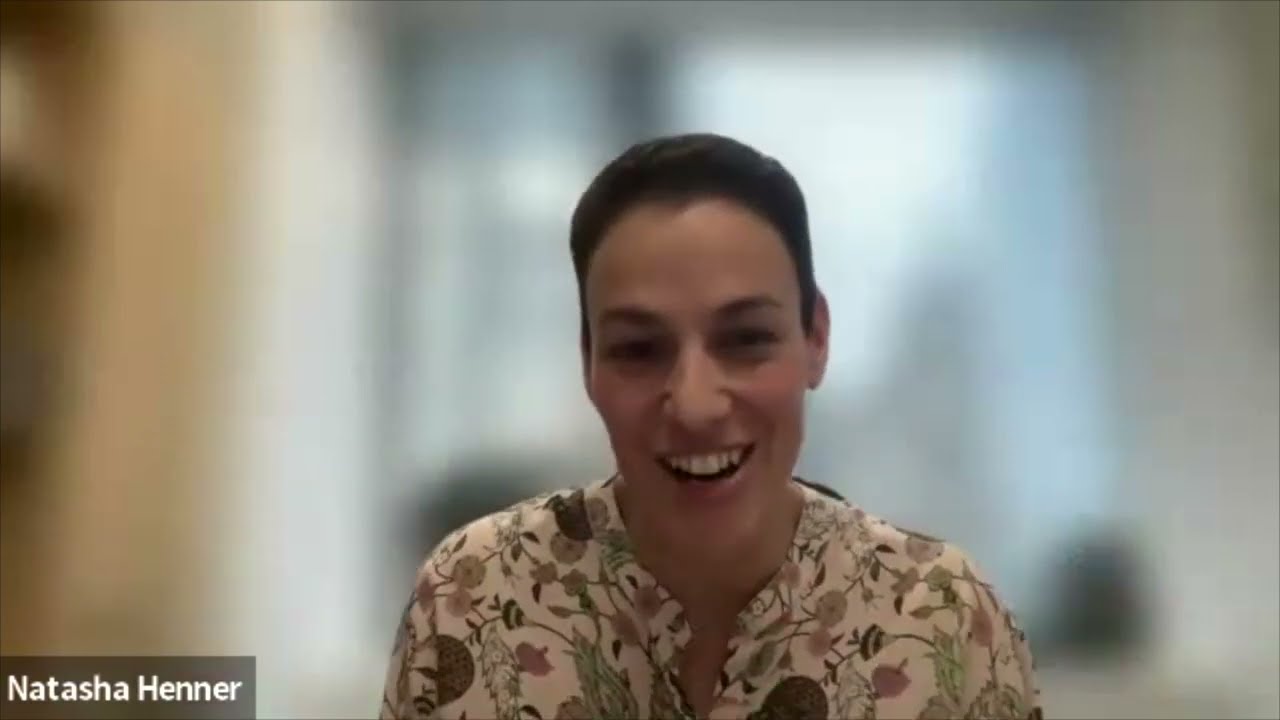
Dr. Natasha Henner, perinatal and palliative care doctor at Lurie Children’s Hospital, talks about how she talks about the pros and cons of social media groups with parents, and helping them watch out for biases. “If you’re on the fence, and you’re only getting one bias, that’s not fair. … The voices on social media can be incredibly helpful for finding resources …. but they can also be hurtful and generate guilt and inner conflict.’

Theme: Support Networks

Theme: Support Networks

The mother of a 14-year-old boy with medical complexity talks about where she looks for support and understanding that a single source can’t provide all the different types of support you may need. She shares what she has done to build a community of external support for herself and how she supports herself from within.

Theme: Support Networks

Jeanette, the mother of a 21-year-old son with progressive medical complexity, shares how hearing the experiences of other parents (via Courageous Parents Network) has helped her husband Frank see that he is not alone. Frank describes the benefits he has found from watching, and reading. “CPN normalizes what we’re going through. It fits you into where you belong.” Jeanette shares that CPN content helps her think through decisions and anticipate end-of-life.

Theme: Support Networks

Sarita and Kareem Edwards describe the foundation they started to support families and children living with Rare disease in their community. https://theewefoundation.org/programs/

Theme: Support Networks

Parents of a child with Trisomy-18 talk about why they did not find the Trisomy-18 group helpful and encourage parents to find people, in a group or otherwise, that helps them feel understood and supported, not judged or marginalized.