
My older sister Heidi was born with microcephaly, a rare health condition. Doctors warned our parents that she may only live six years; however, she survived until she was 12 years old. She and I were less than two years apart, and we played closely together. From the time I could crawl, I helped care for her. My favorite place in our family was at her side.
Watching her decline over the final months of her life was devastating. My parents were open about her decline and did not hide the seriousness of it from me, which I think helped prepare me for the reality of what was to come.
She spent her final days in the hospital, moving between the Intensive Care Unit – where I couldn’t visit because I was only ten – and a regular hospital room. I wanted to be near her; so even when I couldn’t visit her, I asked to sit in the waiting room, and I drew pictures for her.
Each night as I fell asleep at home, I worried that I wouldn’t get the chance to sign, “I love you” to her one last time.
Finally, when it was clear there was nothing left to try, our parents brought my younger sister Mary and me to the hospital after school to say goodbye to Heidi. It was emotional and tearful with lots of hugs and lots of signing, “I love you.”
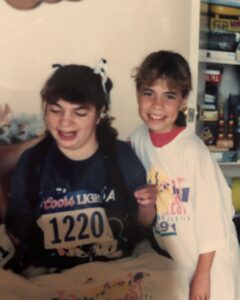 When the doctors took her off life support, nothing happened. She kept breathing on her own. After a while, my dad asked if we could take her home, and the medical team agreed. My parents had driven in two cars, and so I drove home with my dad and Heidi, my arm securely around her slight body, helping her sit upright in the seat beside me. Normally, she sat in her electric wheelchair in our big van. I relished the chance to sit beside her again after we’d been separated by beeping machines, tubes, cords, and ICU visiting rules.
When we arrived home, it was evening and we all helped ready Heidi for bed. I was able to sign, “I love you” and kiss her hand one more time. She died peacefully, in her own room, a few minutes after we left her.
It’s been almost 33 years since her passing, and I still feel her loss deeply. I write this on what would have been her 45th birthday, and I still ache with the pain of missing her.
My family remembers her on days like her birthday and anniversary of her death by watching a video slide show my dad made before she died and sharing memories and photos of her. When she died, one of my fears was that I might one day forget her. I don’t think I ever will.
Looking back, several things helped me cope with my sister’s death – things that may also help other families supporting children through a similar loss.
- My dad bought both me and Mary, who was almost 7 years old, a little photo album to fill with our favorite photos of Heidi. I still keep mine in my nightstand.
- An aunt and a neighbor each gave me journals to write in, and I did write often about Heidi. At first, I only wrote about her in my journals, but later, I wrote about her for some of my school assignments. When I was in seventh grade, a short story I wrote inspired by her won first place in a Los Angeles County writing competition. I continue to write about her as an adult.
- My parents let Mary and me pick a few of Heidi’s belongings to help us remember her. Two of my items are a piece of artwork she made for my birthday and a little golden locket. I still have and treasure them.
- For her funeral, my parents asked me to play the piano as people walked into the church for the service. I was nervous but I remember being proud to honor my sister in this way. Mary and I also drew pictures of Heidi to go on the funeral service program.
- My folks let me pick out the words and image that would go on her gravestone. She is buried where my grandparents lived in Utah. I
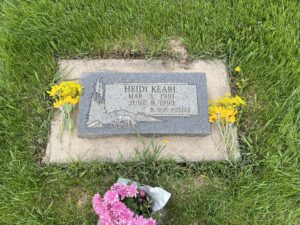 don’t get to visit often; but when I do, I take great pride in my part in helping remember and honor her in this way.
 - A few weeks before she died, I brought home an article from our Scholastic News that featured accessible playgrounds, which were relatively new in 1993. I hated seeing my sister left on the sidelines at playgrounds and I was so excited to show this article to my parents. We talked about how we could build an accessible swing or playground for Heidi, but then she died. In her honor, my parents worked with the Cincinnati Parks Department, near our home, to add accessible features to their waterfront playground. It took time and we moved away in the meantime, but we were able to come back and visit a few times. There was a plaque on the wall dedicating the playground to her. Twice I had work trips to Cincinnati in my young adulthood and made time to visit her playground.
- She died at the end of the school year; but when the new school year began, Mary and I planted a tree for her at a ceremony attended by Heidi’s classmates and our friends. The school staff also dedicated a brick to her on the walkway. At the end of the school year, the yearbook was dedicated to her, too.
On the flip side, one of the most challenging things that happened after Heidi’s death was that our family moved. My dad changed jobs and we relocated, away from the neighbors and school community that knew and loved her. We moved from Kentucky to California a few months after her death, and suddenly I was in a school and neighborhood where people did not know Heidi, or that I had lost a sister. When I tried to broach the topic of my sister with new friends, they wouldn’t know what to say and so I stopped saying anything for years. I felt I had to hide my sister and her death outside of our immediate and extended family because it made others feel uncomfortable.
When I met my now-spouse, Mark, in high school after my family moved to Virginia, he came to my house to work on a group project and asked about a picture of Heidi. When I told him who she was, he listened, asked questions, and was kind. His curiosity and empathy opened my heart to him, and we began dating in college.
When I see relatives or the few times when we visited neighbors in Kentucky who loved Heidi too, I can be my full self. They knew her, and they knew me with her. I can mention her whenever I want. I can ask them about their memories of her.
This evening after dinner, as I have on her birthday in prior years, I plan to show my two young children (one of whom has the middle name Heidi) photos of their aunt Heidi and share a few stories about her. They will grow up knowing that she is a part of our family and a part of my life. I will continue to keep her memory alive.
In previous stories of my younger sister Lauren’s cancer diagnosis and eventual passing, I’ve used a metaphor I call Emotion Beach. Since she was born in December and would pass 10 years and 10 days later, just before Christmas, the entire month has double red flags posted warning of viciously choppy waves of emotion.
Almost as if it was foretold in a mental farmer’s almanac, right on time, December and this season brings an increased intensity and volume of my grieving thoughts. To be honest, it’s playing out right now as you read this. I’ve gone months without having an urge to write about these feelings, and suddenly a grief switch flipped, propelling me to write this piece.
I was in a therapy session earlier this year and was prompted with the question, how much weight does the grief of Lauren’s death carry?
I compared my grief to lava flowing from a volcano. In the immediate months and years, the lava was molten and completely volatile. The anger, depression, and numbness of loss were white hot and I burned myself and the relationships around me. During this stage, I developed a nasty habit of avoiding stressful emotions to a fault. My protection against the lava was burying negative emotions.
As time passed, the lava began to cool and set into place where it had spread. The coping habits I had developed were my default now, and I continued to avoid stressful emotions and bury negative ones. This behavior pattern would have consequences academically, professionally, and personally – things I’m still working to rebuild. However, the grief-stricken lava didn’t burn my finger to the touch anymore. I could bring up Lauren conversationally and feel joy, not sorrow.
Whatever negative emotion, habit or experience took place in the aftermath was forever frozen in place. Today, I must admit, my bad habits still exist. But now, perhaps because of time, therapy, or getting older and collecting more experiences, I now have the clarity to see them for what they are and actively try to counteract them. Grief has forced me to consider new realities and the uncomfortable truth that we are approaching the threshold of Lauren being gone for a longer amount of time than she was here.
My grief has changed. I can talk at length about the joy and kindness Lauren brought into the world just as much as a minute-by-minute run through of her final hours. My relationship to grief has shifted from being a burden to an appreciation and quiet respect for how far I’ve come in my journey. This is true for almost everything related to Lauren and her passing.
That ‘almost everything’ is the key though. One aspect that I’m certainly not at peace with is Lauren showing signs she is with me. We naturally cling to the idea that our deceased loved ones are at peace, free of any pain and watching protectively and lovingly over us. It’s a comforting thought and helps soothe the sting of relearning how to live life without them.
The thing is, I don’t believe I’ve ever had a sign from Lauren.
That’s not to say I don’t believe those who have passed can give us signs, I desperately want to believe that. I’m just of the mindset that I won’t believe it to my core until I see it and I simply don’t think I’ve seen it.
People around me seem to be getting signs from her. Her twin even encountered a medium at the grocery store. Most of the signs however seem directed at my mom. She has told me about hearing Lauren in her head and how Lauren provides one liners and quips about her day-to-day experience constantly. In the beginning, it would make me feel frustrated, and I worried my mom was struggling worse than I thought. That concern then turned to polite dismissal when she’d bring it up because whether it’s real or not, it’s a coping mechanism. Who am I to judge?
Like I said earlier, I have a propensity to avoid negative emotions. One form that takes is an intense skepticism about the afterlife. I take away literal interpretations of what I see. Lauren died in front of me so therefore she is not experiencing life as we know it and cannot interact with me.
I’m more likely to believe that Lauren being able to send me a message is an impossibility. I go back and forth on what I think she experiences right now, or even if she does. Maybe my skepticism is a coping mechanism, maybe it’s fear. I simply do not know the truth.
After exposure to the suffering that accompanies someone battling terminal illness and death, I’d like to think the afterlife is a reward to soothe that pain. A chance to connect with past souls, examine your lived experience and try again if you choose to do so. As a place that provides explanation and reason to the suffering that accompanies the unexplainable.
Maybe that’s why I haven’t seen anything yet. She’s too busy enjoying the warmth of something I can’t comprehend here in my body. Maybe it’s not that elaborate at all and she simply stopped existing. No pain, no feeling and no experience because she is nothing anymore.
It’s possible that by writing a story centered around my feelings about a lack of a sign from Lauren, that it will be the very thing that initiates a chain of events that leads to a powerful sign from Lauren. It’s also entirely possible the absence of a sign is the sign itself.
And maybe the signs are not coincidental license plates or address numbers connected to her. Maybe she’s not controlling the radio, so it just happens to be her favorite Taylor Swift song (Mean). Maybe we simply connect dots that do not really have a connection.
BUT what if there was never going to be a sensible sign because I am the sign itself. You are the sign too. The sign is employing the empathy, kindness, and grace she showed me and everyone she knew. The sign is going above and beyond for a stranger just because you can. If that’s the case, it’s been hiding in plain sight this entire time. I hope as you ride your own waves on Emotion Beach, you catch a sign that brings you solace and comfort for your person too.
Welcome back.
Now that we’re in the thick of winter, the constant 72º and partly cloudy weather here on Emotion Beach doesn’t sound too bad, does it? (When you create the analogy, they let you control the imaginary weather too.)
As a refresher, I left off in the fall with a comparison to what my experience has been like as the older brother of Lauren, who passed away from pediatric cancer in 2017 days after her 10th birthday and days before Christmas.
Given these circumstances, there’s pretty much a daily red or double red flag posted outside of Emotion Beach warning of viciously choppy waves of sadness, grief, and anger during the month of December.
While it’s expected that anniversaries and the painful memories that surround them would be difficult, there have also been plenty of unexpected difficult days that I’ve encountered along this journey.
One situation, or question rather, has stumped me more times than I’d like to admit and is a guaranteed metaphorical double red flag.
How many siblings do you have?
Before the fateful day of Lauren’s passing, the answer was glaringly simple. I have three younger sisters. Duh. Since that day however, I’ve wrestled mentally with how to answer. Do I say three, validating Lauren’s existence, but baiting myself into having to explain that she passed away and risk follow-up questions? Do I say two, making it easier and technically true, but linger with my answer internally hours after being asked?
As a way of coping, I’ve clung to literal interpretations of words surrounding how to describe Lauren’s passing. For example, to the disdain of my family, I was referring to Lauren in the past tense mere hours after her passing.
Currently, I live in a state of conflict with how to answer the sibling question. There is a side of me that wants to agree with the extremely literal interpretation. I have two younger sisters who are alive, therefore I have two younger sisters. At the same time, the other side of me knows deep down I will always have three younger sisters and Lauren will always be a part of my family regardless of her position in life or death.
This example, a single wave on Emotion Beach, illustrates the many mental hoops that I have to jump through to answer something as small as quantifying the size of my family. The size and scope of grief is immeasurable and the way I view the world and interact with it are vastly different because of it.
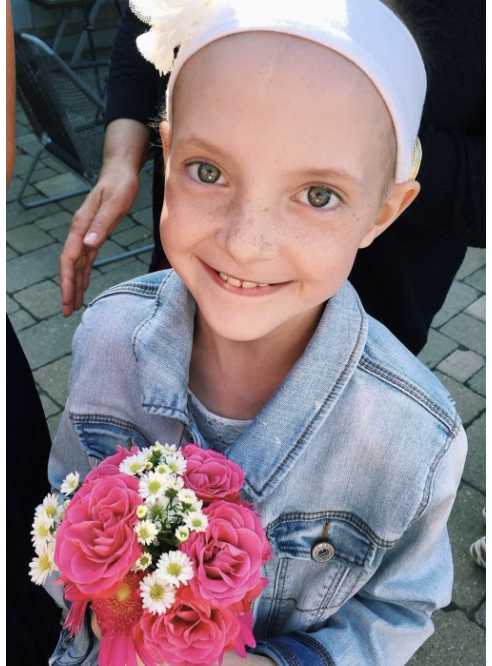 Witnessing Lauren fight courageously for two years, always believing she would eventually be okay, and watching life slip away from her body wildly reshaped what I view as important or worth emotional investment. Things like high school crush dramas or gossip amongst co-workers are trivial in my mind because I have seen and been through exponentially greater emotional events. I know the true meaning of grief in all its depths. The lesson was magnified even further since Lauren was the first ‘real’ experience I’ve faced with the death of an immediate family member.
Another thing Lauren taught me without ever actually trying was the power and infectiousness of a relentlessly positive attitude. She did this through:
- Her smile and kindness to the hospital staff and nurses in the face of a week-long chemo treatment.
- Her inclusion of my Aunt Kathy and Uncle Jerry on our Make-A-Wish trip or my siblings and I being included in her gifted experiences because she was always thinking of someone else.
- The seemingly impossible wisdom she held knowing the position she was in at the age she was and handling it with the grace she did.
I’ve tried taking these lessons and acts of kindness Lauren showed in her limited time and reflecting on them in my own life. The core idea is to approach any situation with a level head and an empathetic heart. And always remembering that you might not know the source of someone else’s anger and pain.
Maybe it’s something as simple as flashing your lights instead of honking when the car in front of you won’t move. Maybe it’s something bigger. That’s for you to decide. The only thing to keep in mind is that an act of kindness can open a lifetime of opportunity.
Hello! My name is Connor Graver and I am a 22 year old finishing my Bachelor’s degree in Political Science in the Chicagoland area. The consequential event that put me on a collision course with CPN was the diagnosis and eventual passing of my younger sister Lauren to pediatric cancer in 2017.
If you’re a regular CPN reader, my last name might look familiar as I am the son of fellow CPN blogger, Amy Graver. I have a niche goal and area of expertise that I am excited to stoically provide to CPN: it’s the sibling experience of a life threatening pediatric disease. Siblings can come in countless combinations which entail different social dynamics and norms. For the Gravers, I am the oldest along with my younger sisters Claire and twin sisters Lauren and Emma.
For my first post, I want to elaborate on a seemingly insignificant and arbitrary moment – a moment that has since come to represent the chasm of before and after in my life.
It’s myself, the summer before I entered high school, sprawled across our family room couch playing Madden 15 on my Xbox 360 -not a care in the world.
That’s it.
Within minutes, I’ll receive a call from my Dad frantically explaining that Lauren’s checkup went awry and he’s coming home to pack a bag for the hospital. We hang up and I divert my attention from the game in front of me. This phone call and moment will be the snowball that triggers the avalanche of diagnosis, treatment, recovery, pain, triumph and heartbreak that defined Lauren’s courageous two year battle.
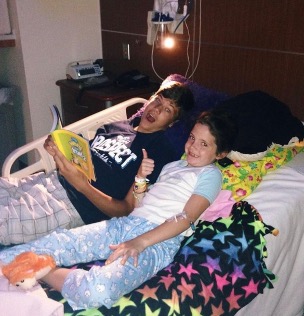 I grip this moment so tightly because I would come to realize it was the immediate and sudden transition from childhood to adulthood, although that wouldn’t be clear until the dust had settled. My perspective and world would never look the same again as I was forced into roles and responsibilities I didn’t want but had to do for my family.
I was forced into the role of make-shift parent since one would have to be with Lauren at the hospital during extended stays for treatment. Unlike my sisters, I wanted and needed to know every detail of Lauren’s treatment as a way to cope and handle what was in front of me.
As a result, I struggled socially — feeling years ahead of my classmates’ emotional maturity. I began battles with depression and anxiety that last to this day. All of these consequences stemmed from Lauren’s diagnosis, and I still feel sheepish saying I struggled because I wasn’t the one fighting the disease.
From the start of this ordeal, it’s as if a wave machine was turned on without ever planning to turn off. Each day, hour and emotion that arise is unique and different but flows like the rest. In years past, the water was considerably more choppy with waves like “Will Lauren survive?” and the subconscious rip current of the start of my depression.
Later on there would be the crashing and high tide of her passing and the aftermath of that.
So as I sit here, now as a regular at the Emotion Beach (to take this analogy to the next level), I’ve learned not to fear the waves or even fight the waves but to sit back, observe and enjoy. Silver linings I never would’ve expected will start to show, just like this opportunity to write to you.
We’ll talk again in December.
Our children bring beautiful people into our lives. This is one of the blessings of parenting these vulnerable children. One such family for my family has been Matt and Myra and their daughters Havi and Kaia, as well as their constellation of aunts, uncles, grandparents and honorary aunts and uncles. Like our daughter Cameron, Havi had infantile Tay-Sachs. Havi died this past Wednesday, January 20, at the age of 2. She died peacefully at home with her parents, and her little sister, Kaia, age 6 months, nearby. Our youngest daughter and Cameron’s little sister, Eliza, has written Kaia a letter. Eliza was 10 weeks old when Cameron died. She is now 19 years old and shares here her counsel to Kaia, for when she is old enough to understand. One little sister to another.
Eliza reads the letter, which is also pasted below.
A Letter to Little Kaia
January 20, 2021
Dear Kaia,
I wanted to write you a letter, one little sister of an angel to another. First, let me tell you that we have freaking super powers because of it. How many people get to say that they have a powerful guardian angel sister watching over them always?
I don’t believe in everything-happens-for-a-reason, but I do believe in silver linings. That a good can come out of an inexplicable bad. And a guardian angel sister is one such thing.
When I was 9 or so, I was absolutely terrified of sleeping in my bed. Don’t ask me why, but for some reason I felt any number of scary things could come and steal me away from my cozy bed and room. I lay awake for hours each night, listening to every sound, and oftentimes went to get my parents. And then one night my mom pulled out a picture of Cameron, my older sister-angel, from her photo album, and gave it to me to sleep with under my pillow. Cameron was looking over me, always, and thus I was safe. As I lay there in my bunk bed, right hand under my pillow fingering Cameron’s photo, I felt a deep sense of calm settle within me, and I quietly fell asleep. I slept with that photograph under my pillow every night from 9 years old to 17 years old, and still do on occasion when I need it. (I’m 19 by the way, as I write this).
I want you to know that it’s okay if you don’t think about Havi all the time. There are days, or weeks, where Cameron does not cross my mind. That doesn’t make me, or you, a bad younger sister. It just means we are living our lives, as Cameron and Havi want us to. And even if I am not thinking about Cameron I know she is there, looking out for me anyways, shining with confidence within me.
I also want you to know that it might be weird sometimes to be the only one who doesn’t remember Havi. I know Cameron from her pictures, but while the rest of my family has some, if not many, concrete images and memories of Cameron from her life, I have none. You will be the same. But that does not mean that your love for her, or her love for you, shines any duller. It is just a different sort of love, radiating from a deeper trust in Havi’s existence.
I want you to know that you may often be told you were the bright light that was necessary to have during the potential darkness and sadness of Havi’s last months in this world. And that, Kaia, is a beautiful and gorgeous gift you gave your family and their friends. It is a gift I reportedly gave my family as well. But I also want you to know that you do not always have to be that light. You can be down, feel sad, ask time and space of your parents. You can be imperfect, messy, even a disaster at times, if you need. You entered the world a joy among the mixed joy and sadness of Havi. I promise you will always be that light and joy, even if you are low at times, as you inevitably will be.
I want you to know that it’s okay if when people ask how many siblings you have, you don’t always include Havi in the count. It is not lying, or hiding Havi, to sometimes simplify things when first meeting others. Havi will not be mad at you. Again, you are living your life as best you can, and she is proud.
Kaia, I want you to know that it might feel weird sometimes to become close friends with someone and not have them know about Havi yet. While I do not always think actively about Cameron, as I told you, I do feel she is a part of me and my family identity. I believe you might feel the same about Havi. So feel free to share Havi with people as early as you would like. A moment will not always perfectly present itself to tell people about her, so do it whenever it feels right to you, even if it feels awkwardly placed. There will be different reactions — “I’m sorry”s and “oh”s. Maybe it will be awkward. But I also can tell you it’s nice to know that other people know about Havi.
Finally, I want you to know you can give Havi things if you need to. Worries. Anxieties. Joys. That’s what older sisters are for. Sometimes, when I’m carrying around a worry for what feels like too long, I close my eyes, breathe the worry out into an imaginary balloon, and watch it float up, up, up, into the sky, until Cameron catches it and takes care of it for me. Sometimes she opens up a deep drawer in the clouds and places my new balloon among all the old ones, storing it for me so I can feel lighter. I think taking care of me like this makes her happy. As I think it would make Havi as well. Perhaps Havi and Cameron have our drawers next to each other, as they help watch over the two of us, and everyone else in our families, down here.
I want you to know Havi loves you forever, and I, who barely know you yet, love you too.
Xox Lizey
for more on the sibling experience, explore CPN’s SIBLING unit.
This post is a response to Communication Between Parents and Well-Siblings in the Context of Living with a Child with a Life-Threatening or Life-Limiting Condition, originally published in the Journal of Pediatrics and Child Health.
When I was two years old, my younger brother Barry was born. We developed a beautiful bond; one that was distinctly silent. As a newborn, it made sense that Barry didn’t talk, but my silence was unexpected. I had a severe speech delay that left me unable to say anything other than “mamma” until age four. Because of this, I was drawn to Barry as the one person in my household who wouldn’t constantly pressure me to practice my speech. What developed between the silence was simply pure communion and it was a calming presence to both of us.
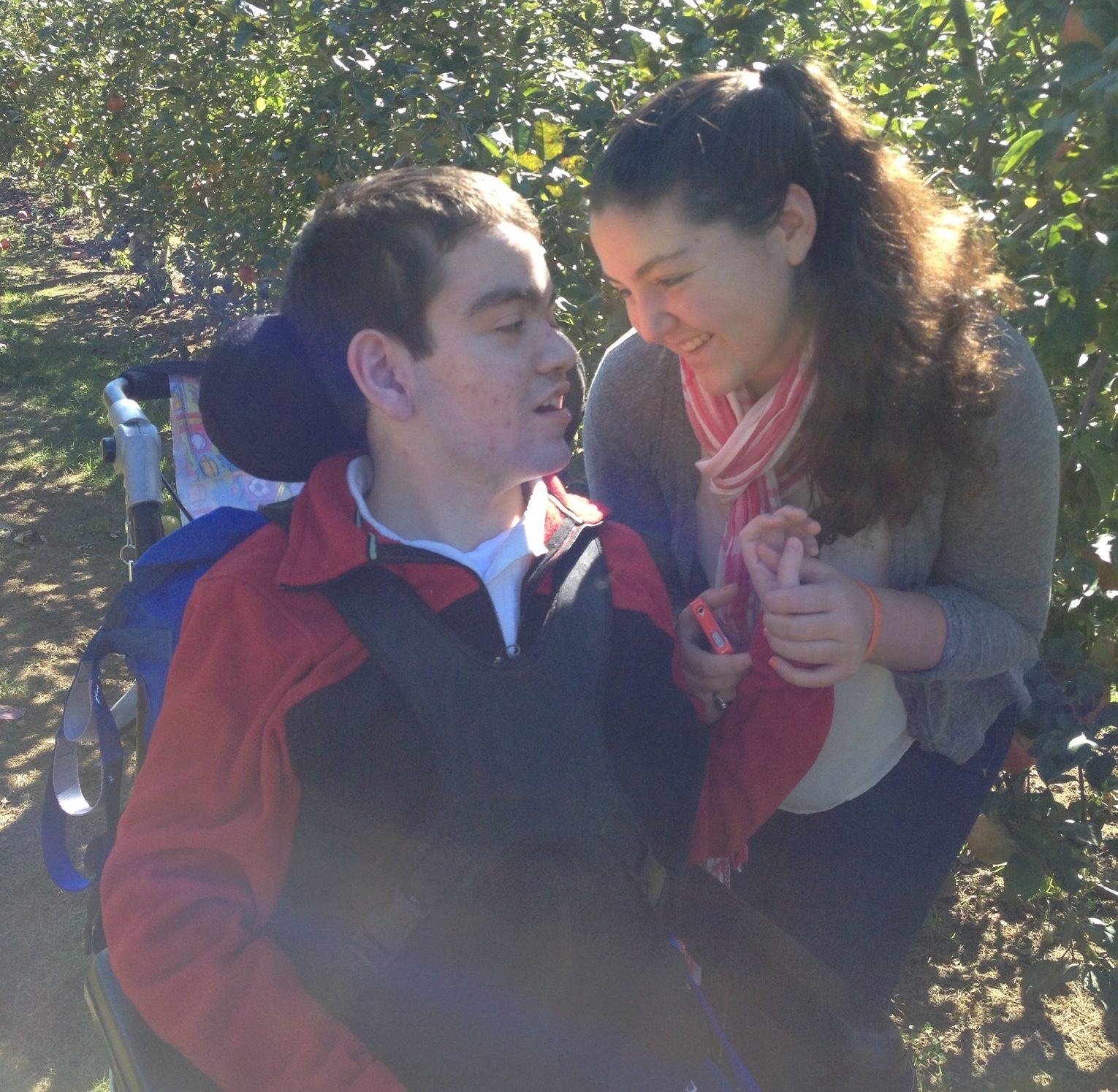 About six months later, our worlds changed when we learned Barry had a severe, unspecified neurological condition. But the doctors were lucky, because they had a doting older sister who was not yet school-age and was happy to serve as the healthy control to her brother. I must have gone to hundreds of doctors’ appointments, especially in Barry’s first couple of years, and I heard and remembered it all. Maybe my mom is correct in that I have a selective photographic memory (only forgetting the things I want to, of course), or maybe it was because most of these memories were so emotional, but I remember the early appointments as if they happened yesterday. I remember hearing the word “macrocephaly” and can picture the white and blue measuring tape coming towards my head as they measured to see if my head was just as big as Barry’s. I remember when Barry was declared “legally blind” and I had to rest my own chin on the scary silver machine so my eyes could be tested too.
I remember two other things: there was no explanation of what all of this meant; and there was additional silence. What did it matter if his head was big? Can he see me? I wondered why no one was explaining anything to me? I was told the facts, but not the information I needed to fully understand them. We would drive home and my mom would call and tell our loved ones the update. I’d hear these words again, and during the silence would let them float inside my head.
Aside from my role as the healthy control, I also made a silent vow to myself: for as long as I lived, I would be Barry’s protector in all things. This took lots of different forms – correcting anyone who incorrectly used the R-word as an insult, shielding Barry if I caught someone starring, and begging the doctors to see him the way I did and have even an ounce of hope about his long-term outcome. I became Barry’s keeper.
In the published journal article Communication between parents and well-siblings in the context of living with a child with a life-threatening or life-limiting condition, the authors, Jaaniste et al., do an excellent job of describing some of the feelings experienced by a “well-sibling”: “…children who have a very sick brother or sister may choose not to share their own frustrations and worries with their parents, perhaps believing their parents have enough other worries to deal with.” As noted in the paper, I can remember never wanting to burden my mom. I realized my mom simply didn’t have the capacity to hear about the day-to-day happenings of every 1st grader at Henry E. Warren Elementary. I noticed my friends telling their parents these sorts of things, but the longer I didn’t tell her, the harder it became for me to talk about friend-matters with her.
This feeling of burdening my mother spread to things like illnesses. I can remember waking up sick in the middle of the night and agonizing over whether it was severe enough to wake my mom. I knew her sleep was precious as she had to be up for Barry’s first round of meds at 4:00 am. I would sneak into her room and stand by her bed for a few minutes, desperately waiting for her to wake up on her own. If she didn’t, I’d make little noises (sniffling my nose, a light tap on the nightstand). If that didn’t work, I’d just get into bed with her, and that did the trick. Always, I felt guilty for cutting into my mom’s minimal sleep and more guilty for complaining over the sniffles, when just inches away a sleeping Barry lay with real problems. I guess in some sense, I had already begun to become my mom’s keeper too, as I tried my hardest to prevent her from having to deal with any “Lexi issues.”
I do not think it was my mother’s fault for not helping me express my needs. As Barry’s health problems became worse, I was just entering adolescence, so I think the changes I was going through myself pushed me further away from my mom, and it deepened this silence between us.
 The paper also does a good job at highlighting the need for different strategies for different children. I needed every little detail from every appointment Barry ever went to. Eventually, when I was about 13, my mom learned to never schedule a neurologist appointment at a time when I was not available. She knew she would not be able to answer my laundry list of questions. She also never cut me off. She never told me to stop asking questions, stop researching, stop proposing treatments. She knew this was the hope I clung onto that allowed me to continue to look at Barry through the lens of “normal sibling” eyes. My two older sisters were different though. They were okay with the Spark Notes version of the cold hard facts. She didn’t pressure my sisters to be more involved. She always reminded us that each of us was going to cope with aspects of the situation in our own way. This is not to say that my sisters didn’t love Barry; their love was just as deep as mine.
When we learned of Barry’s health issues, nobody sat my mom down and taught her how to talk about it to my sisters and me. Formal guidance from providers on how to talk to siblings, as the paper suggests, would help parents in similar situations. There is a large age gap between the three of us sisters. So what was appropriate for Kristin to hear was not the same for Brooke or for me. Of course, when my mom gave age-appropriate information to each of us, of course we compared notes, and were never pleased when we had received different accounts of the same story.
When I was 16 and Barry was 14, his condition worsened. He spent the majority of October 2012- January 2013 in the hospital and the doctors believed Barry needed to be moved to a pediatric nursing home. My mom and sisters agreed. I vehemently did not. I struggled to admit how angry I was at my mom for making this decision. I felt that it was giving up on Barry. I think this is an example of the supportive emotional communication the article references. I believe well siblings need to be taught how to cope with the emotions surrounding their sick sibling. For the majority of Barry’s life, I feel like my family was on an extremely fast merry-go-round. There was no time for my mom to explain what anger is and how it may present. I was going through so much that I could not put into words. I thought only Barry could hear through the silence because when I visited him that calming presence remained. We were both able to comfort each other.
During this time, my mom understood how I was feeling, and she knew I didn’t want her help, so she gave me my space. I am so thankful for that, because I think if she had pushed, she would have pushed me away. I am sorry this forced my mom into the silence that comforted me but meant she went through Barry’s final years on her own. I know she sacrificed the comfort she gets from discussing things so that I could have this silence.
I continued to be Barry’s keeper until he passed away when he was 16 and I had just turned 19. After his passing, I noticed a change in myself. I continued to keep his memory alive, but I didn’t need to be his protector anymore. Instead, I realized, I wanted to become that person for my mom. I wanted to protect her from herself and anyone else who thinks she did anything other than the absolute best she could, given the situation, with the resources she had available. This is why we call my mom Saint Joanne. St. Joanne raised three strong willed daughters while also raising and caring for Barry… alone.
I think that the paper’s section on a sibling death is an accurate representation of my experience. The article states, “parent and well sibling communication at the time of those [death] events… may impact on the well sibling’s… subsequent emotional response or even their bereavement outcomes.” In the last days of Barry’s life, it was just me and my mom with him. One of my sisters was on a trip and my other sister lived far away. During those days, the silence became heavy. There wasn’t anything anyone could say. My mom and I spent every waking second side by side, but I can’t remember any conversation. I remember going to Dunkins’ each morning, having pizza for dinner, and how we were watching “The Voice” when we got the call; but I don’t remember any conversation. Regardless, the communication between my mom in these days was very different from that of the communication between my mom and both of my sisters. My sisters, I believe, felt some guilt for not being there. They never asked about the details of what my mom and I endured those last days and my mom told me not push to tell them. One of them later expressed that not experiencing Barry’s death firsthand made her feel left out of the family. I understand what she meant, because having lived it, I know she cannot imagine what it was truly like without being there. To this day, both my sisters rarely talk about Barry. And they most certainly do not talk about his decline or death.
I don’t think my sisters have given themselves the chance to heal as I have. After Barry’s death, I came to understand the cumulative impact of the experience of my childhood as his sister: not knowing how to express my feelings, not wanting to burden my mom — it stunted my emotional growth. I mistook my perseverance for emotional intelligence. But as I have since been able to talk to my mom about the entire experience, as an adult, I have grown emotionally in ways that many never do. I consider this one of Barry’s gifts.
 I have only recently realized these “consequences” of my quiet childhood. I learned that the longer you wait to speak, the harder it becomes to ever speak. Just like anything else, communication takes practice. That is even more true in the case of emotionally charged conversations. I am so happy with the relationship my mother and I have now. Once I was able to see and understand my experience, my mom became my best friend. She is now usually the first person I want to talk to with any type of news.
Join Lexie and 3 other bereaved siblings on 1/27 for What Siblings Want a CPN Zoom Room on the sibling experience.
CPN has many more resources on the sibling experience in our Sibling Unit
In this episode, CPN’s Jennifer Siedman talks with Chelsey Klenke Robertson about the challenges and gifts of loving Craig, her brother who had Hunter’s Syndrome(MPS II). Her mother Kris joins them to talk about Craig’s final days, the grieving process and how Craig’s legacy has impacted their careers.
In this episode, CPN’s Jennifer Siedman talks with Grey Chapin, founder of the BLAIR Connection, a digital resource to support siblings as they experience the challenges of having a terminally ill brother or sister. Jennifer is the mother to three – Noah and Isabelle, and their brother Ben, who died in 2014 from Sanfilippo Syndrome. Grey is the younger sister of Blair, who also had Sanfilippo Syndrome and died in 2017.