
Ashley and Theron are parents of three children, including Viggo Rick, who died at 6 months of complications related to Trisomy 5p. They offer so much wisdom to other caregivers and suggestions to clinicians about what helps (and what hinders) parents of newborns born with very rare, life-limiting conditions.
This post is my first attempt at distilling into words the medical decision-making framework my husband and I developed during our son Viggo’s life. It was the plane we built while flying at 30,000 feet. I like to think that it actually helped us glide safely to the ground when, at first, it seemed like a crash landing was inevitable.
Our guiding principles were twofold:
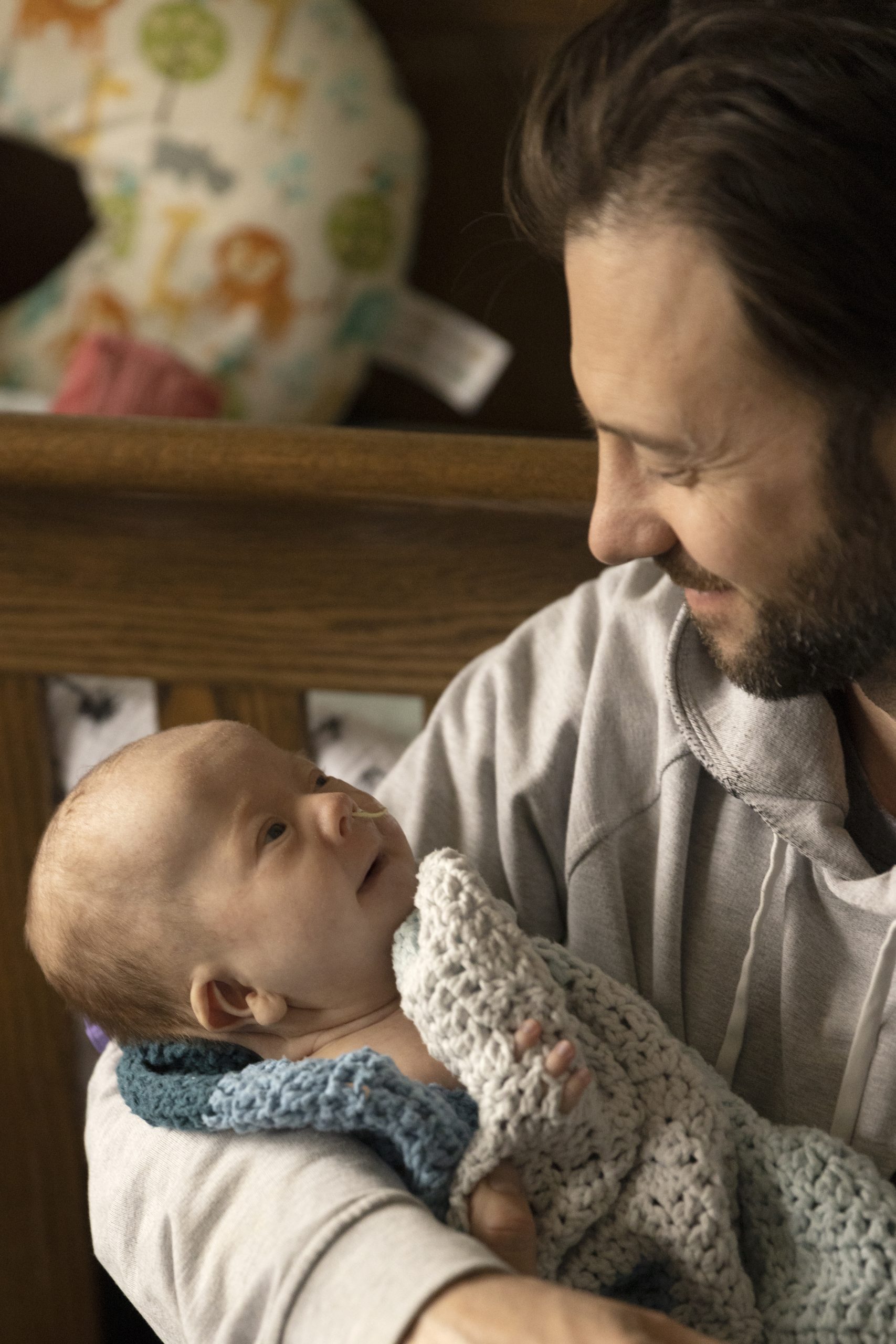
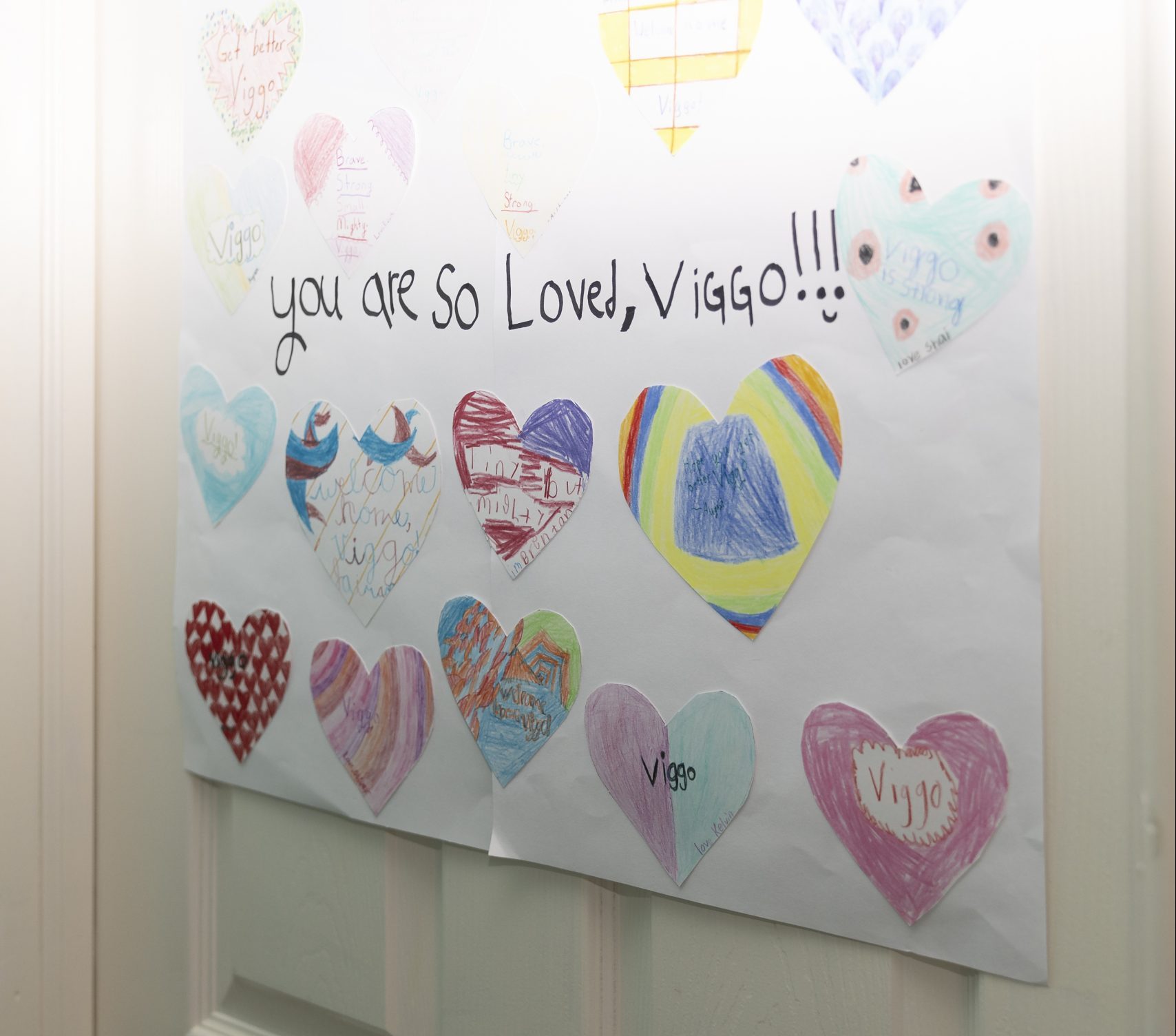
First and foremost, every choice must affirm our son’s dignity and worth as a human being. He was more than a patient, a medical curiosity, or a collection of body systems that could be divided and conquered by an army of subspecialists. He was a beloved son, brother, grandchild, cousin, nephew, neighbor, and member of a community.
Second, every choice should minimize avoidable trauma and suffering for Viggo, his siblings, and ourselves. As we understood it, there was a baseline of suffering and trauma that came with Viggo’s diagnosis. We couldn’t spare him, his siblings, or ourselves the pain that would inevitably follow, even though this was our most earnest desire as parents. While so much was outside of our control, a lot still remained within it. How we carried our son on this path would make all the difference.
 We were asked to make choices for Viggo that were not even possibilities in prior generations. Only in the last few decades have doctors been able to offer parents treatment options for their babies who would have otherwise died shortly before or after birth. In the past, the institutional reflex was to call babies like Viggo “incompatible with life” and refuse them even basic treatment, deeming them to be “a lost cause.” Now, the institutional reflex has shifted to use all available tools for every patient, even though some conditions respond well to treatment and others do not. Parents are given choices that suggest it is up to us whether our critically-ill child ultimately lives or dies. Life-sustaining technology can veer into death-prolonging territory, and the line between the two is anything but clear. Many medical professionals struggle mightily with these distinctions. It is no wonder we as parents struggle, too.
Viggo’s genetic condition was exceedingly rare–-on the order of one in 50-100 million live births. There is very little published medical research on the condition, but the prognosis was “poor” and the vague term “life-limited” was used to describe it. These undefined terms raised so many more questions than answers. How and why and when would he die?
Viggo’s condition was not “progressive” with a medically-understood decline. His body was dependent on technology for every breath and his systems so fragile that things could go sideways quickly-–treatment-resistant epilepsy, hydrocephalus, respiratory failure, or infection could change our reality in a second. Two things were certain: (1) he would continually require aggressive medical interventions, long ICU stays, and round-the-clock care to stay alive; and (2) there would be no recovery.
As critical care has improved in recent decades, more and more patients are surviving life-threatening injuries and illnesses. It was only in the early 2010s that Post-ICU Syndrome (PICS) was formally named to describe the constellation of disabilities that many ICU survivors and their families experience. These include: difficulty sleeping, fatigue, shortness of breath, depression, anxiety, hallucinations, panic attacks, nightmares, cognitive decline, and PTSD.
Most of the research on PICS has been conducted on verbal adults, which left out my son’s population-–infants and non-verbal children. The research on pediatric PICS is even newer, and appears to focus on verbal children. I have not yet come across research on kids like my son—the children our intensive care teams informally referred to as “frequent fliers” or “chronic kids”—for whom the ICU becomes like a second home.
So, I was left to extrapolate. Given what we know about the physical and mental toll of intensive care treatment—essentially being brought back from the brink of death—in “normal” adults and children, what would the toll of repeated ICU stays (and the severity of the conditions requiring those stays) mean for Viggo? What kinds of long-term impacts would he suffer from each illness and each stay, even if he survived and we got to take him back home again? It was impossible to tell, but my takeaway was:
1. Every intervention has a cost.
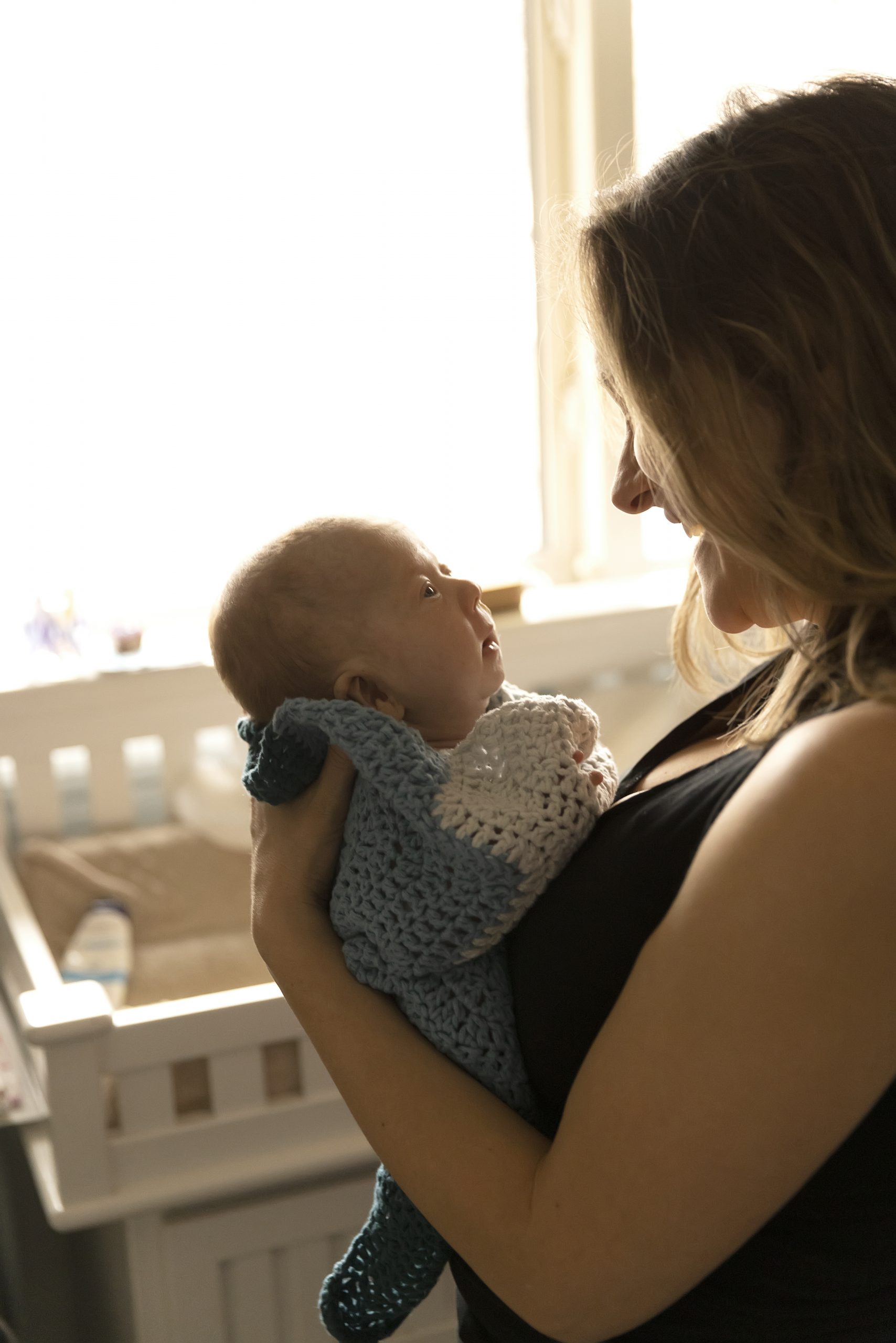
As I examined these questions, I came back to a comment a friend made early on about Viggo. She said he was a Baby Buddha, in that he, like all babies, lived in the present moment. In the here, and in the now. Unlike his parents and family and medical providers, he wasn’t thinking about how long or short his life would be relative to adult expectations. He only knew if he felt comfortable in this moment; if he felt safe in this moment; if he felt loved in this moment. This was Viggo’s subjective experience.
 As Viggo’s parents, we felt strongly that our decisions for him should not be influenced by our desire that he “defy the odds,” or our wish to avoid the pain of losing him at all costs, or our fear of living with a decision that might shorten his life. We felt it was our duty to center Viggo’s subjective experience in the context of an incurable condition that would require painful and traumatizing treatment, over and over to keep him alive. Or to stop his death. A second tenet of our medical decision-making framework rose to light:
2. Our most sacred duty was to center our child’s subjective experience. To us, that meant to maximize his feelings of comfort, safety, and love within the context of his medical status at any given time.
As I considered the future, I realized that Viggo’s decline may very well look like this: each illness or surgery and ICU stay would weaken him physically and potentially increase his mental and emotional agitation. He may eventually stop smiling and interacting, which could be a reflection of cognitive decline or a reaction to trauma, or both. We grappled with the questions of how far should we go? How many surgeries should we pursue? Should our treatment plan be to use all available medical tools to extend his life/stop his death no matter the cost to him, until he dies in spite of the interventions? Would we then feel that we could say we “did all we could”?
I am an estate planner by profession. One of the most important parts of my job is to talk with clients about their Advance Healthcare Directive or Living Will. I have had countless conversations with clients about what quality of life means to them, and what kinds of medical interventions they would want if they were critically ill and unable to communicate their wishes. 100% of my clients have said that if they could not come off a ventilator, they would want to be allowed to die peacefully and without pain. These conversations stand in stark contrast to the growing number of subacute units in America housing minimally responsive or unresponsive adults and children on long-term life support. When asked, many loved ones and medical providers caring for subacute patients say that they would not want to be “kept alive” in the same way. Even though I had been trained in advance care planning, never in my worst nightmares did I imagine that I would be called to apply what I learned to one of my own children. Yet my work in advance care planning taught me that
3. Sometimes interventions prolong life, and sometimes they prolong death. That is, just because we can doesn’t mean we should.
From the moment the doctors used “life-limited” to describe Viggo’s condition, I worried about how he would die. Unfortunately, I had had a taste of how it might go after one of his surgeries. Viggo had a hernia that was getting worse and causing him tremendous pain. We knew it was a risk to allow him to go into surgery, but we decided the pain relief was worth it. When he came out of surgery and was extubated, he “crumped” and stopped breathing. It was his first “code,” which is medical speak for “the patient is dying.”
As Viggo lay gray and motionless on the gurney, the room filled with blue scrubs. My husband and I could barely reach his feet, which we rubbed as we told him how much we loved him, hoping he could hear us over all the other voices in the room. Then we were pushed all the way to the back of the room, and I couldn’t see him anymore. I tried to connect with him through the ether, soul to soul, as I crouched on the floor with my head down, holding my husband’s hand.
I did not want my son to die like this. If these were his last moments, I wanted to be holding him, singing to him, kissing his face, praying to him on the other side.
I knew how beautiful and comforting a “good death” could be. I attended my Dad’s death from cancer in 2018. He was 62. After a bout of sepsis in the ICU, he said he knew he was dying. Instead of trying another experimental treatment that was but doomed to fail, he chose to go home on hospice. (I don’t use “doomed to fail” lightly. I asked his oncologist, point blank, if any of his patients had ever recovered after receiving chemotherapy in the ICU for end-stage cancer. He said “No.” Yet, it was offered as an option.) Home care, focused only on Dad’s comfort, gave us seven more weeks and countless priceless memories with him. It also allowed us to surround him in love and prayer and song as he took his last breath, in his own living room.
 One of the silver linings of dying of a known condition versus a sudden accident or unexpected medical crisis is that you can plan for a good death. The kind of death that, we hope, is peaceful for the one dying and comforting for those who are left behind. When polled about how they want to die, most Americans said “in their sleep.” But the second most-popular option was “in the arms of the one who loves me most.”
4. We couldn’t cure our son, but we could ensure he had a good death. This meant honoring his moment of death instead of panicking or fighting against it.
As my husband and I moved into the territory of critical medical decision-making for our baby, we did so not only asking what kinds of “curative” treatments were available, but also with a keen eye toward the concerns, values and beliefs reflected in the above framework. When we would ask questions of specialists about the costs and benefits of a particular treatment, we noticed they would reflexively reference broad statistics. These are a helpful starting point, but we had to understand: What would this intervention mean FOR VIGGO, taking into account the whole constellation of issues in each of his body systems?
This is where our medical subspecialists would generally punt. To be fair, they specialize in one body system. They have lots of patients. We wanted them to opine about how their little piece of the puzzle fit into the whole, including many other systems that were the province of other subspecialists. They politely declined. And so, we were left to try to understand the whole picture ourselves, with no medical training or expertise in complex care.
This is where our palliative team came in. As it turns out, advancements in critical care over the past 20 years have been accompanied by the advent of a new medical specialty whose province is the whole patient and their family. That is, every body system in relation to every other, as well as mental, emotional, and spiritual needs. When it comes to critical care in the context of incurable pediatric disease, palliative care helps parents and other medical providers answer the “should we?” question, not based on broad statistics or a limited view of one body system, but based on a holistic understanding of THIS CHILD and THIS FAMILY. Our palliative team helped us navigate all the subspecialists, proposed treatments and interventions, emergency room visits and ICU stays. We found that our guiding principles and framework for decision-making were deeply resonant with the palliative approach to complex care.
To summarize, our guiding principles were to (A) continually affirm our son’s dignity and worth as a human being; and (B) minimize avoidable suffering and trauma.
Our framework was:
- To take into account the cost of every intervention, and weigh that against
- Our son’s subjective experience, with the goal that he feel safe, loved, and comfortable as much as absolutely possible;
- To recognize that critical care interventions can prolong death as well as sustain life, and that the distinction between the two is not always clear; and
- To ensure that our son’s eventual death was peaceful, in our loving arms.
This framework, and choosing palliative care, did not mean we “gave up” on our son. For us, it meant the opposite. It meant we could lean into being the parents our unique son needed us to be, for as long as he needed us to be. And as we experience the incomparable sadness and grief that has followed his death, we can see how this framework has protected us from regret and allowed us to say that, if we had to do it all over again, we would make the same choices for our baby boy.
________________________________________________________________________________________________________________Ashley Waddell Tingstad is an estate planner in Ann Arbor, Michigan. She is the wife of a veteran and the mother of three. Her son, Viggo Rick, was born with a rare genetic condition and died at six months of age. Mothering and grieving Viggo has changed Ashley in the most profound ways. She is dedicated to helping families mitigate trauma and suffering in situations where there will be no “happy ending.” She writes about her journey here, at momherenow.com, and on Facebook @momherenow. Ashley teaches her older children that there is no such thing as bad weather, only bad clothes. She is a dedicated practitioner of ashtanga yoga.
When the clinicians don’t give much detail: A frank telling of all the exhausting self-discovery and self-education that these parents had to do to anticipate what their child’s medical needs and care would require — by going to OTHER parents. “We had to get to the end OURSELVES. It could have been handed to us at the beginning. I felt like I was own talking to other parents on the Internet.”
Parents of a child with a very rare genetic condition explain why they wished their doctors would have been more open with them as they made care decisions for their son.
Parents of a child with a very rare genetic condition talk about the relief they felt when they were finally able to meet with the palliative care team. Palliative care brought them more concrete answers about how their son’s life might look and made them feel less isolated and alone as a rare family.
The parents of a son with a very rare genetic condition recount an experience with intubation that was extremely painful but also incredibly informative as they faced the final days of their son’s life and chose to put his comfort and peace first when they made the decision not to re-intubate him.
Parents of a child with a rare genetic condition talk about centering their child’s experience over their own to ensure that he had the best life possible. They express how hard it was to be forced to make decisions on his behalf and the “central tenets” they came up with to guide them.
Parents of three children, one of which was diagnosed with a very rare genetic condition at birth talk about telling their other two kids. They were honest with them about his diagnosis and what it meant for his life, finding that they were able to come together as a family and love Viggo with their whole hearts even if it meant they would break.
Parents of a son diagnosed with a rare genetic condition talk about communicating with him without words and how powerful the connection they had with him was, even though he was only with them for a short time.
The mother and father of a son diagnosed with an extremely rare genetic condition reflect on how their medical team delivered the diagnosis. They explain how confusing it was to have clinicians sharing information with them about their son using coded language that they had to try and decipher.