
Erin Flanagan, MD and Amy Graver, mother of four, including twins Lauren and Emma. Lauren was diagnosed with rhabdomyosarcoma at age 7 and died at age 10
Palliative care doctor Erin Flanagan and mom Amy, mother of four, including twins Lauren and Emma. Lauren was diagnosed with rhabdomyosarcoma at age 7 and died at age 10.
I hope you’re okay. I chant over and over every day. I hope you’re okay. I hope you’re okay. I hope you’re not in pain. I hope you are surrounded by unconditional and everlasting love. I hope wherever you are, there is someone taking care of you, protecting you, looking out for you, and loving you. I hope there is someone with you and for you, where you are now, taking care of you in the ways I wish I could take care of you.
And whomever that entity is, they fill your needs like your mom would if she could.
Those are thoughts for my daughter Lauren. She was 10 years old when she died from a cancer called rhabdomyosarcoma. It’s been nearly 4 ½ years. My grief is heavy.
I used to chant please be okay. That was during her cancer treatment. Please be okay and please let chemo work, and please heal. But chemo didn’t work, neither did surgery, or radiation, or prayer chains, or her mom’s chants. Lauren died.
When I talk about her, whoever is listening often says, “I wish I could do something.” I wish you could bring her back is my usual response. It’s childish and makes the listener uncomfortable and think that I’m delusional. But it’s real, and it’s my heart’s desire. On birthday candles, on dandelions, on stray eyelashes, my wish is for Lauren to come back and be okay.
I know she can’t. But it will be my forever wish.
It doesn’t feel lighter than just after she died. All that stuff about it gets easier after the first year is a fallacy. It’s not any easier, my grief isn’t lessened. There wasn’t anything magic about the 366th day after she died, nor when it had been two years, three, or now where I find myself in the fourth year since she was here. There won’t be anything different when she’s gone for 10 years. The only thing that has changed is that grief isn’t new anymore, and I’m used to carrying it.
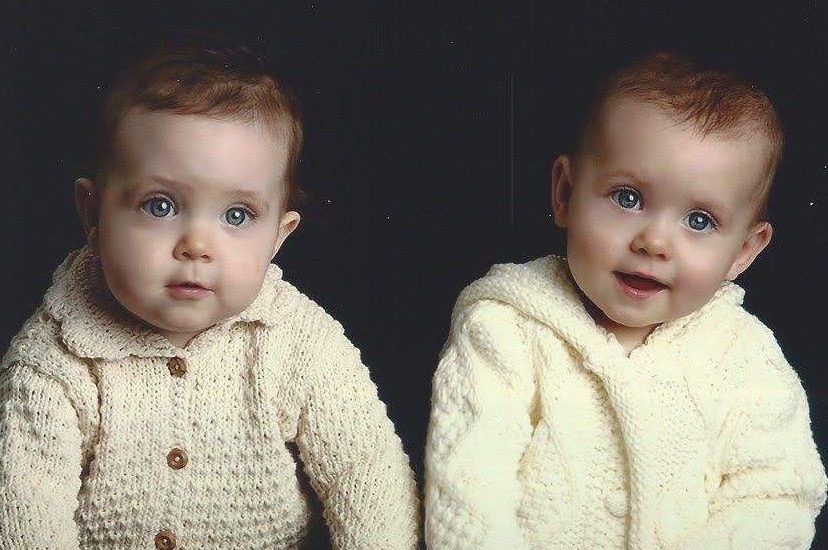 I remember carrying my kids around when they were infants and toddlers. I especially remember carrying my twins. I found a way to carry them at the same time; pick up Emma first, put her high on my hip then scoop up Lauren on the other hip. It was heavy, but as long as I had them positioned the right way, I could manage a short distance – up the stairs, down the hallway, to their highchairs, cribs, or to a shopping cart.
Now I carry this grief. It’s heavy and clumsy and hard to position the right way. Some nights it lays on my chest and makes me feel smothered. During the day, it wraps around my head like a vice, and makes my neck and shoulders ache with its weight. If I’m out walking, it feels like it’s on a sled, dead weighted like a rock, and making me pull it.
When I have my grief well positioned, say, during a joyous moment, my grief feels lighter but then morphs into a gnat, buzzing around my ears reminding me that Lauren isn’t to share this moment. Or it will take a happy moment and find a connection to a similar moment when Lauren was here, making me compare the two, and ruining my new moment. It seeps in during regular parts of my day as well. During chunks of time when I’m focused on something totally different, my grief taps on my mind’s window demanding my attention to remind me of my loss.
I have so many memories of Lauren during her illness. Some scary, some sad, and some lovely. My favorite memories, and the ones that best help me carry my grief, are those times when it was just her and I, together. After a long day at the clinic, or a scan day, she and I would sit on the chair in my room. I’d hold her and she’d ball herself and look small. I’d put a blanket over us and stroke her head. We’d sit there for an hour or more, not talking, just me holding onto her. And we’d do the same thing in the chair in the hospital room, and on warm summer days and nights, when we got home from treatment or a hospital stay, we’d sit outside on our porch. Just me holding her, stroking her head, and hoping she’d be okay.
I wish I could hold you again Lauren. And I hope you’re okay.
________________________________________________________________________________________________________________
Amy Graver currently works in the corporate world, and is a writer, a wife, and mom of four. Her daughter Lauren was diagnosed with rhabdomyosarcoma at age 7. Amy’s writing chronicles the journey on which cancer has taken her family. Lauren’s cancer diagnosis imposed a new reality and a new perspective on life. She is dedicated to making the cancer experience better for future families. Amy is an enthusiast of US presidential history, she aspires to be a professional seashell collector, and is absurdly competitive about things that don’t matter.
On a Monday morning in July, my husband Dan brought our 7-year-old daughter Lauren to the pediatrician for a 9am appointment to talk about stomach pains – what we thought was constipation. I was at a meeting downtown. The pediatrician sent Dan and Lauren to the hospital for an ultrasound, and by 2pm, we met Lauren’s oncologist. In those 5 hours, our world was rocked.
We spent the first few weeks trying to navigate the diagnosis and understand the treatment plan for rhabdomyosarcoma, a rare cancer where cells that should turn into muscles instead turn into cancer. Lauren was facing at least 42 weeks of chemo, multiple surgeries, and radiation. Dan and I were hoping, somehow, that she could be a second grader too.
We began our divide and conquer parenting. Lauren wanted me close, and I wanted that too, so I took Lauren to appointments and stayed with her in the hospital most of the time. Dan took care of everyone and everything else. If there were extended hospital stays, we switched off every few nights so Dan could get time with Lauren and I could be home with our other kids, Lauren’s twin sister Emma and older siblings Claire and Connor.
I made much of our early focus on how we would get Lauren to school. I reached out to her teacher, Ms. Black. Our older kids had attended the same elementary school, and so for the last 8 years, we knew lots of teachers; but Ms. Black was new to us. She and I exchanged emails and then met each other over the phone. I had this supersized goal for Lauren and Emma to be there on the first day of school and for it to feel as normal as we could make it.
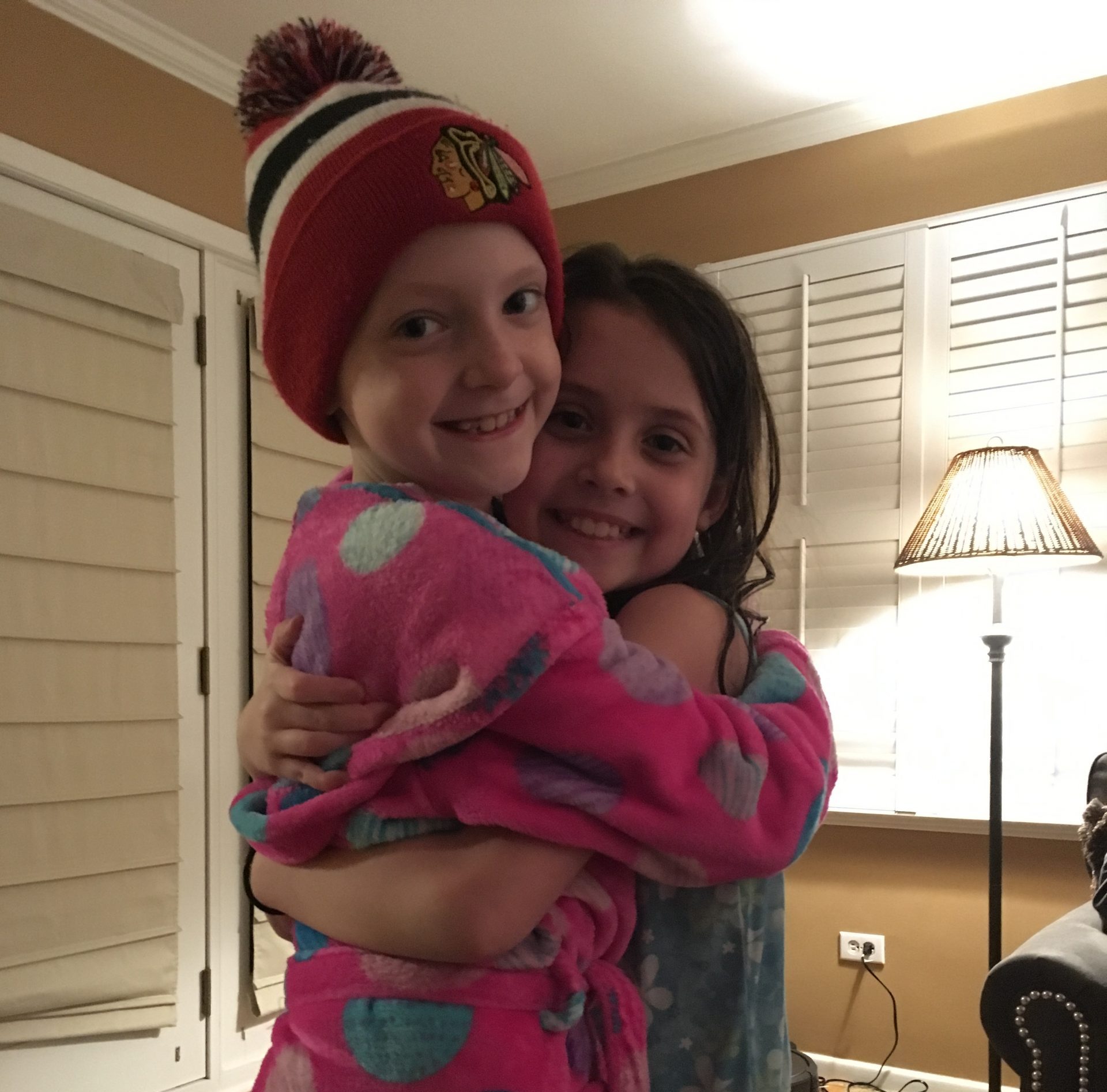 It’s hard to explain, but being there on the first day, and being in control of the narrative, felt like a precursor to how we would deal with this diagnosis. We couldn’t control how/when/if the treatment would work, but if people around us learned about us from us, maybe we could regain some balance, and in telling our own story, in our own words, reclaim some control. I told myself that if the stars aligned and we could figure out how to get all our kids back to school this year, then we could figure out how to deal with cancer.
Ms. Black went to teacher websites and groups. She asked her peers for tips on how to support a child with serious illnesses. I emailed our kids’ principals explaining Lauren’s diagnosis, and told them to expect more absences than usual, whether those days would be spent with their sister, or at home, coping with their new reality. I asked each principal to pass the information to their teachers and social workers and I asked for their support.
Ms. Black had been teaching for many years. She told me she always makes a phone call to each of her incoming students the night before school starts. Her students would hear her voice, and she would tell them how excited she was to see them the next day. Since we weren’t exactly sure if Lauren would be there, or how the first day would go, a few weeks before school started, we invited Ms. Black to our house to meet Lauren. She brought a notebook and explained to Lauren that they could send each other messages in it. It could be about school, the classroom, kids in the classroom, or just fun things so they could get to know each other. If Lauren had to miss school for treatment, Emma would bring the notebook back and forth. Emma could add messages too. Ms. Black wrote Lauren a note to get things started.
We also arranged for Lauren and Emma to take a private tour of the school. They had been there for their siblings’ events, but it was their school now. Ms. Black, along with Emma’s teacher, met us in the front office. The girls met the principal and the school secretary. We got to see their classrooms, their desks, the gym, lunchroom, and as part of our VIP tour, we got to see where the teachers ate lunch, and we even saw an actual teacher’s lunchbox! The girls felt so special, and I felt great. They would be dealing with so much new stuff, including kids’ reactions to Lauren’s hair and her illness. Knowing on the first day of school that they would be walking into the building for the second time gave me relief.
Word was getting around that Lauren had cancer. We had shared the news with a few families that our twins were friends with, but not beyond that. I was worried about how kids would react, and how their reactions might make school harder. Ms. Black asked if Dan and I would be comfortable talking to the class on the first day. We agreed.
All summer we relied on our wonderful college-aged babysitter Courtney. Lauren was disappointed that many of her hospital stays prevented her from being with Courtney. So, we decided Lauren would miss the very first day of school and instead have a special day with Courtney. Emma would go on the first day, and Dan, Emma and I would talk to their classmates in the morning.
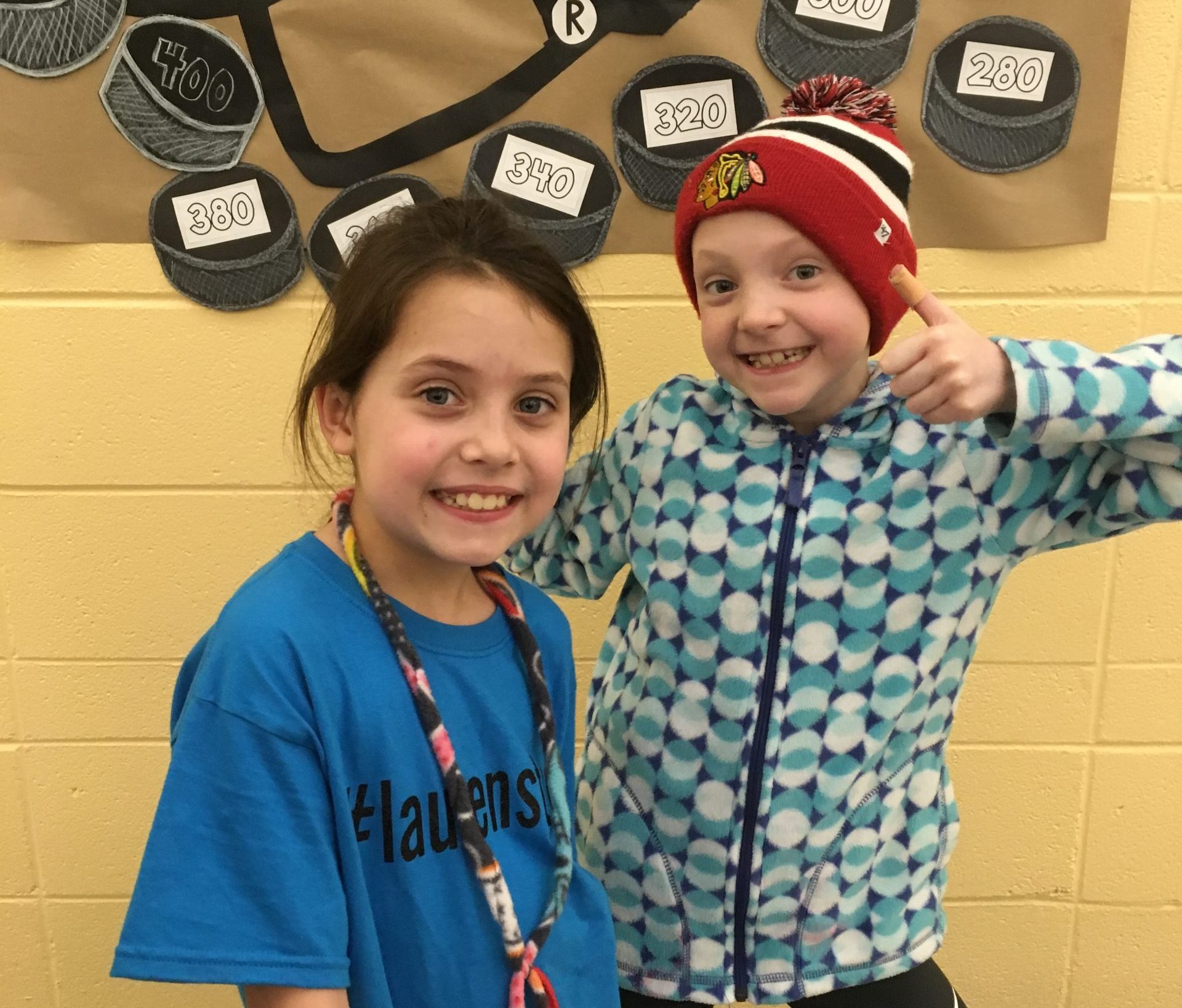 It was important to me that Emma participate in the discussion. I wanted her to assert some control over the upheaval in her young life. Allowing her to help tell her peers about her twin Lauren would empower her, even if just for that morning. We told Emma she was our special twin cancer expert and that she would be in charge of answering questions from the classmates.
Our trio spoke to both Lauren and Emma’s classes. I started off asking the kids who knew Lauren or Emma from kindergarten, first grade, or maybe from soccer. I explained that Lauren got sick over the summer and that while she was the same person, she may look different than they remembered. Cancer was a strong sickness, I told the class, and Lauren needed really strong medicine. And that while the medicine would help, it made her stomach upset and made her hair fall out. At this point, the room got very quiet. I told them that it was normal to want to see what Lauren looked like, and it was okay to look. I reinforced that Lauren was still Lauren and she was just like them, a little excited and a little scared about starting a new school and making new friends. I told them cancer wasn’t contagious. They couldn’t get it by touching, sitting near, talking, or playing with Lauren or Emma. That wouldn’t happen. I promised.
Ms. Black was there, and I made her part of the conversation by asking how long she had been teaching. A very long time she smiled and winked. I asked if she thought this might be her best class, because her students all seemed remarkably kind, friendly, and helpful. The kids beamed. Ms Black confirmed she had been thinking the same thing – she had never had such a special class. I turned to the kids and I said I knew it; I knew you all were the best. And then I asked them a favor; I asked them to be a friend to Lauren, and to Emma.
We took questions from the students and let Emma answer first.
Would Lauren be in school? Yes, she’s coming tomorrow.
Did she have a new backpack? Yes, it’s tie-dye.
What did her hair look like? Could they look at her? Well, it looked kind of bad, and she’s embarrassed, and she wishes it looked better. And yes, they could look. They would see it tomorrow.
Would they really not catch cancer? Because that sounded scary. And they didn’t want to catch it. Nope, I assured them, no one would catch it.
One kid told us he took cough medicine. Another said she did too. And another. One kid said my grandpa had cancer and he died. We said we were sorry, that must be hard for your family. One asked did we ever think of getting a scientist to help? Or maybe an inventor? Yes, we had, our doctors were very special, some were scientists, some were doctors, and some were scientist-inventor doctors, and that was a really great idea. One of the sweetest girls promised Dan, Emma and me that we could count on her, she would be Lauren’s friend.
The two classroom talks went better than we expected. Emma felt like a rock star.
 Lauren started school on the second day. Her classmates were super friendly and welcoming, and they stared at her weird falling out hair, but not for long. The rest of the year in Ms. Black’s class would reflect Lauren: an absolutely normal and exceptional 2nd grader – a second grader and a cancer patient. She figured out how to be both.
That morning didn’t change Lauren’s diagnosis. We still couldn’t control if or when chemo would work. We didn’t control how our own kids would deal with this enormous and sad disruption in their childhood. And though at one point I thought it was possible, we never were able to control people’s reactions when they saw Lauren. But being in control of the message on that first day of school was empowering. Dan and I were meeting our reality head on. That day changed us. And for the first time since that July morning, I felt almost okay.
________________________________________________________________________________________________________________
Amy Graver currently works in the corporate world, and is a writer, a wife, and mom of four. Her daughter Lauren was diagnosed with rhabdomyosarcoma at age 7. Amy’s writing chronicles the journey on which cancer has taken her family. Lauren’s cancer diagnosis imposed a new reality and a new perspective on life. She is dedicated to making the cancer experience better for future families. Amy is an enthusiast of US presidential history, she aspires to be a professional seashell collector, and is absurdly competitive about things that don’t matter.
Have you ever picked up an object in your house and thought, what would I do without this thing? It makes my life easier and better every time I use it. I’ve bought kitchen gadgets on a whim. My favorite is this oversized glass measuring cup; it holds 8 cups and I adore it. I love the handle and its spout. I use it when I make cake batter, stock for my chicken soup, or to pour Jello into fancy little cups. I know if this glass miracle ever breaks, I’ll need another one immediately. I have another gadget that chops up ground beef perfectly. When my sister gave it to me and said it was life changing, I thought, well I’ll decide that and it’s too gimmicky. Now I’m a total evangelist and I buy this tool and hand it out, spreading the word about its goodness. I’ll spare you my favorite painting tools and how they will improve your existence for another blog. You get the picture. There are things in your life that when you are handed or discover them, you just don’t realize how much you now suddenly need them forever after.
That’s what palliative care is to me. This kind of care was a concept I never knew about, nor understood, nor chose, but thank God it was gifted to my daughter and my family. Once it was handed to us, it was life changing.
I attended a seminar with the author and professor Maria Kafalas. She considers palliative care the Marie Kondo of her daughter’s diagnosis. If you don’t recognize her name, Marie Kondo is a professional organizer with a cult following. The premise of the Kondo theory is that the objects you keep should be minimal, and your possessions should reflect only those things that you truly need and that spark joy. Maria’s analogy is so perfect.
Palliative care clarifies and organizes care for your child, even amidst living with a life-altering diagnosis. Kids with critical illnesses truly need palliative care. Our palliative care doctor is one of my favorite humans, and was the spark of our joy on so many days.
Our daughter Lauren was diagnosed with a rare form of cancer at age 7. We went for an appointment with our pediatrician to address Lauren’s aching stomach, and 5 hours later, we met with her chief oncologist. Her stomachache was diagnosed as rhabdomyosarcoma.
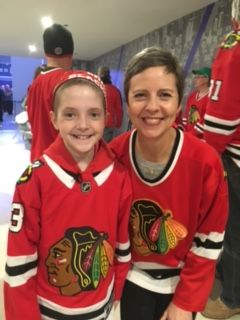
Throughout Lauren’s treatment, our palliative doctor and our palliative team became our lifeline. They took time to learn about Lauren, our family, and what was important to us. They knew how being at school made Lauren feel normal again, like her pre-cancer self. They knew she loved the Chicago Blackhawks and might (did) secretly judge you on your ability or lack thereof, to talk hockey or Chicago sports. They knew she had a new puppy, and that she described its breeding as half lab and half bad decision maker. One afternoon in the oncology clinic, Lauren and our palliative team discovered something about families. They came to the realization that you are either a Cocoa Krispies family, or a Cocoa Puffs one, but you shouldn’t be both. We are, and forever will be, a Cocoa Krispies family.
Our palliative team spoke “Lauren” when our oncology team wasn’t fluent. They helped us address the physical pain Lauren was in. They gave us medications and tools to make that pain bearable, and eventually, livable, to the point where Lauren could go to school most days, even after a morning of chemo. Our palliative team introduced us to pediatric psychologists and psychiatrists to help with the emotional pain inextricably linked with a hard diagnosis. As Lauren’s oncologists worked on solving for tomorrow, her palliative care team worked on solving for today.
 On very hard days, Lauren would tell me that her big worries were back. That meant she was worried about dying. The open and honest relationship that bonded us to our palliative team allowed and encouraged me to share Lauren’s big worries with them. Their words and comfort brought some respite to those hard days.
When the promise of more tomorrows was fading, our palliative team helped us make decisions about what Lauren wanted to accomplish and how we wanted her last days with us to look. Our most difficult and important conversations with Lauren and all of our children were at the encouragement of our palliative team. My husband and I would never have found the strength nor recognized those opportunities and moments without the support and confidence they instilled in us. I will be eternally grateful for those talks.
If you are reading this and going through some hard days, I’m so sorry. If you and your child have big worries, I’m so sorry. If the promise of tomorrow seems like a mirage, I’m so sorry. Please ask for palliative care. Ask at the start of the diagnosis, the middle, or near the end. Please ask. You’ll find respite, support, and exactly the thing you didn’t know you needed.
________________________________________________________________________________________________________________
Amy Graver currently works in the corporate world, and is a writer, a wife, and mom of four. Her daughter Lauren was diagnosed with rhabdomyosarcoma at age 7. Amy’s writing chronicles the journey on which cancer has taken her family. Lauren’s cancer diagnosis imposed a new reality and a new perspective on life. She is dedicated to making the cancer experience better for future families. Amy is an enthusiast of US presidential history, she aspires to be a professional seashell collector, and is absurdly competitive about things that don’t matter.
I don’t like to brag, but I am a gifted smeller. I can tell you which shelf in the fridge is harboring the dead thing before taking a single item out. When I pass a smoker outside a building, puffing away in their restricted pen, I know right away if they are smoking Benson & Hedges Deluxe Ultra Gold Lights, my mom and gram’s brand. And I always knew when the babies needed changing, way before my husband. Though thinking about it, that’s probably not the win I think it is.
In the hospital, there is a collision of smells. You wouldn’t think saline has a smell, but it does. Not good, not bad, just watered down slightly salty and medicinal. I smell orangey industrial soap, and the buttered popcorn we brought from home because it’s my daughter’s go-to snack right now. I bring it, but she won’t eat it here, she’s afraid she’ll eat it and throw up, and consequently ruin this current favorite food and never like it again. I should know all that by now, but I pack it anyway, just in case things change and I can get her to eat something while she’s here. Some foods, like the chicken Caesar wrap on the cafeteria menu are completely off limits. That’s her rule, not mine. But I comply and I get it. I let her be the boss of my lunch pick. She can’t be expected to deal with cancer and that smell.
On overnight stays, I can smell the chemo on her. I can smell it protruding from her pores. It’s metallic and harsh. It smells like some strong alloy that’s been heated hot and still smolders. When we come for an overnight infusion, I’ll smell the chemo all night to the point where I feel like I can taste it. I hate it. It must feel as harsh going through her body as it smells. But we don’t talk about the harshness. I’m afraid she will worry about what it’s doing inside of her besides attacking her cancer. You see, giftedness runs in the family. My daughter is a gifted worrier.
She looks frailer here than at home. She’s wearing a tank top and her purple panda pajama pants. She has her robe on, the one with the foxes wearing glasses and her tie-dye slipper boots. She forgoes her hat. At home, her hat is part of her uniform, but I guess she feels safer here. Or maybe apathetic. Or a little of both. Her eyes, always chameleon-like, are green today because of the colors in her robe. Her freckles poke through her pale skin. She’s feeling up to it, so to break the monotony and selfishly for me to score a bonus new smell, we take a walk around the hospital floor. I push her IV pole with one hand and hold her hand in my other.
As we walk, I smell Mexican food wafting in the hall. A patient’s family has brought home cooked food for their son. I’ve seen their containers in the communal fridge. As we pass the nurses station, Nurse Diana is holding an infant. Diana soothes the baby. I smell Diana’s perfume ever so slightly as we walk by. It’s pretty, just like her.
We pass the dad pushing his toddler son in the wagon that holds the IV pole. The wagons are custom made in animal shapes and are a big deal to little kids on the floor. This boy scored the frog wagon. I swear they’ve walked by our door 40 times today. I’m sure the dad’s ultimate motive is a nap, but only one of them looks tired, and it’s not the boy. I bet their room smells like baby wipes and apple juice.
We walk, maybe 2 laps, and go back to our room then finally, the chemo runs through, and fluids after that, and it’s our time to go home. For as much care as I took packing to come here, now I just hastily stuff our bags. I sniff her robe before it goes in. It doesn’t smell like home anymore, not one bit. Now, it only smells like the hospital. When we get home, I’m going to wash the hospital out of everything. I’ll wash it out of our clothes and blankets, and out of my hair. I’ll help my daughter shower. I’ll wash it all out, except for out of my memory.
________________________________________________________________________________________________________________
Amy Graver currently works in the corporate world, and is a writer, a wife, and mom of four. Her daughter Lauren was diagnosed with rhabdomyosarcoma at age 7. Amy’s writing chronicles the journey on which cancer has taken her family. Lauren’s cancer diagnosis imposed a new reality and a new perspective on life. She is dedicated to making the cancer experience better for future families. Amy is an enthusiast of US presidential history, she aspires to be a professional seashell collector, and is absurdly competitive about things that don’t matter.
Hey there mom shopping next to me in Target. We’re both in the girls department checking out back-to-school clothes. You see my daughter. Well, actually, you only see her cancer. And suddenly you need to leave. I wish you would have stayed long enough to overhear the agonizing decision my daughter was facing. Would she look better in cheetah leggings or leopard ones?
Hey there grandpa at McDonalds. Yep, that’s my child. Yep, she’s a girl. And yep, I know her hair is funky. It’s falling out from cancer treatments. She’s not ready to get rid of it and I’m not ready to make her. Yep, she knows she has cancer. And yep, that’s my husband and those are my other kids. See how comfortable we are with each other? I wish we didn’t make you so uncomfortable.
Hey there expectant mom at Walgreens. You notice my daughter too, and instinctively touch your belly. It’s like I can hear your thoughts. You’re thinking, ‘Oh God. Cancer. I haven’t thought about cancer yet.’ You immediately add it to that already-too-long worry list for your unborn baby. I wish I could glimpse the future, and tell you that your baby will be fine, and you will be too. But I can’t do that. What I can tell you is that whatever challenges God has in store for your child, you’ll rise to them. Because that’s what parents do. They rise. You can’t comprehend that yet. But someday you’ll understand. You’ll rise. I promise you will. And stop worrying so much, you’ll miss too much of your miracle.
Hey there person in the hospital lobby. You see my daughter right away. You see all of her. You mouth “God bless you” to me. God bless you too. I hope your loved one heals completely.
Hey there fellow parent. We’re both dropping our kids off at school. You see me with my girls. You don’t know what to say so you don’t say anything. I want to tell you that telling me you don’t know what to say is exactly the right thing to say. And I understand if you can’t say anything, or anything yet, I really do. When you can’t say anything, a smile works too.
Hey there old self. You used to be all these people. As a gift to my new self and my friends, here is my public service announcement:
If you see us out in public, know that our daughter is well enough to be out. Know that we are happy for her, this day and this moment. Happy to do normal things again. The same things you get to do. Happy we aren’t in a hospital room. Next time you see us out just say hi, or glad you got out today, or you must be having a good day, or good luck with your treatment. And I get it. I really get it. Those words are hard to say. A smile works too.
________________________________________________________________________________________________________________
Amy Graver currently works in the corporate world, and is a writer, a wife, and mom of four. Her daughter Lauren was diagnosed with rhabdomyosarcoma at age 7. Amy’s writing chronicles the journey on which cancer has taken her family. Lauren’s cancer diagnosis imposed a new reality and a new perspective on life. She is dedicated to making the cancer experience better for future families. Amy is an enthusiast of US presidential history, she aspires to be a professional seashell collector, and is absurdly competitive about things that don’t matter.
At CPN we have this thing that happens. I call it CPN Serendipity – people come toward us bringing stories, wisdom, and expertise just as we, the staff, are talking about additional resources we want to include on the website. And more often than not, we discover some far- off mutual connection we already have, making it all the clearer that this person is the right person. And so, it was with Amy Graver, our newest Blogger in Residence.
Amy is mom to four – Connor, Claire, and twins Lauren and Emma. I first ‘met” Amy last March after she submitted a story journaling a conversation that she had with her daughter Lauren; a conversation in which she needed to tell her 7-year-old daughter that she had cancer (rhabdomyosarcoma). Lauren asks her mother, “What color is my cancer?” Amy uses the shades in a Crayola box to explain the many forms of cancer telling her, “When the doctors figure out what shade your cancer is, they will know what medicine to give you.”
Reading Amy’s piece, I felt both an ache in my heart, and a deep respect for her courage and creativity in delivering the news to her daughter and her generous willingness to share this very intimate moment with the CPN network. This past June Amy shared another blog with CPN and alongside me presented at a patient organization conference.
So where does serendipity come in? As it turns out just days before Amy sent her story, the CPN team talked about a need to expand our resources for parents of children with cancer. During that same period, several families contacted me looking for support when parenting twins where one twin has a serious illness. The additional connection – well it turns out Amy attended a presentation Blyth gave a year earlier! And so it seems perfectly perfect that Amy will bring her perspective to the Network as our newest Blogger in Residence!
Awareness
September is Childhood Cancer Awareness Month. The first time I heard this term, I was with my daughter Lauren. She was 2 months into treatment for rhabdomyosarcoma, a rare cancer where cells that should turn into muscles, turn into cancer. We were in the pediatric oncology clinic and the child life specialist stopped by with an activity packet. Child life is a godsend in the hospital and clinic, but today’s packet made me raise an eyebrow. There were pages of cancer ribbons to color, gold cancer ribbon stickers — as gold is the color designated for pediatric cancer — gold ribbon tattoos and some markers. The packet was supposed to help bring awareness to pediatric cancer.
Now I only took a few college marketing classes, but I recall enough to know that we are not your target market for this type of awareness. In fact, we would be considered a saturated market. I looked at that packet and thought, How much more aware can my family make people? My daughter is bald, and we’ve adjusted our school, work, and life schedules to get to the clinic for chemo 5 days each week. Our lives are upside down with awareness. I looked at the packet of stickers. My girls LOVE stickers and won’t turn down a tattoo, but these were headed to the trash can. Lauren was a walking sticker, the epitome of pediatric cancer. And although we were just 2 months into treatment, I felt, and still feel, that pediatric cancer has given me a full body tattoo of awareness. I don’t need your silly packet.
Awareness is better directed to researchers, governmental agencies like Congress and the NIH, foundations, and pharmaceutical companies. Funding for pediatric cancer represents a scant 4% of funding for all cancers. In other words, for every $1000 spent on research — new drugs, better drug efficacy, better imaging, better quality of life — $960 will be spent on adult cancers and $40 will go to pediatric cancers. What kind of life changing research can you buy with $40? Some of the drugs treating Lauren’s tumor haven’t changed in 30 years. 30 freaking years! There’ve been improvements, certainly, and thankfully, but profits for drug companies are in adult medicines, not children’s. That’s why you see so many fundraisers — like St. Jude’s, St. Baldricks, Cal’s Angels — raising funds for research. Many of them are outgrowths of parents of kids with cancer, trying to make things better for the next family in line. Because that’s where real change is happening. Send a coloring packet to the heads of hospitals and drug companies.
And while we’re at it, send another to our legislators, to enact laws so pediatric palliative care is available and accessible for all cancer kids, at the start and throughout their illness, not just at the end of life. And another law so parents don’t have to trade financial ruin for their child’s treatment. Bankruptcy is a common but underreported side effect of cancer. The treatments are so intense, and with long hospital stays, it’s nearly impossible to hold down a job and care for your sick child. I hold our family’s insurance benefits. I was one of the lucky ones, my employer gave me flexibility to work during Lauren’s illness. Had I not had that luxury, I could have lost my job, we would have lost coverage, and I’m certain, lost our house and cars. Access to mental health would help too, because cancer is hard on marriages. Let’s spend $40 on gold stickers for our lawmakers to wear.
I now struggle with how to spread my own version of awareness. Is it enough that my family gave the ultimate sacrifice to this disease? Lauren died at age 10. Like so many mothers and fathers of children with critical illness, you would think there is no more to give. But that’s the beauty, my fellow parent warriors. Even after the ultimate sacrifice, humanity calls us. And as we navigate the weeds of devastation, a love force pulls us to help the families that follow. I’m still working on mastering that pull. My perfect version is when everyone I interact with becomes aware of Lauren’s gifts and the mark she made. Her ripples were small but mighty. Lauren’s light is too bright to be confined to September. Because of her, every day should light up gold.
________________________________________________________________________________________________________________
Amy Graver currently works in the corporate world, and is a writer, a wife, and mom of four. Her daughter Lauren was diagnosed with rhabdomyosarcoma at age 7. Amy’s writing chronicles the journey on which cancer has taken her family. Lauren’s cancer diagnosis imposed a new reality and a new perspective on life. She is dedicated to making the cancer experience better for future families. Amy is an enthusiast of US presidential history, she aspires to be a professional seashell collector, and is absurdly competitive about things that don’t matter.
I know you don’t know what to say. You didn’t know what to say when you heard she was diagnosed and you didn’t know what to say when you saw her for the first time with her hair falling out and you sure didn’t know when you found out she died. And that’s okay. How could you? I didn’t expect you to know what to say any of those times anyway. But I’ll be real honest, I didn’t think we would still be so uncomfortable. I thought once the facts were out there, that she was sick, that she died, you and I could figure out what to say to each other. Say something. Say anything. Or say something else. I didn’t expect us to still feel so uncomfortable.
Maybe you didn’t know what to say the first time, the twentieth time, or the last time you saw me. Or maybe you avoid me because it’s just too hard. Maybe I remind you of what could be or what could have been or there for the grace of god. Maybe my story reminds you of someone you love who’s gone. Maybe I make you think about other cancer stories. Maybe when you think about my story, you think of that kid in your grade school that died. Or that kid from high school. Or that awful summer night those neighbor kids got in that car accident because my story, like theirs, upsets the natural order, where children don’t die first.
If you’re a parent, you look through your parent eyes, because your kid eyes don’t fit you anymore. And with your parent eyes, you see in more dimensions, you anticipate danger quicker and easier than you can happiness. You used to feel more spontaneous and be more naïve. And now if you tried to be like that, it would feel like you are trying to button a child’s coat on your adult body. You understand what grandma meant by time flies. You might even throw around a life is short comment to your own kids. Your grown-up eyes have seen more. More happiness. More devastation. And let’s face it, devastation of any kind is hard to look at.
When you are faced with looking at something that’s devastating, you have two choices. Look away or keep looking.
Grief works like that too. Either you are okay looking/being/holding/sitting with someone who is grieving, or it makes you look away. Here’s what I’d like you to know. You might need to look away. You might prefer standing over there or even walking away forever. But I can’t. My grief isn’t going away. I will wear it and bring it everywhere I go. I’ll drag it or it will drag me, forever. It’s not like I can leave at the door or shut it out of my thoughts. I cannot separate myself from my grief. I don’t think any grieving parent can. There are some days that maybe you can’t find it on me. I took a shower, my clothes passed my teenagers fashion patrol, and I’m in a good mood. I cracked a joke, or I got something done. But I’m not over it. It’s a façade. A veneer. It’s still there, I just covered it up for you, for us, or for the event or for that moment. Or I covered it up for myself, so I could make it through to the next minute. But it’s still right here, with me and in me. We are a package deal now. I hope that you and I can figure out how to make space for my grief and me. Not just me.
And I know you want it to be gone or lessened for me. And I love you for that. The thing is, this can’t be done. It will never be gone for me. I’m not sure it gets lessened. I haven’t been grieving long enough to know that. And if I’m being real honest, that thought is scary for me. If it’s lessened, would that mean she’s lessened? Every morning and every night, I’m still trying to figure out how grief and I will coexist. How will we get out of bed, get out the door or do the stuff you non-grievers do? And some days, I sorta figure it out. Other days, grief acts like this uncontrollable toddler, the one the whole store hears crying. And the grief toddler is tethered to me. And it’s all over me. I cannot tell you why one day, my grief and I can be in harmony, and the next day we can’t.
You’ll ask me what made yesterday okay and today so bad? I don’t know. What I can tell you is that yesterday was okay and today is bad. I don’t know why. And tomorrow might be bad and the next day good. It’s all a surprise to me.
Sometimes, if I’m real honest, I think you want my grief gone or lessened more for you than for me. My grief and I make you uncomfortable. It makes you uneasy to see my grief sitting so near to me, blocking your view of the old me. Or what you hope is the fixed me. Maybe you wish I would not let my grief tag along with us as often as I do. I get that. My grief makes me uncomfortable too.
Have you noticed when I refer to her in the present tense? Don’t think I’m in denial. I know my girl died. There are some days, even these years later, I just still can’t believe it. I still want to say her name, talk about her as if she’s next to me and sign her name on your birthday card, along with the rest of ours. I need to do that. Please don’t tell me some version of she’s in a better place. She’s free of her illness and she’s happy. Her happy place was with me. If I feel guilty about what I did or didn’t do, let me feel guilty. On good days I know I did my best. On bad days I’m convinced I could have tried harder. I know you are trying to help when you tell me to try to get better for my other kids. I am trying. Depending on the day, this is what my trying looks like. You lather on these mini-pep talks, reminding me my kids need me, lots of people are counting on me, rooting for me. I know all that. It’s just hard and heavy and still so very raw. And the thought of other people relying on grieving me is overwhelming. At any moment, my grief and I fight to see who gets to be in charge, and some moments, my grief wins.
So that’s it. That’s what it’s like, for me, on this day, to be a grieving parent.
Today my grief and I are getting along. I’m not sure why.
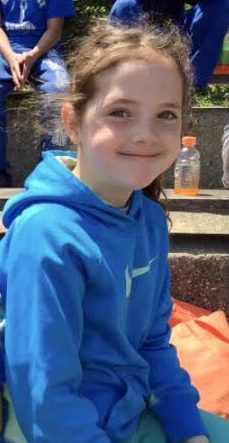 My daughter Lauren is 7 years old. She loves soccer, our new puppy, blue Gatorade and playing outside. Lauren is a twin sister to Emma, and a little sister to Connor and Claire. On Monday morning, my husband Dan takes Lauren to the pediatrician for a stomachache. I have an appointment downtown. Dan calls me when I’m in the parking garage. He’s crying. The pediatrician recommended Lauren get an ultrasound at the hospital, maybe it’s a blockage in her bowel. The ultrasound technician pulls Dan aside, out of earshot from Lauren and tells him it looks like a tumor and Lauren needs to be admitted. The oncologist will meet with us as soon as I get there.
It’s Wednesday night. It’s been less than 72 hours or a lifetime since that call. Dan brought the other kids to visit for a few hours. He just left to take them home. We both have a job tonight. He will tell our other kids Lauren has cancer. And I’ll tell Lauren.
I stall, for hours, I stall. Since Monday, the child life specialist keeps finding me. She asks if I told her yet. She offers to tell her for me. Lauren needs to know she reminds me. Lauren needs me to be honest and tell her. I know I say defensively. I haven’t told her yet, and I want it to come from me, and it hasn’t been the right time. As if there is a right time. I’m telling her tonight. I don’t think she believes me. I barely believe me.
Lauren knows I’m acting weird. I’m fawning over her, being overly solicitous, even more so than I have been since she was admitted. The show on Disney Channel ends and I turn off the TV. Hey Lauren, we need to talk. She’s a sensitive kid. I like to think all my kids are gifted, and I often joke that Lauren is a gifted worrier. She’s only 7, but Dan and I boast to each other she worries at a high school level.
Her eyes get big. I pull her onto the couch near me. Hey, I say, and I grab her hands. Mom, what’s wrong, what’s wrong, please tell me she begs. Well, the doctors figured out why your stomach has been hurting. Why? What’s wrong with me? I take a breath. You need to say it. Tell her I tell myself. Just say the words. Please let me get the words out. Let me get these words out and not break her. Please don’t let me break her. Tell her. Do it. Say it.
It’s cancer. You have cancer Lauren. What? She screams but it’s also a cry. It’s loud and guttural and I’ll never forget that sound. What did you say? I don’t want cancer. No mom. No. No. No. I’m just a kid. No. Mom did you say cancer? No. I can’t have cancer. I don’t want cancer. Lauren. Lauren. Lauren. I don’t want you to have cancer. No one wants that. She’s crying now. Hard. She pushes me away. She’s furious and confused and scared. We cry together for a long time. She’s still crying, but softer now. Mom, what color is it?
I know exactly what she means. The only person with cancer that Lauren knows is a teacher at school. Mrs. F. had breast cancer. Our family participated in some fundraisers. Claire started making and selling beaded bracelets and donating the money to Mrs. F’s family. Soon our whole family was making them, on the couch, watching TV together and making bracelets. Mrs. F. died. I know Lauren is asking me if she will die.
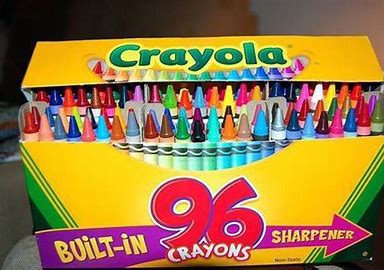 Are you asking me if you have pink cancer? She nods. No, you don’t have pink cancer. I see the slightest bit of relief on her face. What color do I have? Well, I tell her, there are lots of colors of cancer. You know that box of crayons we have at home? Not the one with 16 colors that you need for school, but the big box with the built-in sharpener, that one. Do you know that one? She nods again. Well, cancer comes in as many colors as there are in that box. She asks again. What color do I have? I’m not sure what to say. I want to say the color of the saddest feeling in your heart, the color of your world when it falls apart, the color that scares you the most. I punt. Lauren, what color would you say you have? She thinks, hmmm, probably blueish. Maybe green. No, blueish, she’s sure. I’m surprised she picks blue. It’s her favorite color. She only picks out blue sneakers. Her favorite outfit is a blue shirt, blue leggings, her blue shoes, and a blue headband. I wouldn’t have guessed blue cancer.
Blue huh? Yeah, she says. Mom, will I die? I’m trying hard not to cry now. Trying hard not to reveal my immense fear and dread. Lauren is pretty good at reading me. I feel like my head is see through and she will know the things she’s not ready to know. I worry she will see my worries and adopt them as her own. See, the apple doesn’t fall too far from the tree, I’m a gifted worrier too. The thing is Lauren, and I look at her blanket and get an idea. The thing is, the doctors know the color of your cancer, but they don’t yet know the shade. Her fleece blanket is a gift from someone, and it’s tie-dye blue. Look at your blanket. You see all these shades of blue? The doctors need to figure out what shade of blue your cancer is, because they know the color, but they don’t know the shade. Everyone’s cancer is a different shade. What shade was Mrs. F’s? It was pink I tell her. A bright pink.
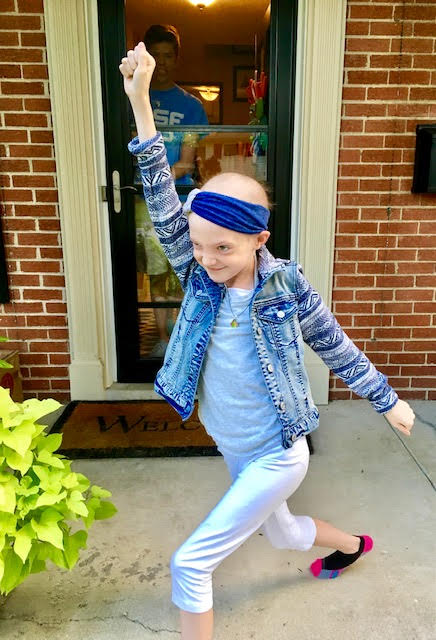 When the doctors figure out what shade your cancer is, they will know what medicine to give you. Mom? I don’t want cancer. I really don’t. I want to go home and not have cancer. I know honey. I hug her. That’s what I want too.
She’s quiet for a while. Does it have a name mom, the cancer? Rhabdomyosarcoma. I can barely get it out of my mouth. It feels foreign, vile, disgusting and I don’t want to say it. Lauren repeats it slowly and perfectly.
More quiet, then another question. Mom? Do you know why I got cancer? No, I don’t. I’ve been thinking about that same question too. And you know what I think Lauren? I don’t think you or I or dad will ever figure that out. I think, for our whole lives, we won’t ever be able to answer why you got cancer. You know what else I think? What’s that mom? I think that the only thing we can do now is to work on the how. Since we can’t know the why, let’s work on the how. Like how we help you get better. And how we figure out the shade. And how we get used to saying words like cancer and rhabdomyosarcoma. And how we show you how much we love you. We sit on the couch for a long time. The hospital bed scares her, and she wants to be close to me. For the rest of that hospital stay, we sleep huddled together on that blue vinyl couch.
________________________________________________________________________________________________________________
Amy Graver currently works in the corporate world, and is a writer, a happy wife and mom of 4 kids. Her daughter Lauren was diagnosed with rhabdomyosarcoma at age 7. Amy’s writing chronicles the journey on which cancer has taken her family. Lauren’s cancer diagnosis imposed a new reality and many challenges that turned their world upside down. Unexpectedly, but so very welcome, have been the silver linings that have emerged over the course of Lauren’s treatment and that still occur today. Amy is an enthusiast of US presidential history, she aspires to be a professional seashell collector, and is absurdly competitive about things that don’t matter.