
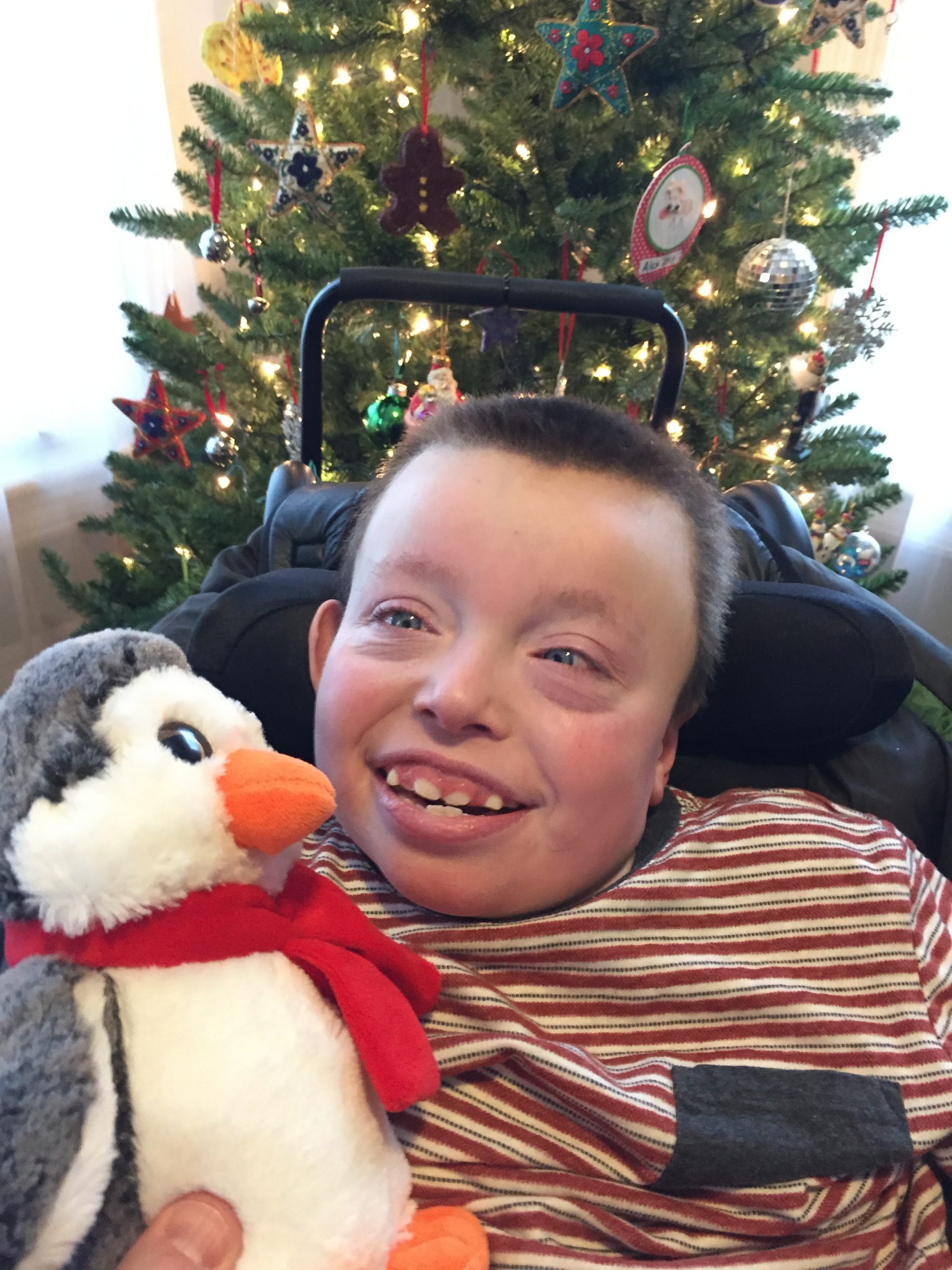
 Our son Lucas was born on the Winter Solstice, the longest night of the year. Right away we knew there were unusual medical concerns, but it would take another year before Lucas was diagnosed with Menkes Syndrome. At one day old, we only knew he needed to be in the NICU for the next several days. We and his doctors had to work through the darkness of that long night searching for some clue that would shed light on his condition. My wife and I were still optimistic enough to think this was some short-term medical need that could be fixed in the days ahead. But until then, we needed to be in the hospital. We would not be home for Christmas.
Christmas in the hospital seemed like a bleak prospect. When the offer came to stay at a nearby Ronald McDonald House to be more comfortable, we jumped at it. But I’ll be honest, I expected it to be the most depressing Christmas of my life. I could not have been more wrong. This home was warm, welcoming and calming. Several common rooms were packed with decorations and Christmas trees with presents around them – presents for us! Meals were provided too. I was amazed at how comforting it was. The main living room was aglow. I know it was from the Christmas lights but it felt like the walls themselves were made of gingerbread and radiating warmth. It was still the worst Christmas of my life – the most stressful and fear filled –but it was also beautiful, inspiring and affirmed the true meaning of the season of giving.
From day one of Lucas’ life, I was acutely aware of how different our lives had become. My wife and I had been fortunate enough to never have experienced a struggle we could not manage on our own. We were the people who could help those less fortunate. Suddenly, we were the ones who were less fortunate. Neither of us had ever needed or accepted charity. Now we had to. We needed the help of a place to stay and meals that we neither cooked nor paid for. It was hard to adjust our minds to this new state. It was so foreign to us and tough on our pride. No one wants to be dependent on the kindness of strangers, but it did open my eyes to the beauty in their generosity.
The dull ache of knowing we were the ones in need of someone’s goodwill that Christmas, marked the beginning of our new understanding of giving. We moved our minds past notions of exchanging gifts, or even sharing of our gifts. We’re all told it is better to give than receive, but I think there’s a bit of an art to being an open recipient. With Lucas’ birth we were getting a crash course in that. I hope we managed it with some grace.
At the time, we didn’t know those ten days around Christmas would not be an isolated example of needing and accepting help. In the months and years ahead, we had to get used to asking for help for our son. Sometimes it was just asking for extra consideration or kindness; sometimes it was leaning on government programs; and sometimes it was turning to a charity because we were in need. We wanted to be self-reliant and proud but Lucas’ needs sometimes grew beyond what we could handle without help.
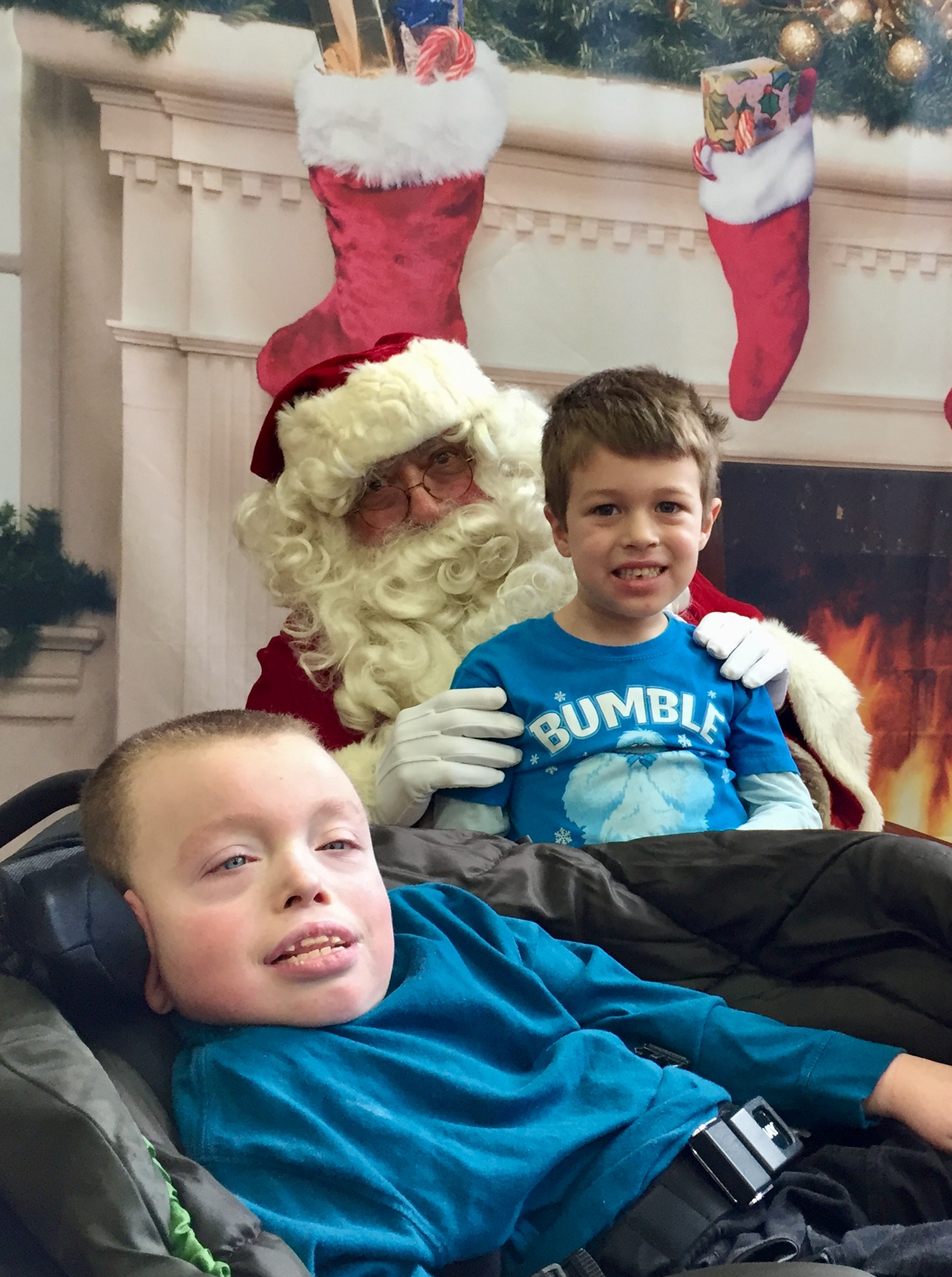 Even after we learned that Lucas’s prognosis included severe degenerative symptoms and a shortened life, my wife maintained the point of view that many people were in a worse situation than we. And this is completely true, some people were. I was always impressed by her generosity and compassion in this attitude. It was too easy for me in those early days to see our situation as close to one of the worst things that could happen to anyone. I envied her ability to hold space in her mind and heart for those who had things even worse than us. But I wonder if another appeal of this otherwise healthy attitude of gratitude might also have been a way to hold on to an idea of ourselves as still apart from those truly in need – we might now be the needy, but we were not the neediest.
I couldn’t help feeling that in my son Lucas, we had our own version of Tiny Tim from Charles Dickens “A Christmas Carol.” Lucas was every bit the heart-melting inspiration we needed to be our best selves. He also filled Tim’s role of reminding us that some misfortunes are more serious than others. In film adaptations of Dickens’ story, Tim gets a prominent seat at the head of the table. In our reality, it was hard to get Lucas’ wheelchair quite close enough to the table. Most large family meals would find Lucas oddly angled in a corner, between two chairs – the bulk of his wheelchair mocking our efforts at equal inclusion.
But Tim wasn’t the only example Dickens would lend to our new life. I became haunted by a version of the Ghost of Christmases Yet to Come. My mind would turn from the joy of our Christmas Present to the sadness for what was likely to come in some not too distant Christmas Future. The image of Lucas’ place at the table, now empty, was not just a possible future to be decided against, like in A Christmas Carol. From the day we learned his diagnosis, we knew it would someday come.
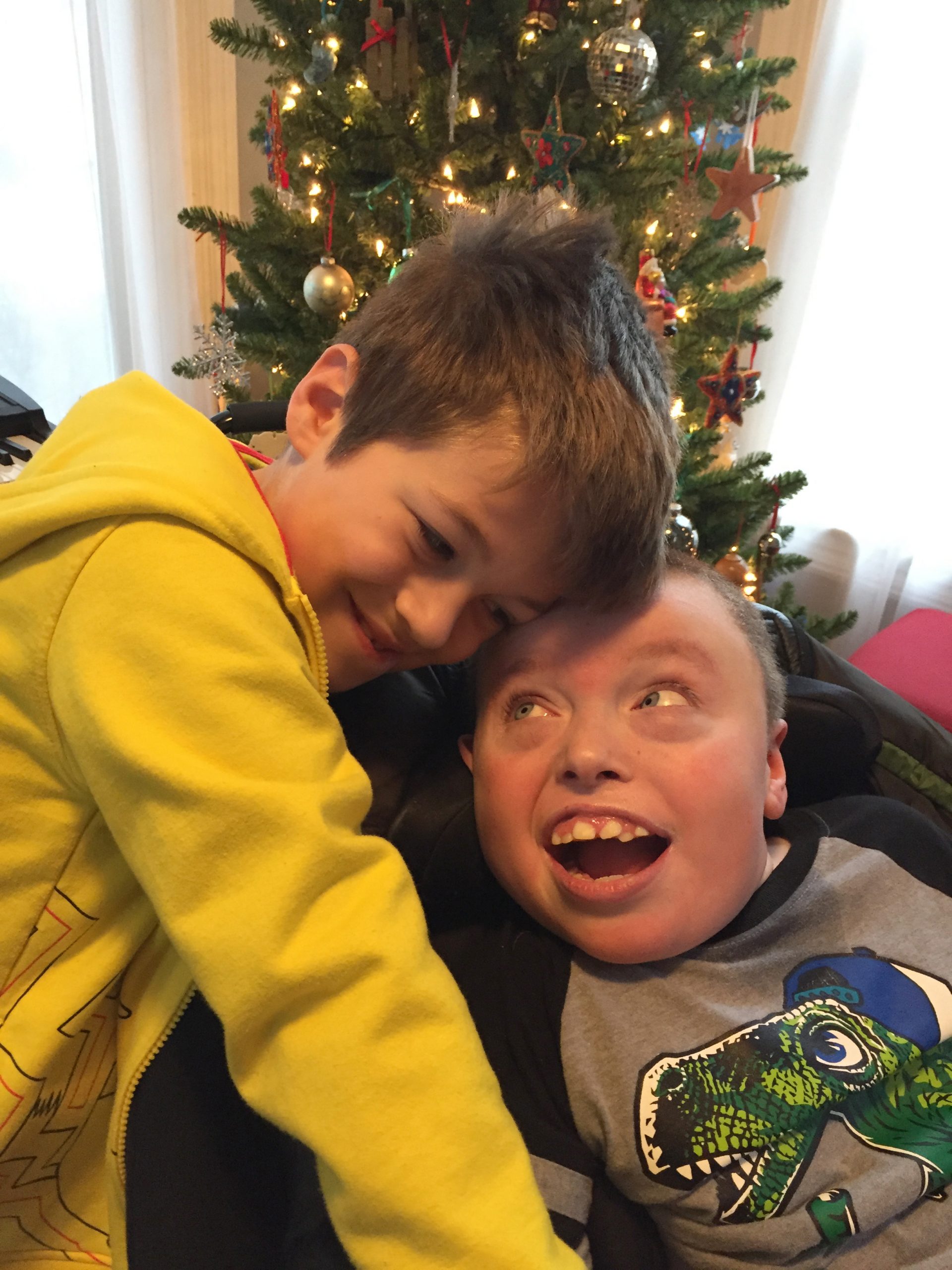 Last week Lucas’ younger brother, age 10, said to me: “I was thinking the winter solstice is about bringing change. Lukey was born on the solstice and he brought change because when you have a rare disease, it changes everything.”
His words highlighted the attitude we needed to embrace. Unlike Ebeneezer Scrooge who learned from the Ghost’s visit that he must change his behavior to avert tragedy, we knew we could avert none of it. None of it – except our approach to it. So the dark visions of our Christmases-yet-to-come would instead inspire us to embrace change and make the most of the life ahead. We’d draw from the darkest night the lesson that the light does return and our time in it is precious. We will be open to the unexpected, to the uncomfortable and especially to unexpected gifts.
________________________________________________________________________________________________________________
At the age of 12 months Daniel’s first child Lucas was diagnosed with the rare disease Menkes Syndrome. After adjusting his expectations of what raising a child might look like, Daniel began to tell Lucas’ story with a short documentary: “Menkes Disease: Finding Help & Hope” narrated by Oscar nominee Mary McDonnell. That film led to Daniel co-founding with Bo Bigelow DISORDER: The Rare Disease Film Festival and later The Disorder Channel, both dedicated to spreading awareness for patient families facing any of the more than 7,000 rare diseases.
When parenting a child with complex care needs – like my son Lucas had due to Menkes Syndrome — a couple often faces a tough choice: is one of them not going to work?
And I’ll stop myself here since the way I phrased that is already a trap. You will both work. But one may choose not to work outside of the home for a paycheck. Parenting kids like ours is a fulltime job and then some. I know some parents manage it while both working full-time jobs. I’d love to know how. Seriously, if you’re one of these families, please tell me.
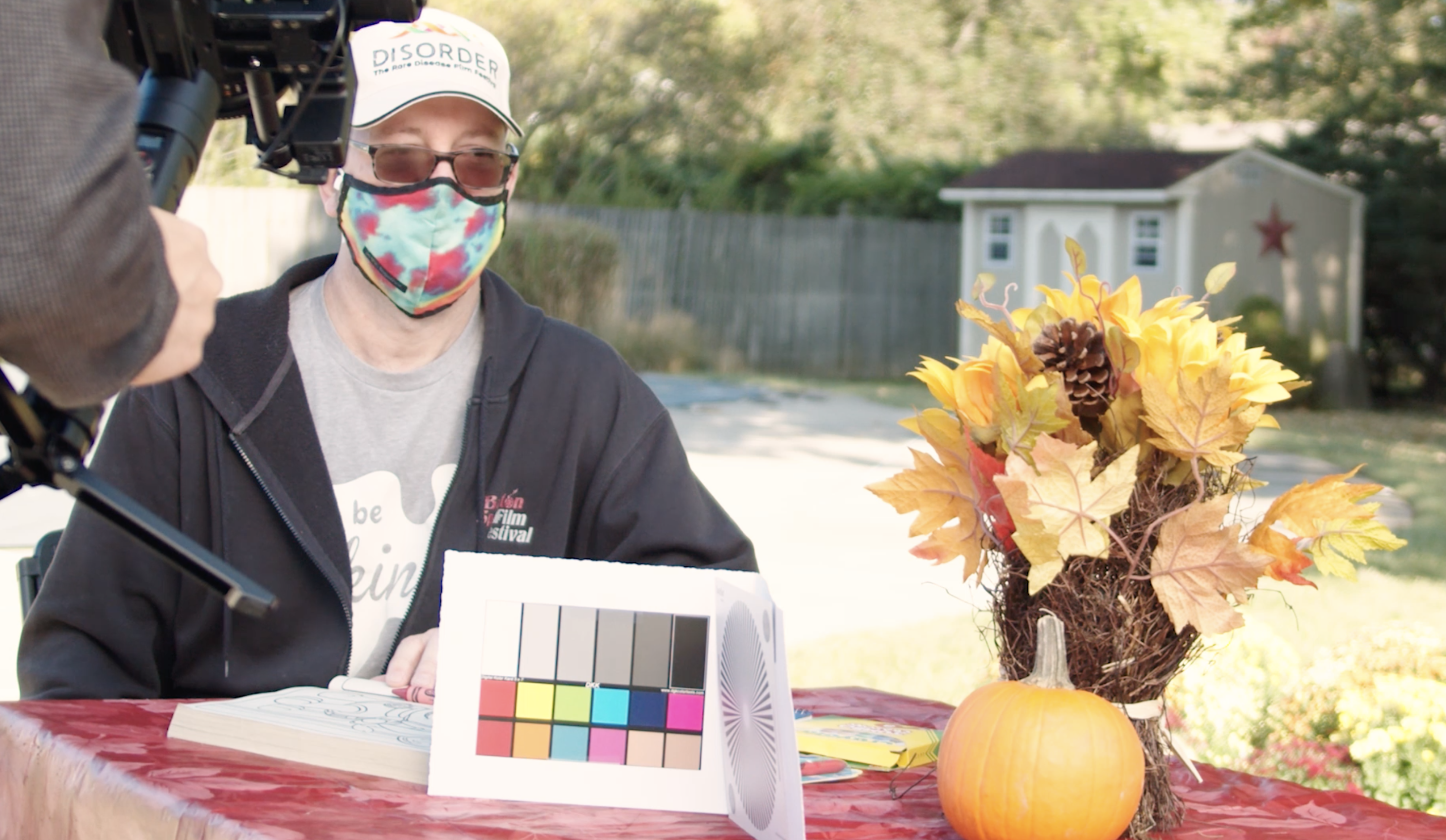 If, like our family, both partners were working full time before the diagnosis of your child, do you decide something has to give? And that something is one of your jobs? In most of the rare disease families I know, one parent has elected to be a full-time at-home parent while the spouse continues to go to their paid job. I probably don’t need to say this, but — in a heterosexual couple — this is most often the mom. However, I’ve been so pleased to become friends with amazing exceptions. Bo Bigelow and Mike Graglia each walked away from their high profile careers to be the primary at-home parent while their wives continued to work in their own high profile careers. They continually inspire me. If you’re a dad caregiver looking for a model, you’d do well to look to them.
When one partner leaves their job, it has several impacts. Most obviously, the family income is greatly reduced, if not halved.
Have you heard of Pay Equality Day? For women that day is April 2 – chosen to illustrate that women need to work a full year plus four months to equal a male colleague’s earnings. For African and Black American women (earned pay $0.61) it is August 22 and Latinas (earned pay $0.53) it is November 20th.
No one has established a Rare Disease Parent Pay Equality Day yet. But we need one.
Even though I can appreciate that the pay equity examples above don’t involve a choice and that it could be argued that rare parents are choosing to earn less, for most of us, it feels like there’s simply no choice at all.
The average dual earner household makes 1.57 times more than the single earner household. Using those stats, Rare Disease Parent Pay Equality Day would be June 24th. Let’s mark our calendars and tell the world.
Of course the income loss is not the worst impact. There are also emotional and relationship tolls; and often the spouse who stops working outside the home struggles to define their identity without a career to define it. These often become strains on the marriage. Talk to any rare disease couple and it is likely you will hear the dynamic play out this way – the working spouse will say, “But I have to go to work.” to which the stay-at- home partner will frustratingly reply, “No, you get to go to work.” Work outside of the home can be a welcome relief from the challenges of care. Just as with parenting a “typically healthy” child, each parent gets exhausted in a different way. If you’re one of these couples (one goes out to work, one stays home to parent) you’ll know the dynamic: one parent gets home tired from the job and wants to relax, but the other has been pushed to their caregiver limits all day and wants to tag in their partner for duty so she can finally take a breath.
Like Bo and Mike, I’m an exception to this gender norm too, but in a different way. In my career making TV commercials, I was my own boss, able to set my own schedule. So instead of deciding which of us would quit our job, we dodged the tough choice and settled on reducing my work-at-home work load so I’d have a flexible enough schedule to handle much of Lucas’ care.
This meant that Monday through Friday I’d work 6 hour days. If a project demanded more time, I typically had to put those hours in after 9pm when the kids were sleeping. I didn’t love those parameters but we mostly made it work. However, it sounds easier than it actually was. Making TV commercials can be divided into production (set up lights, mics, cameras and roll film) and post-production (the editing work which can be done in a home office). The former requires travel and often long days. The latter can allow for a flexible schedule. So I began to turn down client work that involved production and limited myself to post-production jobs only. Turning down work is seldom a good business decision. Many clients still needed the production piece done so they’d ask me to recommend someone and almost everyone who does production also does post-production. With each recommendation, I also ran the risk of referring away all of my work.
But that’s how we managed the care-giving divide. I wasn’t exactly the full time parent but certainly the go-to parent or at least the parent with the flexible schedule. And even this reduced work schedule would not have been possible for me without others helping out. When Lucas was too young for school, my mom was his daycare. Once school began for him, we were fortunate to have a home-care nurse working from 3pm until his bedtime of 7pm. It was only because of the nurse that our work days could go as late as 5pm.
It became easy to take my flexible schedule for granted. I could almost always squeeze in a doctor’s appointment or a surprise pick up from school. And we were grateful for that. But if I wanted to keep my business going, I couldn’t confuse flexible with 100% available. There were plenty of times I felt frustrated by my role as compared to my wife’s.
I recall during a week of far too many medical appointments, asking my wife which of us would handle the next one. I was no longer willing to be the default by assumption. Her reply was logical,“It’s harder for me to take time from work. It’s easier for you.” But my desperation provided me with some logic of my own, so I answered “You’re right, it is always going to be easier for me to be the one, but it also can’t always fall to me.” And she got that. We worked it out. It was harder for her but not impossible. She almost never took sick days (for herself or due to Lucas). In fact, her very sympathetic co-workers had offered to donate their paid time off to her should she need more time.
Several times, I wondered if it would be simpler to give up my work entirely and have increased availability for Lucas’s needs and less tug-of-war on my priorities. But to be honest, I liked keeping active in my professional capacity. I drew satisfaction and a sense of identity from my work and it would have been a struggle for us to lose that income. We probably could have gotten by if it was just my wife’s salary but there would have been no margin for the unexpected expenses. And this lifestyle is nothing, if not unexpected.
For me it wouldn’t be as clean as a job, waiting a few years and then finding a new job to re-enter the workforce. If I shuttered my business and years later wanted to return to it, it would be like starting from zero. My clients would have found other solutions in my absence.
My wife felt trapped in her role too. We couldn’t consider reversing the roles because my wife’s job provided our health insurance. Being self-employed didn’t offer me great options for insurance. Any thoughts she gave to being a stay-at-home parent were dismissed as soon insurance came into play. Luckily for us, my wife is a teacher with summers off and so our roles could flip each July and August. She would become the primary parent while I could extend my work hours some and allow myself to be less available for medical appointments. This gave us each a change of pace and a chance to appreciate the burdens of both roles – to understand we were both working. Cause that is the thing – whether you are the parent who has the validation of working outside the home or the one that feels less validated as a caregiver, you’re both gonna be working!
________________________________________________________________________________________________________________
At the age of 12 months Daniel’s first child Lucas was diagnosed with the rare disease Menkes Syndrome. After adjusting his expectations of what raising a child might look like, Daniel began to tell Lucas’ story with a short documentary: “Menkes Disease: Finding Help & Hope” narrated by Oscar nominee Mary McDonnell. That film led to Daniel co-founding with Bo Bigelow DISORDER: The Rare Disease Film Festival and later The Disorder Channel, both dedicated to spreading awareness for patient families facing any of the more than 7,000 rare diseases.
As a rare dad and one who went to the hospital often with my son Lucas, I was always amazed and worn down by how often the questions and hospital forms required me to repeat the same information. In many cases, this was information I knew was already in the system. Sometimes different doctors in the same hospital could not access or re-use the information I had provided to their colleague and I had to re-do the form or re-tell the information. This may sound like a minor annoyance but I was usually in the hospital during moments of crisis and not in my best mind. Suddenly trying to recall the dates of surgeries or the alternate names of drugs was either an irritation or a monumental challenge. Most of these things were deeply ingrained in my daily routine and I could rattle them off the top of my head – until ER fog crept in which always seemed to happen when asked, “ What year was that surgery?” It was then that I would dig through my paper files or search my phone. One time, I actually scrolled years back in my Facebook feed because I knew I had posted a photo of Lucas in recovery and it would have the date I needed. If you haven’t already experienced this, you probably will.
I learned the hard way the value of having one-page documents ready to pass out during each doctor or hospital visit. Now I want to offer you the chance to avoid that particular part of being a parent of a seriously ill child. Here are my tips for preparing some simple documents that help you avoid having to play ”What’s the deal with your kid?” while at the hospital.
A list of current meds and doses
You need to know the generic names too. So often, a doctor would say, “So he’s on sulfamethoxazole-trimethoprim” and I’d say no he’s not. Then a couple minutes later, I’d realize it was the drug I referred to as “Bactrim” and we would have to backtrack. Knowing all the drug names helps you and the doctor talk the same language avoiding confusion and saving time. For liquid meds, be sure to also know the concentration of the drug (how many ml per mg?). I never knew that off the top of my head.
It’s also handy to list meds your child previously needed but no longer uses. Often doctors have a list of their own and are looking to update it. This can avoid confusion if they ask about something out of date and you’re wondering why.
A list of past surgeries
I always thought these were such big deal events in my son’s life that I would never forget one of them. But I did, or at least the precise date of the surgery. Have a list of all the surgeries, the date and the reason for the surgery. Bonus points for including the surgeon’s name, recovery times or recovery challenges (for example, if anesthesia was a problem).
List of baselines
This is a big one. They might never ask for these. Or, it might not come up until the end of a hospital stay. This is where you are the expert; where you know your kid. It can be especially helpful at that moment when you keep asking if you can go home yet and they say “We’d need to see him staying at his baseline for 24 hours.”, Does your child have a non-typical baseline temperature? Heartbeat? Oxygen levels? For you to simply say so at the time probably won’t do much good. It’s anecdotal. It’s hearsay. But if you have a sheet with your child’s temperature recorded with time and date once a month for 12 months, that could be more convincing than saying his baseline temperature is really one degree above “normal” all the time. It might just get you out of the hospital a bit sooner!
One pager on your rare disease
If your child has a rare disease, they will see many different doctors. It’s not likely they will all be familiar with this disease. They may be hearing of it for the first time just as they read your child’s chart. I always got a quick clue that this was the case when they mispronounced “Menkes Disease” or put a verbal question mark at the end of the name. I used to take this as an opportunity to do my three minute oral history of Menkes Syndrome. And that mostly worked, but it often felt like a chore, and in my “ER fog” I sometimes forgot key elements. After I started bringing a one-page summary of the disease with me, I could do a much shorter verbal explanation and hand over the sheet for additional details. It is best to try to keep this document to one side and not make it too dense – think bullets or highlights! Ideally, the doctor will be reading this right then and there, not later for homework so it shouldn’t be a long read. Be sure this information is credited to a reliable source like a medical journal. At the bottom you can offer links to more information – one of these can be the research of advocacy foundations for your disease.
 A Go-Bag checklist (maybe packed too!)
There’s no such thing as a quick trip to the ER. I would be on the phone with a doctor from our team and hear the words “You need to come in immediately.” Immediately?! My brain would scramble – the hospital is 30 minutes away and every ER trip with Lucas ended with him being admitted for 3-7 days. I would need to pack for him and me for 7 days. Sure, the hospital will have his meds, diapers, tubing and that gown thing, but there were still things he’d need from home. These are often things you don’t always think about at first – comfort items, or in our case it was my DIY hack to adapt one of Lucas’ tubes. And then of course, there’s the stuff you yourself need for your sudden sleep-on-a-chair adventure.
On one of those horrible hospital chair/bed nights, I discovered a fantastic podcast by Effie Parks called “Once Upon a Gene” and settled in to listen to her third episode, Hospital Hair Don’t Care. In this episode, she lays out instructions on how to make a hospital stay more tolerable. She essentially gives you a Go-Bag checklist. A few weeks after that hospital stay, I met Effie by phone. I urged her to make a printable version of her Go-Bag checklist and together we made it happen. Here’s the result
Print it, modify it, create your own and keep it handy. Believe me it will spare you some hassle!
For more tips on navigating the hospital visit our video library and download this guide.
________________________________________________________________________________________________________________
At the age of 12 months Daniel’s first child Lucas was diagnosed with the rare disease Menkes Syndrome. After adjusting his expectations of what raising a child might look like, Daniel began to tell Lucas’ story with a short documentary: “Menkes Disease: Finding Help & Hope” narrated by Oscar nominee Mary McDonnell. That film led to Daniel co-founding with Bo Bigelow DISORDER: The Rare Disease Film Festival and later The Disorder Channel, both dedicated to spreading awareness for patient families facing any of the more than 7,000 rare diseases.
I’m in the PICU with my son Lucas. He’s just had surgery. I don’t know it yet but this will be the second of four surgeries in what ends up being a six day hospital stay. Lucas is awake and aware but hasn’t managed a smile yet. A smile is always our “all-clear” signal from this wordless boy of ours. “All-clear” could be overstating things, but it’s at least a moving-in-the-right-direction signal. I could really use that signal now. The surgery allowed his kidney to drain for the first time in weeks. Nasty stuff, green pea soup sludge stuff, fills the bag – and a lot of it, not just for a small 70 pound kid, but for an average sized adult too.
His surgeon stops in to check on Lucas’ recovery. Dr. K. is our favorite member of Lucas’ care team. He’s been involved with us for about 9 years and is our first line of defense, not just one specialist among many. He inspects Lucas and the bag. There’s some remark like “wow” but all is checking out well. And he says to me “You or I might not have survived this. He’s a strong kid.” I say I know. We’ve known for a long time Lucas had the power to endure things we’re not sure the rest of our family could have. Funny, our boy without the strength to lift a crayon, had more strength than any of us.
But I take Dr. K’s remark as a compliment to Lucas and a testament to his ability to endure, persevere and recover: an ability that has surprised us so many times in the past.
It’s only later, after Lucas has died, that I can hear another message in those same words from Dr. K. With his usual soft, compassionate style, Dr. K. had layered in another meaning for a time if or when I was ready to hear it. I couldn’t hear it then. Nearly a year later, I now realize the same words also meant, “You or I or Lucas might not survive this. Brace yourself.”
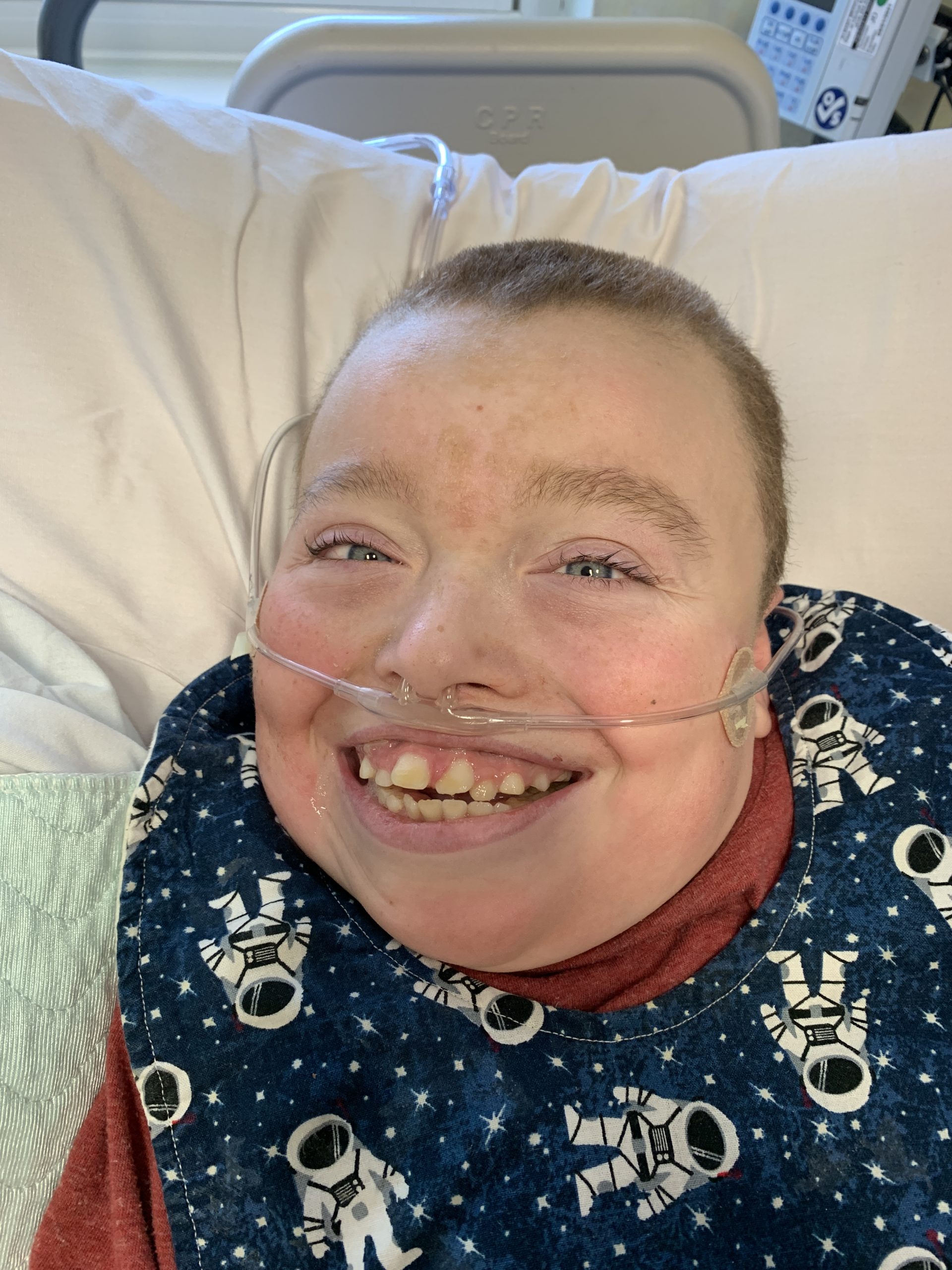 I didn’t brace myself. I let optimism prevail. The next three days would bring two more surgeries, two more not-so-likely and even more heroic recoveries and then finally THE BIG SMILE. The smile I needed to see to know my boy was back or on his way back. By day six they were saying we could go home. The next day after one last night in his home, family close by, Lucas passed peacefully away.
Dr. K. has always been good with words. It’s not just good bedside manner. It’s a kind, measured, compassionate way of communicating difficult options. He seemed able to read my wife and me, gauging our tolerance for harsh realities vs. possible reasons for hope. The life limiting prognosis of Menkes Syndrome was always his guide-star but he never let that be a limit to the care options we (and Lucas’ care team) considered. Many of our conversations included both options: the aggressive treatments that might be best for those in typical health and then a modified approach that might avoid doing more harm for a kid like Lucas. Often this favored a “wait and see” approach over interventions. We appreciated this.
This might have been his nature, or the result of years of careful conversations with other patients. I’m not sure Dr. K. knew his words landed just right for us. I think a key to it was watching my wife’s face and my face and reading how we responded to tough realities. And to our credit, by the time we found Dr. K. we had gotten used to some pretty tough realities.Often those conversations went something like this: “For a person in typical health, we’d do X. For Lucas, that could help, or he might not survive it.”
He always told us we were doing a good job with the care at home. It never seemed perfunctory or some rote, check-list style compliment. Instead it was more like he was surprised by how well we managed Lucas’ care. It was nice to have the validation, and there were times I clung to these reassurances. There are so many unknowns we parents face caring for rare kiddos. They bring more than the typical number of parenting doubts. When the outcome for your child can never be a true “success”, it’s difficult to judge if your parenting efforts are good enough. I would feel guilt, fear, self-doubt and recrimination froth and surface at unlikely moments. Often I found myself reaching back for Dr. K’s last words of affirmation to anchor me again.
So many rare disease parents have stories of doctors saying things that were at best clumsy and at worst cruel. We were lucky to avoid most of that. To some extent we did this by filtering out the doctors that weren’t right for us. And I think, too, by setting a tone of what we were (and were not) ready to hear.
Just as our friends and family worry about saying the wrong thing, this worry must be worse for the doctors. Often there is nothing but wrong things to say, or the person feels they have to navigate the minefield of hurtful, unhelpful remarks to ferret out one that might land with some comfort. This can only be compounded when you add the expectation that a doctor should be offering aid. As with doctors, we expect our friends and family to “do no harm”, and the expectations might end there for our friends. But more is expected of our doctors. They are expected to fix it, to have answers. Dr. K. clearly mastered the mandate to “first do no harm” but took it another step to always keep “care” in our medical care.
________________________________________________________________________________________________________________
At the age of 12 months Daniel’s first child Lucas was diagnosed with the rare disease Menkes Syndrome. After adjusting his expectations of what raising a child might look like, Daniel began to tell Lucas’ story with a short documentary: “Menkes Disease: Finding Help & Hope” narrated by Oscar nominee Mary McDonnell. That film led to Daniel co-founding with Bo Bigelow DISORDER: The Rare Disease Film Festival and later The Disorder Channel, both dedicated to spreading awareness for patient families facing any of the more than 7,000 rare diseases.
The number one thing I hear from fellow parents of kids with life-threatening diseases is how isolating the experience is. I’ve felt it. How does this happen? Why does this happen? Many of us latch on to part of the answer early on. That is: no one can relate to our experience (except other parents of similarly ill kids). This is part of it and it may even be the biggest part of it. But that isn’t all of it. Sometimes it happens with the best of intentions; a friend decides not to invite my family thinking it will be too difficult for us to attend. And they may be completely right; many if not most things were difficult for us to attend. My son Lucas was in a wheelchair and needed some specialized care every three hours if not more often. That makes scheduling and attending a social outing tricky. But the thing is, I’d rather be invited and have to say no than have you not offer to include us.
I know this can feel like damned if you do and damned if you don’t. Why keep inviting us if we always say no? And when you do invite us I probably follow up with uncomfortable questions: How many steps to enter the first floor of your home? Is it too warm or cold at the event?
So yes, a big part of this boils down to: they don’t understand us and they don’t include us. But as I was chatting with a rare disease mom recently, we were surprised to admit to ourselves that after a few years the response “no, we can’t make it” had become an automatic reflex, a default. It’s not always true that we are isolated by others. Sometimes we are self-isolating. It may be a justifiable survival skill. We just can’t; can’t do the basics of social interaction, or the basics of transportation to get to the place of social interaction, at least not on the terms of those in typical health. To be honest, it’s just hard to fit anything extra into our days.
After we lost Lucas to Menkes Syndrome, I was surprised to look back on our strictly scheduled routine and realize how dependent on it we had become. It felt at the time that we could manage his care and the rest of our lives, so long as no curve balls came our way. One small unexpected thing could topple the Jenga tower of our lives. And I mean a small thing like a rescheduled appointment or a flat tire. Ordinary, no-fun-but-you-deal-with-it stuff, could break the levy and send the flood waters up to my nostrils. Yes, much of our scheduled routine was medically necessary or at least Doctors’ orders. But we might have leaned in a bit much. Maybe there was room for more flexibility than we gave ourselves. But the stakes were (or we felt them to be) life and death. I still smile when I recall the urologist who said Lucas would need a catheter every 3-4 hours. For us that meant every three hours WITHOUT FAIL. Not four. And then the tiny grin on his face during a follow up when he allowed “you know most people wouldn’t be so dedicated about the schedule, but I know you are.” In hindsight, I hear this remark almost as meaning “you can give yourselves some breaks, mom and dad”.
I can now see the comfort we extracted from routine. Predictability in the small things in the face of the supreme unpredictability: when would things get worse? When would we be rushed to the hospital? When would Lucas not recover? Beat down by our routine and overburdened by the demands of just the baseline schedule, we nearly forgot there was another answer possible. Sometimes we could, in theory, muster a yes. Yes, we can join you. It will take far more effort that I’m normally up for but this time I think we can manage it.
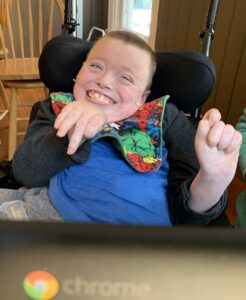
Excited to see friends- 1st day of virtual school
But I’ve also known people to pull away from us more than we’ve pulled away from them. I think this stems from discomfort with mortality, especially child mortality. Okay, sure you might want to avoid an awkward conversation about how my kid is doing (especially if you’re comparing him to your kid), but come on, we can get past that can’t we? I’ve had friends just ghost us once Lucas’s diagnosis was known. I know from other rare parents that they’ve experienced the same. Too many people are too uncomfortable facing a hard truth. The truth that we all die, some of us will die young, no one gets a pass. It’s unfair, uncomfortable, but it shouldn’t be insurmountable, especially if it’s only an occasional aspect of your life on the odd and brief occasions when our paths cross.
To be fair, we don’t have much training for this in our society. Death we get. We have our rituals, our phrases of condolences, our casseroles to deliver. But looming death, ambiguous loss, or debilitating illness? Too few of us have a playbook to react well to those. So some friends ghost. And perhaps proving this point, a close friend of mine was mostly absent from our lives during the eleven and a half years we had Lucas. But once Lucas died, he re-emerged and was kind, compassionate and supportive. I’m guessing the difference was he’d experienced and could relate to the death of a loved one but had no frame of reference for long term illness with death looming in the not too far future. I try to appreciate this. People can only do what they know to do.
All in all I’ve decided for us the isolation went both ways.
________________________________________________________________________________________________________________
At the age of 12 months Daniel’s first child Lucas was diagnosed with the rare disease Menkes Syndrome. After adjusting his expectations of what raising a child might look like, Daniel began to tell Lucas’ story with a short documentary: “Menkes Disease: Finding Help & Hope” narrated by Oscar nominee Mary McDonnell. That film led to Daniel co-founding with Bo Bigelow DISORDER: The Rare Disease Film Festival and later The Disorder Channel, both dedicated to spreading awareness for patient families facing any of the more than 7,000 rare diseases.
Any of us dealing with a life threatening diagnosis for our child has probably had moments of asking “why me?”. And yes to be sure the situation is affecting our child more directly than either parent but that doesn’t stop us questioning, why is this happening to him, her, us? I can still feel the shock and despair of my son Lucas’s diagnosis day. It was over 11 years ago, he was one year old and we learned he had Menkes Syndrome. Boys with Menkes are expected to live 3-10 years unless treated in the first ten days of life. We were told he wouldn’t walk, or talk, or sit without support. It was the worst day of my life. You bet we asked “Why him?” “Why us?” “Why me?”
I felt loss. I felt I had lost. I felt lost.
I kept imagining any other possible tragic news the future might bring and could conjure nothing worse than this news that we already had for our only child.
I imagined Lucas never climbing the stairs to get on a school bus, never running with friends, maybe never even having friends. I most certainly asked, “Why him?” and “Why me?”.
Even in the rawest moments of pain, I could hear words I knew were meant as comfort from friends: words like “God doesn’t give you more than you can handle” or “everything happens for a reason”; but those phrases brought me no comfort. What did bring some comfort was the genetic randomness. Menkes Syndrome is inherited in 2/3s of cases but in the other 1/3 it is a spontaneous mutation. Lucas was in the spontaneous category. Somehow that randomness was almost enough of an answer to “Why him”. I don’t mean it became easy to accept. Instead it seemed like proof that wondering why was pointless. Eventually my mind turned it over like this: Things like this can randomly happen to some people, we are some people, this has happened to us.
Again it didn’t make it easier, but it probably did stop a pointless cycle of questioning Why us.
 The “Why me?” mindset comes from thinking it is unfair. And of course it is unfair. But at our rational best what adult expects life to be fair? Unfair things happen all the time. Often to other people but sometimes to me. To the extent that I was able to change the question “Why me?” into “Why anyone?” I found some small consolation. This shouldn’t happen. But it does happen. And now it’s happened in our family.
Until a rare disease affects someone we know, most of us know little or nothing about them. Once we’re forced to face a rare disease, one thing we quickly learn is that it affects 1 in 10 people. And after learning that, I thought: there was a 1 in 10 chance of something like this happening to us but no one tells expecting parents this? The numbers, the odds, seemed to take some of the mystery out of it. I had less need to wonder how and why.
Last week I was a panelist for The Special Fathers Network conference. A fellow panelist was a pastor and he surprised me by tackling the aphorism “God doesn’t give you more than you can handle.” He rejected the notion, saying: He absolutely does. The pastor went on to explain there are challenges, heavy burdens, sometimes they’ll become life-changing moments, sometimes they’ll force us on to a different path. It’s tempting to use hindsight and look back at a difficult time and (since we clearly got through it) assume it forged us, maybe made us better. Often people say “If not for that, I wouldn’t be where I am today”.
We all agreed on the panel that the quiet times, when you’re alone with your thoughts, that’s when the “Why me” questions swirl in our heads, threatening to pull us down the vortex. The vortex of course leads you to nowhere. We may be lost in our feelings because our world has crashed and we feel like we’re lucky to just stay on our feet. But as one of the other dads at the conference pointed out, the rest of the world is going to keep on moving. Eventually we have to get back to moving in it too. The only way out is through. We can’t just stand there. So we do something.
The opposite of quiet times are busy times. Perhaps it’s no coincidence that the antidote to “why me” seems to be purpose-filled work. How many special needs parents have become amateur nurses, researchers, fundraisers, or advocates? Certainly some of this is from necessity but it helps fill a need beyond the immediate care needs of your child too. We’re probably all familiar with Elizabeth Kubler Ross and David Kessler’s five stages of grief, but less commonly known is the sixth stage of grief that Kessler added two years ago: to the original five, (denial, anger, bargaining, depression and acceptance) Kessler added “meaning” or purpose.
Not everyone impacted by a dire diagnosis for their child will find themselves called to embrace some entirely new purpose related to that experience. But I think most of us feel our sense of purpose and our priorities shifting. Perhaps the version of “Why me” we should instead ask is “Why is it me who needs to do something different than I expected?” Maybe that distinction does not offer enough comfort to some but it is proving a helpful attitude for me.
________________________________________________________________________________________________________________
At the age of 12 months Daniel’s first child Lucas was diagnosed with the rare disease Menkes Syndrome. After adjusting his expectations of what raising a child might look like, Daniel began to tell Lucas’ story with a short documentary: “Menkes Disease: Finding Help & Hope” narrated by Oscar nominee Mary McDonnell. That film led to Daniel co-founding with Bo Bigelow DISORDER: The Rare Disease Film Festival and later The Disorder Channel, both dedicated to spreading awareness for patient families facing any of the more than 7,000 rare diseases.
I’ve been gazing out my window at this tree – a lot, like for the past ten months. The same ten months since my son Lucas left us. It’s not a special tree. It’s not the biggest one in our yard but it fills the view from this window nicely. It grounds me when anxiety leaves me feeling unmoored. It is a source of calm. I feel it weathering time at a slower pace than humans can and I’ve watched the weather work each season’s magic on it. Winter snows clumped and clung to the bare branches adding some grace and charm to what was otherwise desolation. Today, I witnessed the first sign of new growth, just those tiny yellow buds that will become new green leaves.
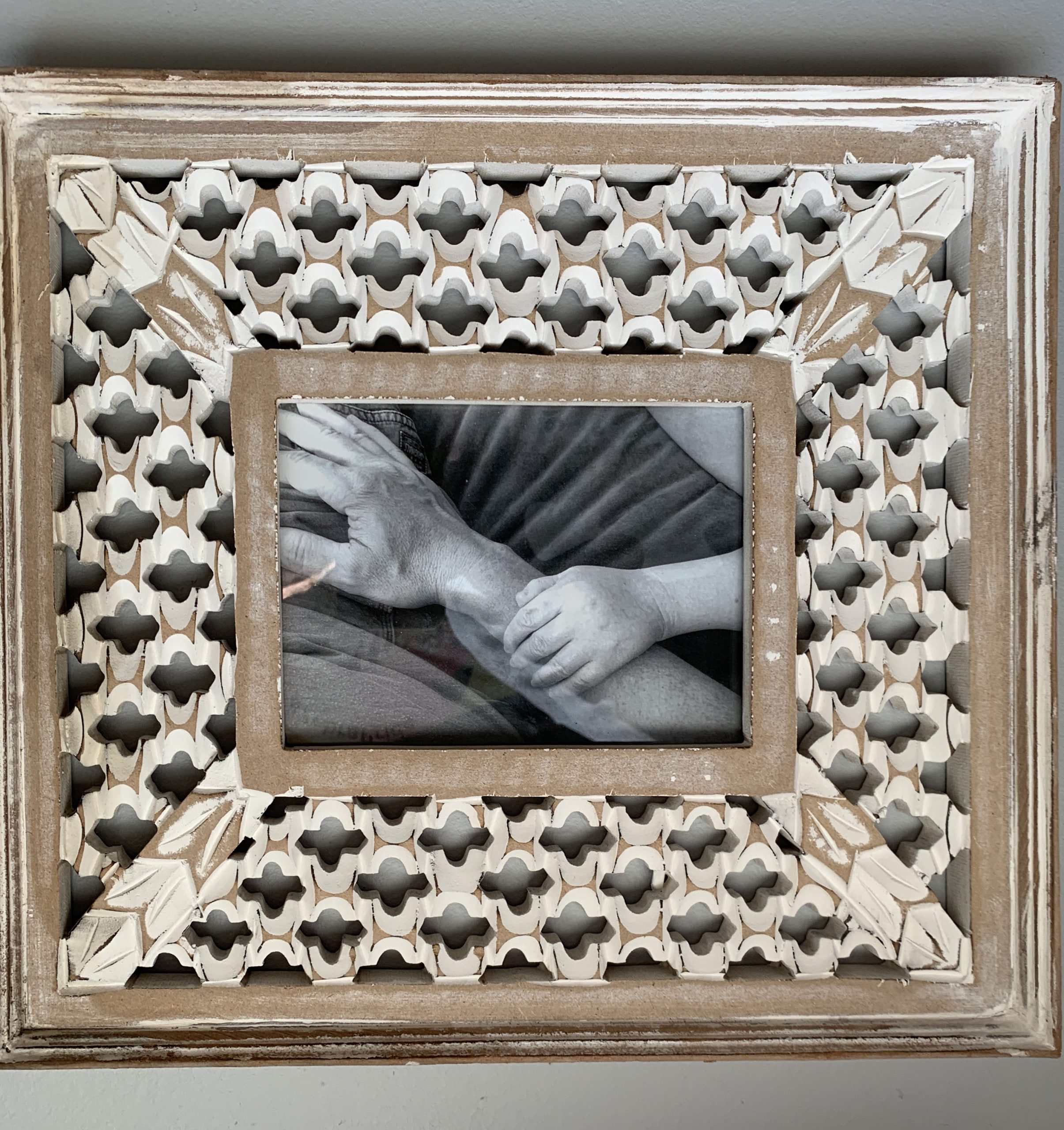 If I shift my gaze just a foot to the left of the window, I see one of my favorite photos of Lucas and me together. It’s just his hand grabbing my arm. I can almost re-live the feeling. It feels like all I ever wanted and the thing I want back the most. His hand to hold mine.
When Lucas was born I didn’t get that first sign of connection; that moment where the infant fist squeezes tight on the parent’s finger and the bond is formed. I longed for it then. I waited for it to come for years. We didn’t know at the time that Menkes Syndrome deprived him of the strength to do even this most instinctive grasp. Years later, at maybe age eight, he could finally manage it. I reveled in it. We all want this affirmation of connection. Consider the gesture you offer someone who’s going through a tough time. You squeeze their hand, maybe pump it twice to double the gesture’s power. I needed that from my firstborn. Even after I had the diagnosis to explain the why, it was only the logical side of me, not my heart, that could give up on expecting that tug of mutual need-comfort-love.
The photo is incomplete, as photos always are. It only shows our arms, no faces. Synecdoche right? The part standing in for the whole. A lot gets left out. Your mind has to fill it in. I feel my memories of my son are getting to be this way too. They offer fewer clear moments and rely on more and more parts to be guessed at. Sometimes that photo brings tears of joy and remembrance, other times, most times, the tears flow from ache. I force my attention to stay on the photo and stay with those thoughts longer than I think I can bear. I owe Lucas this much.
And then I have to break my gaze. Fortunately it’s a short journey back to the tree. Back to calm and relative peace.
I mentioned that this is no special tree. It’s not the “Lucas tree”. In fact, just beyond it are three trees which are meant to be special. These are the three Lucas trees. His ashes sit in an eco urn in the soil where they root. Soon these trees called Red-Buds will defy their name and bloom in purple. That seems special. This other tree, the one in my sight line, maybe it’s a maple. It’s a bit scrawny. It’s just the tree I can see, halfway between my window and Lucas’ trees. I can’t decide if I’m glad or frustrated that it mostly obscures my view of the three Lucas trees. But I have decided it’s been keeping me sane.
Novelist Richard Powers wrote “A tree is a passage between earth and sky”. I’ve never been a tree person. Nothing against them, I just never gave them much thought. My dad can name most of the trees he sees. I can tell you which ones are evergreens, if you ask me in the winter. When I lived in Los Angeles my parents could not pretend to appreciate the City of Angel’s charms, but they did take an interest in the trees. They were disappointed I couldn’t tell them anything about any of them.
If I crane my neck a bit I see past the trees to our red shed. It was seldom visited all winter. Now the change in the weather has us back there grabbing yard furniture and our bikes. My ten year old, Alex, went back there a few days ago and saw Lucas’ wheelchair. It’s mostly hidden under a tarp. Alex was clearly put off by this. He brought it up to me. I could read in his face thoughts like, “Is it okay to keep the wheelchair back there? Not in a place of honor, just among the sleds and bikes and garden tools?”
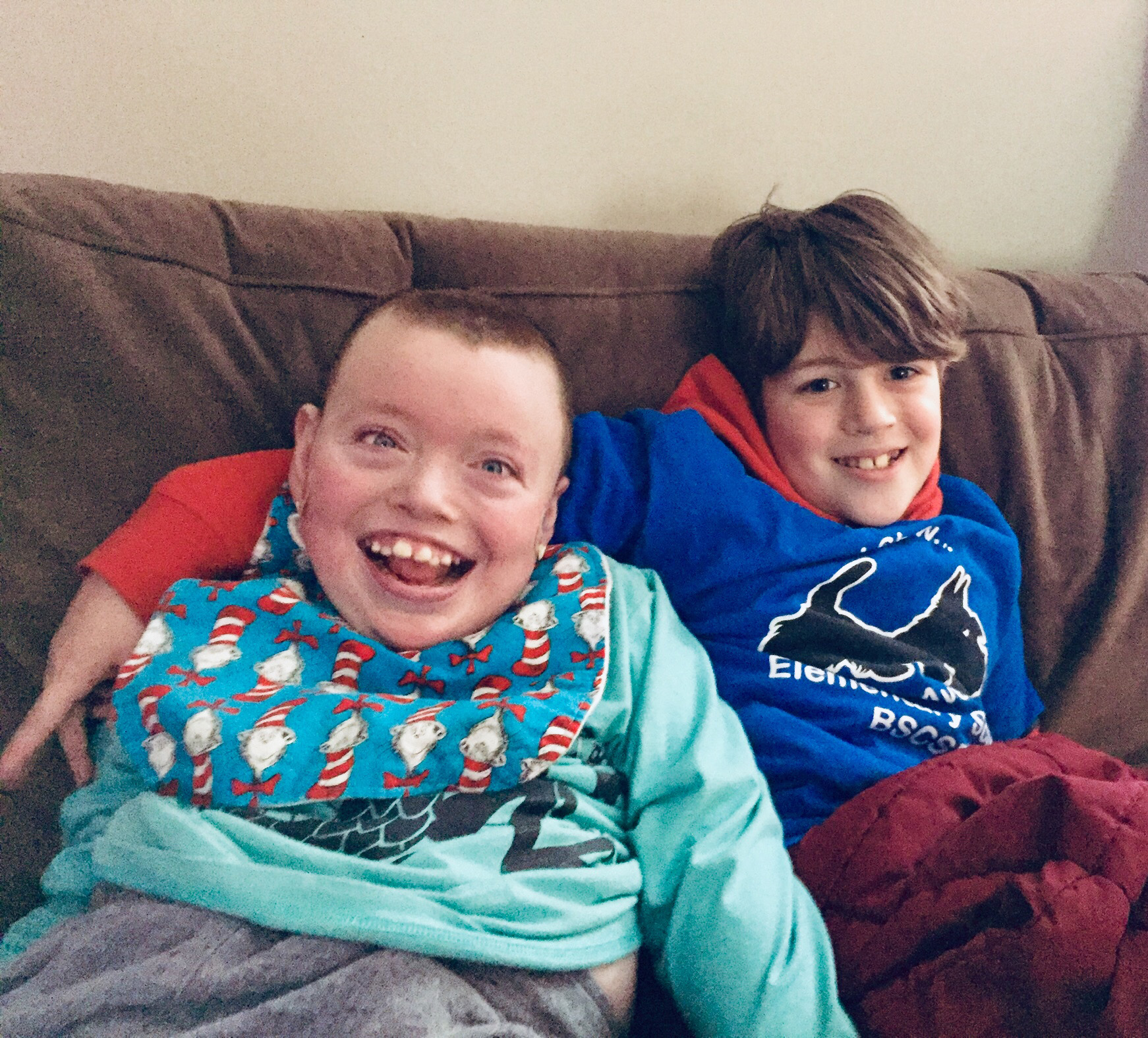 As we talked, we both admitted our memories of Lucas had shifted over the months, focusing more on him lying on the couch rather than seated in his wheelchair. We couldn’t decide if the chair represented less happy times. But Alex was sure the couch represented the fun times, and to prove it he pulled up a special photo of his own. Lucas seated on the couch beside Alex.
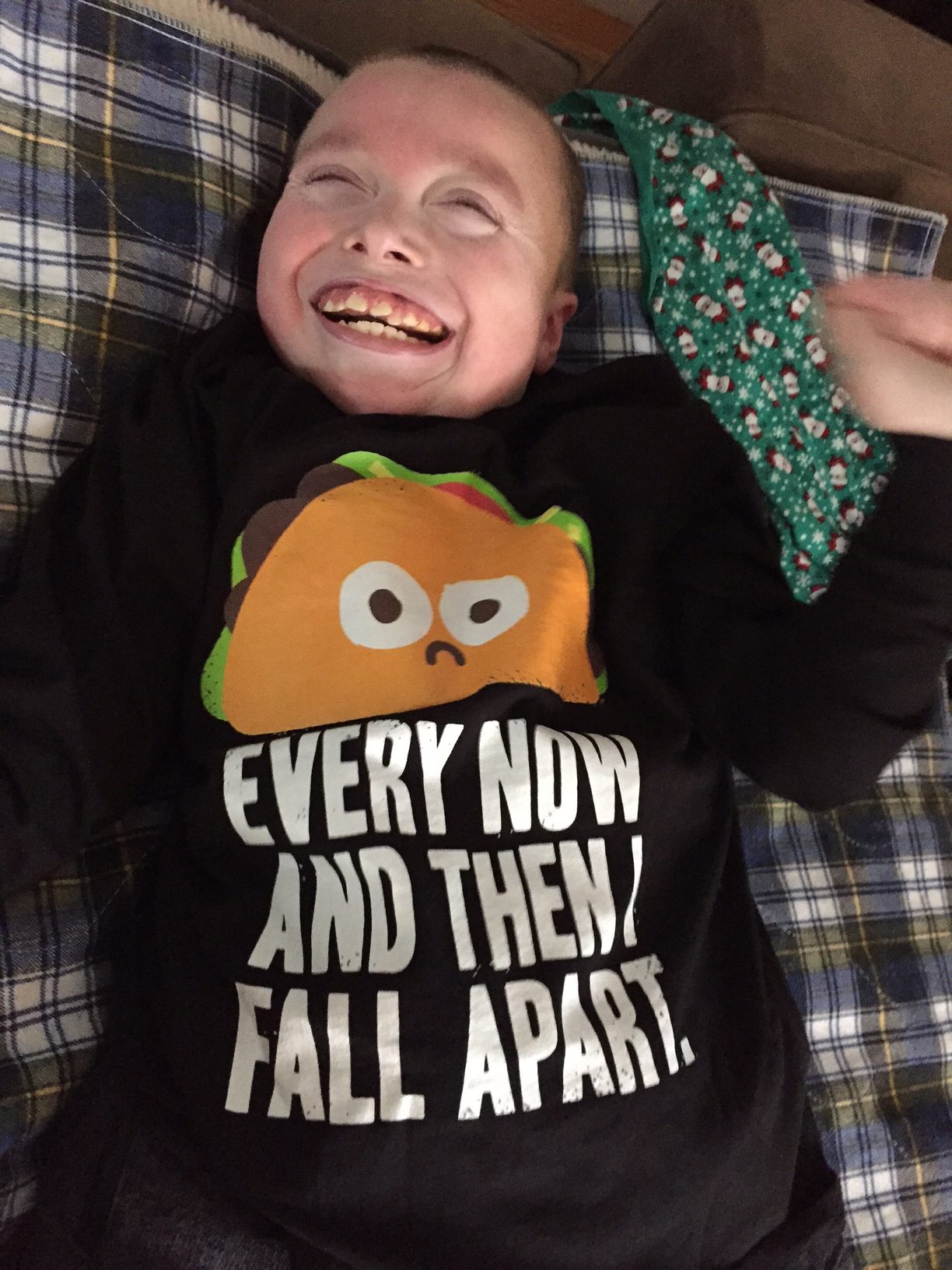
You need to know this moment was a rarity and a source of great pride for Lucas. He wasn’t able to sit unassisted except in his wheelchair. But with the right pillows and positioning he could maintain a seated posture for a few minutes, especially if he had his brother to lean on. It made him look so big. And he knew it. You can see it in Lucas’ grin, it’s pure delight at doing the thing Alex gets to do.
For Alex maybe this was his longed-for “normal” bonding moment that was too long in coming. Shouldn’t two brothers sometimes sit side by side together? Like the hand grasp in my photo, was Alex’s moment of visceral connection made more precious by the years spent waiting for it?
When Alex seeks solitude outdoors his refuge is his tree house. He’s usually silent there. It shields him just enough from my view that I can worry where he’s gone. He recently asked that I haul over a sawed off section of tree trunk he found in the woods. It’s now a seat for him in his sheltering tree: his pensive perch, his thoughtful throne.
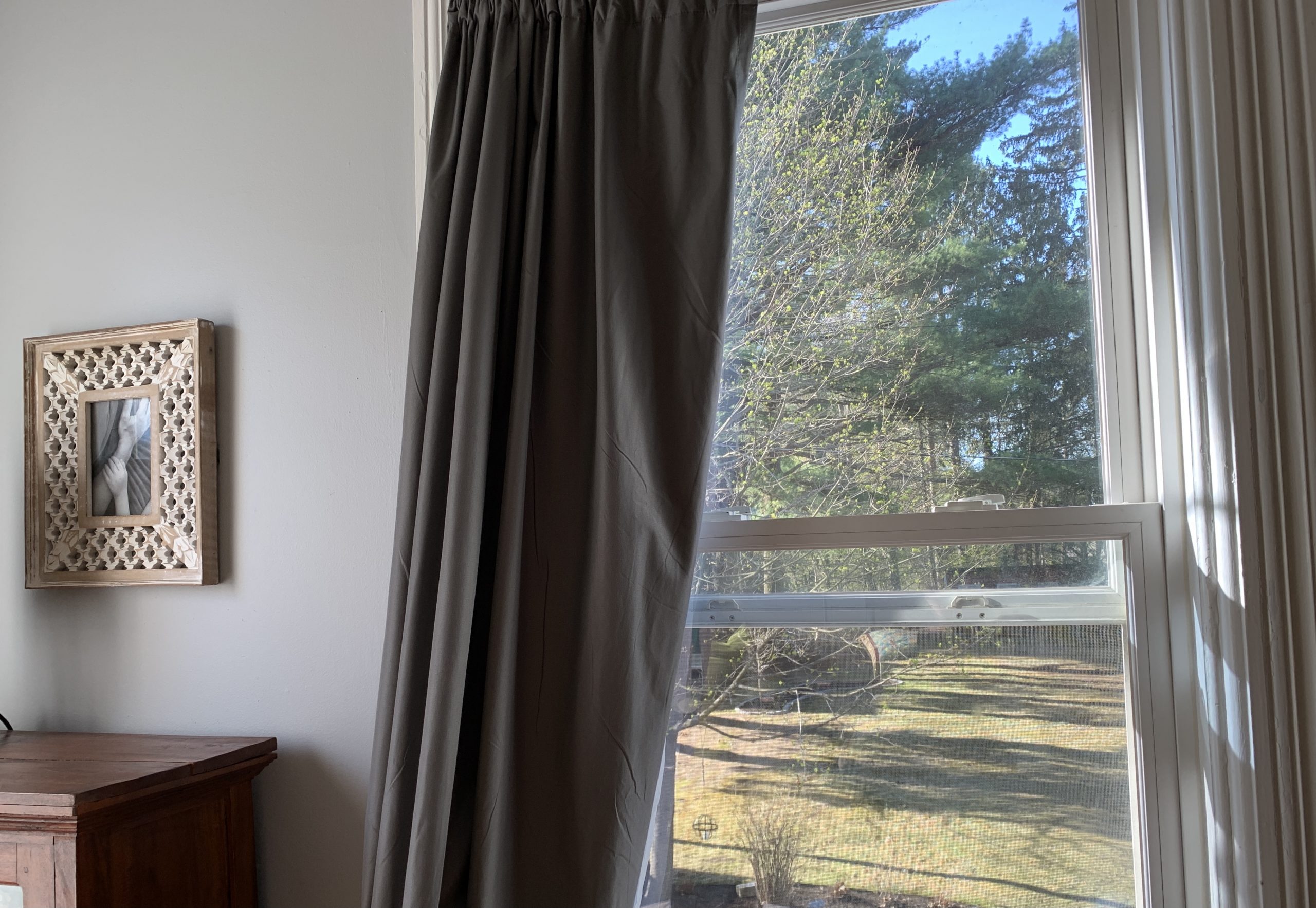 I get it. My tree comforts me even from a distance, viewed through glass. It slows my roiling mind. It connects this earth where my boy is no longer by my side to the skies above where it feels like he might be found shining among the stars. I’ve never been a tree guy but I would turn to nature to cope with loss and pain. The ocean, or mountains, things vast and enduring enough to make us humans and our pains feel small. Is that the real power of nature? Its ability to remind humans to get over themselves?
I think all of fiction stems from asking the question, “What if things were different?” The sub-genre, science fiction adds a layer by asking, “What if things were different because some of us have impossible powers.” These can be the powers of a spacecraft or the powers of the mind.
In a sense, grief can sit in the space between the wonderings of general fiction and science fiction. We wish things were different and we wish we had the power to make it different even if it is impossible.
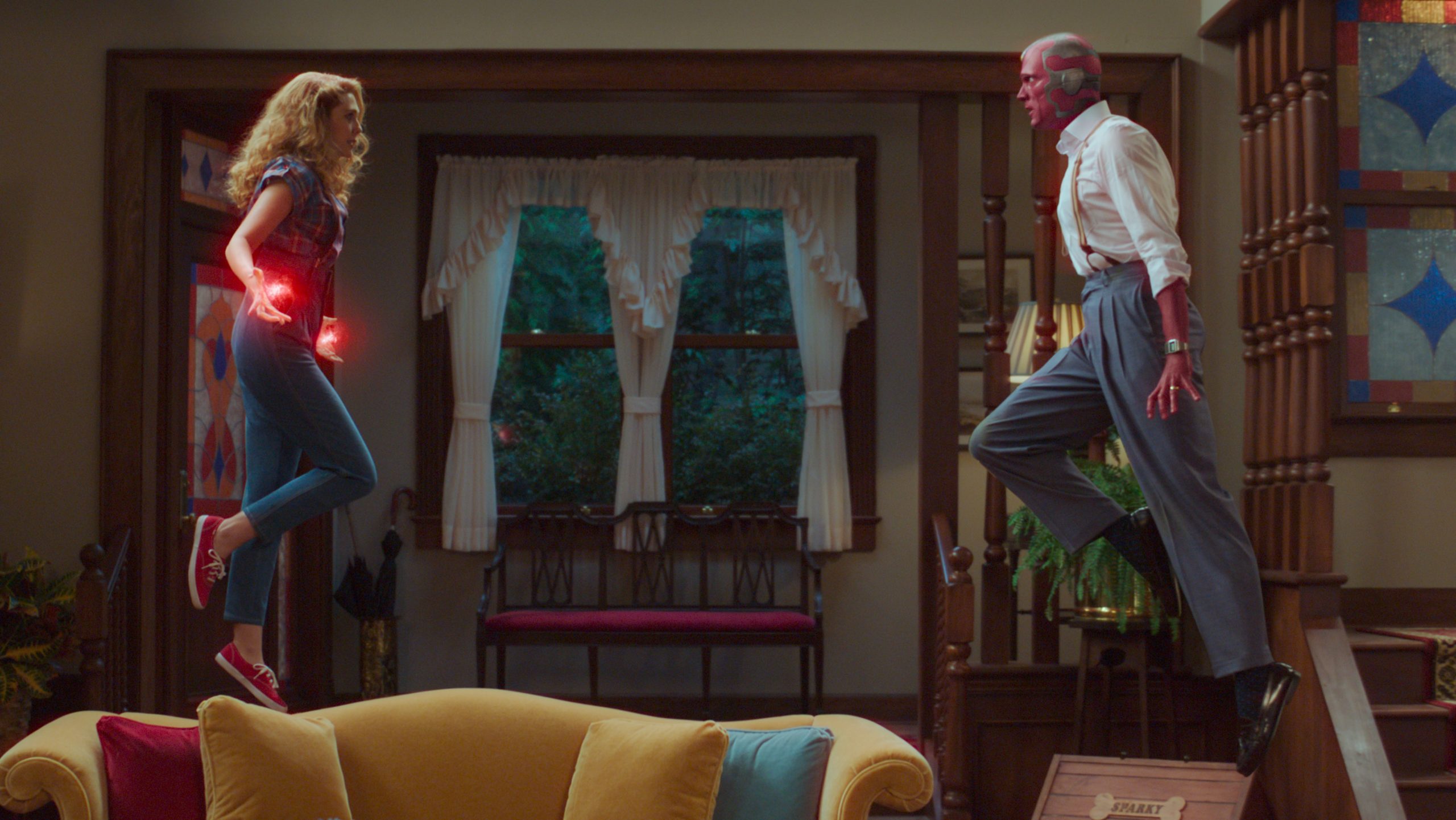 If you had the power, what would you make different? You’re grieving your child’s diagnosis because it has robbed you of the life you imagined you’d have with your child. The one where you live “happily ever after”. If it were in your power, you’d cure the disease — and many rare parents pursue exactly this. They live in hope of gaining the power to treat their child or create conditions for someone else to gain that power.
In grieving the loss of a child, we go through stages of wishing for things to be different. Could I go back and better spend the time I had with my son? Could I somehow have him back for a few moments? Could I at least steel my memories of him against the inevitable fading to come? This is the stuff of science fiction, not just bargaining.
At least two sci-fi TV shows are tackling the topic of super-powered grief.(Spoilers ahead for Wandavision and less spoilers for Debris)
NBC’s new series Debris has rubble from an alien spacecraft exerting a powerful effect on grieving people on Earth. It empowers them to conjure compelling visions and even physical manifestations of the loved one they have lost. We’ve only had one episode air so far, so we’ll have to wait and see if grief is the overarching theme of this show. The wreckage of the alien ship is noticeably built of hexagons. Hexagons and hexes shape the world of Wandavision too, the second show in which grief is a critical part of the storyline.
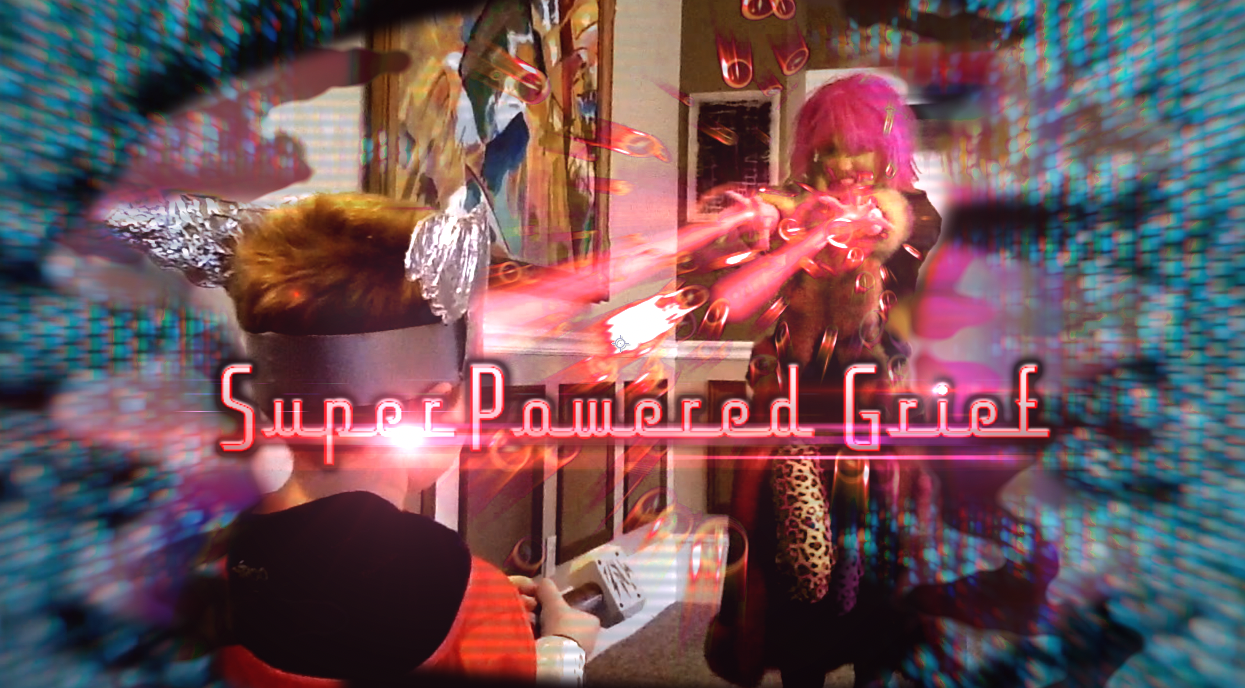 Fans of Marvel’s Avengers saw half the world’s population vanish during the film Avengers: Infinity War. That’s a whole lot of occasions for grief, some of which were explored in the next movie. But now we have Wandavision, a TV series on Disney+ that is essentially taking a deep dive into the grief of Wanda Maximoff. So far, in the Avengers films, Wanda has lost her parents, her brother and her lover, the Vision. She also happens to have magic “hex” powers that let her change reality.
What would you do with that power while struggling with that kind of grief? How would you make the world around you different? Would you make yourself an entirely different world? Perhaps several versions of a different world, experimenting and struggling to find one that offers more happiness than pain.
As Vision watches the woman he loves go through this pain, he remarks “What is grief but love persevering.” Ouch – a gut wrenching moment of TV for me. (watch clip) **
If you haven’t guessed already, I’m a huge Marvel fan boy. The story of Wanda, Vision and Simon Williams and their love triangle is one of my favorites in all of comic book lore. (Simon has been absent from the Marvel films to date. You’ll need to turn to the printed comics for his part of the story.) Each of the three of them is so incredibly powerful but so broken by loss too.
Now each Friday night, my family of three turns on Wandavision. In the early episodes, we thought it would be pulp escapism to distract us from thoughts of the loss of my son several months ago. It turns out the character Wanda is doing just that too. She seeks comfort in the world of TV sitcoms from her youth. Who could blame her? Stuck in our homes during this pandemic, how many of us have found comfort in re-watching an old sitcom favorite? Homages to Dick van Dyke and Bewitched kick things off. And the series moves through the decades of sitcoms with nods to The Munsters, The Brady Bunch, Family Ties, Malcolm in the Middle, and so many others until the show reaches Modern Family‘s trope of talking directly to the camera.
But Wanda has the power to not just watch these shows but to make them real enough to live in. Eventually Wanda’s magic tricks of self-deception begin to crumble under the weight of the loss of her loved ones. Denial, even in service of self care, just delays or amplifies problems.
The character Monica Rambeau on the series is also grieving. It’s why she is able to relate to and connect with Wanda. A counterpoint to how Wanda handles grief, Monica honestly admits, “If I had your powers, I’d bring my mom back.”
Even the need to view Wandavision in weekly episodes rather than binge watch can be seen as serving the core theme of grieving. What serves grief better than time? We don’t get to rush through it and move on to what comes next. We have to take it as it comes, processing it as we can.
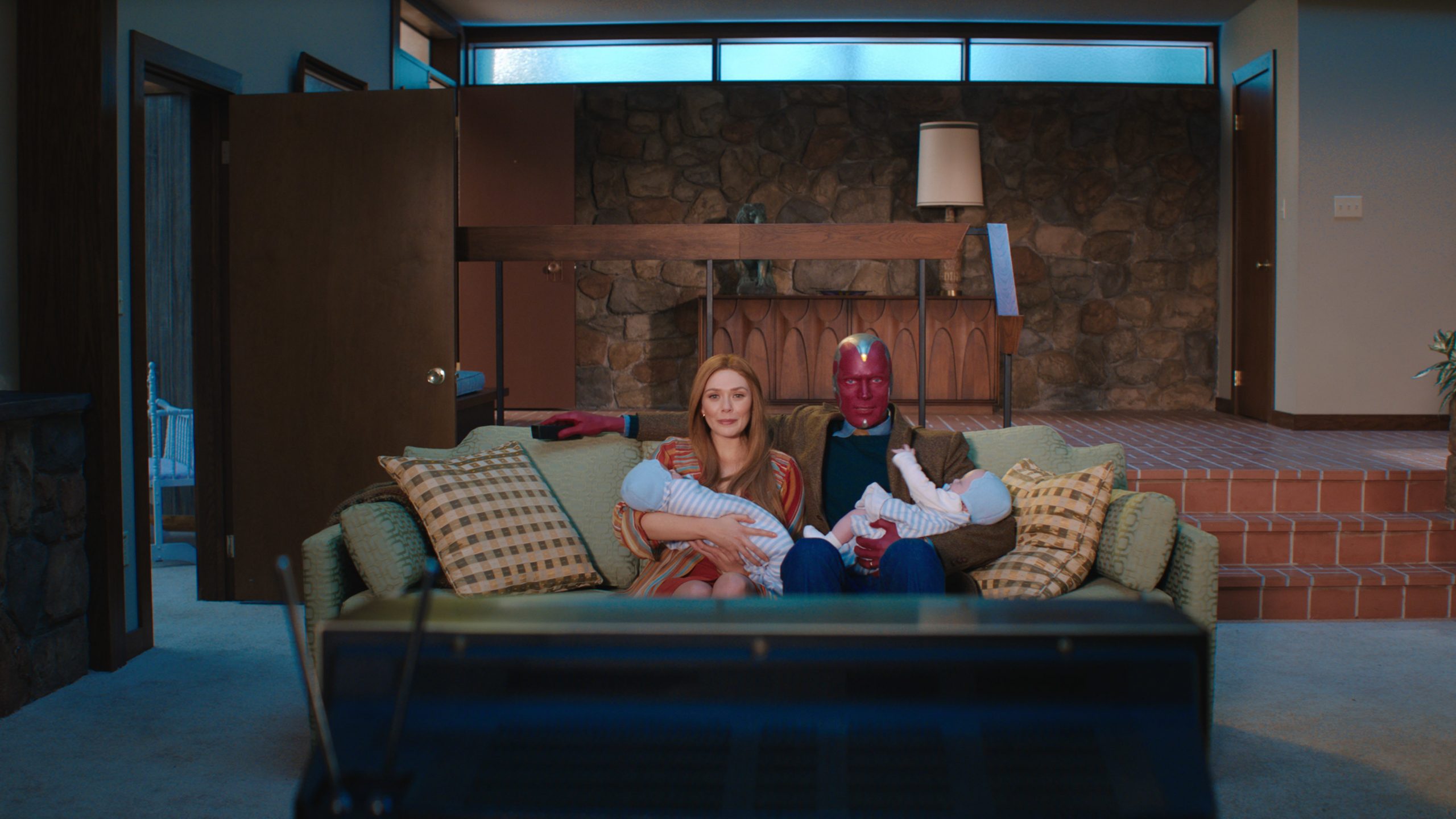 My friend Effie Parks says that when we get a rare disease diagnosis for our child, we begin to grieve the loss of the fictional child we thought we had. On the show, we see Wanda transmogrify her grief with her chaos magic to manifest those fictional children she thought she’d someday have. But by the series finale, she realizes she needs to let go of that fiction however painful it might be to do so. Those children were never real but her sorrow in saying goodbye to them is. She tells Vision,
“You are my sadness and my hope but mostly you’re my love.”
________________________________________________________________________________________________________________
Still images courtesy of Disney Media and Entertainment Distribution
Thanks to TeddyTalks for the clip from Wandavision
At the age of 12 months Daniel’s first child Lucas was diagnosed with the rare disease Menkes Syndrome. After adjusting his expectations of what raising a child might look like, Daniel began to tell Lucas’ story with a short documentary: “Menkes Disease: Finding Help & Hope” narrated by Oscar nominee Mary McDonnell. That film led to Daniel co-founding with Bo Bigelow DISORDER: The Rare Disease Film Festival and later The Disorder Channel, both dedicated to spreading awareness for patient families facing any of the more than 7,000 rare diseases.
In January 2020, we were told our son Lucas had few medical options left and that we had months not years left with him.. 2020 has become so closely associated with Covid-19 that it is now hard to recall that the first two or three months of the year were relatively worry-free for most Americans. It was never worry free for us. We didn’t begin our new year with a feeling of optimism for what lay ahead unless it was the delusional optimism of a bargainer as we asked, “When the urologist said months not years, he could mean 11 months right?” Lucas had Menkes Syndrome. It is a copper transport disorder so not only does insufficient copper reach the brain but too much collects in the kidneys. At this time, we had just come through a particularly rough December of kidney issues for Lucas. We were in and out of the hospital, Lucas endured sleep studies and we discovered he would now need supplemental oxygen at home. It was clear December was a decline for him and a new year did not offer new hope.
So by March when Covid-19 became something most of us could not ignore, we took it very seriously. Mindful of Lucas’ increased vulnerability and that our clock of months not years was ticking down, we determined to strictly isolate our family of four (five if you count our home care nurse). We pulled both boys out of school before the district made the call that schools should close. I was the only one to leave the house for grocery runs and our home nurse went heroically above and beyond her duty electing to isolate away from her own family, including her toddler granddaughter, rather than increase the risk to Lucas or leave us without care at home.
Lucas actually loved this period of time. Non-verbal, it’s always a guessing game to know what he’s thinking but I’d lay odds he wouldn’t know the difference between a Wednesday and a Saturday except that he definitely did know and appreciate the difference between a day when people went to work and school and a day we spent at home all of us together. Covid-19 meant so many more days of all of us together. We could see Lucas delight in that. Whenever he’d see us earlier than 4pm he’d light up or crack up laughing, as if to say “You’re not usually here with me at this time.”
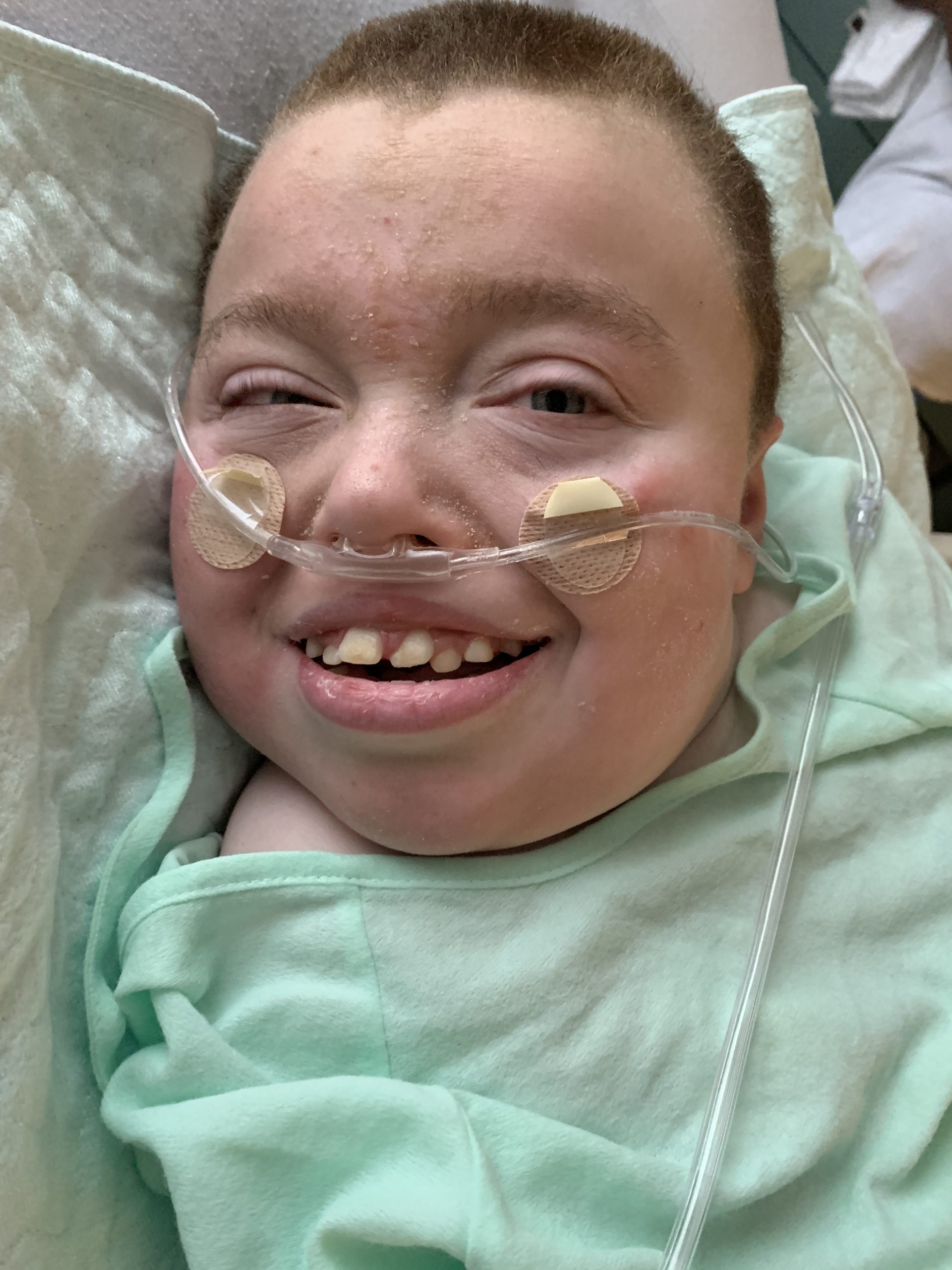 And I am actually able to be grateful to Covid for this time, if that’s possible. Many of us have thought through: “If you knew you were going to lose someone you love, what would you do differently?” Maybe for most it’s a theoretical exercise but the answer more often than not includes something about spending more time together. Well, it wasn’t theoretical for us. We did know and our lockdown lifestyle meant we got to spend a lot more time with Lucas than our typical days allowed.
As we learned more about Covid-19, it seemed uniquely tailored to threaten our son. Boys with Menkes are susceptible to pneumonia, in fact that is often how they die. Boys with Menkes have twisted (compromised) blood vessels and as we learned Covid-19 might be a vascular infection as well as a respiratory one, we took it as a given that if Lucas got Covid he wouldn’t survive it.
During this time, I recall an odd moment of feeling a bit fortunate that we had been able to secure home oxygen supplies. Just three months earlier I was more likely to curse the addition of an oxygen machine to our home. (In fact I wrote about this at the time and you can read that here.) Now this gear seemed a scarce luxury. Even better, our oxygen setup could refill its own tanks so we were not subject to the shortages for tank refills we’d begun to hear were growing more frequent.
The risk of contracting Covid was weighing on us when Lucas’s kidney problems once again grew acute. We were reluctant to bring him to a doctor or worse a hospital. We knew his remaining treatment options were few and affording diminishing chances of good outcomes. We tried to balance that with the chance of him contracting Covid. In hindsight, I can second guess that we may have waited too long to get him care. We were forced to decide which risk was greater – Lucas’ general decline if left untreated or the threat of Covid infection.
In May, a trip to the ER started to seem unavoidable. Remember what May of 2020 was like – New York City was the epicenter for Covid infections. And while we live in upstate New York about three hours north of the city, it wasn’t unreasonable to imagine the pandemic’s spread had reached our area more so than most of the country. We were apprehensive to go.
Like many rare families, experience had taught us that there was no such thing as a short hospital stay for our boy. Seven day stays were routine. I had begun think of the hospital as a twist on the Hotel California: “you can check in any time you like, but you can never leave.” Only recently had we discovered the power of palliative care, particularly when it came to reducing unnecessary time in the hospital. In New York state the paperwork with DNR instructions is printed on bright pink paper and often called “the pink sheet”. Having this sheet with you can radically alter the dynamics of medical advice versus what is medically required. I’d wave the pink sheet in front of the attending doctor in the PICU and shout “we’re going home”. Okay, in truth that only happened in my imagination, but I’d like to think the attitude pervaded our actual exchanges.
When it became clear we might need to head into the hospital, my first call was to our urologist, who we had a long, trusted relationship with. My next call was to our palliative care doctor. I recapped our situation and our reluctance and asked her to prepare for the battle to get us discharged as quickly as possible. From her impressive and expansive well of patience and wisdom she replied “It sounds like you need to be here right away.” She allowed no trace of alarm, her tone was always placid, but it still struck my ears like claxon.
Fortunately our hospital had recently built a separate ER for kids. It tends to be less busy than the main ER. Even so, they seemed close to capacity. Do you know what it looks like when you bring in a kid with high temp, shallow breathing, low tone, swollen blue-ish feet? It looks like Covid-19. We were kept in isolation and staff followed glove and gown protocols that looked to me like the clean room suits of an integrated circuit fabrication lab. Lucas was tested for Covid which not surprisingly came back negative. I was only checked for a high temp and lacking one, I was mostly ignored.
Lucas was admitted and the first of several surgeries was scheduled. My wife Tina and I have a system for extended hospital stays. We alternate nights with Lucas and at home. Each of us gets a chance for the comfort of home and a day at work and then we swap. But with Covid we decided not to trade off. I would be the one to stay for the duration. I’ll admit I thought this was a manly protector type thing to do asTina and Alex would be spared any exposure to Covid (unless Luke or I brought it home with us.)
Lucas, always stronger than we would credit him, pulled through one surgery and then another. Predictably our stay went from two days to three and then four. My wife argued she should relieve me but I thought it best for me to just stick it out. In hindsight, I see my position less as self-sacrificing and more as selfish. I was getting time with Lucas around the clock. I was seeing him smile for the first time in weeks. Tina and Alex were home worried and missing him. I could hear terror catch in her voice with each of my phone call updates. I knew her fear was not just that we’d lose Lucas but that she might not be there when we did.
Just as Menkes Syndrome had sometimes made our own home feel like a prison, now Covid was increasing that seclusion. There’s a reason we called it lockdown. And then to be in a hospital room during Covid, that only further constricts the physical and mental space we have left to us. It’s not the first time my stay in a NICU room has invited mental comparison to what a jail cell would be like. At night alarms and unannounced inspections interrupt my sleep. The room is perhaps 12 foot by 12 foot, the entry wall is glass and generally wide open. A limited moat of free space encircles Lucas’ bed and threads around the tray table I’ve commandeered for my laptop, his wheelchair, and all the hospital equipment. I pace that course until I’m dizzy, enough to shine the path on the floor if not carve a deeper channel in it.
Although I technically have the freedom to exit his room or the hospital, I’m loath to. In the best of times, we parents feel reluctant to leave our children’s rooms especially when our children cannot communicate on their own. Even a moment away for food or the bathroom rains guilt down –what if this is the critical moment? What if reaching me by phone is not fast enough? But Covid-19 has ensured these are far from the best of times and I am even more reticent to leave this room. I would risk not just my absence but the increased chances of contracting Coronavirus. Would that needed stretch of the legs or change of scenery bring the virus back with me to my son? The prison comparison grows more real. My tiny oasis is that recliner chair that almost converts to a bed.
Four days at the hospital turned into six, and one surgery expanded to four. But Lucas recovered from each and seemed ready to go home. The attending half-heartedly offered the option to stay one more night – “Nope, we’re going home.” I interrupted. Minutes later I heard him down the hall retelling that moment with a laugh “And the dad said Noooope, we’re going home.” That night home from the hospital was our last together as a family of four. He got our cuddles and we got his smile. The next morning Lucas awoke, struggled very briefly and left us before paramedics could arrive.
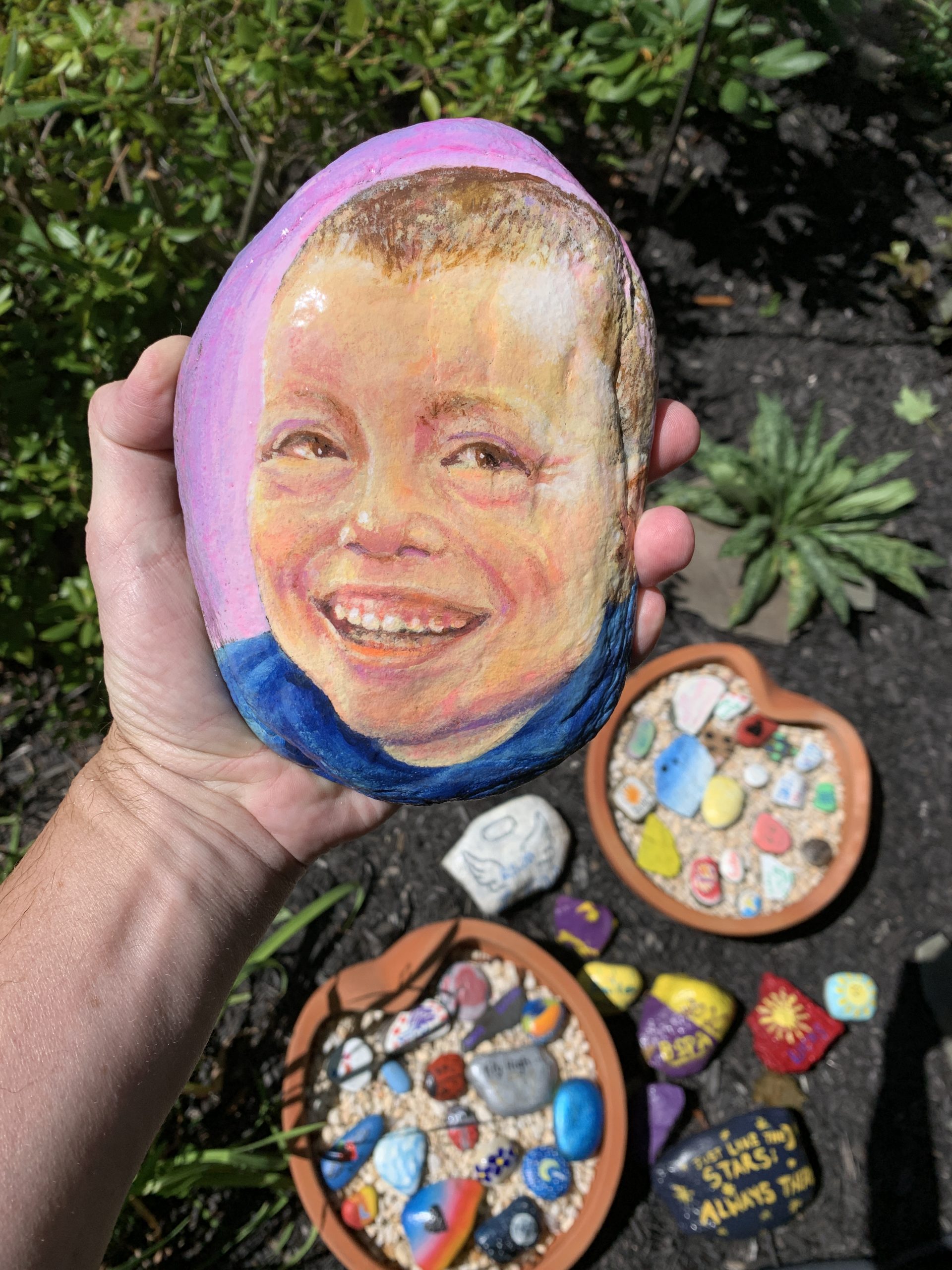 For most of a year on our dry-erase board to-do list we had written “Lucas plan”. This was coded language for “plan Lucas’ funeral”. Since we were not active in any church, we knew we couldn’t rely on their structures and ceremonies. Like Lucas himself, his funeral would be one of kind. We intended to craft it ourselves. Despite these intentions, we never got very far beyond vague plans. Eventually we erased it from the to-do list still undone rather than let it grow ever more macabre. And then, as it turned out, Covid had one more cruel joke to play. Death during a pandemic will waylay even the best of funeral plans. The chance to gather loved ones and find comfort with them? Covid denied us most of that too. Friends and family did find other more socially distant ways to reach out. Dozens of small rocks were painted as Lucas memorials and placed on our porch. And thoughtfully prepared meals fed us for six straight weeks.
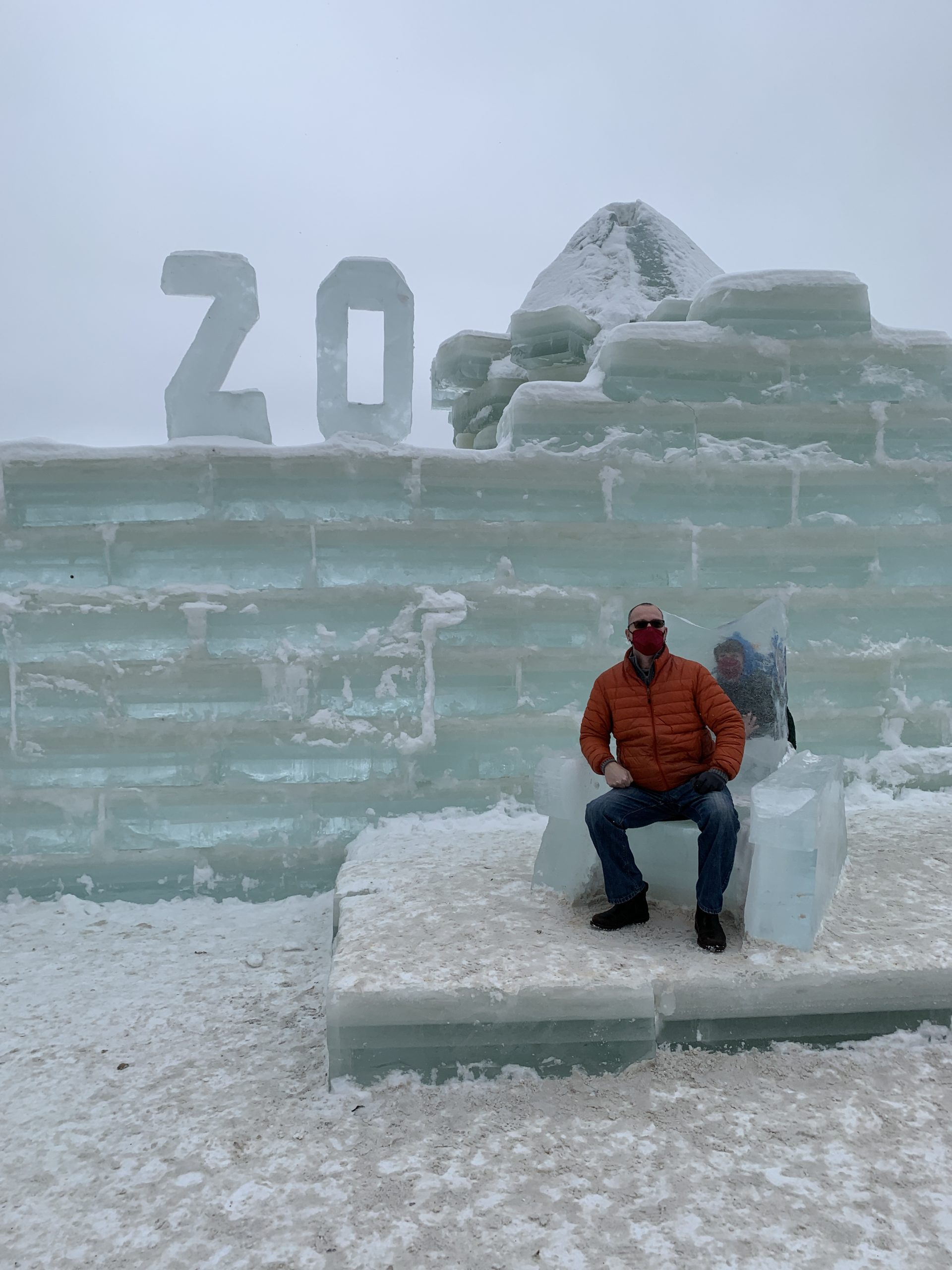 As we took stock of our new life without Lucas, we were honest enough to admit that some things were suddenly easier if in no way better. I mean on practical levels not emotional ones. Life with Lucas meant our ability to travel had been extremely limited for the past ten years (which was all of Alex’ life). It wasn’t too long before each of us voiced a silver lining that we could at last travel to those places we’d longed for, Italy, Prague, even Washington DC had seemed out of reach until now. But then Covid speaks up and says “No, not even this. Not while I’m around.
So yes, Covid made a bad time worse, but really we already had more than ten years experience with a disease rewriting our plans for us.
Almost exactly 12 years ago we had our first child, Lucas. About 6 months ago we lost him to a rare disease, Menkes Syndrome. My wife and I now tend to think of our life in three distinct stages: before Lucas, with Lucas and after Lucas. But almost 10 years ago we had our second child, Alex. I try to imagine how different it is for him; he never had a life before or without Lucas until just recently.
I think my wife and I draw some comfort knowing you can have different chapters in your life. We knew a time before finding each other that we were happy. We knew our time as a couple before Lucas and we were happy then. It helps to know we’ve had and will have different people in our lives at different times and we still find happiness in each segment. That’s probably an advantage unavailable to Alex. His whole life has been one uninterrupted segment with Lucas. There has been no other life for him other than as the younger brother to a different sort of big brother. And I worried – would that mean Alex is less able to adapt to the loss of Lucas than we are?
Last month, as we honored what would have been Lucas’s 12th birthday, I asked Alex how things have been different for him, both during when Lucas was with us and since his passing. Here is some of what he had to say.
“I think about how some of my friends don’t get along with their brothers or sisters. They get in fights all the time. I never got in a fight with Lucas. He could never really do anything wrong, except maybe annoy you. But I basically never got annoyed with him.”
He recalled how some strangers and even some of his friends used to see Lucas and think he was a baby. He remembered, “I have to tell people “No he’s not a baby, he’s special needs.”
I pressed him…did he wish his brother had been different?
“I don’t know if it would be hard having a different brother. Because I haven’t had one. So, I don’t know if it would be easier or harder. He’s the only brother I’ve had.”
“Well, honestly even though it hasn’t even been a year for me not having Lukey as a brother, I’ve gotta say no. I never lived a life without Lukey. I never had to get used to it. I just have to get used to not living with him.”
It’s a relief when I hear Alex’s attitude that having a brother with greater demands on his parents was just how it was. To his mind it wasn’t egregious or damaging. For nine years I had operated with a persistent low-grade fear he was being neglected a bit or given a short shrift.
I sometimes feel Alex might try to avoid speaking ill of Lucas’ memory, so I pressed him for any things that were harder in his life because of Lucas.
“Like if we were watching TV and he wanted to be loud. He always wanted to be loud.”
“There weren’t really any rules for Lukey because he couldn’t really break any to begin with.”
“There was a lot less I could do with Lukey, like tag or playing with toys. He couldn’t really move well in his wheelchair and for toys he couldn’t really hold them even.”
I asked him what his favorite thing to do with Lucas was.
“My favorite things to do with Lucas was a game we called “Three Pigs in a Blanket”. Lukey, mom and I would be lying on the couch and pull a blanket up over our heads, it was cozy. Lukey would laugh every time. For me it was like being in a theater to put on a show.”
Alex is in typical health and we had just started to see him age into a new role. At ages 9 and 11 the sibling dynamic was shifting and as Alex grew more capable, we saw hints of him becoming a protective older brother character despite the numbers of years each had lived. As Alex says, “Basically every day I felt like: is he really 11 and I’m 9?” This spring Alex had just begun to do some of the Lukey care, like venting his g-tube. I asked Alex about this new responsibility
“He (Lucas) loved it. And I didn’t like it. It felt weird for some reason. I had never really taken care of him. I think anything I did he laughed. I don’t think I could do anything without him laughing. He just thought it was funny because I was not supposed to do things.”
And as it turned out this action by Alex was the happy punctuation mark on Lucas’ life. Last June when Lucas was finally able to come home after six days in the hospital and several surgeries, we were at last able to have a family night together. Because of Covid19 concerns, Alex and my wife had avoided any visits to the hospital and hadn’t seen Lucas for six days. These reunions could go either way for us. Often Lucas was just delighted to see those he’s been missing. But just as likely, this could be the moment Lucas suddenly realizes he should have been seeing those people before now. He would be like “Wait minute, where have you been for so long?” and then he’d cry or fuss.
But on this night Lucas was probably just too worn out from recovery to manage either reaction. We worried a bit not to get any smiles. And then we got one – Alex was venting Lukey’s g-tube. He smiled and we could see he wanted to laugh. It made a huge difference to us. It felt like he was back. His recent months-long decline had been so gradual we hadn’t even realized Lucas had gone weeks without a smile. His smiles not only light up rooms but really seem to lighten the hearts of anyone around him. We definitely needed a Lucas smile that night. We had no way to know then that was our last moment together as a family with him. But had we known; it was about as good as we could have wished for. The next morning, he awoke for just a few minutes before passing away.
I worried during the life-with-Lucas-time that perhaps Alex was getting less attention than he needed. I could feel a desire to say, “not now, can’t you see we’re busy dealing with Lukey stuff?” I don’t think I ever let myself vocalize that, but I think he picked up on it and was a very good sport about it. I asked him about this recently and he reluctantly admitted he felt that way “sometimes but not very much.” In his words “I never really felt left out really.” and his life with Lucas “It just kinda felt normal. I never really thought about it. It’s just what we did.”
But I’m sure for Alex, it felt like it was always Lucas’ time and rarely Alex’ time. We tried to work against this tendency. Sometimes we stumbled upon unexpected solutions. For example, after we resigned ourselves to never traveling by plane with Lucas, we realized if we were to ever travel farther than a manageable van ride it would mean splitting up the family. This led to some really precious trips for just Alex and his mom, or just Alex and me. He got undivided attention on an adventure with one of us. They are now among his favorite memories. His mom and I each in turn got to feel a week or a few days of “normal” parenting. For a little while on those trips life was easier. The practical demands of Lucas’ care were temporarily removed. The emotional demands were, for a moment, able to shift from foreground to background. For two of us.
Like most siblings to a special needs kiddo, Alex is sensitive and compassionate. And so, he was guarded and careful not to offend when he mentioned after Lucas’ death that “It’s mostly sad and bad, but there are some good things.” He went on to talk about how “We can do a lot more. We can all go on a vacation together.” (if only Covid would allow).
I don’t know if it’s unfair to my wife and me to think there is lost time with Alex which we now need to make up for; but fair or not, we are approaching this new chapter as one where Alex gets to be our first priority.
At the age of 12 months Daniel’s first child Lucas was diagnosed with the rare disease Menkes Syndrome. After adjusting his expectations of what raising a child might look like, Daniel began to tell Lucas’ story with a short documentary: “Menkes Disease: Finding Help & Hope” narrated by Oscar nominee Mary McDonnell. That film led to Daniel co-founding with Bo Bigelow DISORDER: The Rare Disease Film Festival and later The Disorder Channel, both dedicated to spreading awareness for patient families facing any of the more than 7,000 rare diseases.