
First published on Patient Worthy.
In medicine, baseline is a simple word. It’s a starting point; a reference used for comparison over time. Physicians document it carefully. Researchers rely on it. Clinical trials require it. But when your child is diagnosed with a terminal illness, baseline becomes something far more personal.
When my daughter Éabha was diagnosed with an aggressive brain tumor at age 10, I entered the world of pediatric oncology with a dual lens: I was both a registered nurse and her mother. I understood immediately why clinicians asked about baseline. Establishing a child’s baseline helps guide treatment decisions, detect complications, and evaluate disease progression. It is essential to good medicine. But living it is something entirely different.
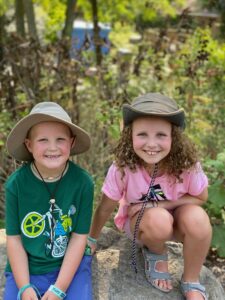 One day she was an energetic, creative, endlessly curious child. The next, we were standing in an intensive care unit being told to prepare for the worst. That day marked the end of the “baseline” we had always known. Before cancer, Éabha was vibrant in a way that filled every room. She was thoughtful beyond her years, fiercely loving, and completely devoted to her younger brother. Her laughter came easily. Her wit came quickly. Her energy felt limitless.
Then hydrocephalus, neurosurgery, biopsies, radiation, steroids, chemotherapy, complications, vision loss, weakness, and with each medical intervention came a subtle recalibration. A new version of our daughter emerged.
In pediatrics, baseline matters because children are still developing. Clinicians rely on parents to help distinguish what is normal growth from what signals concern. In pediatric cancer, especially brain tumors, that distinction can become lifesaving. A subtle change in coordination, increased fatigue, a shift in speech pattern, sleeping longer than usual, laughing a little less. These may be whispers of disease progression or treatment complications. But those whispers are rarely obvious. They live in nuance, and parents become fluent in that language.
Baseline isn’t static it is ever evolving. There was a baseline after surgery. A baseline after radiation. A baseline on high-dose steroids. A baseline during tapers. A baseline after shunt revisions. A baseline during stable scans. And every time we thought we understood it, it would shift again.
Monitoring her baseline became a constant, quiet vigilance. As a nurse, I had the clinical knowledge to recognize patterns. As her mother, I knew the cadence of her voice, the spark in her eyes, the rhythm of her walk, the subtle expressions that signaled something wasn’t right. Sometimes it was nothing, sometimes it was everything.
And yet, what makes baseline so difficult in pediatric cancer is not just the vigilance, it is the grief. When decline happens in children, what is often slipping away are pieces of identity. Children with neurologic cancers rarely decline dramatically overnight. The changes come gradually over time and to the outside world, these might appear insignificant. To us, they carried enormous weight. Because baseline is not only about physical ability, but it also encompasses personality, independence, humor, endurance, spirit. Each time Éabha’s baseline shifted, it was an acknowledgment that something had changed, perhaps permanently.
There is a particular exhaustion that comes from loving your child wholeheartedly while simultaneously assessing them clinically. I could understand the pathophysiology of increased intracranial pressure. I could interpret MRI reports. But nothing prepares you for realizing that the baseline you are now protecting would once have felt unimaginable.
Still, baseline was also how we held onto her. It was our early warning system. But it was also our sacred measure of who she was that day. It helped us know what kind of day it could be. Whether she had the strength for visitors. Whether she could sit outside and feel the sun. Whether we needed to advocate for medication adjustments or imaging sooner rather than later.
As her illness progressed, I came to understand that honoring a child’s baseline is honoring their dignity. When asked, “What is her baseline?” they were not simply collecting data. They were acknowledging her as a whole person, not just a diagnosis.
Éabha died at twelve years old.
And when I reflect on her life, I don’t think first about tumor markers or survival curves. I think about the steady courage she showed in a body that betrayed her. I think about the tenderness she extended to others even while suffering. I think about the quiet strength that carried her through days that would have broken most adults.
In the end, baseline was not just a clinical reference point. It was the story of who she was becoming, even as disease tried to define her.
For families navigating pediatric cancer, baseline is more than a word in a chart. It is the lens through which we recognize change. It is the language we use to communicate concern. It is often the first signal that something needs attention. When healthcare teams truly respect a parent’s understanding of baseline, they are doing more than practicing good medicine. They are entering into partnership with the people who know that child best. They are being invited into the most intimate understanding of that child’s life. That partnership can change everything.
Parent Champion Aisling Melton, Parent of Éabha
Eabha was diagnosed at age 10 with a stage-4 diffuse midline high-grade glioma, and died at age 12.
Aisling’s 6 words: Because Éabha Grace Melton deserved better
We don’t get to decide what children can or cannot achieve as adults. Our job is to give every child—not just those with disabilities—the chance to surpass our limited, adult-shaped expectations. Because here’s the truth: they will, whether we believe in them or not.
When our daughter was in first grade, I sought the help of an educational advocate to support me in drafting her IEP goals. At that point, I had spent eight years as a high school counselor, sitting on the other side of that IEP table. I knew how important it was to start with goals that presumed competence—something I wasn’t seeing in what the school had proposed. And I also knew that, without data, I couldn’t fight for the educational changes she might need later. So I reached out to a former special education teacher who now worked privately with parents for a fee.
I told her about our daughter—a brain cancer survivor—and asked only for a consultation on the IEP goals I had already drafted, trying to be mindful of costs. She listened, then reviewed my goals. And this was her response:
“I would like you to make sure the goals are appropriate based on her medical barriers, which might make them unattainable.”
I was stunned. I hadn’t expected someone advertising themselves as an advocate for children with disabilities to say something so limiting. I thanked her for her time, paid her, and chose not to expend the little energy I had left arguing. I was learning, with time, to preserve that precious energy for my daughter and my family.
Still, that moment left a lasting mark. It was the first time someone so clearly failed to presume my child’s competence. She was only six. And already, people were underestimating her—dismissing her potential without even giving her a chance to try.
That’s when my “Mom gut” kicked in. And then my brain followed with this truth: I don’t care if she doesn’t meet every goal. What matters is that we give her the chance to try. This life—her life—is too precious for imposed limitations. The world already presents architectural barriers for her mobility to move with wheels, and now she has to face this too?
Let me spell it out. When our daughter was diagnosed with brain cancer just after her 2nd birthday, we didn’t say, “Well, this is risky. She probably won’t make it through chemo, radiation to her baby brain, or the radiation necrosis that nearly took her afterward.” No. We assumed survival. We moved forward with everything we had to keep her alive.
And that’s the same spirit we bring to her education. Sure, schools aren’t obligated to go all-in like a parent does but a parent will leverage every ounce of strength, every resource, every connection—for the best possible future for their child. Her quality of life depends on her education and we cannot, must not, assume she can’t. She has already lived through more than most adults will ever face. Trust me: she deserves the chance to show you what she’s capable of. And such is true for ALL kids.
My greatest dream is that she outlives me. And if that dream comes true, I want to know I did everything in my power to equip her for that future—to foster her independence, her learning, her joy.
A parent’s love for their child? It’s relentless. It’s fierce. It doesn’t underestimate.
Neither should the rest of the world.
The diagnosis of a serious health condition requires parents to venture into unfamiliar and often challenging territory, such as navigating the healthcare system or making important medical decisions. You will also face a new challenge: communicating with your child about their condition, treatment and prognosis. Indeed, many parents find that this is one of the most daunting aspects of the caregiver journey. Know that you are not alone in this concern and that there is support available to you.
In previous stories of my younger sister Lauren’s cancer diagnosis and eventual passing, I’ve used a metaphor I call Emotion Beach. Since she was born in December and would pass 10 years and 10 days later, just before Christmas, the entire month has double red flags posted warning of viciously choppy waves of emotion.
Almost as if it was foretold in a mental farmer’s almanac, right on time, December and this season brings an increased intensity and volume of my grieving thoughts. To be honest, it’s playing out right now as you read this. I’ve gone months without having an urge to write about these feelings, and suddenly a grief switch flipped, propelling me to write this piece.
I was in a therapy session earlier this year and was prompted with the question, how much weight does the grief of Lauren’s death carry?
I compared my grief to lava flowing from a volcano. In the immediate months and years, the lava was molten and completely volatile. The anger, depression, and numbness of loss were white hot and I burned myself and the relationships around me. During this stage, I developed a nasty habit of avoiding stressful emotions to a fault. My protection against the lava was burying negative emotions.
As time passed, the lava began to cool and set into place where it had spread. The coping habits I had developed were my default now, and I continued to avoid stressful emotions and bury negative ones. This behavior pattern would have consequences academically, professionally, and personally – things I’m still working to rebuild. However, the grief-stricken lava didn’t burn my finger to the touch anymore. I could bring up Lauren conversationally and feel joy, not sorrow.
Whatever negative emotion, habit or experience took place in the aftermath was forever frozen in place. Today, I must admit, my bad habits still exist. But now, perhaps because of time, therapy, or getting older and collecting more experiences, I now have the clarity to see them for what they are and actively try to counteract them. Grief has forced me to consider new realities and the uncomfortable truth that we are approaching the threshold of Lauren being gone for a longer amount of time than she was here.
My grief has changed. I can talk at length about the joy and kindness Lauren brought into the world just as much as a minute-by-minute run through of her final hours. My relationship to grief has shifted from being a burden to an appreciation and quiet respect for how far I’ve come in my journey. This is true for almost everything related to Lauren and her passing.
That ‘almost everything’ is the key though. One aspect that I’m certainly not at peace with is Lauren showing signs she is with me. We naturally cling to the idea that our deceased loved ones are at peace, free of any pain and watching protectively and lovingly over us. It’s a comforting thought and helps soothe the sting of relearning how to live life without them.
The thing is, I don’t believe I’ve ever had a sign from Lauren.
That’s not to say I don’t believe those who have passed can give us signs, I desperately want to believe that. I’m just of the mindset that I won’t believe it to my core until I see it and I simply don’t think I’ve seen it.
People around me seem to be getting signs from her. Her twin even encountered a medium at the grocery store. Most of the signs however seem directed at my mom. She has told me about hearing Lauren in her head and how Lauren provides one liners and quips about her day-to-day experience constantly. In the beginning, it would make me feel frustrated, and I worried my mom was struggling worse than I thought. That concern then turned to polite dismissal when she’d bring it up because whether it’s real or not, it’s a coping mechanism. Who am I to judge?
Like I said earlier, I have a propensity to avoid negative emotions. One form that takes is an intense skepticism about the afterlife. I take away literal interpretations of what I see. Lauren died in front of me so therefore she is not experiencing life as we know it and cannot interact with me.
I’m more likely to believe that Lauren being able to send me a message is an impossibility. I go back and forth on what I think she experiences right now, or even if she does. Maybe my skepticism is a coping mechanism, maybe it’s fear. I simply do not know the truth.
After exposure to the suffering that accompanies someone battling terminal illness and death, I’d like to think the afterlife is a reward to soothe that pain. A chance to connect with past souls, examine your lived experience and try again if you choose to do so. As a place that provides explanation and reason to the suffering that accompanies the unexplainable.
Maybe that’s why I haven’t seen anything yet. She’s too busy enjoying the warmth of something I can’t comprehend here in my body. Maybe it’s not that elaborate at all and she simply stopped existing. No pain, no feeling and no experience because she is nothing anymore.
It’s possible that by writing a story centered around my feelings about a lack of a sign from Lauren, that it will be the very thing that initiates a chain of events that leads to a powerful sign from Lauren. It’s also entirely possible the absence of a sign is the sign itself.
And maybe the signs are not coincidental license plates or address numbers connected to her. Maybe she’s not controlling the radio, so it just happens to be her favorite Taylor Swift song (Mean). Maybe we simply connect dots that do not really have a connection.
BUT what if there was never going to be a sensible sign because I am the sign itself. You are the sign too. The sign is employing the empathy, kindness, and grace she showed me and everyone she knew. The sign is going above and beyond for a stranger just because you can. If that’s the case, it’s been hiding in plain sight this entire time. I hope as you ride your own waves on Emotion Beach, you catch a sign that brings you solace and comfort for your person too.
Palliative care offers invaluable support to children and their families, regardless of the prognosis, by focusing on enhancing quality of life while managing a serious illness. Importantly, children can receive palliative care alongside curative treatments, starting as early as the time of diagnosis and continuing throughout treatment and beyond. This Guide provides an overview of the benefits of palliative care in pediatric oncology, helping you understand how it can make a meaningful difference.
Our simple home is nestled back in the woods alongside a sparkling creek. Being out in those woods was my daughter’s favorite thing. Izzy had the ability to engage with nature in a sacred way. She held burial services for butterflies and had a ‘thinking tree’ where she would go to talk to God. From picking dandelions and catching lightning bugs, to building forts from fallen limbs, she loved all of it.
Early on in life, cancer taught Izzy the reality of her favorite things. She was deeply aware that they were privileged. They were precious. And they were never promised. There were years when Izzy’s body was strong enough for the great outdoors and years it simply wasn’t. Years the walls of the hospital felt like our saving grace and years they felt like a prison to a sacred spirit like Izzy.
On the corner of our property there lies a Buckeye Tree, whose limbs twist and turn creating the most beautiful canopy. Each Fall her twisting limbs let go of the life she’s spent the whole year growing. Her ‘fruit’ falls to the earth in the spiny, little shells where it has grown. When ready, the shells can easily be peeled away revealing to its finder a smooth, shiny nut called a buckeye.
Collecting buckeyes was a fall tradition that Izzy cherished. She would collect a handful, then take them to the side and peel apart the shell in wonder. Somehow, each one she opened was always more beautiful than the last. Week after week she would collect her treasures in a bucket, waiting for the very last one to fall.
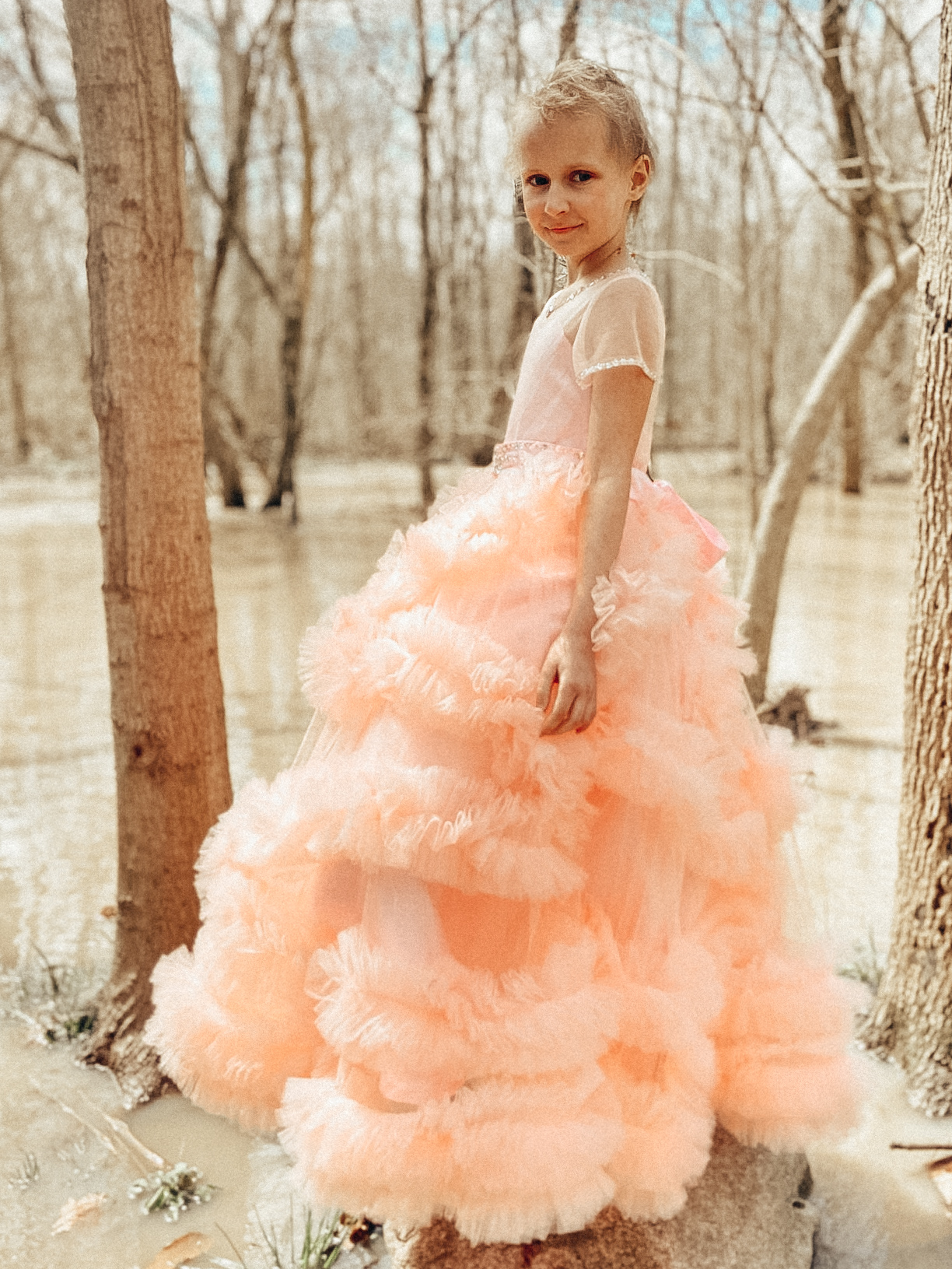 One fall day we came home from the hospital after getting platelets and blood. She felt so good that as soon as I put the car in Park, she swung open the door and raced to Buckeye tree. When I got to her, I found she was throwing rocks into the tree, for the buckeyes weren’t quite ready to fall. I laughed at her and told her to be patient. Told her they would probably be ready the next week.
For all of my life, I will never forget her response. I will never forget her candor, nor her wisdom as the truth in her eyes met the truth in my own. “But my legs don’t hurt today, and they might hurt next week,” she said. I stood frozen, in awe of her ability to navigate the very unfair cards she was dealt. Then, with silent tears streaming down my face, I approached the Buckeye tree and told her I would help.
Izzy died the following Spring. In our simple home, nestled back in the woods alongside a sparkling creek. I still see her out there. Exploring the woods and collecting treasures like fallen buckeyes. And I hear her wisdom, beckoning me to stay aware. Of what is privileged, what is precious and what can never be promised.
________________________________________________________________________________________________________________
Molly is a Writer, Speaker, and End of Life and Grief Coach in the Indianapolis area. She spent a decade in Pastoral Care before spending the next decade caring for her daughter throughout her cancer journey. She has combined both experiences to help others navigate unimaginable journeys. You can find her writings and teachings on IG at: the.grief.writer, or online at: mollymattockscoaching.com.
Part of our role as parents is to protect our children while slowly teaching them how to protect themselves. When they are toddlers, we hold their hand in parking lots, knowing they don’t have the knowledge they need to navigate the danger on their own. But when they’re teenagers, we trust them to walk alongside us, navigating the danger on their own. A chosen few of us are called to parent our way through procedure rooms just the same.
My daughter, Izzy, was three years old when she was diagnosed with cancer. In those early days, I took the lead, telling her what was wrong and what we were going to do about it: “So, once they take the rock out of my tummy it won’t hurt anymore?” Over ten years and six relapses our conversation evolved into one she had a voice in: “What will happen to my body after I die.” That evolution didn’t happen in one moment but in a million tiny moments combined.
Izzy’s cancer would never stay away long. So for us, treatment became the only way Izzy could stay alive. At the age of ten, she started asking to have a say in what treatments we did. For years, decisions had been made about her body without her consent and she simply wanted to be part of the conversation: “You talk about me like I’m not even sitting right here.” Her medical team agreed it was time, and soon Izzy began participating in the conversations we had every three months after scans.
At each appointment our doctor would give us the results and tell us what he thought was best. Then ask Izzy if she had any questions. She always did and they were always pretty much the same: “Is there an option where I can just go to school and not do treatment?” The truth is, she knew the answer. But her ability to ask the question gave her what she needed to process the answer. “They say I have options but what they really mean is I can do treatment, or I can die. And that doesn’t seem like much of a choice.” But in the end, it was a choice. And it was the choice she made.
The last few years of Izzy’s life the disease ravaged her bones, often making her unable to walk. While treatment always destroyed the disease in her, after so much toxicity it began destroying all of her. This meant ‘good days’ were a thing of the past. When we weren’t in the hospital for treatment, we were in the hospital controlling the damage of treatment. It suddenly became hard to assess what the real ‘danger’ was. Izzy said: “Fighting cancer your whole life isn’t the same as living.” She was right and together we began to wonder what death could be for her.
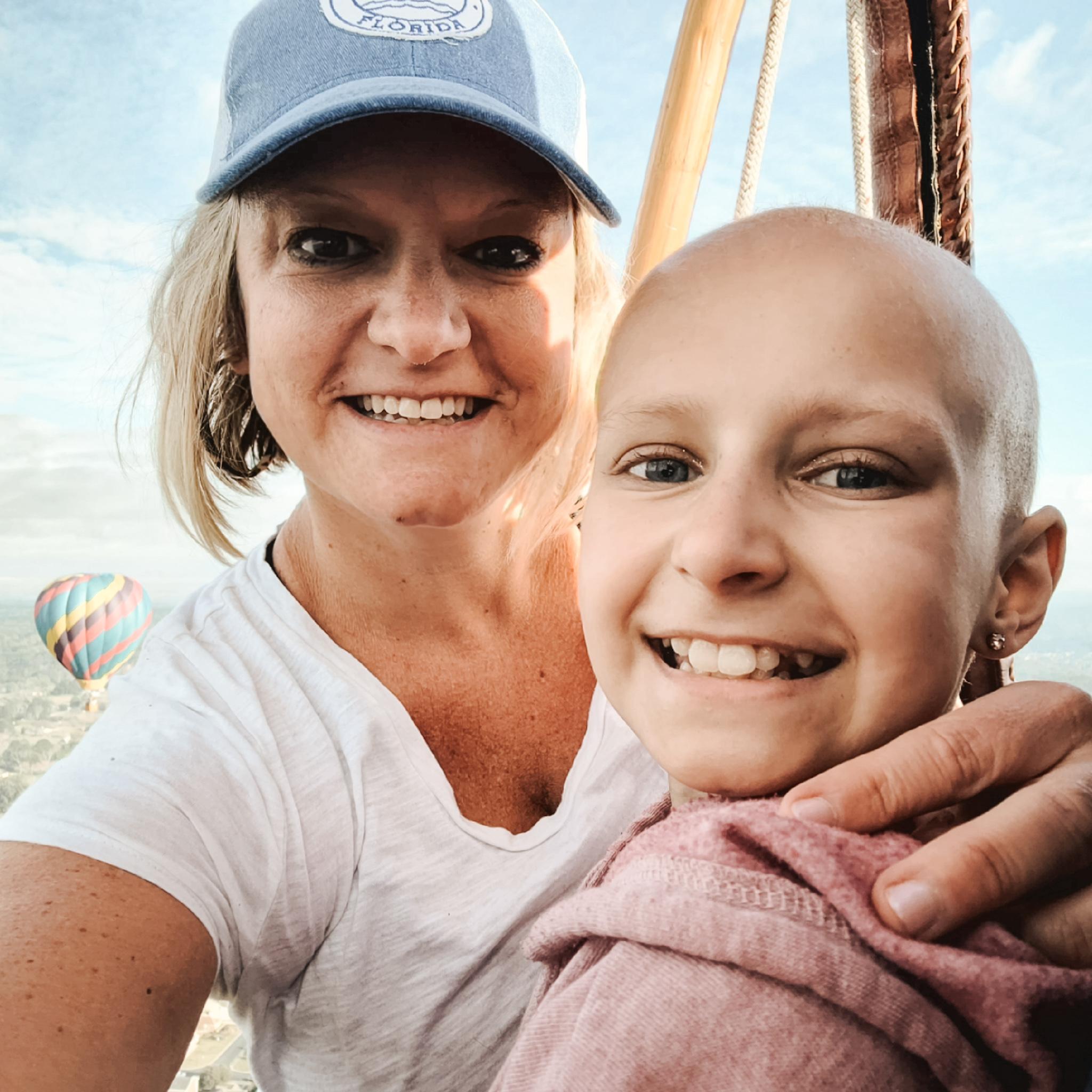 In January of 2021, we made the decision to stop treatment. To leave the hospital and go live life the way she wanted before she died. Izzy walked towards death with curiosity and hope, believing it could offer her the one thing this life no longer could: freedom.
For most of Izzy’s life I fought to keep her here. Holding her hand and teaching her to identify danger and navigate it safely. But in the end, she let go, teaching me that danger isn’t always the thing we think it is. Teaching us all that having to fight to stay alive is not the same as living.
________________________________________________________________________________________________________________
Molly is a Writer, Speaker, and End of Life and Grief Coach in the Indianapolis area. She spent a decade in Pastoral Care before spending the next decade caring for her daughter throughout her cancer journey. She has combined both experiences to help others navigate unimaginable journeys. You can find her writings and teachings on IG at: the.grief.writer, or online at: mollymattockscoaching.com.
Hello! My name is Connor Graver and I am a 22 year old finishing my Bachelor’s degree in Political Science in the Chicagoland area. The consequential event that put me on a collision course with CPN was the diagnosis and eventual passing of my younger sister Lauren to pediatric cancer in 2017.
If you’re a regular CPN reader, my last name might look familiar as I am the son of fellow CPN blogger, Amy Graver. I have a niche goal and area of expertise that I am excited to stoically provide to CPN: it’s the sibling experience of a life threatening pediatric disease. Siblings can come in countless combinations which entail different social dynamics and norms. For the Gravers, I am the oldest along with my younger sisters Claire and twin sisters Lauren and Emma.
For my first post, I want to elaborate on a seemingly insignificant and arbitrary moment – a moment that has since come to represent the chasm of before and after in my life.
It’s myself, the summer before I entered high school, sprawled across our family room couch playing Madden 15 on my Xbox 360 -not a care in the world.
That’s it.
Within minutes, I’ll receive a call from my Dad frantically explaining that Lauren’s checkup went awry and he’s coming home to pack a bag for the hospital. We hang up and I divert my attention from the game in front of me. This phone call and moment will be the snowball that triggers the avalanche of diagnosis, treatment, recovery, pain, triumph and heartbreak that defined Lauren’s courageous two year battle.
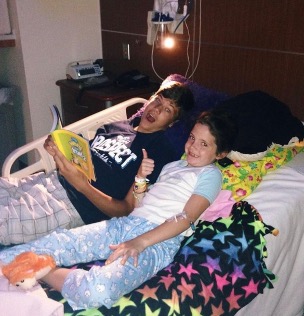 I grip this moment so tightly because I would come to realize it was the immediate and sudden transition from childhood to adulthood, although that wouldn’t be clear until the dust had settled. My perspective and world would never look the same again as I was forced into roles and responsibilities I didn’t want but had to do for my family.
I was forced into the role of make-shift parent since one would have to be with Lauren at the hospital during extended stays for treatment. Unlike my sisters, I wanted and needed to know every detail of Lauren’s treatment as a way to cope and handle what was in front of me.
As a result, I struggled socially — feeling years ahead of my classmates’ emotional maturity. I began battles with depression and anxiety that last to this day. All of these consequences stemmed from Lauren’s diagnosis, and I still feel sheepish saying I struggled because I wasn’t the one fighting the disease.
From the start of this ordeal, it’s as if a wave machine was turned on without ever planning to turn off. Each day, hour and emotion that arise is unique and different but flows like the rest. In years past, the water was considerably more choppy with waves like “Will Lauren survive?” and the subconscious rip current of the start of my depression.
Later on there would be the crashing and high tide of her passing and the aftermath of that.
So as I sit here, now as a regular at the Emotion Beach (to take this analogy to the next level), I’ve learned not to fear the waves or even fight the waves but to sit back, observe and enjoy. Silver linings I never would’ve expected will start to show, just like this opportunity to write to you.
We’ll talk again in December.
I walk into a patient room. It’s dark – the teenagers’ rooms often are. I introduce myself to Nora, who is sitting in bed writing in a journal. She is kind, quiet, and very polite. She stops what she’s doing to talk.
“Hey Nora, I’m Katie. I’m a nurse practitioner with the advanced care team. What are you up to?”
“Just writing in this journal they gave me. I love this quote I found, it’s about truth.”
We chat for a minute, and I seamlessly transition into my introduction of our team. I share how our advanced care team helps to support all kids with a cancer diagnosis. We work to address their symptoms throughout treatment, to support them and their families, and work to achieve goals that are important to them. Nora nods along, then shares quietly about herself when asked. She’s a junior in high school; she loves to spend time with her friends; she loves to eat. After a bit, I excuse myself and explain I will be back tomorrow to check in.
Back in the office, I write her progress note. Progress notes are a necessary evil for providers – ensuring we communicate clearly and consistently to other members of the care team and track the work we do with patients and families. While I’m documenting her history, my recommendations for ways to treat her nausea, and noting other services that should meet her, I can’t stop thinking about her truth quote. Ultimately, I head back to Nora’s room.
“Nora, when I was in here before, you shared that you love the quote you were journaling about. Will you share the full quote with me?”
She easily repeated it from memory, “Rather than love, than money, than fame, give me truth.” [Henry David Thoreau]
“That feels really important, Nora. Can you tell me more about what it means to you?”
Nora explains that in the face of her diagnosis, she kept hearing that quote repeat in her head. It is one she has loved for a long time, she explains. She wants her life to be “big and full, but I don’t have to be famous or something for that to happen.” She admits to me that while the news she is hearing scares her, she wants no sugar coating, no skirting around the obvious, no empty guarantees. “I don’t have time for anything but the truth.” As I often am in my work, I am humbled by the strength and grace of this young woman facing a devastating diagnosis.
We make a plan that involves a promise I’ve learned to honor from other amazing palliative care providers who have guided my growth in this field. I tell Nora I can’t make any guarantees about her future, but I can guarantee her these things:
I will always be honest with her.
I will always listen to her questions and respond to them directly.
And I will always tell her when I am worried.
The days pass, then weeks, then months. We learned other things about Nora – things far more important than the determined tumor spreading through her despite chemotherapy, surgery, and radiation. We learned about her love for fanny packs, her job at Dairy Bar, her wigs which she treated as her babies. We learned about her family, the ever-present parade of friends in and out of her hospital room, and we celebrated with her when she was named Prom Queen. Life lived on through relapses, progression, and treatment. Life loved on.
Again and again, our team was able to draw from that quote: one simple line from one meeting with Nora. We knew how imperative the truth was to her. I lost count of the conversations that began with some combination of that first conversation. As determined as Nora’s cancer was, her spirit and grit remained true.
316 days later (it matters, and it doesn’t matter, right?), I entered Nora’s room to process after the oncology team had left. Her cancer had progressed further. Our options to treat the ever-evasive tumors were dwindling. She looked up at me under eyelashes heavy with tears.
“Are you worried?”
“Yes.”
“I want to be here at the hospital. For the end.”
We made plans. Time passed. Nora went home, and eventually returned. Her room was full of music, of friends, of family, of home cooked food. Her room was full of truth.
I write little of Nora’s actual death, because while it was an important part of her story, she wanted it to be the least of her story. Her story was her life, one that she continued to live as brightly as she could, one we were privileged to bear witness to.
Knowing Nora has made me a better provider. I listen more closely. I look for the one line in a whole conversation that becomes the thread that weaves the rest of a story together. Her legacy lives on.
________________________________________________________________________________________________________________
Katie is an acute care pediatric nurse practitioner and a part of the Pediatric Advanced Care Team (PACT) at a children’s hospital in the Chicago suburbs. She is a firm believer that finding connections with patients and families builds authentic relationships and optimal care. She has a passion for seeking out multimodal therapies that allow children with complex medical illness to live their best and fullest lives. Prior to being a palliative care provider, Katie was a nurse in the neonatal intensive care unit for almost ten years. She is a mother of three and enjoys baking in the middle of the night, 72 degree weather, and being outside with her loved ones.