
First published on Patient Worthy.
In medicine, baseline is a simple word. It’s a starting point; a reference used for comparison over time. Physicians document it carefully. Researchers rely on it. Clinical trials require it. But when your child is diagnosed with a terminal illness, baseline becomes something far more personal.
When my daughter Éabha was diagnosed with an aggressive brain tumor at age 10, I entered the world of pediatric oncology with a dual lens: I was both a registered nurse and her mother. I understood immediately why clinicians asked about baseline. Establishing a child’s baseline helps guide treatment decisions, detect complications, and evaluate disease progression. It is essential to good medicine. But living it is something entirely different.
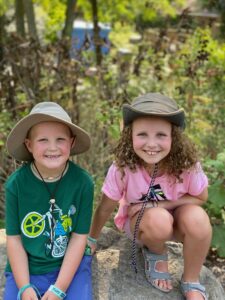 One day she was an energetic, creative, endlessly curious child. The next, we were standing in an intensive care unit being told to prepare for the worst. That day marked the end of the “baseline” we had always known. Before cancer, Éabha was vibrant in a way that filled every room. She was thoughtful beyond her years, fiercely loving, and completely devoted to her younger brother. Her laughter came easily. Her wit came quickly. Her energy felt limitless.
Then hydrocephalus, neurosurgery, biopsies, radiation, steroids, chemotherapy, complications, vision loss, weakness, and with each medical intervention came a subtle recalibration. A new version of our daughter emerged.
In pediatrics, baseline matters because children are still developing. Clinicians rely on parents to help distinguish what is normal growth from what signals concern. In pediatric cancer, especially brain tumors, that distinction can become lifesaving. A subtle change in coordination, increased fatigue, a shift in speech pattern, sleeping longer than usual, laughing a little less. These may be whispers of disease progression or treatment complications. But those whispers are rarely obvious. They live in nuance, and parents become fluent in that language.
Baseline isn’t static it is ever evolving. There was a baseline after surgery. A baseline after radiation. A baseline on high-dose steroids. A baseline during tapers. A baseline after shunt revisions. A baseline during stable scans. And every time we thought we understood it, it would shift again.
Monitoring her baseline became a constant, quiet vigilance. As a nurse, I had the clinical knowledge to recognize patterns. As her mother, I knew the cadence of her voice, the spark in her eyes, the rhythm of her walk, the subtle expressions that signaled something wasn’t right. Sometimes it was nothing, sometimes it was everything.
And yet, what makes baseline so difficult in pediatric cancer is not just the vigilance, it is the grief. When decline happens in children, what is often slipping away are pieces of identity. Children with neurologic cancers rarely decline dramatically overnight. The changes come gradually over time and to the outside world, these might appear insignificant. To us, they carried enormous weight. Because baseline is not only about physical ability, but it also encompasses personality, independence, humor, endurance, spirit. Each time Éabha’s baseline shifted, it was an acknowledgment that something had changed, perhaps permanently.
There is a particular exhaustion that comes from loving your child wholeheartedly while simultaneously assessing them clinically. I could understand the pathophysiology of increased intracranial pressure. I could interpret MRI reports. But nothing prepares you for realizing that the baseline you are now protecting would once have felt unimaginable.
Still, baseline was also how we held onto her. It was our early warning system. But it was also our sacred measure of who she was that day. It helped us know what kind of day it could be. Whether she had the strength for visitors. Whether she could sit outside and feel the sun. Whether we needed to advocate for medication adjustments or imaging sooner rather than later.
As her illness progressed, I came to understand that honoring a child’s baseline is honoring their dignity. When asked, “What is her baseline?” they were not simply collecting data. They were acknowledging her as a whole person, not just a diagnosis.
Éabha died at twelve years old.
And when I reflect on her life, I don’t think first about tumor markers or survival curves. I think about the steady courage she showed in a body that betrayed her. I think about the tenderness she extended to others even while suffering. I think about the quiet strength that carried her through days that would have broken most adults.
In the end, baseline was not just a clinical reference point. It was the story of who she was becoming, even as disease tried to define her.
For families navigating pediatric cancer, baseline is more than a word in a chart. It is the lens through which we recognize change. It is the language we use to communicate concern. It is often the first signal that something needs attention. When healthcare teams truly respect a parent’s understanding of baseline, they are doing more than practicing good medicine. They are entering into partnership with the people who know that child best. They are being invited into the most intimate understanding of that child’s life. That partnership can change everything.
We don’t get to decide what children can or cannot achieve as adults. Our job is to give every child—not just those with disabilities—the chance to surpass our limited, adult-shaped expectations. Because here’s the truth: they will, whether we believe in them or not.
When our daughter was in first grade, I sought the help of an educational advocate to support me in drafting her IEP goals. At that point, I had spent eight years as a high school counselor, sitting on the other side of that IEP table. I knew how important it was to start with goals that presumed competence—something I wasn’t seeing in what the school had proposed. And I also knew that, without data, I couldn’t fight for the educational changes she might need later. So I reached out to a former special education teacher who now worked privately with parents for a fee.
I told her about our daughter—a brain cancer survivor—and asked only for a consultation on the IEP goals I had already drafted, trying to be mindful of costs. She listened, then reviewed my goals. And this was her response:
“I would like you to make sure the goals are appropriate based on her medical barriers, which might make them unattainable.”
I was stunned. I hadn’t expected someone advertising themselves as an advocate for children with disabilities to say something so limiting. I thanked her for her time, paid her, and chose not to expend the little energy I had left arguing. I was learning, with time, to preserve that precious energy for my daughter and my family.
Still, that moment left a lasting mark. It was the first time someone so clearly failed to presume my child’s competence. She was only six. And already, people were underestimating her—dismissing her potential without even giving her a chance to try.
That’s when my “Mom gut” kicked in. And then my brain followed with this truth: I don’t care if she doesn’t meet every goal. What matters is that we give her the chance to try. This life—her life—is too precious for imposed limitations. The world already presents architectural barriers for her mobility to move with wheels, and now she has to face this too?
Let me spell it out. When our daughter was diagnosed with brain cancer just after her 2nd birthday, we didn’t say, “Well, this is risky. She probably won’t make it through chemo, radiation to her baby brain, or the radiation necrosis that nearly took her afterward.” No. We assumed survival. We moved forward with everything we had to keep her alive.
And that’s the same spirit we bring to her education. Sure, schools aren’t obligated to go all-in like a parent does but a parent will leverage every ounce of strength, every resource, every connection—for the best possible future for their child. Her quality of life depends on her education and we cannot, must not, assume she can’t. She has already lived through more than most adults will ever face. Trust me: she deserves the chance to show you what she’s capable of. And such is true for ALL kids.
My greatest dream is that she outlives me. And if that dream comes true, I want to know I did everything in my power to equip her for that future—to foster her independence, her learning, her joy.
A parent’s love for their child? It’s relentless. It’s fierce. It doesn’t underestimate.
Neither should the rest of the world.
Looking out my home office window, I often see the teenage boy from next door. He looks like my son Robby at the same age – fair-haired, tall, and gangly. That boy likes to shoot basketball in the same hoop in our cul-de-sac. The sound of the ball bouncing on the pavement and swishing into the net reminds me of afternoons when I would hear my son doing the same thing after school. I glimpse familiar, slightly awkward gestures, the disheveled hair, the expression of concentration. Robby died in 2016, so I know it’s not him, but sometimes I do a double-take and it takes a second to sink in…
I do like to be reminded of my son as he became a young man, with a strong body and strong feelings, yet not far from the tenderness of childhood. I smile, thinking of the small and big milestones this other boy has ahead of him. Sports triumphs, taking pictures before prom, throwing a mortar board in the air, the nervous excitement of leaving for college.
That recognition also brings sadness as I am reminded that Robby’s not here, and he will never be back. The boy next door will grow to experience the things my son did not get to.
That feels unspeakably unfair.
I felt a similar tug during Robby’s illness. His life was so complicated, so often interrupted. Pain, nausea, or brain fog (and sometimes all three) hung over his daily life, making everything harder. When his illness flared up, Robby could spend weeks in the hospital. It hurt to see him struggle to make up for lost time, often battling a new round of physical debilities, several times returning to school in a wheelchair.
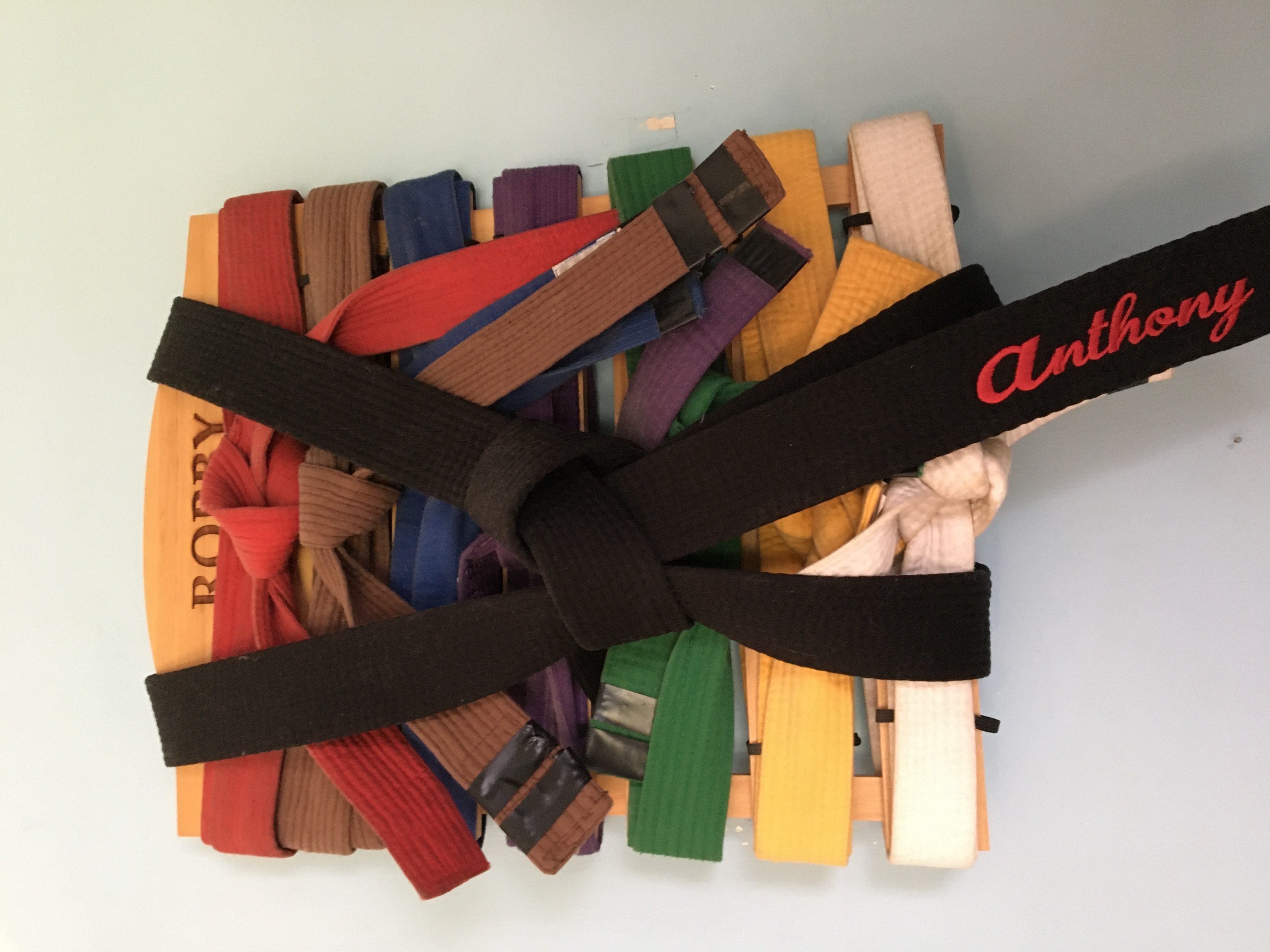 But Robby’s fortitude was powerful. After the first few episodes, he regained his considerable strength, and he achieved a lifelong goal of becoming a black belt in karate the summer he turned 18.
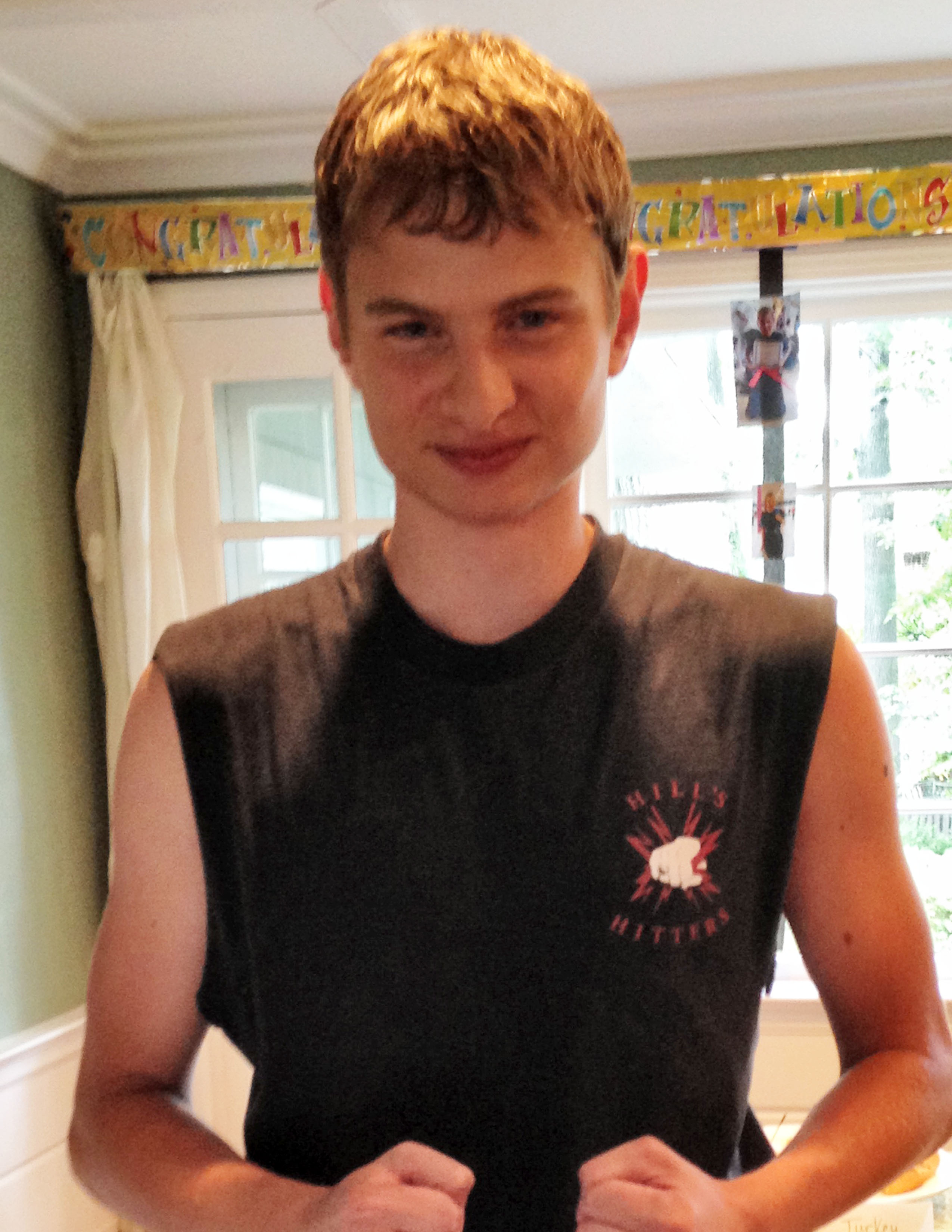
His illness flared up again during his freshman year in college, but Robby insisted on staying at school. I was conflicted – both proud of his perseverance and pained by what it cost him. I always admired his ability to look past his own limitations and focus on what he could do right now.
Taking him back to his dorm after one hospital stay, I was struck by the sight of carefree college students walking and laughing around campus. I felt overwhelmed by anger that my son was facing debilitating complications – both physically and emotionally – that most of them could not even imagine. I didn’t begrudge them their youthful fun, but I wished my son could have that untroubled experience.
As Robby’s illness failed to respond to treatment, my husband and I began to reframe our image of how our son’s life would unfold.
The doctors continued to assure us that Robby’s condition was not typically life-threatening, but there were long-term implications even for a chronic illness. The chemotherapy treatment (to suppress his overreactive auto-immune response) raised his risk for future cancer, and it could potentially leave him sterile. It was terrifying to ponder yet another danger lurking in his future, and it was heartbreaking to think he might miss out on being a father.
In the near term, we began thinking that Robby might need more than four years to finish college, so he completed some classes online. Perhaps he would need our support more long-term, and we could convert our basement (with a separate entrance and unused bathroom) into an apartment for him.
In problem-solving mode, I could focus on work-arounds for the complications of his everyday life. Caregiving for a young adult was about balancing his needs with his hunger for autonomy. Sometimes he wanted to vent rage about his obstacles, and sometimes he just wanted to keep moving forward undaunted. I needed to both acknowledge the injustice that was his burden and remain ready to address what was realistically possible.
With my child facing life-altering challenges, it felt somehow wrong to concentrate on the things I might miss. It was happening to him, and my motherly hope wanted nothing more than to ease his way. For most of his illness, there was little certainty about the future. So I took my cues from Robby and focused mainly on the present, on the problems I could solve, on finding happiness of this moment.
Still, underneath all the pragmatism, I was profoundly saddened by my son’s limitations. Primarily for him, of course, but also for the impact on my life. I curtailed and ultimately left my job to focus on caregiving – the right choice, but still tiresome and unrelenting. The fear of losing Robby was ever present, and it loomed in the background of even happy times as I wondered privately (rarely aloud) what our family in the future would be like without him?
Even now I feel both sorrowful and infuriated because…
… I won’t see him grow into an adult with wisdom and confidence.
… I won’t delight in his giddy joy being in love.
… I won’t be a grandmother to his children.
I sometimes have conflicting feelings around the cousins and friends who were Robby’s peers as I watch them in their own lives. They graduate from college, move to new cities, launch careers. As much as I share the pleasure of their maturity and hopeful futures, I can’t help but be reminded that they will continue to experience life in ways I wanted for my son.
When a child is ill or has died, their limitations, or their absence takes up a lot of space where the stories of their life should have been.
The value of living in the present is a well-worn cliché –and it is laudable advice, but it conflicts with the natural tendency of parents to dream about their child’s future. When the real world takes over, parents get used to unfulfilled hopes. An enthusiastic gymnast will probably not compete in the Olympics. An essay with a gold star does not usually lead to a Pulitzer Prize winning career.
Eventually, we realize that the lofty dreams are less important, and we learn that the smaller, ordinary moments matter immeasurably. Cooking a meal together, staying up late playing a board game, taking an early morning walk on the beach. It is these moments that comprise a rich family life. Not the accomplishments, but the time together.
It’s true for everyone – while the future shortens before us, we still have the time to appreciate now.

As I write this, I see the boy next door outside shooting hoops again. He seems to have grown a foot over the summer, and the outlines of a future strapping young man are unmistakable. He’s joined by his father in a game of HORSE – and I can hear them playfully trash talking each other through the game.
I silently wish them well. I imagine their pleasure in planning future milestones, and with luck and grace, they will revel in every twist and turn of the path. But most of all, I hope they enjoy the moment right now when they are simply happy to be together.
________________________________________________________________________________________________________________
Caryn Anthony is a nonprofit consultant and executive coach from Silver Spring, MD, and is also chair of the Patient and Family Advisory Council for Children’s National Medical System. She is the author of “Any Way the Wind Blows,”—a blog geared for families raising a child with a significant medical condition. Her writing has also appeared in The Huffington Post, Grown and Flown, and Modern Loss.
I never thought of myself as a writer, which I realize sounds strange to say even as my words are published in a regular blog…
Writing used to be just something I did for work — proposals, reports, presentations. I appreciated a solid structure, a thoughtful analysis, a clear message. Useful, but not compelling.
But a different kind of writing crept into my life in the months after my son died. I wrote to express my feelings, to connect with others, to make sense of my experience, and ultimately to share insights in the hope of easing someone else’s journey.
 In the beginning, I found solace connecting with others through writing about my gratitude.
I started with thank you notes, composing personalized messages to the clinical team who had worked with my son. I wanted them to feel what they had meant to us, and to evoke a story of why it mattered. I also told our story to the hospital CEO so the institution could appreciate their extraordinary professionalism. It was powerful to put words to the feelings, and to give these precious people a concrete expression of their meaning in our lives.
I discovered that the inspiration for writing is sometimes serendipitous – like an image that pops in my head as the proverbial “bolt from the blue”.
One day as I cleared out the refrigerator, I was struck by the memory of the endless food people brought in the days following my son’s death. Salads, deli platters, chicken dinners – there was more than we could eat, but we couldn’t bear to waste it. So, my daughter and I improvised our own version of the Food Network show “Chopped” and converted the leftovers into new meals. In a rush to capture the moment, I smiled as I jotted down an account of how it happened.
I had no plans to do anything with that rough piece until I came across a website called “Modern Loss”. Those personal stories were raw, pragmatic, and sometimes even funny; and they resonated more than any other resources for grieving parents I received. In finding the right venue for what I wanted to read, I was inspired to also see it as a possible venue for something I wrote.
So, I refined the essay about post-shiva cooking, and added tips (for bringing food to mourners) and even a recipe (for carrot soup) (link). I nervously submitted my piece fully expecting a polite rejection, but to my great surprise the piece was accepted with praise for the relatable story and voice. I was stunned, and proud, and a bit intrigued.
That first acceptance cracked the door open so I could begin imagining that I had something to say.
And the urge to tell other aspects of my story persisted. I believed that the lessons I learned over years of coordinating my son’s care could help other families. Like many caregivers, I often found my role the hard way, developing strategies by the seat of my pants, and facing great frustration through trial and error. I hated to think that this hard-won knowledge would just end with me, so I set out to explore how I could pay it forward.
As I tested the waters, several people suggested I should write a book – an idea I always dismissed with a chuckle. Who me? I may have some thoughts to share, but clearly not enough to fill a book, and of course I’m no official expert. Besides, is a parent really going to read a whole book while they’re busy caregiving for a sick child? Unlikely, I thought…
But still, I thought maybe a fellow parent could be a welcome voice of support and advice. Perhaps a shorter format would be more accessible and an easier way to explore a wide range of topics.
A blog seemed to fit the bill, but I needed learn more about the basic structure, and consider what I wanted to say.
I received great advice from a generous friend, a communications professional, as he probed my goals for the writing:
- Who is the audience – parents, clinical professionals, advocates?
- What kind of content – personal anecdotes, tips and tools, summaries of research?
- What impact for readers – feeling validated, learning new strategies, building community?
Being intentional about the work created a framework for the creativity, and I found the flow easier.
I knew I wanted to describe the unseen challenges, and to give voice to the emotional experience. And I especially wanted to connect to readers in a down-to-earth, non-sappy way. It was important to me that this didn’t come across as a saintly hero’s journey, but something real that acknowledges the messiness of life as a caregiver, and the conflicting demands and feelings that go along with that.
If my writing was going to be an ongoing resource, then I needed more than inspiration from a “bolt from the blue”. I learned that just doing the writing, without harsh self-editing, was the best way to cultivate sustainable creative energy. The more I wrote, the more ideas bubbled up. It seemed that knowing how I wanted to communicate also fueled what I would write about. The more I wrote, the easier it came, and the more pleasure I took in the work.
And while I’m proud of the work I’ve published, not all writing has to be about creating a polished product for public consumption.
Sometimes the process itself creates release, insight, and connection.
Using a storytelling lens can make it easier to get started by describing who is involved, defining the narrative arc of events, and pondering why it matters. And no matter the final product, the act of writing has its own rewards, like:
- Putting strong feelings into words can relieve stress or anxiety, and it can make those feelings seem more manageable.
- Recounting a story preserves the history and details to look back on later.
- Sorting through a confusing situation to organize ideas may reveal patterns that clarify next steps.
- Using a story format can help others relate to the issues more readily.
 This kind of writing might fit in anyone’s life, whether used to vent about problems or store memories in a private journal, or to advocate for an action or policy change, or to find community in a shared experience.
Writing was initially (and remains) an outlet to help me make sense of my altered universe after the death of my son. Even just that function in my life would have been plenty. It’s an unexpected gift that I find my identity expanded with a creative pursuit I truly enjoy – even beyond this blog.
Most importantly, I am honored and motivated with a sense of purpose that my writing might speak to another family as they navigate a difficult path, that there is help and hope to make life a little easier “Any Way the Wind Blows”.
Read Caryn’s piece Bring Soup Not Salad in Modern Loss
________________________________________________________________________________________________________________
Caryn Anthony is a nonprofit consultant and executive coach from Silver Spring, MD, and is also chair of the Patient and Family Advisory Council for Children’s National Medical System. She is the author of “Any Way the Wind Blows,”—a blog geared for families raising a child with a significant medical condition. Her writing has also appeared in The Huffington Post, Grown and Flown, and Modern Loss.
The phone rang at 3am. “Who in the world could that be?” I wondered as I sat on the bed with my husband and daughter – all of us in a fog of shock.
Only a few hours ago we were in the emergency department at Children’s National Medical Center, devastated as my 20-year-old son Robby died from a massive blood clot to his lungs. He’d been seriously ill for some time, but the immediate trauma of his death was raw.
Despite my confusion, I answered the phone. A man introduced himself as a representative from the Washington Regional Transplant Community (WRTC). He was calm and kind as he expressed sympathy for the loss we had just suffered, and he explained that he needed to ask some questions about my son’s decision to be an organ and tissue donor.
I struggled to process what he was saying. “Wait, do I need to do this now?” My mind was swamped by grief, and I was exhausted after hours of stress at the hospital. The WRTC representative explained that organs and tissue must be recovered within a certain period of time to be viable, and they needed to get specific information in order to move the process forward.
I knew that being an organ donor had been important to Robby. We talked about the concept before he was sick, and then in more detail over the past year as his chronic illness became life-threatening. I was very proud of his decision and ready to support it – I just didn’t think I’d need to implement his wishes in the middle of the worst night of my life.
The representative told me that there was an extensive list of questions to confirm our permission, and to collect the most recent data about Robby’s health to assess what could be donated safely. It would probably take 30-40 minutes to complete the intake — Did I want to proceed?
“No!” I thought to myself…but I summoned the strength to do it anyway.
I used to think that being a donor was a pretty simple choice. You check the box on your driver’s license, or give your permission as next of kin, and then it happens. The reality is more nitty gritty.
The WRTC rep asked for separate consent for each different organ and tissue – heart, lungs, kidneys, liver, corneas, skin, connective tissue, and brain. Some people are comfortable with certain types of donations and uncomfortable with others. They may agree if an organ is going to a person, but maybe not for research. Sometimes families want to preserve their loved one’s body in some way for burial. WRTC was sensitive to the range of individual preferences, and ready to accept whatever limitations we wanted.
The rep also asked questions about Robby’s condition and treatment. What medication had he been taking? What types of illness could he have been exposed to? In order to get a complete picture, he had to ask some surprising and personal questions. Had Robby traveled overseas in the past year? Did he have a tattoo? Had he been sexually active? Had he used alcohol or drugs recreationally? Which ones? I knew that the information would be kept confidential, but it still felt unsettling to delve into intimate details of my son’s life with a stranger.
And I had questions too. My son had been very ill, so what could they still use? How many people could be reached? The answer was an unsatisfactory “We’ll have to see…” because they wouldn’t know until they could examine his body. Since he didn’t die on a ventilator, his organs (like heart, lungs, kidneys) would not be usable after death, but there was a long list of many other possibilities from his tissue.
I’ve learned that organ donation can be delayed or even fail over the challenges I faced that night. Family members are sometimes too distraught to have a rational conversation. Or they’re not ready to face the reality of what the recovery process will mean to their loved one’s body. Or they fundamentally disagree with the choice to donate anything at all.
Any of these are completely understandable obstacles, and it’s a lot to expect someone to be ready to engage in the process under such excruciating circumstances. Unfortunately, that is exactly what is required.
I knew that Robby wanted to give away as much as possible, to help others or to advance science. It was deeply meaningful to him that he could make such an affirmative decision when he felt powerless in much of his life, and I admire that he was able to think about helping others even amid his own profound struggles. So it was Robby’s intentions that kept me focused during that 3am conversation, and it was reassuring to know exactly what my son wanted and why it was important to him. It didn’t make the middle-of-the-night call any easier, but it made my role clear.
A few weeks later I received a letter from WRTC. It thanked us graciously, and described how his donations had been used. They had been able to recover my son’s corneas which would potentially restore the sight for two other people. His skin would be used to create skin grafts that would treat numerous burn victims and other traumatic wound patients. And his brain would help scientists learn about diseases like Parkinson’s or dementia. It was a surreal moment of maternal pride – even in his absence, look what my amazing son did!
For me, it was an act of trust and love to fulfill Robby’s wishes about donation, and it is still a comfort to know that his final act on July 19, 2016 was one of generosity. This spirit is beautifully captured in a poem that was read at Robby’s funeral:
When I die
Give what’s left of me away
To children
And old men that wait to die.
And if you need to cry,
Cry for your brother
Walking the street beside you.
And when you need me,
Put your arms around anyone
And give them
What you need to give to me.
I want to leave you something,
Something better
Than words
Or sounds.
Look for me
In the people I’ve known
Or loved,
And if you cannot give me away,
At least let me live on in your eyes
And not your mind
You can love me most
By letting
Hands touch hands,
By letting bodies touch bodies,
And by letting go
Of children that need to be free.
Love doesn’t die,
People do.
So, when all that’s left of me
Is love,
Give me away.
-Merrit Malloy
To learn more about donation visit organdonor.gov
To register to be a donor, visit RegisterMe.org.
In this clip from Courageous Parents Network’s interview with pediatric psychologist Dr. Joanna Breyer, author of “When Your Child is Very Sick,” Dr. Breyer talks about how deeply she has been affected children and families and how she remembers them and stays in touch with some. Of course, some families will not want to continue ties or contact because the association is so painful.
Psychologist Nancy Frumer Styron and mom and CPN’er Kerri in conversation about anticipatory grief: What it is, the role it plays, how natural it is, how it can help people to process and prepare, and where to find help coping.
2017 Follow Up Interview, 4 years after first interview. Kerri now works at Courageous Parents Network and is also a pediatric massage therapist in pediatric palliative care.
When my son Kai was diagnosed with a brain tumor at 8 months old, he was still breastfeeding. He had always been a fussy baby and nursing him was one comfort I could always provide, so he nursed a lot. As our early days of new mom groups, breastfeeding and cloth diapering turned into the days spent in hospital waiting rooms for sedated MRI’s, brain surgeries and weekly chemotherapy, I was so thankful that I was still able to comfort and feed him through nursing. It was the one thing that only I could do to help him, and we both really needed it.
After his first surgery to place a VP shunt, he began losing weight. A few weeks into his chemotherapy treatment, he was losing interest in eating altogether. When you receive chemotherapy in an outpatient clinic, like the Jimmy Fund, the first thing you do upon arrival each week is check vitals, weight and length. Each week I would dread going into that tiny exam room, my heart pounding as the scale teetered between the fractions of a kilogram that we were monitoring – 9.61, 8.48, 8.25. The medicine made him nauseous for several days after each weekly infusion, and his continued weight loss each week felt like a tracking of my failure as his parent to keep him nourished.
His doctors suggested a feeding tube pretty early on. Breastfeeding was a large part of my parenting plan and my identity as a mom. (I was studying to be a lactation consultant and was working as a peer counselor before Kai’s diagnosis.) A feeding tube felt scary. It felt like I was failing my basic duties as his mother. I was afraid a feeding tube would prevent us from doing things and only make our life harder. It would be a clear and visible sign that he was really sick. So I resisted.
As we settled into our new routine of doctors appointments, therapies, early intervention, and support groups, I found myself spending the majority of our time at home trying to get his meds and food in him. Feeding him was quickly turning from a source of comfort and care to a battle that was wearing us both down.
I clearly remember the day I knew it was time. We had spent the whole weekend in the house doing nothing but trying to get him to eat. He was weak and dehydrated and would whimper and cry as I tried to force anti-nausea meds down his throat. Any food I could get in him would quickly come back up. It felt like I was torturing him, while all the while my anxiety about our weekly weigh-in was growing. He had lost 2 pounds in 2 months, a lot of weight for a baby his age. That Monday, I called his doctor and told her we were ready.
He was first placed with an NG tube to see if he would tolerate the feeds. We ended up inpatient that week for a shunt check so it was a good time to try the NG tube. I learned about the feeding pump that would help the food push through his tube. He didn’t seem to mind the tube coming out of his nose, his food was staying down, and my fears about life with a feeding tube were quickly replaced by my determination to keep him nourished and strong. The best part of his new tube was knowing that he was getting the medicine he needed without having to pin him down and force them down his throat. After all of my resistance, the feeding tube ended up being such a relief.
His peg surgery happened a few weeks later and his mickey button after that. It felt like a long process and there were plenty of bumps along the way – including uncontrolled pain after the initial surgery, an infection a few days later that landed us inpatient for a week, and, of course, the rights of passage for every tubie mom, ‘feeding the bed’ and the day the the dog ran through his tube, pulling out his button and hurling it across the room while a social worker was waiting at the door!
But overall the tube gave us more options and made life easier. Kai was still getting breastmilk through his tube. I learned to incorporate blended food into his diet, and we still offered food by mouth at every meal. We maintained his weight, had less hospital stays for hydration, and were able to utilize an at-home chemotherapy that was given through his tube.
Despite the gains we had made with Kai’s nutrition and quality of life, his tumor was not responding to the chemotherapy. A little over a year after his tube was placed, and three ‘failed’ chemotherapy protocols later, we decided to take him off of all chemotherapy to try to better regulate his pain. While we always had the option to pick back up with another chemotherapy protocol, we made this decision to stop treatment knowing Kai was not going to survive. I took him home with new meds, focused on keeping him comfortable. At this point, his tube became a vital vehicle for his comfort, allowing me to maintain his medication schedule with fewer pokes.
Week after week, we would check in with his doctors who would still take his vitals, weigh and measure him; and a part of every conversation still included his food intake. “He is losing weight,” they would proclaim “Are you not able to keep up with his feeds?” they questioned with concern. When I fed him he grew fussy and almost always vomited. I had gone back to offering him food by mouth, because force feeding (through a feeding tube) a nauseas gut that was essentially shutting down basically felt unfair. But at each visit to the oncology clinic they pushed me to feed him more.
One particularly difficult day, I called our home VNA nurse asking for help to get ahead of the pain. She rushed over and walked into our living room to find me holding Kai, who was hooked up to a slow feed, whimpering in discomfort. She looked at me and with less-than-gentle advice said, “You don’t have to feed him like this anymore. His body doesn’t need it, and it is only making him more uncomfortable.” I knew what she was saying and as much as I didn’t want it to be true, I was so thankful that she gave me permission to trust my maternal instinct and listen to his cues.
I unplugged the pump.
When we went into the hospital the last time, he was still getting 1-2 cans through his tube slowly throughout the day. It felt like just for show. An ounce here and an ounce there, just enough to keep people from asking. We fed him by mouth anything he wanted, mostly ice cream and fruit smoothies. It felt so good when he chose to eat, but when he turned away I no longer struggled to force feed him. I knew by now his body just didn’t require all the nutrition it once did. We entered the hospital that last time because he was in pain that I was no longer able to manage at home. He showed symptoms of a growing tumor, shunt malfunction, sepsis and fungal infection. The ICU offered shunt revision but warned that surgery would be really hard on him now. The fungal infection would take months to clear and his tumor, well we already knew there was nothing we could do to stop it from growing. I decided not to do surgery, or treat the infections. I asked to be transferred out of the ICU and back to our regular floor where the nurses knew us. I also decided to stop using his tube for anything except meds, which were primarily through his pic line by this point. I told the doctors, if we were stopping all other treatment then I was stopping food and hydration as well. It felt like the obvious, most compassionate decision I could make and I made it without question. The tubes and machines were removed from his body and we were transferred to the comfort suite on our regular floor.
When we decided to give him his feeding tube I never considered the fact that I may someday choose to stop using it. I never considered the fact that for some people in some situations this can be an agonizing decision to face. His feeding tube gave me the chance to be his mother again. To feed him and keep him free from pain. With the help of a seasoned hospice nurse I learned to take Kai’s lead. When he was in fact dying, his feeding tube did not hasten or lengthen his life. I am so thankful I had the support to make these decisions, all along the way, without guilt or controversy.
Grief counselor Nancy Frumer Styron talks about the complex number of roles a parent takes on as they care for a child with a life-limiting illness, And how the roles change again when the child dies: for parents who have no other surviving children, “Am I still a parent?” “Now I am a bereaved parent — a club no one wants to belong to.” A bereaved mom talks about her identity after her son’s death and about how that identity is forever changed.