
When Evren and I first heard someone ask us, “Who’s your quarterback?”, it took milliseconds for it to click: the interviewer wanted to know who coordinated Evren’s complex care team. Today, I realize that who’s your quarterback is jargon known to many who live with medically complex diagnoses and their parents or caregivers, who may be asked the question again and again. But for me and Evren, it’s always been an awkward question. Was it legit for him to answer with, Mom’s the quarterback?
Somewhere on the timeline from childhood to the late teens or early twenties, a monumental transition occurs for a family living with medical complexity when it’s time for the entire pediatric team to be subbed out for adult care providers. Leaving pediatric providers who earned our trust and cared for our sick children is an emotionally fraught process, and many parents begin feeling anxiety years prior. The transition is even more challenging in situations like ours in which the parent or caregiver is the quarterback. Once our children reach 18, QB moms like me are then expected to turn the ball over to our medically complex “adult” child.
When Evren reached age 18, we were all overjoyed. Despite serious and progressive impacts of his genetic disease, Acid Sphingomyelinase, or ASMD, he had survived to adulthood and would be starting college an hour from home. Fortunately, though, we had a grace period before his pediatric providers would push us out of the nest. Because of his complex diagnosis, his pediatrician was willing to keep him on longer, and the children’s hospital, where most of our care team was, would continue seeing him until age 23.
But the time for the transition of care came sooner rather than later, before age 23. It turned out that certain specialties like endocrinology and pulmonology draw the line at 18 years because the demand for that specialty care outweighs the supply. But more than that, I wanted Evren to go to school. He needed to spend his days in classes and with his friends, not with me sitting in a car for hours traveling to and from medical appointments. So the decision was made to line up an entirely new team of adult care providers near his college. With a change of medical provider groups through an HMO, every single one of his physicians had to go all at once.
For the most part, Evren was still a typical young man. He wanted to do and think about the things most young men like. So although I gave my best shot at passing the ball to him, Evren was not really interested in taking over the QB position. He resisted my coaching on how to ask for referrals and had zero inclination to leave his social media apps and summon the patience needed to comb through a provider database which was not only tricky to navigate, but also filled with outdated listings.
Though I tried to fire him up with factoids I’d read in website bios about the new physicians, Evren wasn’t the least bit curious. I wasn’t surprised that he seemed completely unmotivated to take over as quarterback. He didn’t want to participate in the transition of care because he wished he didn’t need the care in the first place. He wanted life to be about fun at college and making memories with friends. No sir. No transition of care workshops for Evren.
Sigh.
I would need to be able to continue as QB, at least for a while. My plan was to watch for readiness for each new phase, transitioning him into the QB role at a slower pace. I felt doubly responsible to do whatever I could to help Evren because his disease progression had left him chronically exhausted. At least I could carry this weight for him.
Though I asked each one of his physicians, including his pediatrician, not one made a single helpful recommendation. I had to transition his care team by myself. The process took hours across several months and required endless phone calls, which usually meant sitting on hold with annoying music playing in the background. If my mind wandered, I had to listen yet again to the phone menu options, “which may have changed,” in order to be connected to the right line.
Sometimes I’d be disconnected, and sometimes a computer-generated voice ordered me to leave a message for the staff “who were all busy answering other callers.” I strategized by calling offices in the mornings during summer vacation while Evren was physically present but still sleeping in. Because Evren wasn’t a patient yet, there was no privacy waiver on file, and the office wouldn’t allow me to make an appointment for him. I’d dial the office, and when the receptionist inquired about his age, that was my cue to barge into Evren’s room, wake him out of a sound sleep, shove the phone at him, (he knew the drill), and then he would mumble with his eyes closed, “My mother has my permission to talk to you.”
One day, during a search for the new lineup, my mind started to slip into a daydream. Hmm. I wonder what it would be like to have one of these quarterbacks—someone who would guide us down the field and show us who to pass the ball to. What would it be like to have someone help me? Having a personal quarterback would have removed the burden of anxiety I felt about possibly making serious mistakes along the way, somehow leaving a bad impression, or failing to find that magic provider who would have been perfect for Evren’s care.
Right then I said to myself, I’m just going to do it. I had seen somewhere on the children’s hospital website that they had a transition of care office, and I would see if they could help me. When I called, and the conversation went something like this:
Me: Hello, I was wondering if you might be able to offer some help with the process of transitioning my son’s care. My son is aging out.
Receptionist: What is it you’re looking for help with?
Me: Well, I tried asking his hematologist and pulmonologist for a recommendation for an adult provider, and they basically said they don’t know anyone.
Receptionist: Uh, excuse me. I have a call coming in. I need to put you on hold. Click.
Me: Okay, drumming my fingers, feeling less optimistic with each passing minute.
Receptionist: Three minutes later. Okay, I’m back. What is it you wanted again?
Me: Uh, basically I wanted some help trying to find new providers for my son. After talking to the pulmonologist, I get the impression that it’s going to be YOYO.
Receptionist: YOYO?
Me: Yeah, you’re on your own.
Receptionist: Wait a minute. Who told you that? Did they say that? How old is your son? Do we have a confidentiality waiver on file?
Me: Yes, it’s there somewhere. Yikes. Am I lying? Has that one expired? I’m sure it’s there! I said it with fingers crossed, feeling guilty over my potential falsehood.
Receptionist: I’m putting you on hold while I look for it. Click. About two minutes later, he comes back on. I still can’t find it. Lots of tapping noises in the background. Oh, wait a minute. I have another call coming in. Click. Puts me on hold for the third time.
Enough! This quarterback dream has ended. I hung up the phone.
So, for a few hours, I stewed in frustration and self-pity, feeling jealous of people who had their own personal quarterbacks. Then, abruptly I put myself in check. I thought about the mothers around the world who had no money to access care of any kind for their children, or who might be able to access a doctor, but no specialty care of the caliber I expected for Evren. I was acting spoiled. I felt remorseful, and my attitude did a 360. I practiced expressing gratitude that my son could access the care he needed, and that I had the capacity to help him.
Eventually, the new care team came together, and I felt optimistic. In time, I saw that a few seemed to take even better care of Evren than his pediatric providers. By the end of the summer, it felt as though we had 100 appointments. “I think I’m all doctored out, Mom,” Evren said with weary resignation.
Fast forward to early 2025. My son was at his first visit with a new cardiologist; the third in as many years. (The first one—well—I picked a lemon. The second moved away.) Evren and I had agreed I would phone in and listen. Though he now attended many appointments by himself, I still tried to attend important visits, though it wasn’t always possible. As planned, I listened in and expected Evren to speak for himself. I spoke only when necessary. The appointment went well, and I hung up once the next steps had been determined.
A few minutes later, Evren called me back. “You know what the doctor said? He said, ‘We’re building a good team with your mom as QB.’ I started to laugh inside my head, but I couldn’t help myself. I couldn’t stop laughing. He must have thought I was crazy!”
I still smile at that.
We’re optimistic that Evren will be strong enough to take a regular job, and I’m confident that when it’s time, he can be his own quarterback.
Dear Mother or Father Who Isn’t Brokering Your Own Treatment for Your Child,
I wanted to write this letter because I believe you might be feeling the same sort of guilt and despair that I felt when I saw other parents doing their own ground-breaking research while raising millions of dollars, creating teams of scientists and physicians and starting companies that would develop a miracle cure or treatment for their children. I wanted to tell you my personal story about how God spoke to my heart and changed my thinking in hopes that you, too, might see your own situation in a new light.
When my son was diagnosed with a rare and progressive multi-systemic genetic disease at age three, I was told that the treatment for his disease already existed. And though I was devastated to the very core, I found solace in the fact that he would soon be able to access a cure. But it turned out I was wrong. The treatment existed, but only in a lab.
In my naiveté, I was patiently hopeful until about year three or four when I realized that nothing was happening. Nothing. No progress, no movement. Clinical trials were canceled before they even started, and no one uttered a word about when they might restart. I realized that it would be years before any treatment would be available.
By then my son had already begun manifesting new symptoms of his disease, and every couple of years, something new would appear. Some were external changes that I could see, and some were internal that I couldn’t. My anxiety about his life began to ramp up, and I started some rather frantic Internet and database searches trying to learn all that I could to make sense of what was happening.
About five years after his diagnosis, I was poking around on the Internet during one of my obsessive searches when I saw a headline about my son’s ultra-rare disease in Nature magazine, one of the world’s top scientific journals. The headline announced a novel and exciting discovery about a promising drug treatment for my son’s disease in the form of a compound that could induce something called heat shock proteins, or HSPS, that would help his body overcome the underlying cause of disease.
For a short while, I was jubilant. I even communicated with the lead author of the Nature article. But months afterwards, the promising new drug discovery was diverted towards treating a completely different disease. We had been abandoned without a word or a backward glance, most likely because of our ultra-small population and the infamous therapy that was still struggling to gain a foothold in the process of funding clinical trials.
With my new hope dashed and almost no social and financial capital to speak of, I grew even more desperate, believing the only option was to figure out something on my own. These HSP inducers, as they were called, already existed in other herbal and pharmaceutical drugs. And even before the article came out, I had already heard about something called chaperone therapy, which works along the same lines as HSPs to treat the type of disease my son has.
Tossing all concerns about my ego aside, I reached out to researchers and physicians and asked questions about chaperone therapies and HSP inducers, some that revealed my ignorance and others that reflected my insight and understanding. In response, some ignored me, some sympathized, some scoffed, some condescended, some offered suggestions, and one physician was willing to move forward with a possible off-the-label option.
Looking at my son, who appeared to be becoming increasingly frail compared to other children but who was still stable and with a good quality of life, I weighed it all out. I weighed out what might be dangerous for his compromised liver and blood and what might be safe enough to try and help him. In the end, I decided I had to let all the possibilities go, except for a few ordinary vitamin and mineral supplements. I could not risk any harm to my own son.
At this point, I hit another low. Why couldn’t I manage to do what other parents were accomplishing? Didn’t I love my son well enough to carry out the miracle-making process on my own? Why was I not smart enough to find answers that were laid out in plain view for biochemists? Had I made all the wrong decisions about relationships and finances? Was I not trying hard enough?
I began to ask God, why? Why can’t I fix this? It all seemed unfair, and I felt like a failure. The torment went on for some time, flaring whenever my son experienced problems related to his disease.
With all the noise, my busy mind was never truly quiet.
Well, almost never.
Because one ordinary day, completely out of the blue, God found a small space of quiet in my mind, and in that moment, God spoke to me quite clearly.
Now some claim to hear God’s voice audibly, but for many others, including me, God’s voice comes in a revelation of knowledge in the form of an impression. The impression is so clear and definitive that there is no room for doubt about its origins and accuracy.
The answer that came in, answered my question, why can’t I make a treatment happen for my son? Translated into my own words, here is what God spoke to me:
Kara, you weren’t asked to do that. I didn’t lay that desire on your heart. I didn’t orchestrate the relationships and provide the resources you would need to accomplish that. I have something else in mind for you.
And that was it. But it set me free and allowed me to begin the process of reframing my life, my gifts, and my purpose.
After the epiphany, I started thinking about what life would be like if we were all destined to be scientists or physicians. I thought about the songs that uplifted me when I was down and the people who sang them. What would life be like without the work of artists and musicians? Without teachers and caregivers? Of course, we need people who are gifted in the sciences and who have the business acumen needed to help bring drugs and other therapies to market. But life is more than just existing; there also needs to be a quality of life that makes it beautiful and worth living, a life in which we can live out our unique purpose alongside other human beings, whose purposes are no greater or worthier than those of any others.
Ultimately, I found freedom from my guilt and despair and walked together with my son in endurance for the remainder of the time it took to access treatment, in total, eighteen years. Though I continued and still continue to experience the ebb and flow of grief over my son’s disease, I would never again be crushed by the weight of what I once saw as my own failure to be the parent who brokered her own child’s cure.
So, my message to you, if you are feeling like I did, to open the door to the possibilities that in the right timing, you too might see clearly a path set out before you, one that may directly or indirectly involve you in the process of brokering a cure, and one that may simply be to take care of your child. You will find your way. Neither your life nor your child’s life is without purpose, and you are both created perfectly to achieve it.
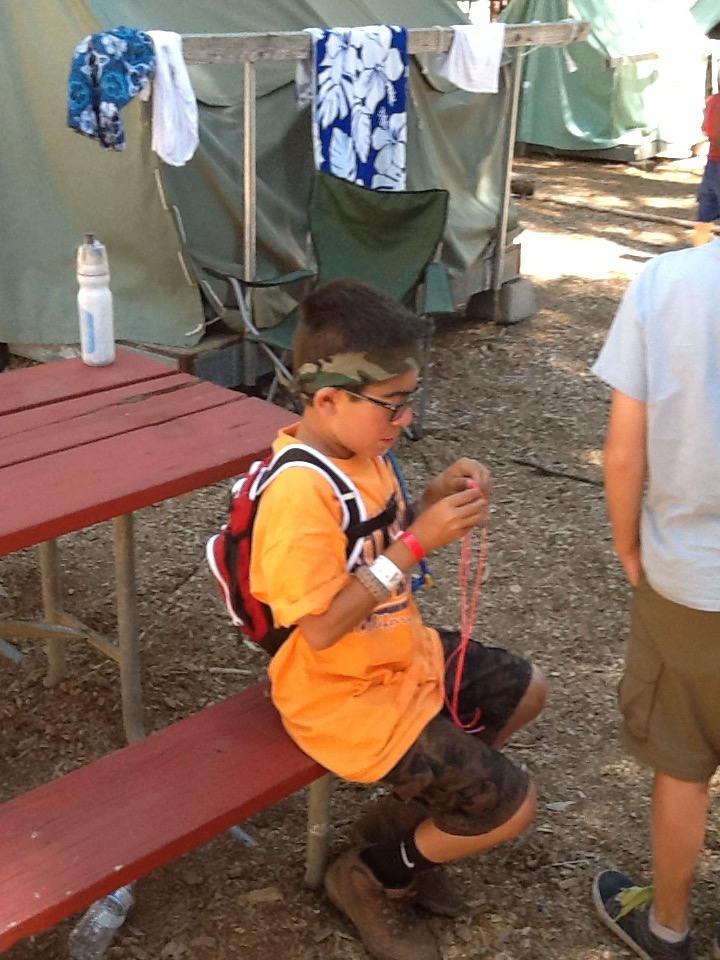 When my son Evren was in the sixth grade, he joined the Boy Scouts. While I was happy to see him socializing and learning about the great outdoors and his obsession du jour—wilderness survival—I was always nervous when he was away from me. Evren’s rare genetic disease, Acid Sphingomyelinase Deficiency, or ASMD, affects many organ systems including the liver, lungs, heart, and bones. Headaches, stomach pain, bleeding and fatigue were common to the point of being more ordinary than unusual. In short, Evren’s health status was a source of chronic anxiety.
My parents, Evren’s grandparents, shared my fears for his well-being. So for longer scout trips or overnighters, my father faithfully accompanied him dressed in a standard issue, adult-sized scout uniform.
Evren was always relieved Grandpa was there. Grandpa’s presence freed Evren from his anxieties about his health and allowed him to just be one of the boys.
The arrival of summer meant the much anticipated, week-long scout camp. I don’t believe I would have been brave enough to send Evren alone, accompanied only by the Scoutmaster and one or two other adults. But since Grandpa would accompany him, I smiled and sent Evren off, optimistic he would experience the typical childhood joys of summer camp. I could also relax somewhat, safe in the knowledge that Grandpa would watch over him.
Two days after Evren left for camp, I received a phone call. “I’m driving Evren to the hospital,” Grandpa informed me in his high-alert yet everything’s-under-control tone. Apparently, Evren had a bloody nose—a common occurrence in childhood– but with ASMD, bleeding is a major concern since the disease interferes with clotting. His nose had begun gushing blood, alarming the camp’s first aid officer, a former army medic. He tracked down an ER doctor in the camp who said there was nothing he could do. Evren needed to be transported to the nearest hospital, about forty-five minutes’ hard drive down a steep mountain, mostly on dirt roads.
After my father’s call, I stopped everything and jumped in the car to make the hour and ten-minute drive to meet them. Every ten seconds I had to tell myself to ease my foot off the gas pedal. A speeding ticket’s not going to help at all. Thank goodness my father is there, I kept thinking like a broken record.
When I finally arrived, I found a pale-faced Evren lying patiently on an ER room table with hospital grade clips on his nose, dried blood on his face, and a soaked tee-shirt that looked rather grisly from his recent bleeding event. I comforted him while I cleaned off his face, and then I went to speak with my dad in the waiting room.
“Dad,” I said, “I have a mission for you.” I knew without hesitation I could ask my father to do anything for his grandson, however inconvenient. “I need you to go buy Evren a new tee-shirt.” Without any ado, my father left the ER and headed to the nearest drugstore.
Now I came from a military family in which the children did not order the parents about. But the presence of a grandchild, especially one with special medical or developmental needs, somehow bridges the divide between adult children and their parents, even between those who haven’t always seen eye to eye.
Grandpa returned and handed me a neon-orange tee-shirt in size adult-small emblazoned with the city’s name in bright blue letters. “It was the best I could do,” he said apologetically. With gratitude, I took it and quickly peeled off the wet, stained tee-shirt Evren was wearing and threw it in the garbage. Although the giant top swamped Evren’s little torso and nearly reached his mid-thighs, he was clean, dry, and restored. After a long rest, he recovered and begged to return to camp. “Why not?” said the doctor. And so he did, along with Grandpa, of course.
Grandparents who actively care for grandchildren who have serious illnesses or neuro-developmental diagnoses are truly unsung heroes. But in fact, when looking at the grandchild-grandparent relationship from another angle, it is the grandparents whose lives are honored, made beautiful and thus “graced” by the presence of our very special children. For this reason, I choose the term “graced grandparents” to distinguish the exceptional classification of grandparents who have these special grandchildren in their lives.
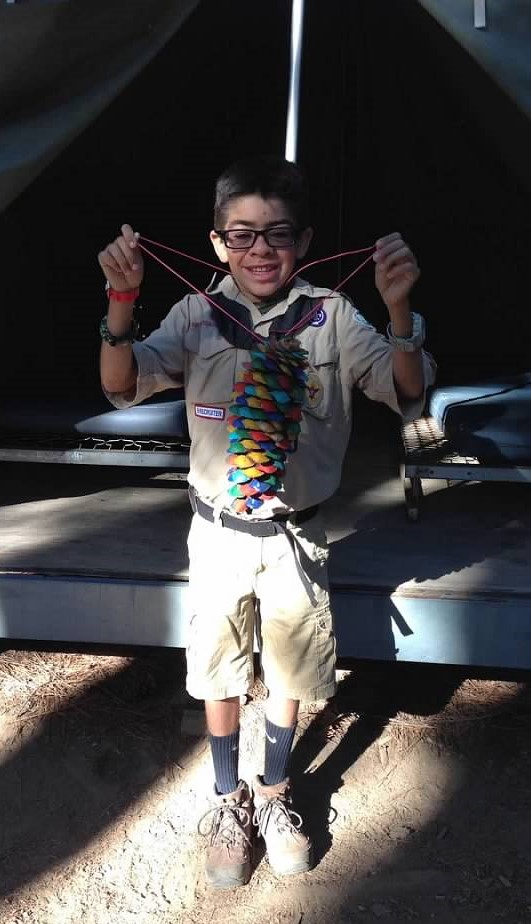 Indeed, these grandparents are honored to be able to journey alongside a grandchild whose life may be fraught with remarkable challenges or whose life may be limited in length. Such children allow us to be immersed in unconditional, perfect love while they illuminate the ephemeral nature of life and underscore the very purpose of our existence.
In contemplating graced grandparenthood as a universal phenomenon, I decided to ask Veronica, my symbolically adopted niece, about her perceptions of her mother Irene’s role as grandmother to Jace. Jace was Veronica’s eldest son who had cerebral palsy and who was non-verbal and non-ambulatory. He passed away at age five during the COVID epidemic.
Veronica affirmed that her mother gave her “so much emotional support,” during and after her son’s life. She went on to explain that her mother Irene had grown hard with the enormity of the responsibility and hardships she had endured. Irene had already lost an adult son and a daughter and was raising her grandchildren as a subsistence farmer in rural Uganda. As Veronica put it, her mother “was not so emotional.”
Despite their socio-economic differences, I had seen this disconnect on a smaller scale with my own father. Life had hardened both of them to an extent. But it seems that the presence of our extraordinary children allows grandparents, even in extreme cases, to rediscover and reconnect with their gentleness and true identity as caring, feeling adults who are capable of outwardly expressing love and affection. Because of the special grandparent-grandchild relationship, miraculously, they are able to become “soft” once again.
Graced grandparents are the unsung heroes who hold up their children and grandchildren selflessly and steadfastly with countless acts of support. Often, these grandparents are the only ones who provide desperately needed respite care, especially for our older children. Their patience and wisdom, gleaned from their maturity, and close family bonds create the trustworthiness anxious parents need in order to separate from their children, many of whom are unable to speak for themselves and who require knowledge of specific behavioral or medical interventions. These heroic grandparents primarily offer their time and energy for free, without public recognition, and frequently on the fly.
Moreover, they are commonly the chief supporters of our other children, the super siblings, which reinforces our family systems and fosters our collective resilience. Even after the loss of a grandchild, these grandparents, with their wisdom and love, continue strengthening their adult children and surviving grandchildren.
This was the case for Veronica, who described the support her mother gave to two-year-old Izzy, Jace’s little brother. Confused by Jace’s disappearance, Izzy talked inconsolably about his missing brother, repeatedly asking when he would return. Grandma Irene was the one who “helped Izzy understand that when someone dies, they never come back,” which allowed Izzy to eventually resolve his grieving process.
Veronica also revealed that even in her bereavement, Irene was a graced grandparent. “You see,” Veronica explained, “here [in Uganda], we call an older person not by name, but by their first child’s name. They called me Mummy Jace. After Jace died, it took a long time for my mom to upgrade to Mummy Izzy.” Irene cherished her grandson, and the honor she held for Jace made adapting to the family structure’s new hierarchy a heart-rendering process.
Five years after that first summer camp, Evren achieved the highest rank in Scouts, thanks in large part to his grandpa’s unwavering devotion and dedication. A year after that, Evren and I co-wrote a children’s book about growing up with a rare disease, and Grandpa is represented in an illustration that depicts a grandfather following close behind his grandson as the two cross a stream amidst a group of scouts. Those readers familiar with chronic disease may recognize the insulated medicine tote bag that the grandfather shoulders for his grandson. It is symbolic of the weight they help us carry.
So today, graced grandparents all over the world, on behalf of all parents and guardians of children with serious medical or neuro-developmental diagnosis, I salute you, and I thank you. Yes, you have been graced by our children’s presence, and yes, we are infinitely blessed to have you.
________________________________________________________________________________________________________________
Kara Ayik is mother to two young adult sons, Evren and Erol. Her oldest son Evren was diagnosed with ASMD, a rare genetic disease, at age three. In 2021, she and Evren published their co-written book, Extraordinary! A Book for Children with Rare Diseases, which has since been translated into multiple languages. Currently a teacher, Kara divides her time among her many interests which include environmental stewardship and support for the well-being of children everywhere.
About fifteen years ago, one of my worst practical fears came to pass when I received a phone call that my young children had lost their employee-sponsored healthcare insurance. Today we have the Affordable Care Act, but back in 2008, there was no such thing. As a parent of a child with a serious, multi-systemic genetic disease called ASMD, the implications were overwhelming. Earning a part-time lecturer’s salary, how could I possibly manage my son’s medical expenses?
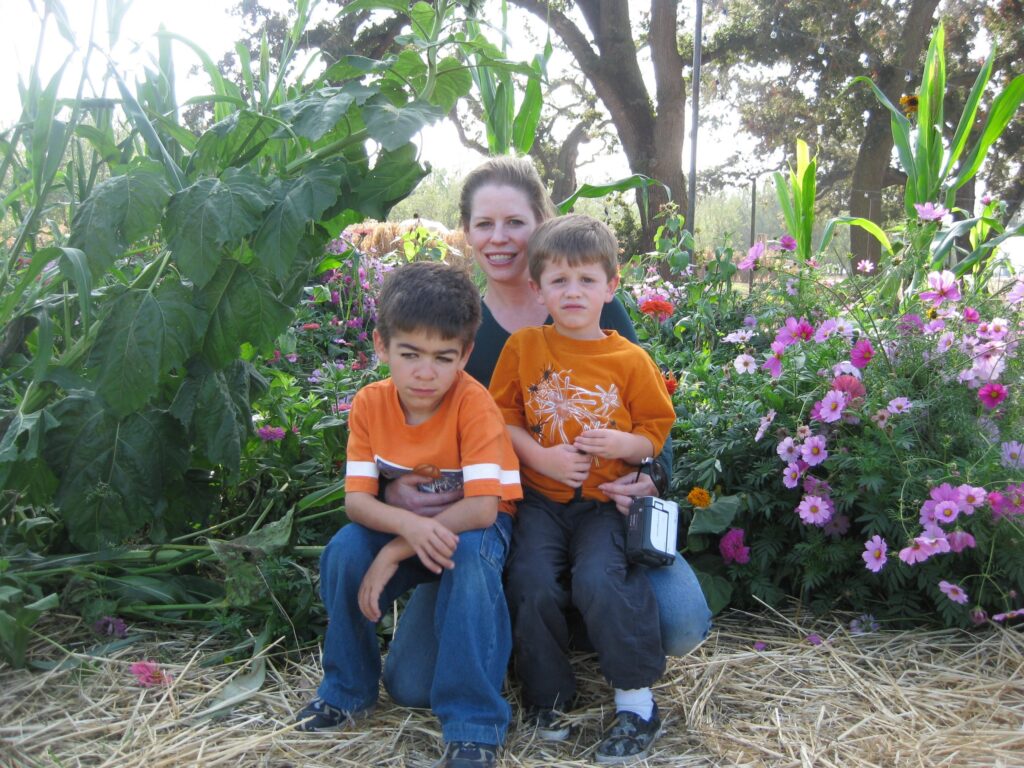
I became obsessive about this new uninsured status. Having received bills for $750 for just one ten-minute specialist’s visit or upwards of $5,000 for a trip to the emergency room, I had no idea how I could possibly pay for the healthcare costs I would be facing. What were my options? Declare bankruptcy? Beg for family loans? Rack up massive credit card debt? Quit my job and declare ourselves medically indigent? And forget about luxuries like vacations. Expendable income? Nope. Bizarre ideas about bubble-wrapping my son to keep him from hurting himself began occupying valuable space in my brain. How on Earth will we manage? I began ruminating incessantly.
After a few months of this mental torture, I realized something had to change. Life couldn’t go on like this. Then an idea came to me. Self-care. Yes. . . I am going to get myself some of this “self-care” I have been hearing so much about. Back then, the term was known, but not in common usage like it is now.
I thought back to my childhood when a neighbor surprised me with a candle-making kit. I recalled the delight I took in making a tri-colored, heart-shaped sand candle that I can still see in my mind’s eye. I wanted to relive those joyful, excited, and proud feelings. So I decided, Yes, that’s it. I am going to make candles for my self-care.
Being sensitive to strong scents, I decided that all-natural beeswax was the way to go. Living in an area where beehives are a mainstay for the almond orchards that require commercial pollination, I easily found a bee keeper who sold me twenty pounds of the most beautiful and naturally fragrant, opaque golden-yellow beeswax you’ve ever seen. “Take a whiff of that!” the beekeeper said, holding open the bag for me. Indeed, the beeswax smelled heavenly of honey.
Sometime later on a Sunday, after finding some inexpensive candle molds from Craigslist and buying some wicks from the craft store, I decided the time was ripe for my candle making self-care experience.
First though, I needed to heat up my used wax melting pot. It had some dark pinkish-red, artificial bayberry-smelling wax left in it that looked suspiciously like the remnants of someone’s Christmas candle project. No, that wax would definitely contaminate my beautiful, pure, golden beeswax. So I set the pot on the stove and reasoned, Okay, I’ll let this wax melt so I can clean it out. Then I’ll begin.
But after I set my pot on the stove, my mind drifted away from candles, and wandered back towards my insurance dilemma. I’m going to hop on the Internet while this heats up, maybe look around for some options, I reasoned.
Okay, so now if you’re thinking, what a terrible idea, you’d be right. Anyway, I sat down at the computer, and then I felt myself being drawn into a surreal cyberspace. I began clicking around, website after website, moving ever deeper into that tunnel of despair when suddenly I was startled by a loud Bang! Pop! And a split-second later, a shrill and frantic beep beep beep rang from smoke alarms throughout the house. I jumped back into my physical body, sprang out of the chair and dashed into the kitchen. It was on fire! The candle wax had ignited. The microwave, the stovetop, and the edge of the cabinets were awash in angry, bright orange flames.
In the fight or flight circumstances, I froze. But I managed to grab the phone and dial 911.
“911, what’s your emergency?” the woman who answered stated. In my frozen state, the best I could manage was to blurt out in a breathy, monotone voice, “Fire. Fire.”
“Get everyone out of the house!” the operator ordered. I can’t quite remember what was said next. But then somehow, in the course of nano-seconds, I re-engaged my cognition and had the following conversation in my head.
Kara, get ahold of yourself. You won a trophy in the third grade for drawing the best fire-prevention poster in the whole school. The fire fighters came to award it to you. You can do something about this fire.
And so I reached into a cupboard (which was not aflame), grabbed an almost full box of baking soda, and hurled the contents at the fire. That managed to douse about 75% of the flames. Then I took a breath, and I huffed and I puffed until I blew the rest of them out.
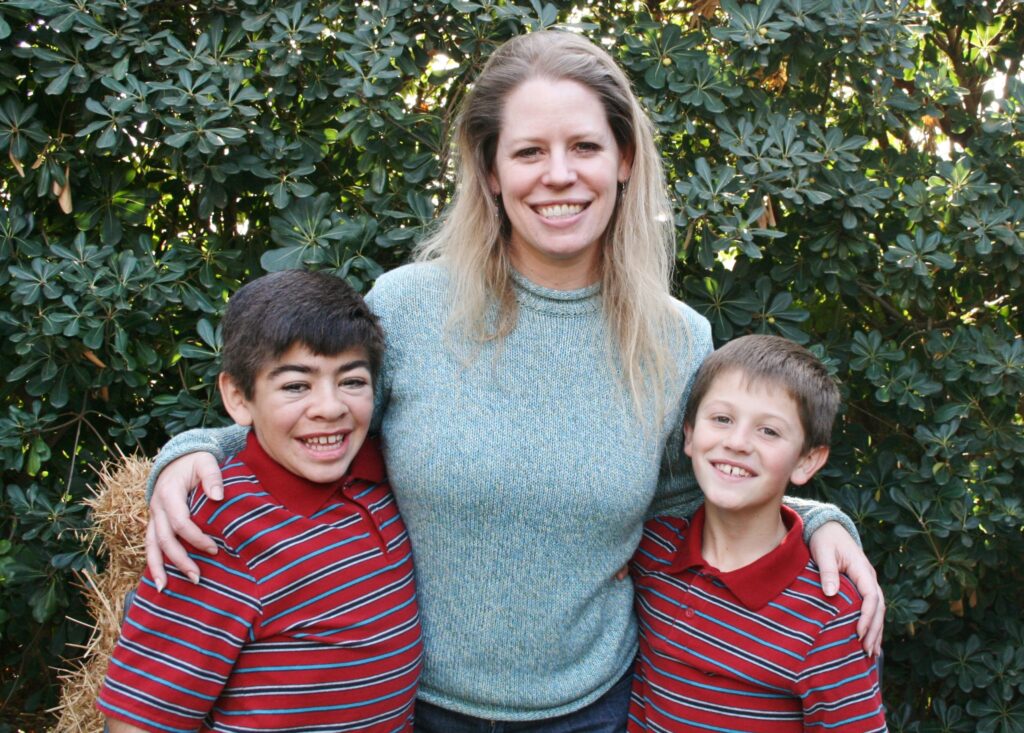
Just then, the sound of sirens grew louder as two fire engines and the fire chief’s truck all pulled up to my house, right along with all the neighbors from the cul-de-sac who lined up along the sidewalk to watch, one with a video camera who slowly panned around to record the action. As icing on the cake, right at that moment, my parents and children returned from a Sunday drive, and my oldest son Evren began crying that all of his toys were going to burn up. By then I knew the danger had passed, so I just rolled my eyes, tipped my head back, and shook my head ruefully. No, this definitely was not the self-care experience I envisioned.
In the weeks following, my kitchen received a mini-makeover with a new range and microwave, professionally cleaned cabinets, and fantastic new paint with buttercup-yellow walls and a Swiss coffee ceiling. The insurance estimator gifted me a new fire extinguisher. I also found two good health insurance plans that helped cover my costs quite well until I eventually secured employer-funded insurance. In fact, I learned a lot from the candle-making disaster, and here’s what I’d like to share with you.
I did not recognize and think my way out of a cognitive distortion known as catastrophizing.
Catastrophizing, derived from the word catastrophe, is a destructive thinking process that short circuits our hope and joy. Catastrophizing is when you focus your thoughts and energy on the worst possible outcomes that could possibly happen. The fact is, most of the time, the catastrophic events do not become realities.
Now, I understand that when you are the parent of a child with a serious illness, there is something called anticipatory grief. I also have firsthand experiences with baselines that change for the worse and the realities of a genetic disease that is progressive. But catastrophizing is about a misguided choice, not a normal grieving process. My lesson was to learn to stop catastrophizing and reframe my circumstances in a more positive light. I found inspiration in a line from a song which I turned into a mantra. Now, when I see myself begin to ruminate, I tell myself, this is the life that my son and I have been given. Let us rejoice and be glad in it. I no longer waste away hours worrying about problems that do not exist.
I needed a different type of self-care.
Some are unaware that self-care actually has four components, physical, emotional, psychological, and spiritual. At the same time, society and the popular media teach us that we find freedom through external sources, especially with material goods. But beware of the limits of this approach to self-care. Candles are (usually) fun to make and nice to have. But candles weren’t what I needed. I needed to embrace my spirituality to encourage me and help me stop obsessing about things that were out of my control, including biblical verses like Joshua 1:9 which says, “Be strong and courageous. Do not be afraid; do not be discouraged, for the LORD your God will be with you wherever you go.”
Whether you describe yourself as religious, spiritually-minded, agnostic, or atheist, I hold that we are all spiritual beings and need to attend to our spiritual self-care. You can adapt ideas from any faith tradition or spiritual healer or author that resonate with you. Spiritual care is accessible universally and without cost.
I need the opportunity to leave the house for a few days.
Over time, I came to understand how critical it was to be able to leave the home for at least a few days every year. At home, we are surrounded by sights, sounds, and smells that call our stressors to mind. I have learned that after about two days away, I began to emotionally decompress and begin rebuilding my internal resources.
A word of encouragement to those who are struggling financially or who find it difficult to navigate travel with a medically fragile or otherwise high-needs child. You, too, may benefit from a break from the home. For me, a self-care vacation did not necessitate leaving my children behind. Also, you can network with friends and family to help you, and perhaps take a shorter trip with simpler plans for your destination and activities. I have come to understand that for me, that leaving the home periodically as a form of self-care is a necessity, not a luxury.
When you do embark on a self-care experience, my best advice to you is to give yourself full permission to stay present in the moment, and to allow your heart and mind to be unburdened so that your self-care journey is a rewarding one, certainly without any fire engines involved.
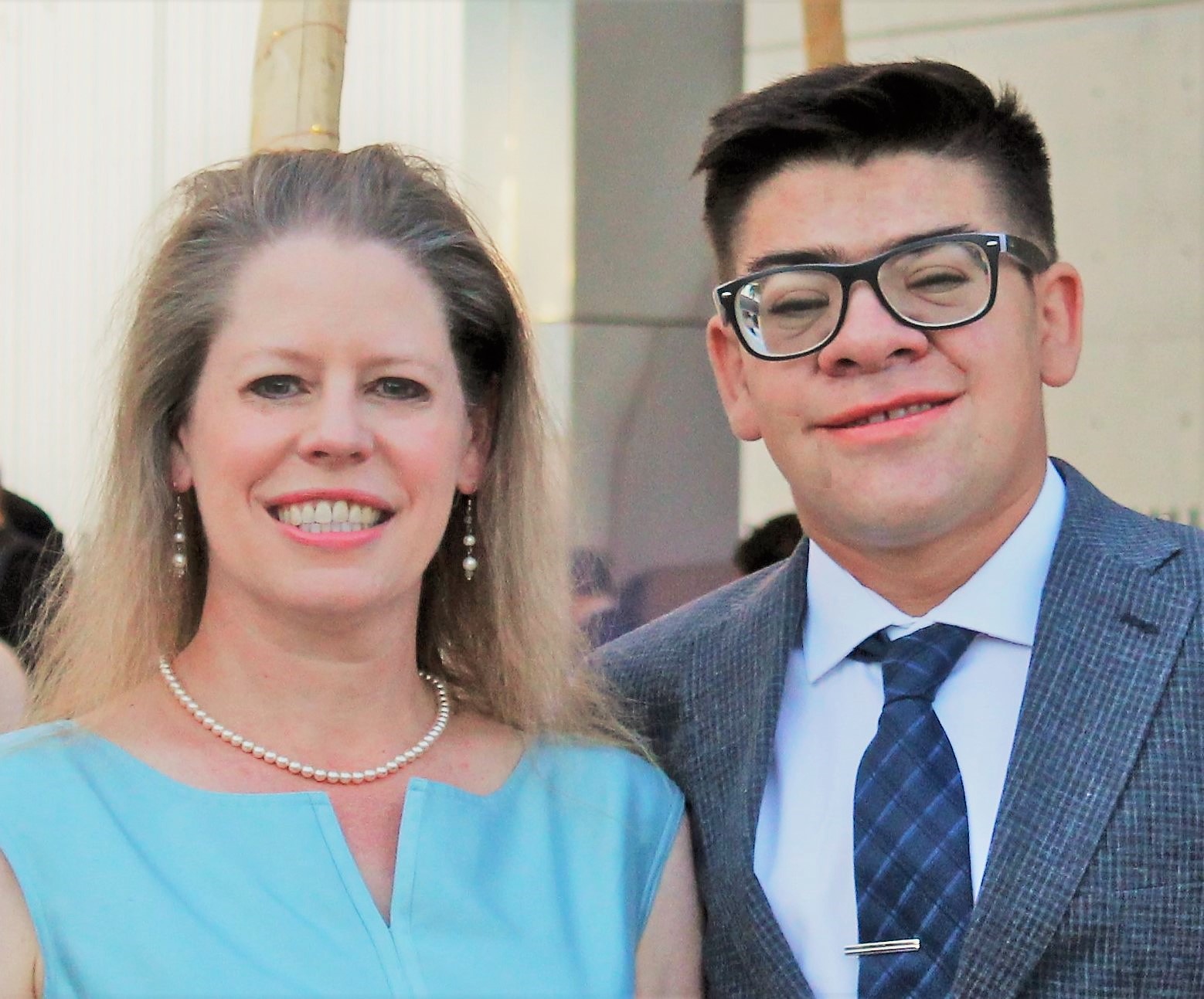 If you have a child who has lived with a chronic disease or life-threatening illness, a high likelihood exists that some well-meaning individual or family member– perhaps even more than one—has tried to encourage you by saying, God does not give you anything you can’t handle. Well…I have a bone to pick with this particular piece of advice. Here are three thoughts about the oft-heard “God does not give you anything you cannot handle” that I think are worth considering.
The original verse from the Bible does not say this.
The paraphrased verse is drawn from 1 Corinthians 10:13 which says, “No temptation has overtaken you except what is common to mankind. And God is faithful; he will not let you be tempted beyond what you can bear. But when you are tempted, he will also provide a way out so that you can endure it” (NIV).
Remember that the Apostle Paul spoke his original words in Greek, and words don’t always translate perfectly into English. Also, it’s important to look at the historical context in which the original verse was written. Although the word temptation can be interpreted as “test” or “trial,” this passage was taken from a sermon in which Paul was teaching about avoiding temptations related to idolatry, or worship of false gods, and temptations of the flesh (i.e., sexual immorality). The Corinthians had a rather big problem with temptations of the flesh and worship of false idols.
The verse does go on to say that God will provide a way out so we can endure our pain, and that entails the pain of trials from any variety of sources. Parents of children with rare diseases and life-life limiting illness do not live in a vacuum, and may likely be facing trials because of relationship issues, trouble at work, insurance battles, money problems, and general disappointment in the way life has unfolded. The great news is that God does promise us “a way out” regardless of the nature of the struggle and hope for our continued endurance. But of course, the way out Paul mentions entails our ongoing communication with God, and the way out is spiritual, not necessarily from a miraculous healing or the ending of our trial or temptation.
God does not “give” us the devastating illness or losses we may face with our children, and God does allow us to experience pain we cannot handle.
The phrase “God doesn’t give you anything you can’t handle” implies that God has given our children a serious or life-threatening illness or chronic disease. God does not do that. While you may logically argue that God has the power to prevent the illness or disease or to cure it, that is not the same as God knowingly giving our innocent children a serious illness to teach us a lesson.
On the other hand, if we could simply “handle” the pain of our children’s illness or our loss quite easily on our own without ever stumbling, then why would we need God? In fact, God does allow us to experience pain we cannot handle. But as the Bible verse actually reads in its original form, God never abandons us and does provide a way out, or a spiritual means of finding peace even in the most grievous of circumstances.
It is a fact that sometimes we will not “handle” our pain.
What does it mean to handle our pain, our anger, or grief? How does that “handling” actually look?
As a mother of a now-adult child with a rare and complex genetic disease, I am here to tell you that I have not always handled my anger, frustration, disappointment, and grief, especially after the onset of my mother’s later stages of Alzheimer’s disease. Then I became a deluxe grief sandwich with both my amazing mother and my first-born and much beloved son both in a state of serious illness with an uncertain future. Over the last eighteen years, I have lost it and given into temptations many times. I have cried on the way to work, cried at work, blown my budget, yelled at a few healthcare providers and their office staff, binged on cookies, and neglected my housekeeping, and at times even failed at mothering. I have even given God the silent treatment, and not only on one occasion. While I’m somewhat embarrassed and not proud of my behaviors, I offer this self-disclosure to let you know that unless we are saints, we will indeed have moments when we do not “handle” our pain, our trials, our temptations. Allow my confession to help you know that as parents we will not handle all that comes our way with perfect grace and an angelic smile.
But that does not mean we are faithless or failures. We may drop the ball, but we can pick it up again. God does not abandon us in our moments of weakness, and God knows our hearts. As for our patenting failures, I will share the best piece of advice I received from a chaplain, and that is, love covers a multitude of sins. Our enduring love for our children will mitigate any perceived failures and our legitimate mistakes.
A final note. . .
So, should you hear this piece of well-intended but badly paraphrased verse about God never giving you something you cannot handle, see yourself pasting a new thought right over the top of the misguided advice, just as if you were placing a big bumper sticker over the words. Here is one truth that has always been a great comfort to me:
God will help you find meaning in the pain.
If you want to find peace, God will help you make meaning out of your pain. You will find a channel through which the pain of grief will be transformed into something new that is more bearable, and even beautiful. I believe this may be the way out promised in the original Bible verse.
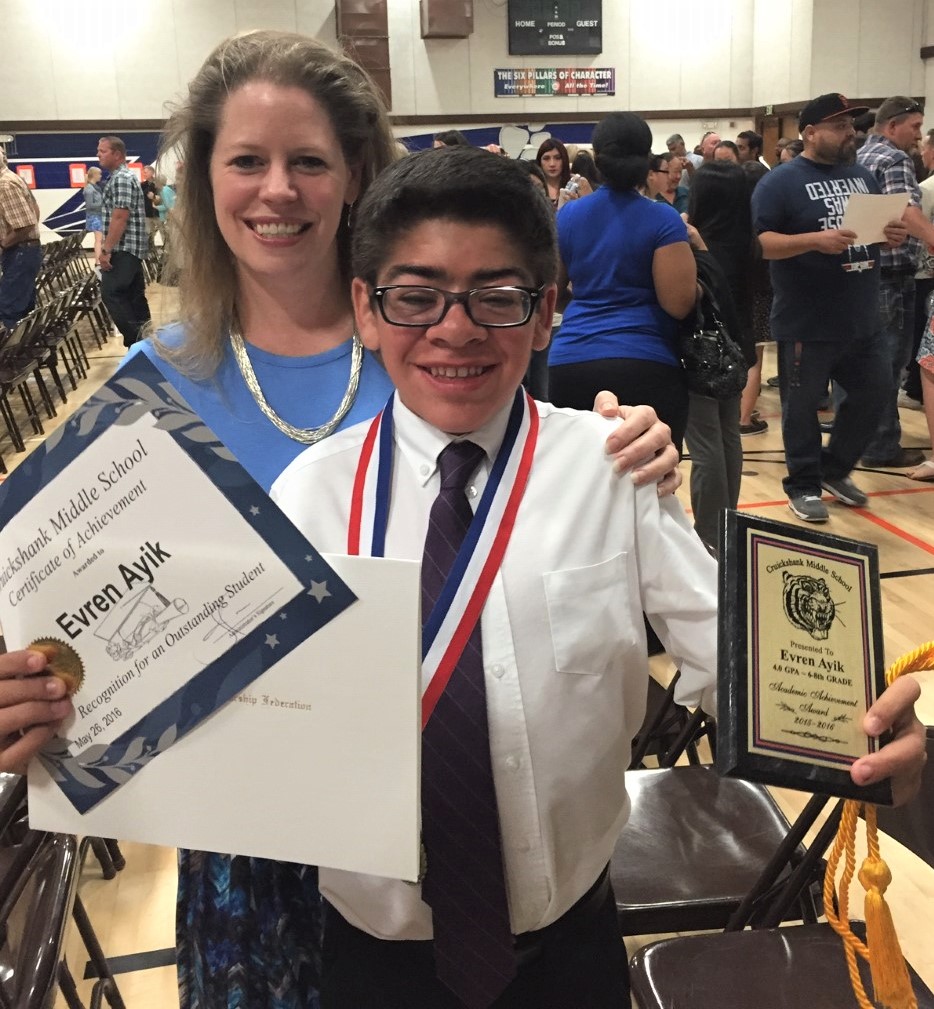 Many parents who have traveled the painful journey of parenting or losing a seriously ill child have channeled their hard-earned wisdom and their emotional pain into creative, spiritual, charitable, or intellectual pursuits that have given great meaning to their lives. For me, part of my quest to find meaning in our suffering and regain some peace was achieved through writing a book with my son fifteen years after his diagnosis to help other children survive the challenges of growing up with a rare genetic disease. But I know we didn’t accomplish it alone, and finding meaning and reconciling our pain is a process, not an instant achievement.
Essentially, God will put the needed guidance, people, and circumstances in place when you desire to find meaning in what you and your child have endured. Just remember, it may take time, years even. But if you want it, God will be there to help make it happen. God will help you handle it.
________________________________________________________________________________________________________________
Kara Ayik is mother to Evren who has Acid Sphingomyelinase Deficiency (ASMD), and Evren’s younger brother Erol. In addition to being Evren’s co-author of the children’s book, Extraordinary! A Book for Children with Rare Diseases, Kara has shared her reflections on raising a child with a rare and progressive genetic disease with family support organizations and other professional and civic groups across the country including the FDA and the Global Liver Institute. She has also written blogs for Rare Revolution magazine’s multi-media channels. Her varied interests include health literacy, environmental conservation, cultural and linguistic diversity, and native flowers and hummingbirds.