

Reprinted with permission from Why I Laugh In The Face Of My Daughter’s Life And Death, Kelsey Stanczyk, ©Perspectives 2025 American Academy of Pediatrics
View original publication at Perspectives in Pediatric Palliative Care N. 4 and also Home | AAP.
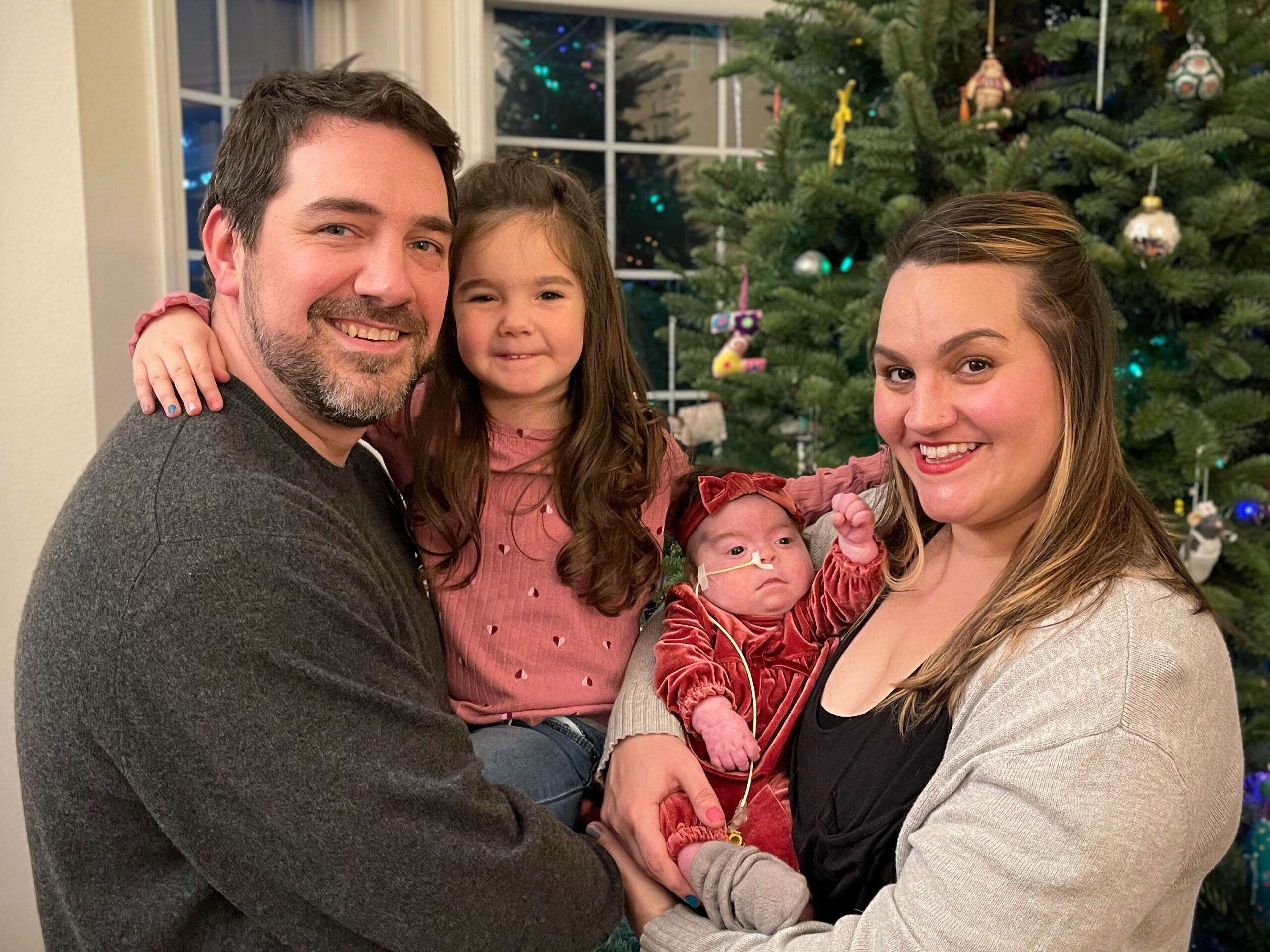
I was recently asked to reflect on what a good day looked like with Stella. When I closed my eyes to remember, I saw me holding her, sitting on my couch with nowhere else to be, and listening to her laugh. I can recall this feeling light and warm. These memories feel like bright lights in my mind. I think a good day with Stella was what joy feels like. Humor helps me access that joy.
 Stella is my youngest daughter. She was born when my older daughter, Zoey, was three years old. Stella was born with two rare chromosomal abnormalities after a stressful pregnancy, and she lived until two weeks before her second birthday. Her life was full of many ups and downs and unpredictability. Stella lived with a variety of complex medical needs and eventually died due to related complications. Those two years were difficult, scary, and also so beautiful. It’s very strange to live in a world as a mother whose child has died. Some days I wonder how it’s even possible. I’m learning that it’s possible through remembering all the days: good, bad, and the in between, and finding ways to connect to the light that this life holds. Laughter is one of those lights.
Stella had a startling (in the best way) laugh. Her genetic anomalies contributed to her short stature so when this booming cackle escaped her small body for the first time, I laughed to the point of tears. Stella couldn’t communicate in traditional ways and that often led to guessing and frustration. What was she saying? What did she need? I’d often find myself second guessing if I was doing something right. But when she’d burst into laughter with her whole tiny body, I knew she was telling me she was happy.
Laughter truly can change everything. I think about times in my life where I was consumed with overwhelm, sadness, anger, grief. Sometimes the only thing that could cut through that overwhelm was laughter. I learned this well in my experience with Stella. Sure, my humor may have become a little cynical or darker at times, but it always brings me back into the light when I need it most.
Now, I’m not talking about everyday being “glass half-full” and needing to twist every single detail to optimism. That’s not real or helpful. Being told “it all happens for a reason” or “look for the good” is the opposite of helpful in terrible times. But a genuine authentic moment that makes me laugh is healing.
As an example, our family made the incredibly difficult decision to compassionately extubate Stella and focus on comfort care. On the day we were going to extubate Stella, my husband was packing a bag to bring to the hospital. We did not know how long Stella would live after that extubation and were told to plan for hours to days. My husband had to pack a bag and choose clothing to wear for his daughter’s last days. How weird is that? To plan your clothing for when your child dies. That isn’t funny. That isn’t something to “find the good” in. But when he came across his Bluey T-Shirt that said, “Oh Biscuits!” it was a little funny. Being parents to a then five-year-old and balancing life with another child with complex needs, we often turned to Bluey. We knew that this show could provide an eight-minute break and give Zoey some screen time that didn’t feel like horrible parenting. We’d all grown to love this family of dogs.
He didn’t end up wearing that shirt when Stella died. But he showed up at the hospital that night and told me he considered it. I laughed and sobbed and thought “Oh Biscuits, indeed.” In the heaviest throes of grief that laughter amidst the sobs was a glimmer of joy that kept me connected. A sliver of light in the darkest night.
Or when we went to pick up Stella’s urn from the funeral home after she died. This small urn felt cruel and wrong. Even the funeral home director seemed uncomfortable coordinating the cremation of a toddler. We got in the car holding the urn with a sense of finality, wondering “What next? She’s gone, and we’re left with this vase.” What was next was that we drove home. But we worried about the vase rolling off the seat and falling on the floor.
It didn’t feel right to put Stella on the ground – but her urn fit in the cup holder. So, she rode home in the cup holder like a super-sized fountain drink from the gas station. Again, the absurdity and humor brought tears of laughter among the grief. Somehow, there’s some joy there.
 My husband and I had to explain to Zoey that her baby sister was going to die. We had to find a way to explain death, its finality, and cremation to our five-year child. I truly believe that Zoey is okay today because we did so authentically and allowed her to guide the process. Humor played a role there too. I will never forget sitting with her at the foot of Stella’s hospital bed coloring and talking while Stella’s nurses provided care. Zoey asked us what we do with ashes once a body is cremated. We discussed that some people keep them in an urn close by, make jewelry, or scatter them somewhere meaningful. Stella lived one third of her life at the hospital. It was the reason we chose to stay there for her death and not bring her home – the hospital was her home too. So, when Zoey suggested that the most meaningful place to scatter her ashes would be in the hospital, the whole room had a good laugh. (Or rather, it did after a very weighted pause and me declaring we would not be attempting a Greys Anatomy-esque burial for Stella.)
Humor is something my family depends on. To others who don’t know this pain or grief, I’m sure it can look dark. But it keeps us together and it keeps us going. Stella was deaf, and Zoey would make jokes all the time about Stella getting the luxury of ignoring noises or things that Zoey found annoying. We never needed to worry about Stella running away in a crowded grocery store. Not because she was well behaved, but because she couldn’t. You’ve probably heard the phrase: “If you can’t laugh about it…” We have so many of those moments. Yet, I think it’s more than that. Humor and laughter are crucial to survival, to coping. Stella’s diagnosis gave me permission to find whatever humor I connected with and allow it to bring joy. It’s helped me connect with other parents who understand.
Grief is everywhere: in small instances and in large ones that may feel too large to move forward through. My life as Stella’s mom provided me with small and large griefs. Surviving the hard days is possible by finding that light – that joy – wherever I can. Humor and laughter connect me to the joy of Stella’s life.
When I wear my “Emotional Support Ghost” sweatshirt with Stella’s name on the sleeve (that I bought from another bereaved mother, whose humor and online presence has seen me through some dark nights), I don’t care if someone in public thinks it’s inappropriate or judges me. Because I know that it’s not. It’s real. It’s important. Humor is joy in another form and sometimes it’s the only connection I can access.
My advice to providers or anyone who is part of another’s grief story is to honor that humor. Honor that connection to joy. It’s okay if you don’t get it or don’t understand. We all find humor in different places. It’s important to find those places and allow them in. I know how it feels to be stuck in the darkness, shoved down by the hopeless weight of grief. Authentic laughter lightens that load and allows you to float back into the light. It can bring you back.