

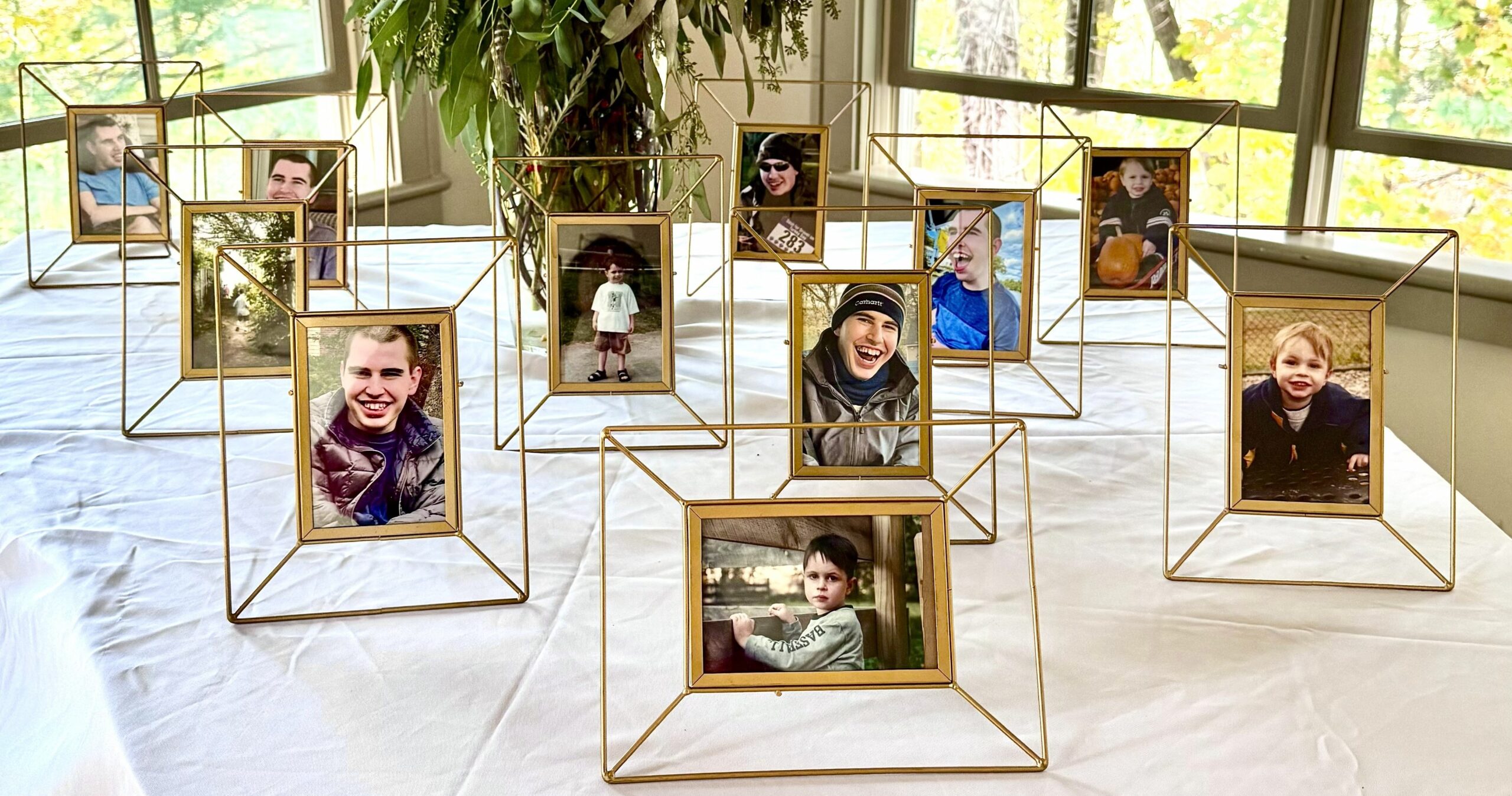
My son was dying.
After nearly thirty years as a mother and caregiver to a child with an incurable rare disease, I was no stranger to the realities of medically complex parenthood—shortened life expectancy, anticipatory grief, crisis management, and disease progression. Thinking about end-of-life and planning for “when the time comes” was not unfamiliar territory.
I had heard it often in the CPN community: the better the before, the better the after. As a longtime follower and contributor, I was well acquainted with palliative care and had learned from bereaved parents who had walked this path before me. I knew I would be best served by leaning into the resources available to our family—palliative care, hospice, and the interdisciplinary teams who guide families through the hardest moments. My son had spent years in palliative care and had been on hospice once before. I thought I knew what to expect.
But I also sensed this time was different.
I understood that I needed to prepare myself mentally. Yet I also knew that no amount of preparation could shield me—or my family—from the grief of what lay ahead. We were facing the reality of losing our son and brother.
 My son spent ten months on hospice before he died. Our emotions shifted by the day, sometimes by the minute. We lived on an emotional rollercoaster of joy, anguish, dread, love, fear, anger, uncertainty, and hope. There are no words sufficient to describe what it feels like to accompany your child through a long end-of-life process. My mission was to ensure my son experienced a calm, comfortable death at home. What I needed, in turn, was the mental, physical, and spiritual strength to allow that to happen.
I don’t know exactly how to define a “good” death. But I do know this: my son was quiet, comfortable, and peaceful when he died. He responded to our voices and our touch. He was enveloped in love and his favorite blanket. Holding him as he took his last breath was, at once, raw pain and pure love—the most gut-wrenching, sacred privilege I can imagine.
No amount of experience or preparation can protect you from the reality of losing your child. What it can do is help you navigate the path with intention. Six months after his death, I find myself reflecting on our hospice journey and what might help others walking a similar road. Reflection and sharing are part of how I process and heal. I believe that in helping others, we help ourselves. This is what CPN does best. Having shared my son’s journey there for over a decade, it feels important to name what mattered most as we approached the end of his life.
Permission to shift.
I didn’t anticipate how difficult it would be to give myself permission to transition fully from a palliative approach to hospice care. As a lifelong caregiver, my instinct was always to intervene—to stabilize, to fix, to extend. I thought I was struggling with decision-making, but in truth, I was struggling to let go of that identity. I needed to shift from an interventional mindset to one grounded in comfort and aligned with our goals of care. A long conversation with his hospice nurse gave me the clarity and validation I needed. Once I allowed myself to see things differently, it felt like a weight had lifted.
Build a team, then trust them.
We were fortunate to have strong hospice support, but not every provider has experience with medically complex, fully dependent patients with lifelong rare disease. This population doesn’t always fit the typical hospice model. We asked to bring in an outside expert in pain and symptom management, and our hospice team welcomed the collaboration. It gave us confidence and helped tailor care to my son’s needs.
Trust didn’t come instantly. Some recommendations felt unfamiliar, and my hesitation often showed up as resistance rooted in fear. It took time to feel comfortable with changes like scheduled medications. What made the difference was a team that educated without pressuring, supported without rushing, and gave us space to process. Over time, I learned to lean into that fear and trust both the team and the process. When I did, my son benefited.
Good days can be complicated.
One of the most unexpected challenges was learning how to receive the good days. Paradoxically, they were often the hardest. Effective symptom management meant my son had days where he was engaged, active, and happy. Instead of relief, I felt guilt and doubt. Was he getting better? Had we made the right decision? Should he still be on hospice?
It was disorienting to witness joy alongside the knowledge that he was dying. Over time, I came to understand that this was the goal—to create space for good days. The hospice team reassured me that comfort and joy were not contradictions, but the outcome of good care. I learned to replace guilt with gratitude. Good days weren’t something to question; they were something to embrace.
Talk it out.
Throughout those ten months, I had regular conversations with our hospice chaplain and social worker. Not everyone in my family engaged the same way, but for me, those conversations were essential. They gave me a safe space to express concerns, ask questions, and process fear, guilt, and uncertainty with people who understood.
We talked about what to expect before, during, and after my son’s death—how to prepare, how to support family and caregivers, and how to honor his life. Nothing was off limits. They walked me through possible scenarios, coordinated with outside resources, and helped our family navigate difficult conversations and find common ground. With each transition, I felt steadier.
You can’t control timing.
As the end drew closer, I found myself quietly hoping my son’s death would avoid certain days—birthdays, holidays, meaningful dates. My calendar felt like a minefield. The team listened and acknowledged those dates, respecting what was, in truth, my attempt to hold on to some sense of control.
My son died on his brother’s birthday. Just as we had experienced with his disease, death does not make exceptions for special days. What helped me cope was reframing—a concept I had explored through CPN. It allowed us to acknowledge the day with meaning and honor, rather than only pain.
Plan for what feels unimaginable.
One of my greatest fears was the moment of separation—when my son would be taken from our home and I would have to let him go. The thought was unbearable. The hospice team gently asked, “Would it help if you knew the person who would take him?”
They arranged for us to meet several funeral directors in our home. What initially felt uncomfortable became one of the most meaningful preparations we made. I needed to understand the process, to ask questions, to feel some familiarity with what would come next. Knowledge was grounding to me. No detail was too small.
We found someone who met us with openness, patience, and compassion. We developed a connection, stayed in contact, and I felt reassured every step of the way that my son would be safe and respected. That preparation didn’t make the moment easy—but it made it less frightening.
Honor different ways of coping.
When a death is anticipated, there is time to plan. That time can be a gift, allowing for thoughtful decisions and preparation, but it can also feel overwhelming. Even within one family, grief takes different shapes. Each person brings their own comfort level with the physical, emotional, and spiritual realities of dying, along with their own needs and boundaries.
I needed information and open conversation. Others needed space and less detail. Neither approach was wrong. There is no single “right” way to move through this. At times, I felt prepared, yet certain moments—especially witnessing physical decline—were more difficult than I expected. I often had to resist my instinct to intervene.
As a family, we faced hard decisions and difficult conversations about presence, about witnessing, and about what would come next. Sometimes we didn’t have clear answers and could only understand what felt right in the moment. Each of us was on our own path.
Protect your peace.
In the final weeks, we struggled to balance openness with privacy—how to protect our son’s dignity while navigating the needs and emotions of others. We had to decide how much to share, and with whom. We faced difficult choices about who could be present and what we could take on emotionally.
We had a large community who loved our son deeply. Letting people in had always sustained us. But we realized we couldn’t manage others’ expectations while caring for ourselves and our son. Gradually, we narrowed the circle.
After years of relying on others, it felt unnatural to set limits. Protecting our peace was not selfish—it was necessary. It allowed us to be fully present when it mattered most.
Receive love.
Of everything I have carried with me since my son’s death, two words stand out: Receive love.
In the early days of grief, when everything feels overwhelming, even the smallest actions can feel impossible. This was the advice given to me: if you can do nothing else, just receive love. It shifted my perspective and gave me something simple—and doable—to hold onto.
Six months later, I am still learning what that means. There is a permanent void in our hearts and home. We are forever changed, shaped by grief and loss. And yet, alongside that grief, there is also a quiet sense of peace—knowing we walked this path with intention, did the best we could for our son, and that he was surrounded by love until the very end.
If you are walking this path, my hope is that something here helps you feel a little more prepared and a little less alone. And when the time comes—may you be able to receive love.