

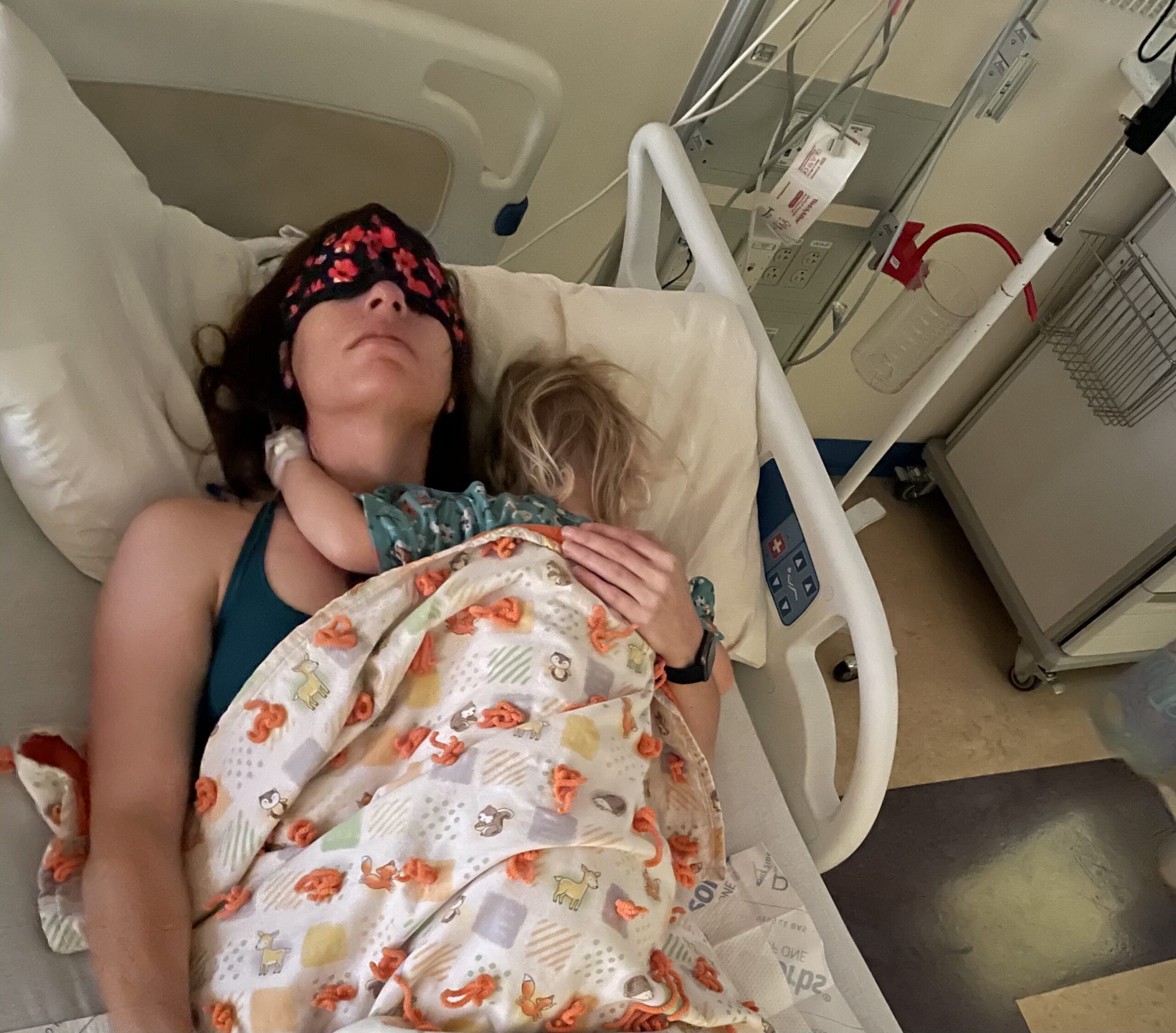
As a teenager and young adult, I always prioritized getting a full night’s sleep. When I became pregnant, I worried how I would get enough sleep while caring for a baby.
I wasn’t wrong to worry.
Sleep has been one of the many parts of my life that changed significantly after I became a parent to a medically complex child, starting the very first night.
My water broke three weeks before my due date, in April 2018. Soon after my son was born, my spouse, Mark, and I learned he was born without an anus and he needed surgery. We were shocked.
At 3am, our newborn—conceived through IVF after two miscarriages, a failed adoption and years of infertility—was taken from my arms and transferred by ambulance in a sterile pod to a larger hospital with a NICU. I was discharged a few hours later to start meeting with specialists and surgeons, while also learning how to pump milk. It would be almost two weeks before I could hold my son skin-to-skin due to the risk of infection. Saying goodbye that first night to the newborn we’d worked five years to bring into this world was extremely traumatic.
Until very recently, I slept in the same bed or the same room as my son. The need to be able to reach out and touch him was in part because I couldn’t bear to be away from him overnight after that initial NICU separation. The other reason was that my son truly could not sleep alone most nights. I had to be there in case he had a seizure, a fever, bladder pain, an ostomy bag leak, or some other health issue that could arise in the night.
A study in the Journal of Family Nursing on caregiver sleep and medically complex children found this experience to be common, “the degree of sleep deprivation varies by diagnosis, but a key contributing factor is the need for parents to be vigilant at night.”(1)
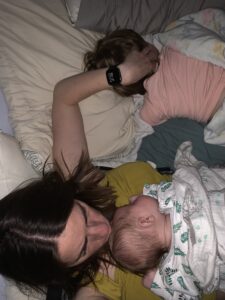
In this community though, I know I am not alone. Many of you may see yourself in these experiences, too. These are examples of specific ways caretaking a medically complex child has affected my sleep.
Colostomy
My son’s first surgery created a colostomy, a small opening on his abdomen where his stool would expel. Before he left the NICU, wound nurses showed Mark and me how to manage plastic ostomy bags to protect the site and collect the stool. It was a challenge to keep them adhered to his small body at the very site where he was healing from surgery. The ostomy bags never lasted long those first few weeks, and I soon became conditioned to changing ostomy bags at all times of day and night, and washing all the sheets and blankets and clothing that got soaked in the brown liquid stool.
In time, as he grew and healed, the bags would last a few days, but stool leaks still happened some night. In his life, he’s had many surgeries related to this condition and there have been periods of nightly ostomy management.
Hospitalizations
Hospitalizations were another issue that were incompatible with restful sleep. Our son has had ten major surgeries and numerous other hospitalizations. We never left him alone overnight. We are lucky to have paid sick leave and the ability to work from his hospital room. As this community knows well, hospital sleep isn’t really sleep—alarms, nurses, vital signs, rounds, doctors, fear, and a child in pain make that impossible.
While I usually did the overnight hospital shifts when he was young, when we added a baby girl to the family when our son was five, initially I stayed home to nurse her overnight and pumped milk from the hospital for her during the day. I felt ripped in two when this happened, wanting to be with both children but having to choose who needed me more. Now Mark and I swap nights at the hospital with our son and nights at home with our toddler daughter.
Catheterizing
When my son was 18 months old, he was diagnosed with a neurogenic bladder. He will never urinate normally and will require medication and an intermittent catheter process every few hours—including at least once overnight—for life.
For years, I woke up next to him every night between 1am and 3am to catheterize him. Some nights I fell back asleep quickly. Many nights I didn’t. One reason I didn’t wean him until he was over two years old was so I could nurse him in my lap to keep him in a sleepy state as I leaned over him and did the overnight catheter process solo, so Mark could stay asleep. Initially, to keep the process sterile with a wiggly baby, it required both myself and Mark. Thankfully, by the time I weaned, my son was so used to the process, and he could usually sleep through it.
This past March, testing showed that his bladder condition had worsened. Now he needs two catheterizing sessions overnight, initially a mere four hours apart. At first I tried to do both care sessions, but I couldn’t manage the long-term double-wakeful nights while also being a parent to our early-rising toddler. We made a new routine that stretched the time between care times to five and a half hours. Now, Mark stays up until 11:30pm to do the catheter process and I sleep in our basement on a couch and wake by 5am and do the next catheter care. If I go to sleep early, I can often get over seven hours of uninterrupted sleep for the first time in our son’s eight years.
Seizures
My son was two years old when he had his first febrile seizure, with his babysitter who handled it well. His next seizure occurred a year later when he had a fever from an ear infection, and I woke to him convulsing next to me. I had never seen a seizure, and it was 2am and I was scared. I called for Mark and then called 911. After an ambulance ride, the ER doctor assured us he’d outgrow seizures. She was wrong. He had three more febrile seizures before he began dropping into convulsive seizures unexpectedly, resulting in an epilepsy diagnosis. Genetic testing later discovered he is on the spectrum for Dravet Syndrome, a rare form of epilepsy that causes dangerous seizure activity. When he had his first status seizure that lasted over an hour and almost took his life, true panic set in for me. I slept with one arm on him all night, half sleeping mom, half seizure monitor, while also caring for my infant daughter.
Getting Sleep
Thanks to four daily seizure medications and trigger avoidance, my son has gone eight months without a seizure, and because he also wears a seizure detection watch overnight, I finally feel able to sleep apart from him. Additionally, since Mark and I share the new nighttime catheter care routine, I’m finally sleeping through the night, in my own space. I am a better parent and I feel healthier thanks to that rest. I used to be a long distance runner, for instance, and one improvement I’ve seen is my ability to go further on my daily runs again.
I know this sleep situation could change any time. His condition could worsen. A new issue could arise. But for now, I am taking this period to try to get some sleep.
I am not taking this uninterrupted sleep for granted. My hope is that every caregiver gets stretches of true rest, because caring for our children is hard enough without facing each day exhausted.
- McCann D, Bull R, Winzenberg T. Sleep deprivation in parents caring for children with complex needs at home: a mixed methods systematic review. J Fam Nurs. 2015 Feb;21(1):86-118. doi: 10.1177/1074840714562026. Epub 2014 Dec 19. PMID: 25527511.
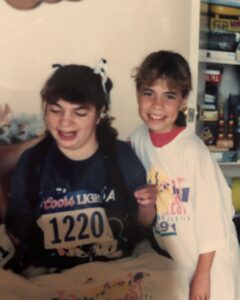 Holly Kearl is the younger sister of Heidi, who had the rare disease microcephaly. She is the parent of an 8-year-old with multiple rare conditions, as well as a 3-year-old. She’s written about disabilities and rare conditions for outlets like Guardian, Newsweek, USA Today, Parents.com, and HuffPost. She regularly writes for the Pull-Thru Network’s member newsletter, and she served on her state of Virginia’s inaugural Rare Disease Advisory Council. Before becoming a parent, she wrote books and articles, spoke globally and advocated on women’s issues. She also has 12 years of experience elevating the voices of under-represented voices through op-ed trainings and editing/pitching op-eds. She’s worked for entities like UN Women, Aspen Institute, Op-Ed Project, AAUW, and the National Women’s History Museum. She currently is a consultant for George Mason University and Red Dot Foundation.