

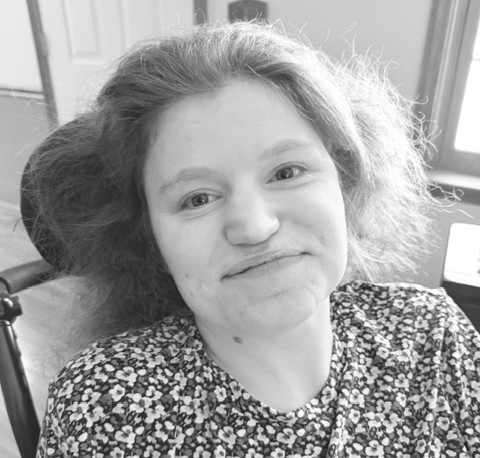
I consider myself an advocate through and through; not only for my daughter, who struggles with a rare disease, but for the causes I feel are in her best interest. To that end, I want to remind all parents of children with rare diseases and complex medical conditions that you know your child best. This is true for two obvious reasons. First, we typically spend the most time with that child providing clinical care and parental oversight. Second, by definition, a rare disease is just that – rare. This suggests not a tremendous amount is known about the given condition we find ourselves navigating. For those two reasons alone (there are more!) it is so important to listen to our inner voice, our gut and our past experiences.
There have been many times over the years where I’ve needed to find my voice and politely request more. More support, more budget, more space or more time. Whether it meant pausing on the idea of overnight summer camp and choosing day camp instead, questioning the timeline of a medication titration, electing to place a G-tube, or seeking out the most supportive seating for Sasha’s evolving postural needs, these were moments that required careful consideration. There were times when I stood back during meetings—while touring a camp at an open house, attending an appointment with a neurologist or surgeon, or meeting with a DME representative—when I needed to gather my thoughts, analyze the information in front of me, and advocate for what was important and what was right.
At other times, my advocacy is hindered by unrealistic expectations. This happens when I enter an appointment expecting complete alignment between provider, patient, and parent. I want to feel fully seen and understood. I want the clinician’s knowledge to be vast, their understanding of her syndrome complete, their answers certain. From that place, I imagine a dialogue unfolding effortlessly, clarity expanding without limits.
Of course, this is an unrealistic expectation at best, and at its worst, deeply irrational – especially when caring for a child with a rare disease. It’s as though I am searching for someone omnipresent, omnipotent, omniscient.
When such overly hopeful expectations are not met, I recognize the moments when I dig in my heels under the banner of advocacy. In my disappointment at the absence of concrete answers, I cling to the belief that I know more, that I know best, that I alone am the expert. And in doing so, collaboration stalls. I hear only superficially what the provider is trying to convey.
It’s while standing at that forked road that collaboration breaks down. This is when I overlook a provider’s deep experience, especially when it is not specific to my daughter’s disease. Advocacy needs to be rooted in realistic expectations; when mine blur, everyone loses, potentially most of all, Sasha.
These are the times when I’ve had to let go of my attachment to an idea, perhaps to even an ideal. Yes, I care for a child who is rare. Yes, there is a good chance when a specialist new to her care team approaches, they have perhaps never met a child with Sanfilippo Syndrome. I am often asked if medical residents can be present in an exam room when Sasha is receiving routine care at our state’s teaching hospital; and I am pleased each time I am asked this and gladly agree. Each interaction means one more future medical provider who can say, “I have seen Sanfilippo Syndrome before”.
Sometimes I pause when a remarkable medical provider shares that they have never treated a child with Sanfilippo Syndrome. I must remind myself that this neurologist has seen hundreds of children with epilepsy, that the speech language pathologist in front of us has conducted countless swallow studies, that our PCP has faced challenging confounding variables, that virtually all geneticists have treated numerous other rare diseases. It makes me ask, “What if both concepts can be true – that I know my daughter best and the provider might also be right?” As we both gain knowledge through managing my daughter’s care, we all might expand and grow together.
Recently, I pushed back against a recommendation from Sasha’s neurologist to titrate down one of her anti-seizure medications. For many reasons, I found his recommendation to be particularly bold. Sasha has a form of epilepsy known as Lennox-Gestaut, which tends to be very resistive to medications. There was a point in time just over a decade ago when her seizures became so severe it looked like the seizures, and not so much Sanfilippo Syndrome, would be the medical event to take her. We were tremendously fortunate to find something that’s worked these past 12 years. Why rock the apple cart now? I was able to offer this perspective and history to the neurologist, and we’ve been able to more cautiously approach dosing changes while maintaining her seizure control. What a pivotal moment that was. Through collaboration, a sense of harmony was forged within her care plan.
At another appointment this past year, when meeting a new geneticist, I was excited to glean some insight into some of the more challenging symptoms to recently arise for Sasha. She had never treated a child with Sanfilippo Syndrome before, but she had treated a patient with a very different rare syndrome, an individual who was also an outlier in the life expectancy for her given condition. Much like Sasha, this child also suffered the same challenging symptom Sasha was experiencing. Again, like Sasha, this symptom was uncommonly found in the comparable rare disease. Parallels were drawn by our new provider in real time, and data gathering was soon underway. This could one day enhance understanding of both syndromes. I am grateful for this provider for thinking outside the box and sharing her insights.
At Sasha’s annual physical in 2024, as her PCP brought the appointment to a close, she stated, “with Sasha doing so well right now, would she be interested in attending summer camp next year?” I was floored, with an initial (internal) reaction of “are you crazy?!” I now stand back in this new year underway. As I assess the alignment of many of my responses over the years, I recognize that my baseline is often to resist. The camp experience ended up being an unforgettable one for Sasha and our entire family, with tremendous meaning imparted to the entire household. To this day, new habits remain in place for Sasha’s betterment stemming from a single week at camp. Her little sister Nika picking out Sasha’s daily outfit, me checking the forecast each morning to see if we can safely be outdoors, my husband shopping for a land yacht of a handicap vehicle to ensure travel and adventure in all seasons. All of us are mirroring our roles from that sole week of summer camp.
All of this is to say, when I walk into a medical provider’s exam room, they have no idea the depth of the well that holds Sasha’s entire story, her traits, her personality, her medical history. But maybe, I don’t always appreciate the depth of their well either. As caregivers, we are the leader in our child’s care. We truly do know them best. But our care team members, if we are lucky enough – and I deeply hope we all are – they know an awful lot too.
 Joanne Huff comes to Courageous Parents Network as a long time follower and parent enthusiast of the organization. As the Mother of two girls, the oldest of whom has the rare disease MPS IIIA/Sanfilippo Syndrome, Joanne has benefited tremendously from the intimate parent interviews and candid, vulnerable story sharing throughout numerous thought provoking blog posts. As her daughter’s activities and lifestyle started to slow down with disease progression, CPN became a larger anchor in times of uncertainty and unrest. It is through this lens that Joanne hopes to share experiences and insights via the CPN blog.
Joanne completed nursing school after her daughter’s diagnosis, receiving her Bachelors of Science in Nursing from Plymouth State University, Plymouth NH. She enjoyed community liaison work with home care providers of adults with special needs up until her own daughter’s care became increasingly more involved. In addition to serving on the Boards of New England Regional Genetics Group (NERGG) and Adaptive Sports Partners through 2024, she has found great purpose in volunteer work advocating for policy improvements and change in Washington DC with the National MPS Society. In her free time, Joanne seeks balance and refuge with yoga, hiking and performing as an ensemble Soprano vocalist with the Pemigewasset Choral Society. When not blogging for CPN, Joanne enjoys sharing offerings on her personal Blog Folding Origami for God. She resides in Bow New Hampshire with her two daughters, Sasha and Nika, her husband Mike and her yellow lab Suki.