

What I Mean When I Say “I Hope…”
Often, at the bottom of our darkest pits, there can be found a small pool of glitter. Its bubbling
warmth calls us in, lures us, with promises of brighter times to come. It sparkles like an exit, like
rest, like relief. It almost looks alive. Especially as the days shorten and the year thins toward its
edge, we can mistake this shimmer for light.
I have.
I can’t tell you how many times I’ve made wishes for my daughter. You might find my wishes
hanging from every star, pinned to the early darkness that arrives before dinner these days.
They’ve been tucked into bedtime prayers, scribbled on appointment forms, whispered into
intake calls, swallowed in waiting rooms where the clock seems to stall. Wishing, however, has
no agency, which is why it so often disappoints. We can glide on the soft illusions of wishing for
years. I once thought the world could change if I asked it nicely enough; and when that didn’t
work, if I yelled at it loudly enough. But nothing moved until I did.
It is hard to keep ourselves from falling into glittering wishful indolence because wishing is easy.
It’s buoyant. It floats us gently above reality like lights strung against the dark, beautiful but
untouchable. But hope lives lower than the lights, and it will not be with the glitter that we find
our way out of the abyss. It is in the muck and mire of the clay and walls through which we must
climb, hands cut, clothes wet, heart pounding with the yawning terror of effort.
Hope lives where boots meet ground.
We aren’t built on wishes; we’re built on hope. A wish asks, What do you want? Hope answers,
This is what I’m doing about it. Hope is not a request, but it is not exactly a response either. It is
not up in the stars. It’s down here, in the cold, in the mud made from the sweat and tears of
terrified people doing hard things. In the struggle of people whose very existence is in defiance
of the odds. Hope doesn’t turn away from pain or speak around it. Hope enters pain and gives
meaning to its shape, or at the very least, direction.
Hope, then, requires motion. Not because we are certain of the outcome, but because we are
certain about what our hoping demands of us. Hope is making the terrifying phone call while the
rest of the house is quiet. It is gathering the pile of unintelligible forms and answering every
question even when none seem fair. It is showing up to the difficult meeting ready to speak even
when your voice is shaking. Hope is not just praying for rain; it is digging the well. It is
sharpening the tools. It is learning which rock wall will hold and which won’t. Hope is willing to
sweat, even when the air is cold.
But hope isn’t solitary work. Voicing our hope is the declaration of everything we are willing to
do to be the kind of person we want to be. It marks the boundaries we are willing to fortify.
Voicing it also invites witnesses. When found in true community, hope both carries and is
carried by others. I have not survived on my own hope alone. Often, I’ve borrowed it. Often,
someone has seen me sinking and, without saying so, climbed down into the pit with me and
said, I’ll hold you while you look for your footing. This hope is embodied and ordinary, the work
shared between human beings not to fix things, but to keep moving through them. In the season
when doors open and tables are extended, may we all hope for a community of reasonable
beings bound together by a common agreement as to the objects of their love.
And this is why hope is so difficult: it breaks you.
It both crushes you down and opens you up. It is an unselfing; a difficult, precise kind of
breaking. Hope drags us through the sludge of reality and wakes us up to what needs to be
done. Sometimes it sounds like hard truths: We need a new specialist. This medication isn’t
helping. She’s declining again. Sometimes it arrives as a silence so heavy it requires a
response. Hope asks not only what is possible, but what is required. And when you finally see
what is required, you cannot unsee it. You become responsible for it.
A wish is little more than breath, while hope is given substance by the weight of authentic
responsibility. This responsibility is neither sentimental nor abstract. It demands nothing more
and nothing less than for you to radically be the kind of person you want to see in the world. Not
someday, but now. In the way you sign your name on the line. In the way you hold your
daughter’s head when she can’t hold it up herself. In the way you choose gratitude when rage
would be easier. In the way you speak truth when silence would be safer. In the way you wake
up tomorrow after the calendar turns and do it again.
This is why hope is not merely oriented toward the future. It informs the present. It rearranges
the texture of each moment. Our hope isn’t motivated by an unknown happening; we hope
because we are certain of the actions our hoping requires. Hope does not guarantee outcomes;
it guarantees movement. It guarantees that the past will not be allowed to fade but will be
carried forward as fuel. Hope says: I may not control what arrives, but I will shape how I meet it
one ordinary day at a time.
And so, when I say that I have hope for you, my daughter, I am not wishing for a world that
magically unfolds in your favor. I am committing myself to a way of living that leaves the world
with no other option but to make room for you. I am willing to live in such a way as to create a
world that you deserve to live in, and one that deserves to have you living in it. A world made
not of wishes, but of work. Not built on glitter, but on gratitude. Not imagined or remembered
from afar, but made here, in the present. Like those gifts that only exist because someone stays
up late to assemble them.
Hope, when it’s real, is simply love with its sleeves rolled up.
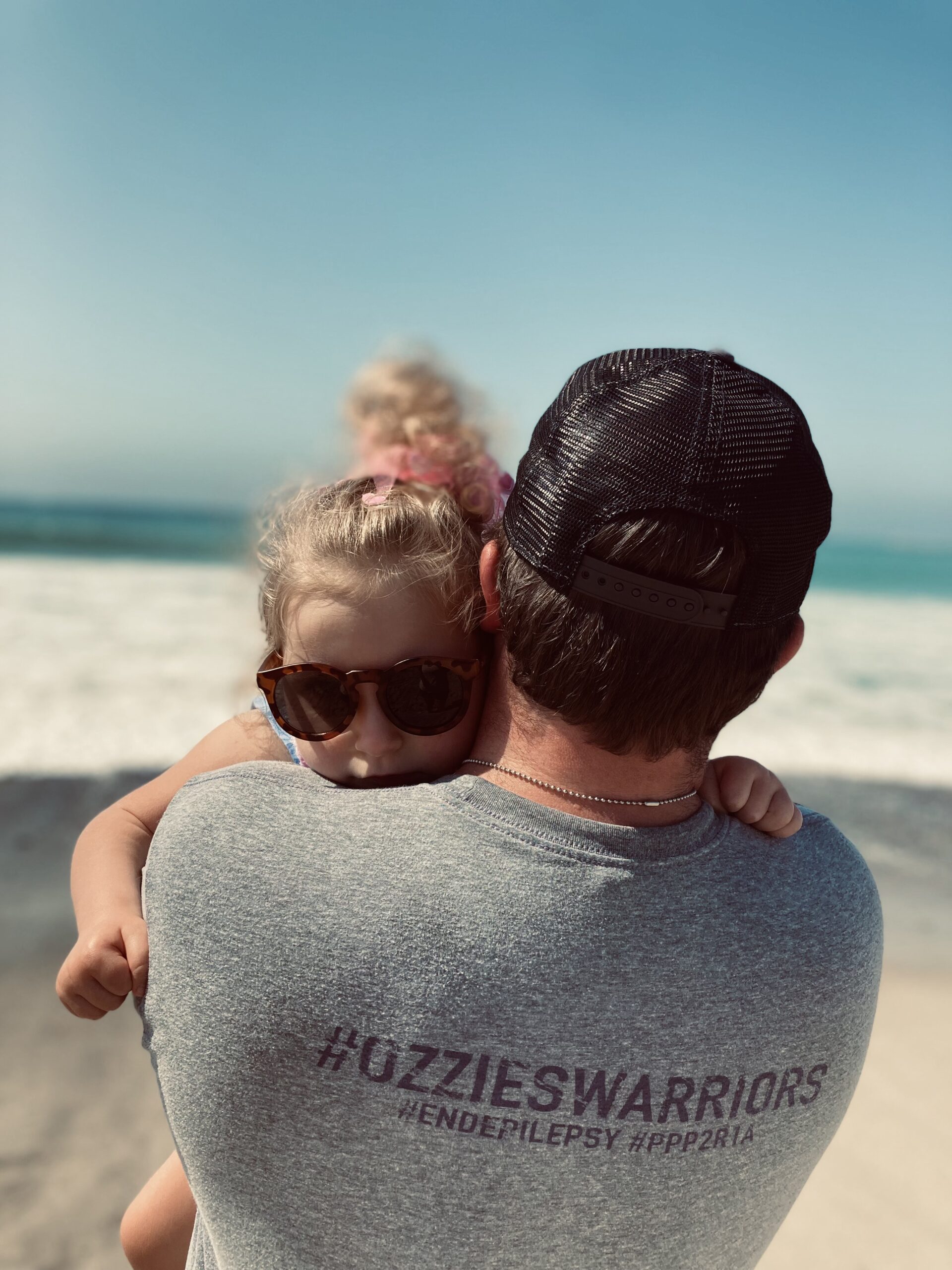
I hope you know how loved you are.
 Stephen Hager goes by his second middle name (he has three), Bud, because it’s easier to remember and baristas never misspell it. Along with his wife he is a caregiver for their 8-year-old daughter, Emma, who has pachygyria, a rare neurological disorder. He believes in taking an active approach to advocating for his child and others like her. To this end, he sits on various advisory councils at Children Hospital of Orange County (CHOC), volunteers on consulting and directing boards for various non-profit centers and lends his writing skills where he can. Experiencing a lack of support for parents of medically complex children, Bud founded a support group through CHOC focusing on parent-to-parent interaction. He is also a professor of psychology and has a small private psychotherapy practice.